When you’re moving (in a car, train, or bus) your phone constantly searches for the nearest cell tower. Phones tend to transmit at higher power when moving in a car, and where the signal is weak a phone raises its transmit power to keep the call quality up [1][2].
Watch our quick tip on YouTube Shorts
Get our complete guide with room-by-room strategies and product recommendations.
Why a moving phone works harder
A phone in a moving car keeps handing off from one tower to the next, and the metal body of a car or train car tends to weaken the signal that reaches the handset. A weaker link makes the phone raise its transmit power to hold the call together.
A stationary phone maintains a steady, lower-power connection. A moving phone tends to transmit at higher power, and in heavy-use areas a phone may run at its highest power more than half the time [1]. The inverse square law means that field power from a small source drops with the square of the distance, so doubling your distance cuts it by about 75%, for a source far enough away to act like a point.
A call is also the use that puts the phone against your head for a long stretch, so a weak link and a long, close call arrive together.
The easy fix is to skip calls in a moving vehicle, not to buy gear
Remove or switch it off
The most reliable fix: wire it, schedule it off, or choose a model without the radio.
Move it away
Fields from a device fall off quickly with distance, so the nightstand beats the pillow.
Block the path
Only for what you cannot remove or move; it must cover the path fully to work.
Measure before and after
Use a meter that reads the field type the change targets, so you know it worked.
Remove the source before shielding.
The usual order of fixes: source first, shielding last.
Chart: frequencyblockers.com: The easy fix is to skip calls in a moving vehicle, not to buy gear
Embed this chart
Free to reuse on your site. Copy the code below; please keep the credit link.
What to do instead
The Fix: Put your phone in airplane mode while traveling. If you must take a call, pull over or wait until you’ve stopped.
- Let a call go to voicemail and return it once you have stopped.
- Send a short text at a red light or a rest stop instead of talking while the car is moving.
- If you are a passenger, take the call before the trip starts or after you arrive.
- On a long drive, plan one stop to make the calls you need.
If you absolutely must use your phone while moving, a stronger signal lets the phone transmit at lower power [2][1].
How to check the difference
An RF meter reads the radio signal a phone gives off. Hold it near the phone during a call while parked with good signal, then compare against a call from the same spot with the signal blocked or weak, such as an underground garage. Keep the meter and phone in the same positions each time, because the reading changes a lot with orientation.
Phone-based adapters can show the same trend but are less reliable than a calibrated meter. The comparison that matters is your own before and after, not a single number.
For more information, check out our guide on EMF Testing Smartphone Adapters. Also see our guide on Faraday Bags For Phones.
When this does not help
Speaker mode or a wired headset puts distance between the phone and your head, but the phone still transmits while the call is live. Only ending the call, or switching the radios off, stops the transmission itself.
Airplane mode also stops incoming calls and texts, so it suits a trip where you do not need to be reached. If you do need to be reachable, the habit of waiting for a stop is the practical middle ground.
The International Agency for Research on Cancer (IARC) has classified radiofrequency electromagnetic fields as “possibly carcinogenic to humans” (Group 2B), a rating that rested on limited evidence about brain cancer risk. A WHO-commissioned meta-analysis later found that ever or regular mobile phone use was not associated with glioma (pooled relative risk 1.01), so the case for cutting exposure is precaution and habit, not a demonstrated danger [3][4][5].
Mission Darkness Faraday Bag
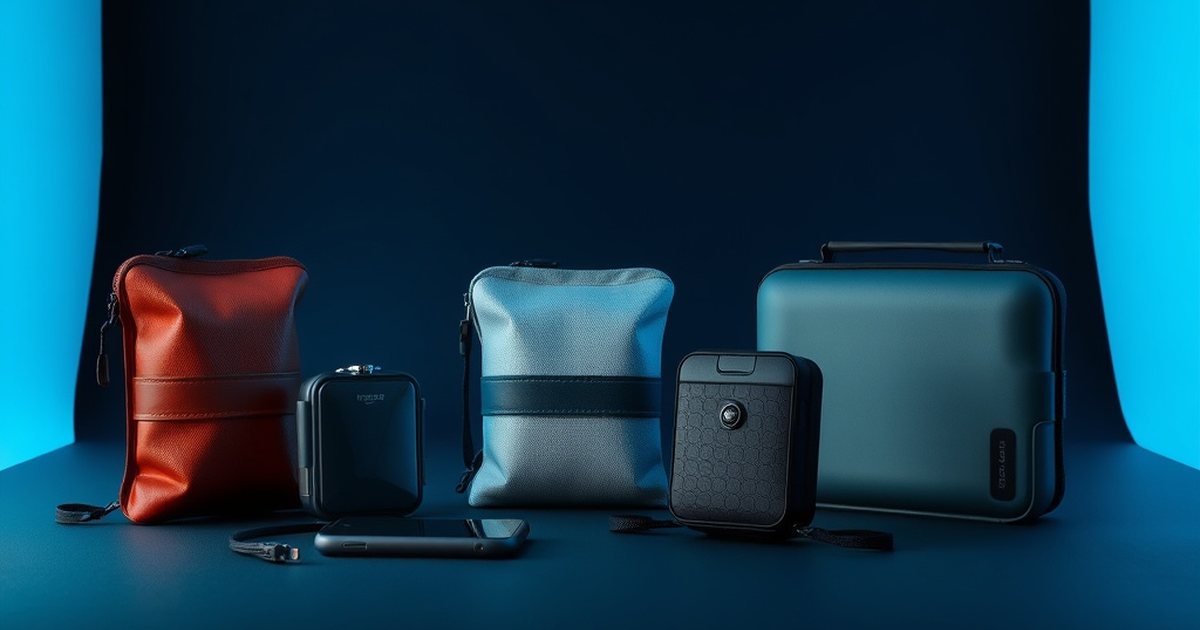
A phone in a sealed Faraday bag cannot keep reconnecting to towers as the car moves. It also cannot ring, so use it on drives where you do not need to be reached.

Ready for More EMF Protection Tips?
Our complete guide includes 100 actionable strategies for every room in your home, plus product recommendations from our curated collection.
Frequently Asked Questions
Why is making phone calls in moving vehicles worse for EMF exposure?
When you’re in a moving vehicle, your phone constantly searches for the nearest cell tower, and each handoff between towers triggers a power spike. Phones tend to transmit at higher power in a moving vehicle, which can raise your exposure compared with a stationary call [1].
What’s the best way to reduce EMF exposure while traveling by car?
The most effective approach is applying the DISTANCE TIME principle by avoiding phone calls altogether while moving. Instead, wait until you reach your destination to make calls, or use text-based communication like messaging apps that don’t require constant signal searching and power spikes.
Does the type of vehicle I’m traveling in affect my EMF exposure?
Yes, any vehicle with a metal frame including cars, trains, and buses can trap and reflect cellular radiation. However, you can further protect yourself by using EMF protection solutions like Faraday bags for your phone when traveling, which blocks signals and prevents the radiation from reaching you.
Can I reduce EMF exposure on public transportation like buses and trains?
Yes, the same principle applies to all moving vehicles. Keep your phone in a Faraday bag or avoid using it while the vehicle is in motion, and save calls and data-heavy tasks for when you’ve reached your stationary destination to minimize tower handoffs and radiation exposure.
References
- ICNIRP (International Commission for Non-Ionizing Radiation Protection) Standing Committee on Epidemiology: et al. Epidemiology of Health Effects of Radiofrequency Exposure. Environmental Health Perspectives (2004). PMID 15579422
- T. Buczkowski et al. Influence of Mobile Phones on the Quality of ECG Signal Acquired by Medical Devices. Measurement Science Review (2013). doi:10.2478/msr-2013-0035
- Mireille B. Toledano et al. Cohort profile: UK COSMOS, a UK cohort for study of environment and health. International Journal of Epidemiology (2015). PMID 26534947
- International Agency for Research on Cancer IARC classifies radiofrequency electromagnetic fields as possibly carcinogenic to humans (Press release 208). International Agency for Research on Cancer (2011). source
- Karipidis K et al. The effect of exposure to radiofrequency fields on cancer risk in the general and working population: A systematic review of human observational studies – Part I: Most researched outcomes. Environment international (2024). PMID 39241333
These statements have not been evaluated by the Food and Drug Administration. This information is not intended to diagnose, treat, cure, or prevent any disease. Content is for informational purposes only and is not medical advice; consult a qualified healthcare provider before starting any supplement. As an Amazon Associate we earn from qualifying purchases.