A lamp, clock radio or fan on a mains cord is wired to the house, and that connection is what puts a field around it. A device that runs on its own batteries has no such connection, so for the bedroom the cleanest swap is often the simplest one: take the cord out of the picture.
Get our complete guide with room-by-room strategies and product recommendations.
What the cord adds, and what a battery removes
A plugged-in clock radio does produce a small field, but in household measurements most continuously running appliances gave significant magnetic fields only within about half a metre, and appliance fields drop drastically with distance [1][2].
The field around a plugged-in cord is the mains electric field, and it exists whenever the cord is live, whether or not the device is switched on. A battery supplies steady direct current at low voltage, so there is no mains voltage at the device and no mains field around it.
A battery device has no mains cord, so no mains electric field around it
Measured in mG or µT
From current in wiring, power lines, motors and appliances. Read it with a gaussmeter or the magnetic mode of a multi-field meter.
Measured in V/m
From voltage on unshielded cords and wiring, even with nothing switched on. Read it with an electric-field mode; grounding changes the reading.
Measured in µW/m² or V/m
From phones, Wi-Fi, Bluetooth, cell towers and smart meters. Read it with an RF meter whose range covers the bands you care about.
Noise on the wiring
High-frequency noise riding on the mains, conducted rather than radiated. A field meter cannot see it; it needs a plug-in line-noise meter.
No cord, no mains field.
Each field type needs its own sensor; a meter that reads one says nothing about the others.
Chart: frequencyblockers.com: A battery device has no mains cord, so no mains electric field around it
Embed this chart
Free to reuse on your site. Copy the code below; please keep the credit link.
The size of the effect is small, and it is local. It matters most for things that sit on the nightstand at head height for hours, which is why the bedroom is the place to start.
Swaps that work in a bedroom
- A battery-powered analog clock in place of a plug-in clock radio. The Braun analog alarm clock is one example.
- A battery book light or flashlight in place of a corded bedside lamp.
- A battery fan if you want air movement without a cord running to the bed.
- Rechargeable devices are fine as long as they are charged in another room and then brought in unplugged.
Where batteries do not help
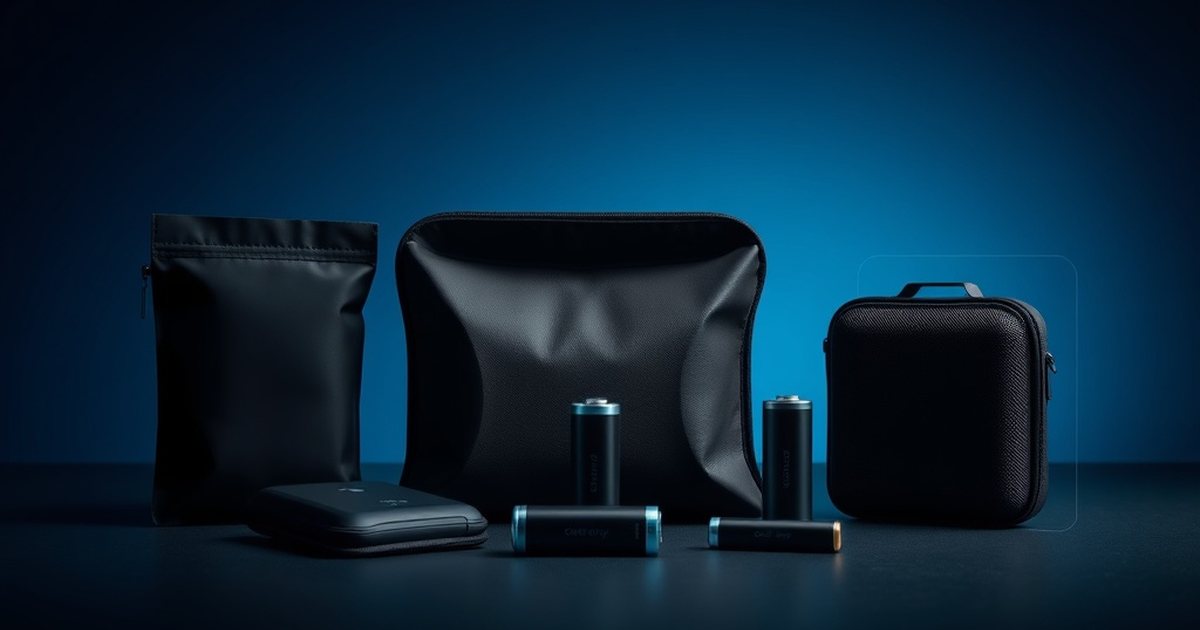
Battery power only removes the mains connection. If the device has a radio in it, such as a phone, a tablet, a baby monitor or a smart speaker, it still transmits on its own battery. The swap works for simple devices, and it has nothing to say about wireless ones.
It also does not touch the wiring in the walls. The outlets and cables behind the bed keep their electric field whether or not anything is plugged in, a separate problem with a separate fix.
Braun Classic Analog Alarm Clock
A battery analog alarm clock for the nightstand, with nothing plugged in and no radio. It replaces the most common corded device in a bedroom.
Checking the result
An electric field meter, or the electric setting on a three-in-one meter, shows the difference directly. Hold it near the plugged-in clock or lamp and note the reading, then repeat at the same spot after the battery version replaces it and the old cord is unplugged. Distance from the cord should be about the same in both readings.
ICNIRP’s low-frequency guidelines found no compelling evidence that chronic conditions are causally related to low-frequency EMF exposure, so this swap is a low-cost precaution rather than a response to proven harm [3].
The International Agency for Research on Cancer (IARC) has classified radiofrequency electromagnetic fields as “possibly carcinogenic to humans,” a rating based on limited human evidence for glioma and acoustic neuroma. The US National Cancer Institute says the evidence to date suggests cell phone use does not cause brain or other kinds of cancer. Simple, low-cost precautions are a reasonable personal choice, but they rest on uncertainty, not on proven harm [6][7].
Ready for More EMF Protection Tips?
Our complete guide includes 100 actionable strategies for every room in your home, plus product recommendations from our curated collection.
Frequently Asked Questions
Will switching to battery-powered devices in my bedroom really make a difference in my EMF exposure?
Yes, it reduces the mains electric field from those devices. Since any device plugged into AC power generates electric fields, even devices like clock radios create EMF zones around them. By switching to battery-powered alternatives in your bedroom, you eliminate these constant electric field sources while you sleep [3].
What types of devices should I replace with battery-powered versions in my bedroom?
Start with devices you use near your bed or leave plugged in overnight, such as alarm clocks, phone chargers, white noise machines, and nightlights. Common replacements include battery-operated alarm clocks like the Braun Analog Alarm Clock and rechargeable devices you charge outside the bedroom during the day.
Are there any downsides to using only battery-powered devices in the bedroom?
The main consideration is battery maintenance and replacement costs. However, this is a minor trade-off compared to the potential benefits for your sleep quality and overall health, though research in Sleep Medicine Reviews reports little or no radiofrequency effect on sleep architecture and inconsistent evidence on melatonin [4].
How do I know if AC-powered devices in my bedroom are actually affecting my health?
You can measure EMF levels in your bedroom using an EMF meter to establish a baseline before and after removing plugged-in devices. Some people report better sleep after removing plugged-in devices, but self-reports cannot separate a lower field from changed habits and expectation; in blinded provocation studies, expectation of harm was a trigger of symptoms [5].
References
- Preece AW et al. Magnetic fields from domestic appliances in the UK. Physics in medicine and biology (1997). PMID 9015809
- Kenji Tanaka et al. Quantification of Low Frequency Magnetic Fields Generated by Household Appliances. IEEJ Transactions on Fundamentals and Materials (2009). doi:10.1541/ieejfms.129.627
- International Commission on Non-Ionizing Radiation Protection ICNIRP Guidelines for Limiting Exposure to Time-Varying Electric and Magnetic Fields (1 Hz to 100 kHz). International Commission on Non-Ionizing Radiation Protection (2010). source
- Ohayon MM et al. The potential for impact of man-made super low and extremely low frequency electromagnetic fields on sleep. Sleep medicine reviews (2019). PMID 31252334
- Rubin GJ et al. Idiopathic environmental intolerance attributed to electromagnetic fields (formerly 'electromagnetic hypersensitivity'): An updated systematic review of provocation studies. Bioelectromagnetics (2010). PMID 19681059
- International Agency for Research on Cancer IARC classifies radiofrequency electromagnetic fields as possibly carcinogenic to humans (Press release 208). International Agency for Research on Cancer (2011). source
- US National Cancer Institute Cell Phones and Cancer Risk. US National Cancer Institute (current). source
These statements have not been evaluated by the Food and Drug Administration. This information is not intended to diagnose, treat, cure, or prevent any disease. Content is for informational purposes only and is not medical advice; consult a qualified healthcare provider before starting any supplement. As an Amazon Associate we earn from qualifying purchases.