A smart meter is a small radio mounted on the outside of the house. It does not broadcast steadily: it sends brief bursts of data to the utility and stays quiet in between. A shield is a conductive mesh cover that sits over the meter, and the useful question is how much it changes when the starting level is already low.
Get our complete guide with room-by-room strategies and product recommendations.
What a smart meter actually emits
Smart meters (digital utility meters) send short bursts of RF, and measured duty cycles are typically under 1%, meaning they transmit only a small fraction of the time. Even 0.3 m from a smart meter installation, the worst-case time-averaged exposure was 5.39% of the FCC/IEEE reference level [1][2].
Peak fields 0.3 m in front of deployed smart meters were no more than 15% of the US FCC general-public exposure limit in one utility study, and 99.9% of the meters had a duty cycle of 1.12% or less [3].
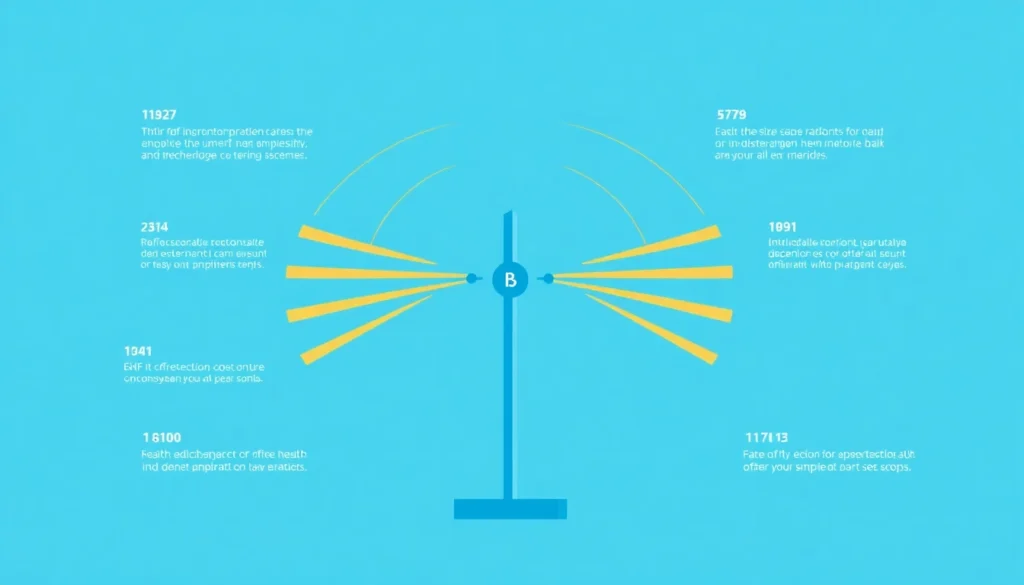
A smart meter shield reflects some RF, but only where it covers
A conductive layer bounces RF
Metal-coated fabric, foil, mesh and conductive paint reflect most incoming radio-frequency energy.
Some energy is lost inside
Thicker or multi-layer materials also absorb part of the signal as it passes through.
Gaps let signals through
Seams, open weaves, zips and unsealed edges leak, and short wavelengths slip through smaller gaps.
Low-frequency magnetic fields pass
Thin fabric or paint does little against 50/60 Hz magnetic fields; distance or special high-permeability metal is needed.
Coverage and gaps decide how much it blocks.
How well a material shields depends on the frequency and on how completely it covers the space.
Chart: frequencyblockers.com: A smart meter shield reflects some RF, but only where it covers
Embed this chart
Free to reuse on your site. Copy the code below; please keep the credit link.
Research note: Around smart utility meters in a lab, the maximum 6-minute averaged exposure was 0.1 mW/m2, less than 0.0024% of the 1998 ICNIRP public reference level [7].
What a cover can and cannot do
Conductive mesh reflects or redirects RF, but only where it actually covers. Seams, gaps around the mounting, and any open face let signal out, so the result depends on the fit more than on the label. A cover with a flip lid keeps the meter readable by the utility, which is also what keeps the cover on the meter.
Some utilities object to covers that block their reads, so check your utility’s rules before you install one. A shield also only helps on the side it covers. It does nothing for a bedroom wall that sits on the far side of the meter if the mesh is open there.
Smart Meter Guard EMF Shield
A mesh cover for the smart meter. Check with your utility before fitting anything, and measure inside the house before and after.
View Product
Measure before and after
An RF meter is the right tool, because a smart meter is an RF source. Hold the sensor at the spot you care about, such as the inside of the wall behind the meter, and measure once with the cover off and once with it on, in the same position.
Use the meter’s peak or max-hold setting. The meter transmits in short bursts, and an average can hide them. If the reading barely moves, the cover is not doing much at that spot, and you have learned that without guessing.

Where to put effort first
Measured numbers beat assumptions here. “Emissions From Smart Meters and Other Residential Radiofrequency Sources”, published in Health Physics (2019), measured 55 residential devices across 10 homes and found that overall residential radiofrequency exposure is low, and that an individual smart meter contributes relatively little, it can emit up to 20 V/m at 50 cm, but it transmits at most about 1% of the time. The devices that dominated exposure were the ones held against the body: phones and other personal communication devices, plus frequently-used wireless access points. If you want to reduce your actual exposure, that is where the measured evidence points first.
Once the wireless devices you hold and carry are sorted, a meter cover is a reasonable extra for a wall that backs onto a room you use a lot. Another route is to ask your utility whether an analog meter option exists in your area, which removes the radio instead of covering it.
The International Agency for Research on Cancer (IARC) has classified radiofrequency electromagnetic fields as “possibly carcinogenic to humans,” a rating based on limited evidence: IARC rated the human evidence as limited for glioma and acoustic neuroma and inadequate for other cancers, while the US National Cancer Institute says the evidence to date suggests cell phone use does not cause brain or other kinds of cancer. Some people choose low-cost precautions anyway [5][6].
Ready for More EMF Protection Tips?
Our complete guide includes 100 actionable strategies for every room in your home, plus product recommendations from our curated collection.
Get the Complete GuideFrequently Asked Questions
How often do smart meters actually transmit RF signals?
Smart meters transmit in brief bursts: duty cycles were typically under 1%, and 99.9% of meters in one large utility dataset had a duty cycle of 1.12% or less. Exposure varies by utility and meter model, but inside six homes with smart meters no interior peak field measurement exceeded 1% of the FCC general-public limit [1][3].
Will installing a smart meter shield actually reduce my EMF exposure?
A shield can reduce the RF reaching a room, but the meter is rarely a large source to begin with: in a study of 55 residential devices in 10 homes, smart meters emitted up to 20 V/m at 50 cm but transmitted at most about 1% of the time, so individually they added little to home exposure [4]. This approach aligns with the SHIELD principle of EMF protection, which addresses the root cause of exposure rather than just treating symptoms after the fact.
Can I install a smart meter shield myself, or do I need to hire a professional?
Many smart meter shields are designed for DIY installation and can be mounted directly over your meter with basic tools. However, you should always check with your utility company first, as some regions have specific regulations about meter access and modifications that may require professional installation.
What’s the difference between natural and artificial EMF exposure from my smart meter?
Natural EMFs from the earth and sun have existed for millennia and your body has evolved to handle them, while smart meters are a more recent addition. Their transmissions are brief and the measured exposure is low, and you can reduce it further with distance or shielding if you choose [3][2].
References
- Tell RA et al. Radiofrequency fields associated with the Itron smart meter. Radiation protection dosimetry (2012). PMID 22234423
- Aerts S et al. Spatial and temporal assessment of radiofrequency electromagnetic fields emitted by smart meters and smart meter banks in urban environments. Environmental research (2020). PMID 32032814
- Tell RA et al. Characterization of radiofrequency field emissions from smart meters. Journal of exposure science & environmental epidemiology (2013). PMID 23131714
- Aerts S et al. Emissions From Smart Meters and Other Residential Radiofrequency Sources. Health physics (2019). PMID 30883437
- International Agency for Research on Cancer IARC classifies radiofrequency electromagnetic fields as possibly carcinogenic to humans (Press release 208). International Agency for Research on Cancer (2011). source
- US National Cancer Institute Cell Phones and Cancer Risk. US National Cancer Institute (current). source
- Addison D et al. Evaluation of Exposure to Radiofrequency Electromagnetic Fields from Smart Utility Meters operating at 868 MHz. Bioelectromagnetics (2023). PMID 37002551
These statements have not been evaluated by the Food and Drug Administration. This information is not intended to diagnose, treat, cure, or prevent any disease. Content is for informational purposes only and is not medical advice; consult a qualified healthcare provider before starting any supplement. As an Amazon Associate we earn from qualifying purchases.