RF radiation passes through glass easily. If your windows face a cell tower, smart meter, or neighbor’s WiFi router, some of that RF reaches your living space, usually at levels well below exposure limits [1][2].
Get our complete guide with room-by-room strategies and product recommendations.
Why glass is the weak point and what a film does
Walls with metal studs, foil insulation or stucco mesh already block part of a radio signal. A plain window has none of that, so it is often the easiest route for a signal to take into a room. A shielding film puts a thin conductive layer on the glass to reflect and absorb some of it.
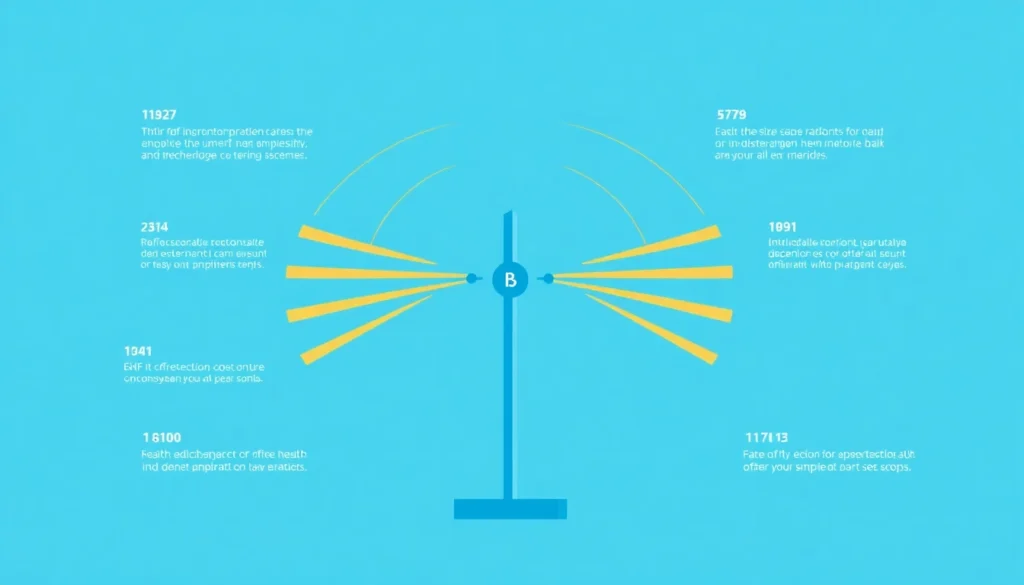
Window shielding only works if the film covers the glass and the frame
A conductive layer bounces RF
Metal-coated fabric, foil, mesh and conductive paint reflect most incoming radio-frequency energy.
Some energy is lost inside
Thicker or multi-layer materials also absorb part of the signal as it passes through.
Gaps let signals through
Seams, open weaves, zips and unsealed edges leak, and short wavelengths slip through smaller gaps.
Low-frequency magnetic fields pass
Thin fabric or paint does little against 50/60 Hz magnetic fields; distance or special high-permeability metal is needed.
Gaps around the film let RF back in.
How well a material shields depends on the frequency and on how completely it covers the space.
Chart: frequencyblockers.com: Window shielding only works if the film covers the glass and the frame
Embed this chart
Free to reuse on your site. Copy the code below; please keep the credit link.
The metallic particles in shielding film reflect and absorb RF radiation. Shielding films vary, and see-through films trade shielding against light: one silver-nanowire film reached 37.74 dB at X band while letting through 72.0% of visible light. Gaps around the frame still leak [3][4][5].
The trade-off is real. The same layer that stops radio waves can also dim the view and reduce the cell reception you want indoors. Choose the film for the window that faces the source, not for every pane in the house.
Research note: In personal meter recordings of randomly selected residents, the maximum electric field strength was always lower than 1.5 V/m [13].
Applying film where it counts
- Pick the windows that face the tower, the smart meter or the neighbor’s router, and start with the room where people spend the most time.
- Clean the glass thoroughly and apply the film to the full pane, pressed flat with no bubbles or lifted edges.
- Pay attention to the frame. Film that stops at the glass leaves the edges open, and gaps around the frame still leak.
- Where a frame cannot be sealed, a conductive curtain or mesh across the opening can cover what the film leaves open.
- Close the window. An open window lets the signal straight past any film.
EMF Shielding Window Film
A transparent RF shielding film for the glass facing the tower. Measure indoors first, and expect walls and other windows to let signal in too.
View Product
Treat the film as a partial measure for one direction. Signals can still enter through walls, the roof and other windows, so a single treated window will not turn a room into a shielded one.
Measure first, then measure again
An RF meter is the right instrument, since this tip addresses radio waves. Hold it at each window, at the height where you sit or sleep, and note the reading. Do it before you buy anything, then decide which windows deserve treatment.
After applying film, repeat the reading at the same spot and angle. Also check a spot a few feet inside the room, because the signal can come around the frame. If the number barely moves, the film is not the lever for that room.
Check what the meter actually reads before spending on film. Spot measurements in homes near base stations gave a mean of 0.58 V/m total RF-EMF, and around base stations in different countries the maximum electric field was at most 7.7% of the ICNIRP 2020 limit. A WHO-commissioned review found moderate certainty evidence of no increase in childhood leukaemia from base stations and broadcast antennas [11][2][12].
How much weight to give this
The International Agency for Research on Cancer (IARC) classified radiofrequency fields as possibly carcinogenic to humans (Group 2B), a rating based on limited evidence about brain cancer risk. The US National Cancer Institute says the evidence to date suggests cell phone use does not cause brain or other kinds of cancer [6][7].
So window film is a precaution, and the readings in most homes are low to begin with. If a meter shows a room well below what you expected, the money and effort are better spent elsewhere.
Ready for More EMF Protection Tips?
Our complete guide includes 100 actionable strategies for every room in your home, plus product recommendations from our curated collection.
Get the Complete GuideFrequently Asked Questions
Why does RF radiation pass through my windows so easily?
Ordinary clear glass lets much of the signal through, though glass with a metallic low-emissivity coating attenuates mobile-phone-band radio waves by roughly 30 to 40 dB, which is why signal drops inside some trains and buildings [8][9]. This is why windows facing these sources require additional shielding to reduce your EMF exposure in your home.
What are practical ways to shield windows facing cell towers?
You can use RF-blocking window films, install shielding curtains made with conductive materials, or apply metallic coatings designed to reflect electromagnetic radiation. These solutions are part of the SHIELD principle of EMF protection and can significantly reduce the RF streams entering your living space.
How do I know if my windows are exposed to harmful EMF sources?
Identify nearby cell towers, smart meters on your property or neighbors’ homes, and WiFi routers that may be pointed toward your windows. If your windows face any of these sources, an RF meter can show how much signal actually reaches the window. In Belgian measurements, 94% of broadband readings in schools, homes and public places were below 1 V/m, and around base stations in different countries the maximum field was at most 7.7% of the ICNIRP 2020 limit [10][2].
Is shielding windows more effective than other EMF protection methods?
Window shielding reduces the RF coming through that window, but leakage around edges, frames and gaps lowers shielding, and untreated walls and other openings still let signal in [5]. Combined with other approaches like distance and reducing device usage, shielding creates a comprehensive protection strategy for your home.
References
- ICNIRP (International Commission for Non-Ionizing Radiation Protection) Standing Committee on Epidemiology: et al. Epidemiology of Health Effects of Radiofrequency Exposure. Environmental Health Perspectives (2004). PMID 15579422
- Deprez K et al. IN-SITU 5G NR BASE STATION EXPOSURE OF THE GENERAL PUBLIC: COMPARISON OF ASSESSMENT METHODS. Radiation protection dosimetry (2022). PMID 35511688
- Wang G et al. Flexible and transparent silver nanowires/biopolymer film for high-efficient electromagnetic interference shielding. Journal of colloid and interface science (2022). PMID 34492357
- Zhang N et al. Flexible and transparent graphene/silver-nanowires composite film for high electromagnetic interference shielding effectiveness. Science bulletin (2019). PMID 36659744
- Andrew C. Marvin et al. A Method for the Measurement of Shielding Effectiveness of Planar Samples Requiring No Sample Edge Preparation or Contact. IEEE Transactions on Electromagnetic Compatibility (2009). doi:10.1109/temc.2009.2015147
- Mireille B. Toledano et al. Cohort profile: UK COSMOS, a UK cohort for study of environment and health. International Journal of Epidemiology (2015). PMID 26534947
- US National Cancer Institute Cell Phones and Cancer Risk. US National Cancer Institute (current). source
- Rocío Chueca et al. Radiofrequency transmission through rectangular apertures in perimetrally uncoated low emissivity windows. Journal of Physics D Applied Physics (2023). doi:10.1088/1361-6463/ad0d2e
- Kukuh Aris Santoso et al. Evaluating The Attenuation Effects of Wood and Glass Building Materials on 4g Cellular and Wifi Signal Transmission Power Using the Opensignal Application. ISEJ Indonesian Science Education Journal (2026). doi:10.62159/isej.v7i3.2552
- Leen Verloock et al. Assessment of Radio Frequency Exposures in Schools, Homes, and Public Places in Belgium. Health Physics (2014). PMID 25353235
- De Giudici P et al. Radiofrequency exposure of people living near mobile-phone base stations in France. Environmental research (2021). PMID 33221309
- Karipidis K et al. The effect of exposure to radiofrequency fields on cancer risk in the general and working population: A systematic review of human observational studies – Part I: Most researched outcomes. Environment international (2024). PMID 39241333
- Jean‐François Viel et al. Residential exposure to radiofrequency fields from mobile phone base stations, and broadcast transmitters: a population-based survey with personal meter. Occupational and Environmental Medicine (2009). PMID 19336431
These statements have not been evaluated by the Food and Drug Administration. This information is not intended to diagnose, treat, cure, or prevent any disease. Content is for informational purposes only and is not medical advice; consult a qualified healthcare provider before starting any supplement. As an Amazon Associate we earn from qualifying purchases.