A home is shared RF space. You can move the router away from the bedroom and set your own phone to airplane mode at night, but if the rest of the household keeps phones charging on the pillow, the room has only changed in part.
Get our complete guide with room-by-room strategies and product recommendations.
Start with a conversation, not a checklist
One caution when you talk to family: in blinded tests, people who attribute symptoms to EMF reported lower well-being whenever they believed a base station was on, whether or not it actually was, and control participants without sensitivity did the same. Reviews of provocation studies found support for a nocebo effect, where expecting harm triggers symptoms. Present these steps as low-cost precautions rather than as a warning [9][10].
Lead by example rather than lecturing. When others see you taking simple steps, like keeping phones out of the bedroom, they get curious [4].
EMF reduction works best as a household effort. Reducing exposure time is one of the three classic principles of radiation protection (time, distance and shielding), which comes from work with ionizing radiation. Radio signals from phones and WiFi are non-ionizing, and their energy is too low to damage DNA, so here it is a precaution, not a response to a proven hazard [3].
Three ideas anyone can follow
Skip the jargon and give people three ideas they can picture. Distance: fields weaken quickly as you move away from a source, so a phone across the room is a very different thing from a phone against the head. Time: less time near a transmitting device means less exposure. Shielding: a barrier between you and a source can reduce what reaches you, though it only works where the barrier actually sits.
- Charge phones across the room or in another room, not under the pillow.
- Use speakerphone, a wired headset or earbuds on a call rather than holding the phone to the head.
- Pick one shared spot for the router, away from beds and favorite chairs.
- Switch tablets and consoles to airplane mode when the game or the movie is stored on the device.
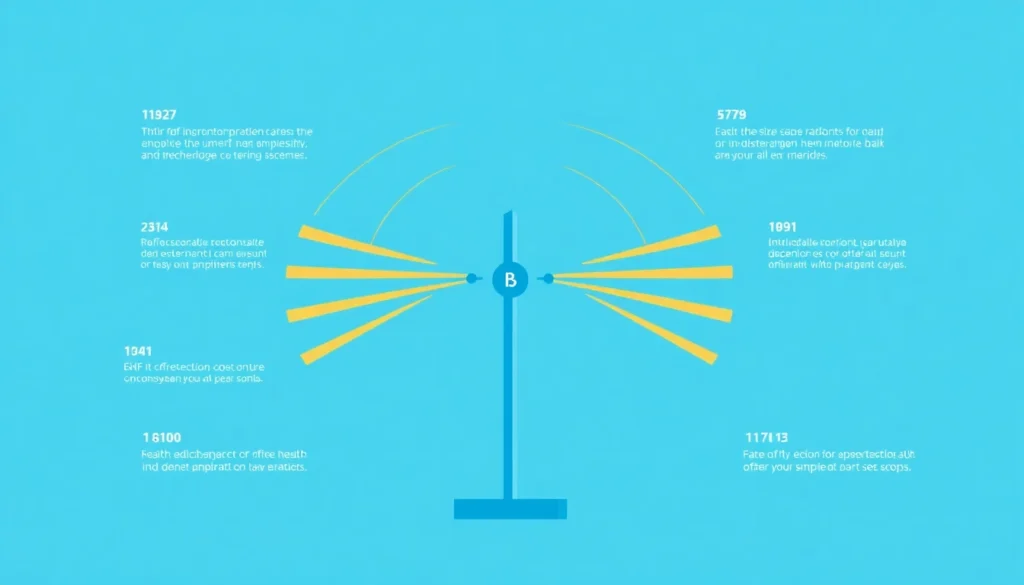
Agree on the same order of fixes so the household works together
Remove or switch it off
The most reliable fix: wire it, schedule it off, or choose a model without the radio.
Move it away
Fields from a device fall off quickly with distance, so the nightstand beats the pillow.
Block the path
Only for what you cannot remove or move; it must cover the path fully to work.
Measure before and after
Use a meter that reads the field type the change targets, so you know it worked.
Source first, then distance, then shielding.
The usual order of fixes: source first, shielding last.
Chart: frequencyblockers.com: Agree on the same order of fixes so the household works together
Embed this chart
Free to reuse on your site. Copy the code below; please keep the credit link.
If children are the reason you are bringing it up
It is tempting to say that children absorb far more radiation than adults. The studies are more mixed than that, and presenting them accurately makes you easier to trust.
Children are often said to absorb more microwave radiation than adults, but simulation studies disagree: one found peak local SAR over 1 g and 10 g of tissue and penetration depth about the same in adult and child head models, while another found peak SAR in 1 g of peripheral brain tissue about two times higher in children aged 5 to 8, but not in children above 8 [1][2].
Research note: Modeling suggests peak brain SAR (10 g average) is higher than an adult’s by factors of 1.31 (age 4), 1.23 (8), 1.15 (12) and 1.07 (16) [11].
Let a meter do the talking
A handheld meter turns an abstract argument into something people can watch. Hand it to a skeptical family member and let them read the router, the phone charger and the bedside table, then step back and read again. A three-mode meter such as the one below covers RF from wireless devices as well as the magnetic and electric fields near chargers and wiring.
TriField TF2 EMF Meter
A meter turns the conversation into something the family can see. Let each person read their own bedroom and desk, then decide on changes together.
View ProductSome people will still not care, and that is fine. Agree on the few changes that cost nothing, such as where phones charge, and leave the rest alone.
The International Agency for Research on Cancer (IARC), the cancer research arm of the WHO, has classified radiofrequency electromagnetic fields as “possibly carcinogenic to humans,” a rating based on limited evidence about brain cancer risk. A 2024 WHO-commissioned review of human studies found that ever or regular mobile phone use was not associated with glioma risk, and the US National Cancer Institute says the evidence to date suggests cell phone use does not cause brain or other kinds of cancer. The steps in this guide are a low-cost precaution, not a response to a proven harm [7][8][5][3].
Ready for More EMF Protection Tips?
Our complete guide includes 100 actionable strategies for every room in your home, plus product recommendations from our curated collection.
Get the Complete GuideFrequently Asked Questions
How can I get my family members to take EMF protection seriously when they’re skeptical?
Start by sharing what the research does and does not show, such as the WHO-commissioned reviews and exposure measurement studies [5]. Focus on practical, non-invasive changes you can implement together, such as establishing device-free times during meals or before bed, which benefits everyone’s health and sleep quality.

Why do children absorb more EMF radiation than adults?
Whether children absorb more radiofrequency energy than adults is disputed. Some head-model simulations find peak absorption about the same, while one found it about two times higher in the 1 g of peripheral brain tissue of children aged 5 to 8 but not above 8. Another review found that effects of GSM-type exposure in children did not differ from those in healthy adults. Family-wide changes are a choice about precaution, not a response to proven harm to children [1][2][6].
What is the TIME principle mentioned in EMF protection strategies?
The TIME principle is a foundational EMF protection approach that focuses on reducing exposure over time rather than just treating symptoms after the fact. By addressing the root cause of EMF exposure through habits and device usage patterns, you can effectively lower your family’s overall electromagnetic field exposure throughout the day.
Can my family members’ device usage and habits affect my own EMF exposure?
Yes, your spouse’s, kids’, and roommates’ devices and habits create secondhand EMF exposure that undermines your personal protection efforts. Since electromagnetic fields from nearby devices penetrate walls and shared spaces, implementing family-wide changes is far more effective than individual protection alone.
References
- Bit-Babik G et al. Simulation of exposure and SAR estimation for adult and child heads exposed to radiofrequency energy from portable communication devices. Radiation research (2005). PMID 15850420
- Joe Wiart et al. Analysis of RF exposure in the head tissues of children and adults. Physics in Medicine and Biology (2008). PMID 18562780
- US National Cancer Institute Cell Phones and Cancer Risk. US National Cancer Institute (current). source
- Evelyn Mohler et al. Exposure to Radiofrequency Electromagnetic Fields and Sleep Quality: A Prospective Cohort Study. PLoS ONE (2012). PMID 22624036
- Karipidis K et al. The effect of exposure to radiofrequency fields on cancer risk in the general and working population: A systematic review of human observational studies – Part I: Most researched outcomes. Environment international (2024). PMID 39241333
- van Rongen E et al. Effects of radiofrequency electromagnetic fields on the human nervous system. Journal of toxicology and environmental health. Part B, Critical reviews (2009). PMID 20183535
- Mireille B. Toledano et al. Cohort profile: UK COSMOS, a UK cohort for study of environment and health. International Journal of Epidemiology (2015). PMID 26534947
- International Agency for Research on Cancer IARC classifies radiofrequency electromagnetic fields as possibly carcinogenic to humans (Press release 208). International Agency for Research on Cancer (2011). source
- Eltiti S et al. Symptom Presentation in Idiopathic Environmental Intolerance With Attribution to Electromagnetic Fields: Evidence for a Nocebo Effect Based on Data Re-Analyzed From Two Previous Provocation Studies. Frontiers in psychology (2018). PMID 30210397
- Rubin GJ et al. Idiopathic environmental intolerance attributed to electromagnetic fields (formerly 'electromagnetic hypersensitivity'): An updated systematic review of provocation studies. Bioelectromagnetics (2010). PMID 19681059
- Anderson V Comparisons of peak SAR levels in concentric sphere head models of children and adults for irradiation by a dipole at 900 MHz. Physics in medicine and biology (2003). PMID 14620057
These statements have not been evaluated by the Food and Drug Administration. This information is not intended to diagnose, treat, cure, or prevent any disease. Content is for informational purposes only and is not medical advice; consult a qualified healthcare provider before starting any supplement. As an Amazon Associate we earn from qualifying purchases.