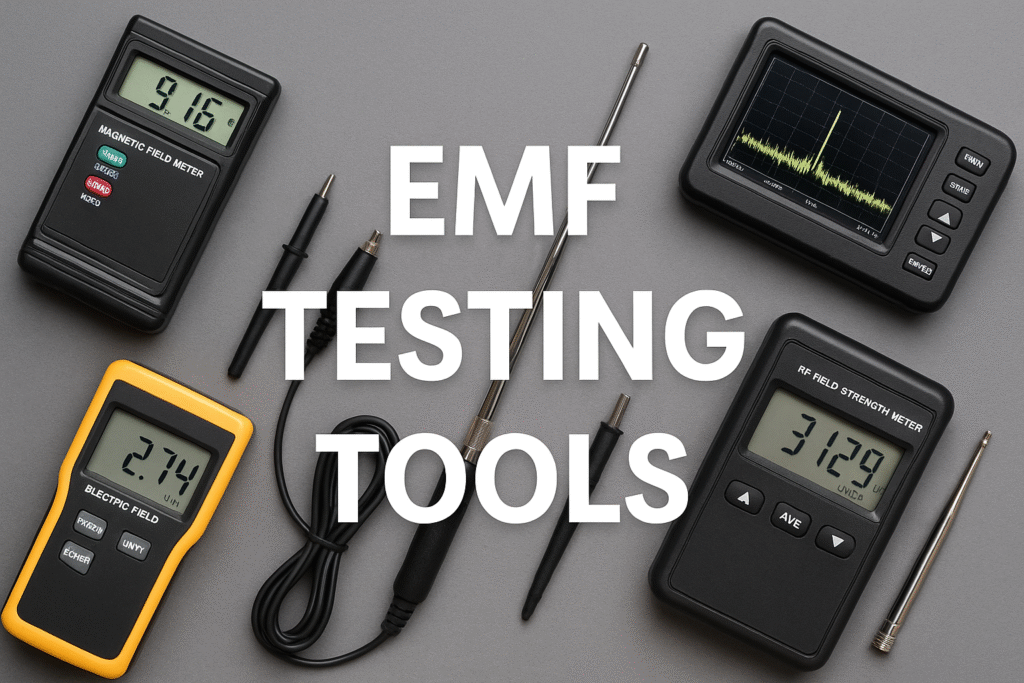
If you want to know what electromagnetic fields are doing in your home, office, or neighborhood, you need an EMF meter. These handheld detectors measure invisible electromagnetic radiation from sources like power lines, Wi-Fi routers, cell towers, smart meters, and household appliances.
The problem is that the market is flooded with options ranging from $20 novelty gadgets to $500 professional instruments. Some measure only one type of field. Others try to measure everything but do none of it well. Picking the wrong meter means either wasting money on something that cannot detect what you care about, or overspending on features you will never use.
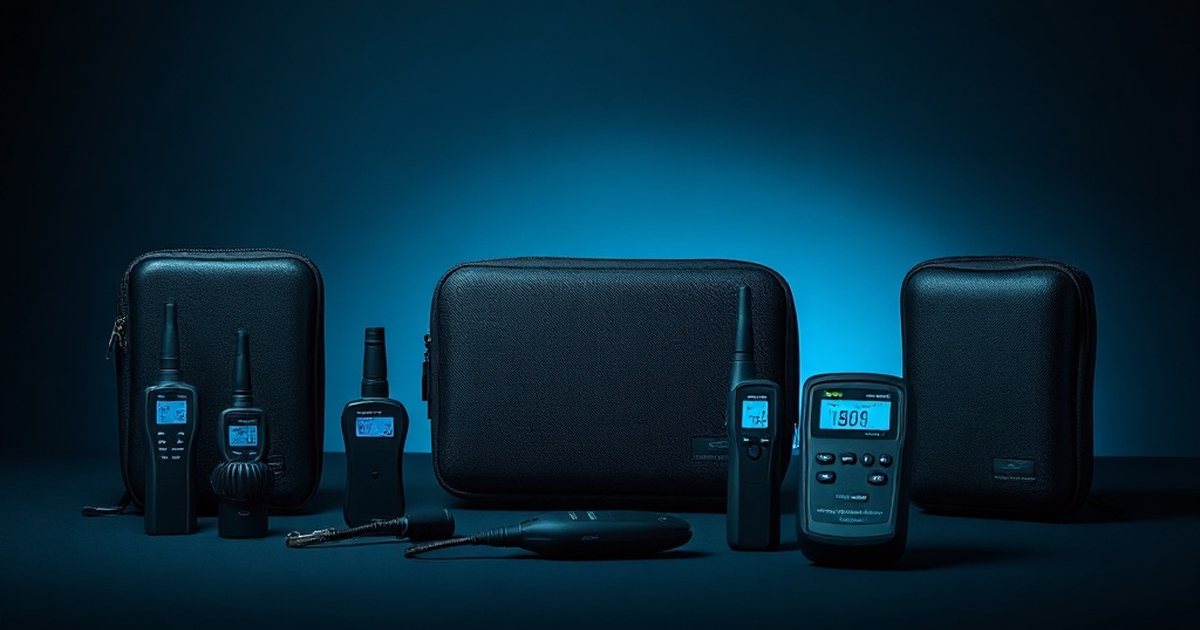
This guide breaks down seven EMF meters across every budget and use case. We cover what each one actually measures, where it falls short, and who should buy it. Whether you are a concerned homeowner checking appliances or someone conducting a thorough RF survey of your living space, there is a meter here that fits.
How We Evaluated These EMF Meters
Transparency matters, so here is exactly how we arrived at these picks. We did not independently lab-test these meters in a controlled environment. Our evaluations are based on three sources:
- Published manufacturer specifications including frequency ranges, measurement ranges, accuracy ratings, and sensor types
- Aggregated verified buyer reviews from retailers and EMF community forums, focusing on real-world performance reports rather than marketing claims
- Independent published test data where available, including third-party calibration results and comparison reviews from established EMF education resources
We prioritized meters with a track record of consistent performance reports from multiple independent sources. We also weighted practical factors like battery life, ease of use, and build quality alongside raw measurement specs. No manufacturer paid for inclusion in this guide.
Quick Comparison: Best EMF Meters at a Glance
| Meter | Measures | Price Range | Best For |
|---|---|---|---|
| TriField TF2 | Magnetic, Electric, RF | $160 – $200 | Best overall for most people |
| GQ EMF-390 | Magnetic, Electric, RF | $110 – $130 | Data logging and analysis |
| Cornet ED88TPlus 5G2 | Magnetic, Electric, RF | $180 – $210 | RF frequency identification |
| LATNEX AF-5000 | Magnetic, Electric, RF | $150 – $190 | Widest RF frequency coverage |
| Safe and Sound Pro II | RF only | $380 – $420 | Dedicated professional RF measurement |
| ERICKHILL RT-100 | Magnetic, Electric | $35 – $45 | Budget-friendly home checks |
| Meterk MK08 | Magnetic, Electric | $22 – $30 | Ultra-budget entry point |
1. TriField TF2: Best Overall EMF Meter
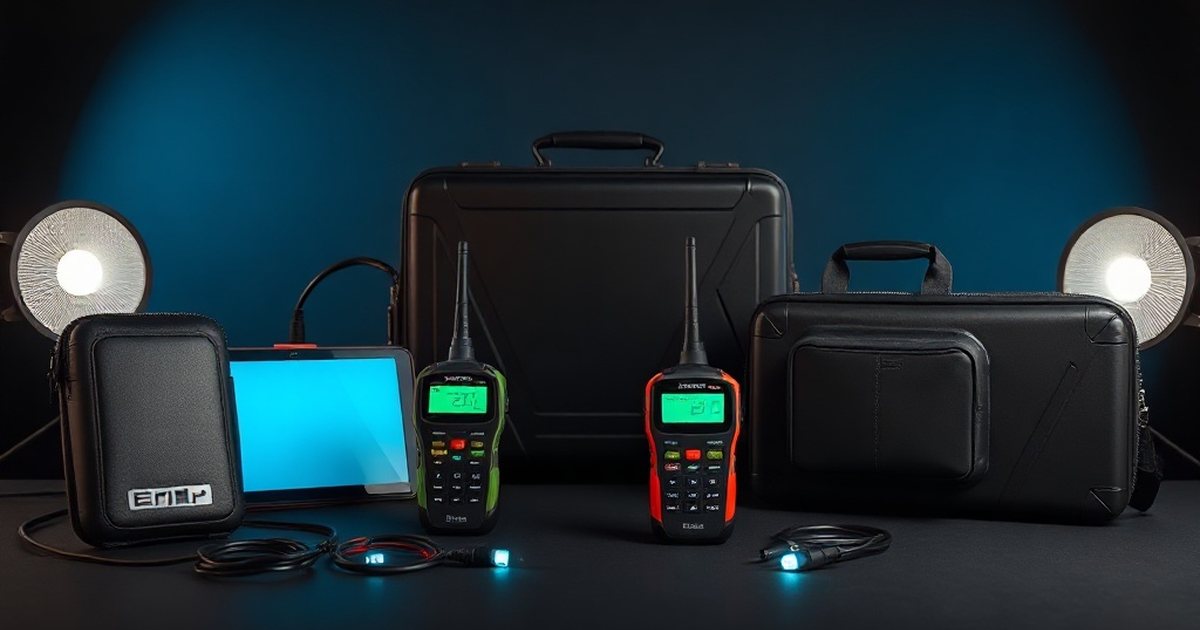
The TriField TF2 is the meter most often recommended as a first purchase, and for good reason. Made in the USA by AlphaLab, it measures all three field types in a single device with an interface simple enough for someone who has never held an EMF meter before.
What the TriField TF2 Measures
The TF2 covers magnetic fields from 0.1 to 100 milligauss, electric fields up to 1000 V/m, and RF radiation from 20 MHz to 6 GHz. That RF range covers most common wireless sources including Wi-Fi (2.4 GHz and 5 GHz bands), Bluetooth, cell phone signals, and sub-6 GHz 5G deployments.
A standout feature is the weighted magnetic field mode. Rather than giving you a raw milligauss reading, this mode adjusts the measurement based on the frequencies most associated with biological interaction. It is a useful addition for anyone specifically concerned about ELF magnetic field exposure from wiring and appliances.
Pros and Cons
- Pro: Measures all three field types (magnetic, electric, RF) in one device
- Pro: Dual analog and digital display gives both precise readings and intuitive visual movement
- Pro: True RMS measurement provides accurate readings for complex waveforms
- Pro: Simple three-mode dial makes it genuinely easy to use right out of the box
- Con: No data logging capability, so you cannot record readings over time
- Con: RF upper limit of 6 GHz means some newer C-band 5G frequencies go unmeasured
- Con: RF sensitivity is lower than dedicated RF meters, and may not detect weaker signals at distance
Who Should Buy the TriField TF2
The TF2 is the right choice if you want a single reliable meter that can check everything in your home without a steep learning curve. It is not the most advanced option in any single measurement category, but it does all three competently. If you are buying your first EMF meter and do not want to spend time learning complex menus, this is the one to get.
2. GQ EMF-390: Best for Data Logging
The GQ EMF-390 from GQ Electronics packs more features per dollar than almost any other meter on this list. Where the TriField TF2 prioritizes simplicity, the EMF-390 prioritizes depth of data.
What the GQ EMF-390 Measures
The EMF-390 covers magnetic fields from 0.1 to 800 milligauss (a significantly wider range than the TF2), electric fields, and RF from 10 MHz to 8 GHz. That extended RF ceiling means better coverage for C-band 5G signals around 3.5 GHz and many newer wireless protocols.
The defining feature is built-in data logging. The meter stores real-time readings every second with timestamps to 1 MB of internal flash memory. You can connect it to a PC via USB and download the data with the free GQ EMF-Pro software for detailed analysis. The RF browser mode displays a visual graph of RF signals over the past 45 seconds, helping you see whether signals are pulsed or continuous.

Pros and Cons
- Pro: Built-in data logging stores up to 10,000 records for later analysis on PC
- Pro: Wider magnetic field range (up to 800 mG) than most competitors
- Pro: RF histogram and browser modes give visual context to readings
- Pro: Additional sensors for temperature, humidity, and GPS
- Pro: Lower price point than other tri-mode meters (around $120)
- Con: More complex interface requires a learning curve for beginners
- Con: LCD display is less intuitive than the TF2’s analog-style readout
- Con: Firmware updates via USB can occasionally be finicky
Who Should Buy the GQ EMF-390
The EMF-390 is ideal for anyone who wants to do more than spot-check. If you plan to monitor exposure over time, track changes before and after mitigation efforts, or document readings for a building biology assessment, the data logging alone justifies the purchase. Many experienced users own both a TF2 for quick checks and an EMF-390 for deeper analysis.
3. Cornet ED88TPlus 5G2: Best for RF Frequency Identification
The Cornet ED88TPlus has earned a loyal following among building biologists and EMF consultants. Now in its 5G2 revision, the ED88TPlus is designed for users who want to understand not just the strength of RF signals but which frequencies they are coming from.
What the Cornet ED88TPlus Measures
In tri-mode operation, the ED88TPlus measures RF from 100 MHz to 8 GHz (with reduced sensitivity up to 11 GHz), magnetic fields from 0.1 to 600 milligauss across two sensitivity ranges, and electric fields from 10 to 100 V/m. The built-in frequency counter displays the frequency of detected RF signals up to 4.2 GHz, which lets you identify whether a reading is coming from a Wi-Fi router, a cell tower, or a cordless phone.
The sampling rate of 25,000 times per second is extremely fast for a consumer meter, designed to capture even brief RF bursts that slower meters might miss entirely. It also includes data logging, sound signature analysis, and statistical views including peak, average, histogram, and duty cycle displays.
Pros and Cons
- Pro: Built-in frequency counter helps identify specific RF sources
- Pro: Ultra-fast 25,000 samples/second captures short RF bursts
- Pro: Two magnetic field sensitivity ranges for both high and low level readings
- Pro: Data logging and sound signature analysis included
- Pro: Strong reputation among building biologists and EMF consultants
- Con: Small screen can be difficult to read in bright light
- Con: Interface navigation takes practice to master all modes
- Con: Electric field range (10-100 V/m) is narrower than some competitors
Who Should Buy the Cornet ED88TPlus
If knowing the strength of an RF signal is not enough and you also want to know what frequency it is operating on, the ED88TPlus is the right tool. It bridges the gap between consumer and professional RF analysis. Users who are trying to pinpoint specific sources of RF radiation in their environment, or who want to verify the effectiveness of shielding materials at specific frequencies, will get the most value from this meter.

4. LATNEX AF-5000: Widest RF Frequency Coverage
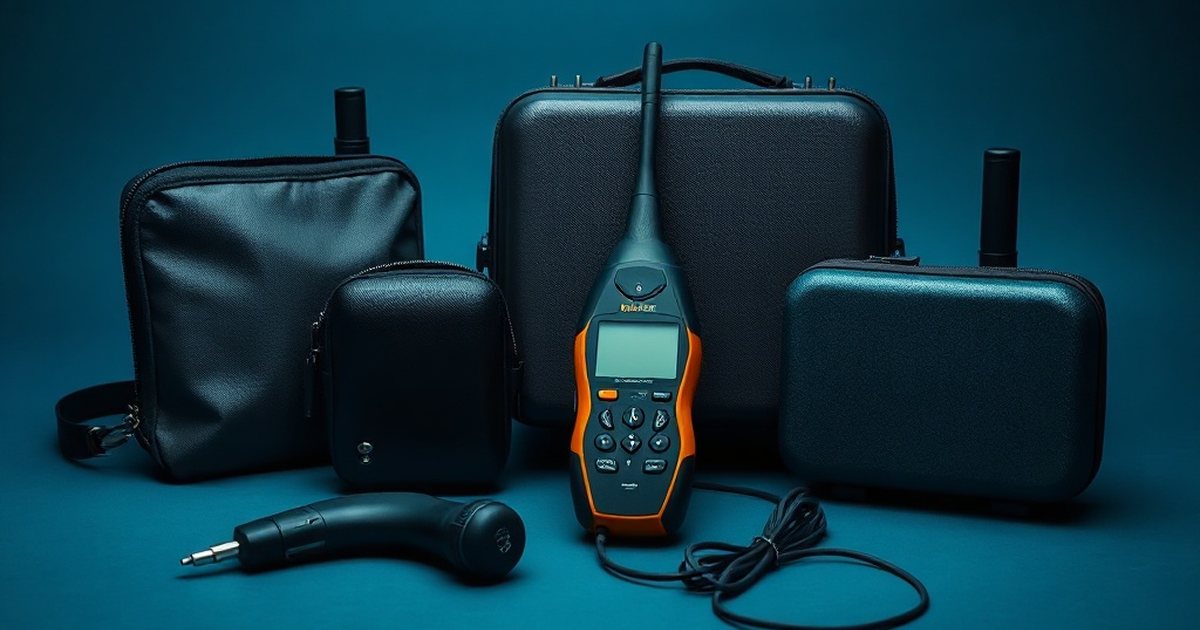
The LATNEX AF-5000 stands out with the broadest RF frequency range of any consumer-grade tri-mode meter we evaluated. If detecting the widest possible range of wireless signals is your priority, this meter covers more ground than anything else near its price.
What the LATNEX AF-5000 Measures
The AF-5000 measures RF from 50 MHz to 10 GHz, 3-axis magnetic fields across ranges up to 2000 mG (with resolution as fine as 0.02 mG on the lowest range), and electric fields from 50 to 2000 V/m. The RF range topping out at 10 GHz is notably higher than competitors, offering coverage into frequency bands that other consumer meters simply cannot detect.
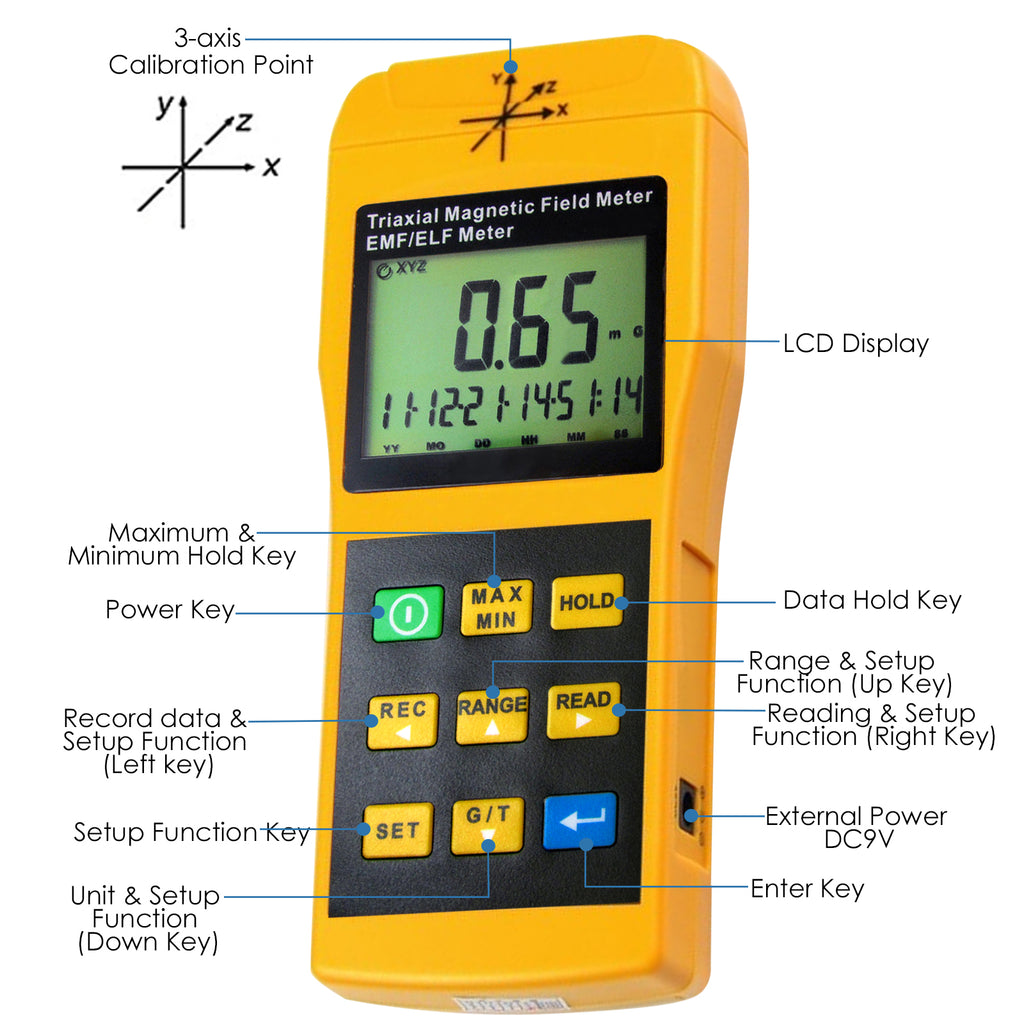
The 3-axis magnetic field sensor is a practical advantage. Instead of having to rotate the meter in three orientations to find the strongest reading (as single-axis meters require), the AF-5000 automatically combines measurements from all three axes for an accurate reading regardless of how you hold it. It ships with a calibration certificate and a 2-year warranty.
Pros and Cons
- Pro: RF range up to 10 GHz covers more frequencies than any other meter in this guide
- Pro: True 3-axis magnetic field sensor eliminates the need to rotate the meter
- Pro: Multiple RF display units (uW/m2, uW/cm2, mV/m, V/m, dBm) suit different use cases
- Pro: Includes calibration certificate for professional credibility
- Pro: Color TFT display shows all three measurements
- Con: Magnetic and electric field frequency response limited to 50/60 Hz only
- Con: No data logging or PC connectivity for recording measurements over time
- Con: Does not display the frequency of detected RF signals
Who Should Buy the LATNEX AF-5000
The AF-5000 makes sense for users who want the widest possible RF detection range in a single device. If you live near cell infrastructure operating across multiple bands, or if covering higher frequency signals matters to you, the 10 GHz ceiling provides headroom that other meters lack. The 3-axis magnetic sensor also makes it a strong choice for anyone who finds single-axis meters tedious to use.
5. Safe and Sound Pro II: Best Dedicated RF Meter
The Safe and Sound Pro II from Safe Living Technologies takes a fundamentally different approach than the other meters on this list. Instead of trying to measure everything, it focuses exclusively on RF radiation and does that one job at a professional level.
What the Safe and Sound Pro II Measures
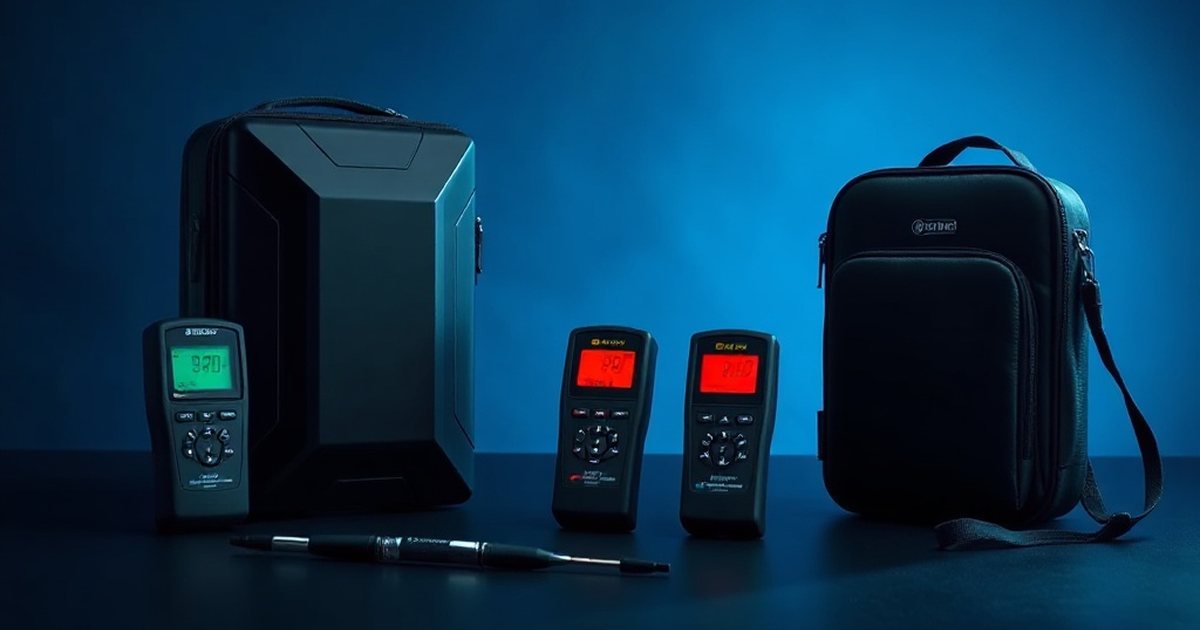
This meter measures RF radiation only, covering 200 MHz to 8 GHz with a true calibrated response range of 400 MHz to 7.2 GHz. The measurement range spans from 0.001 uW/m2 to 2,500,000 uW/m2, giving it far more sensitivity at the low end and far more headroom at the high end than any combo meter can achieve.

Each unit ships with its own individual calibration certificate, and the design is third-party performance tested by Nemko Canada, an accredited laboratory. That level of verification is uncommon at any consumer price point. The meter offers Peak, Max Hold, and Average measurement modes, with color-coded LED indicators that give an instant visual reference from green (low) through yellow and orange to red (high).
Pros and Cons
- Pro: Exceptional RF sensitivity, far beyond what any combo meter achieves
- Pro: Third-party certified accuracy with individual calibration certificate
- Pro: Color-coded LED indicators give instant visual feedback without looking at the display
- Pro: OLED display with Peak, Max Hold, and Average modes
- Pro: Sound function helps distinguish between different RF source types
- Pro: USB power jack enables continuous monitoring
- Con: Measures RF only. No magnetic or electric field detection at all
- Con: No data logging capability
- Con: Single-axis antenna means orientation affects readings
- Con: Price around $400 is significantly higher than combo meters
Who Should Buy the Safe and Sound Pro II
This meter is for users whose primary concern is RF radiation specifically. If you are evaluating RF levels from nearby cell towers, testing the effectiveness of RF shielding materials, or monitoring ambient RF levels in a sleeping area, the Pro II gives you accuracy and sensitivity that combo meters cannot match. Just understand that you will still need a separate meter for magnetic and electric field measurements. Many serious practitioners pair this with a TriField TF2 or similar combo meter to cover all three field types.
6. ERICKHILL RT-100: Best Budget EMF Meter
The ERICKHILL RT-100 proves you do not need to spend hundreds of dollars to start measuring EMF in your home. At around $40, it provides legitimate magnetic and electric field detection at a price point accessible to almost anyone.
What the ERICKHILL RT-100 Measures
The RT-100 measures magnetic fields from 0.01 uT to 99.99 uT (approximately 0.1 to 999 milligauss) and electric fields from 1 to 1999 V/m. It does not measure RF radiation, so it will not detect signals from Wi-Fi routers, cell towers, or Bluetooth devices. What it will detect is the ELF (extremely low frequency) magnetic and electric fields produced by power lines, household wiring, appliances, and electronics.
The sound-light alarm triggers when readings exceed 0.4 uT (4 mG) for magnetic fields or 40 V/m for electric fields. The 2.25-inch backlit LCD is clear enough to read in most conditions, and the meter can display either average or peak readings.
Pros and Cons
- Pro: Extremely affordable at around $40
- Pro: Sound and light alarm provides immediate feedback when levels are elevated
- Pro: Simple operation with no learning curve
- Pro: 3-year warranty and lifetime technical support from ERICKHILL
- Pro: Auto power-off preserves battery life
- Con: No RF measurement at all. Cannot detect Wi-Fi, cell towers, or any wireless signal
- Con: Single-axis sensor requires rotating the meter to find the strongest reading
- Con: Lower accuracy compared to more expensive meters
Who Should Buy the ERICKHILL RT-100
The RT-100 is an honest starting point for someone who wants to check magnetic and electric fields around appliances, wiring, and power lines without a significant investment. If you want to know whether your bedside reading lamp or the wiring behind your headboard is producing elevated magnetic fields, this meter will tell you. Just know that it has a significant blind spot: it will not detect anything wireless. If RF is part of your concern, look at the combo meters higher on this list.
7. Meterk MK08: Best Under $30
The Meterk MK08 occupies the ultra-budget tier of EMF meters. At around $25, it is the lowest-cost option that still produces usable measurements of magnetic and electric fields in your home.
What the Meterk MK08 Measures
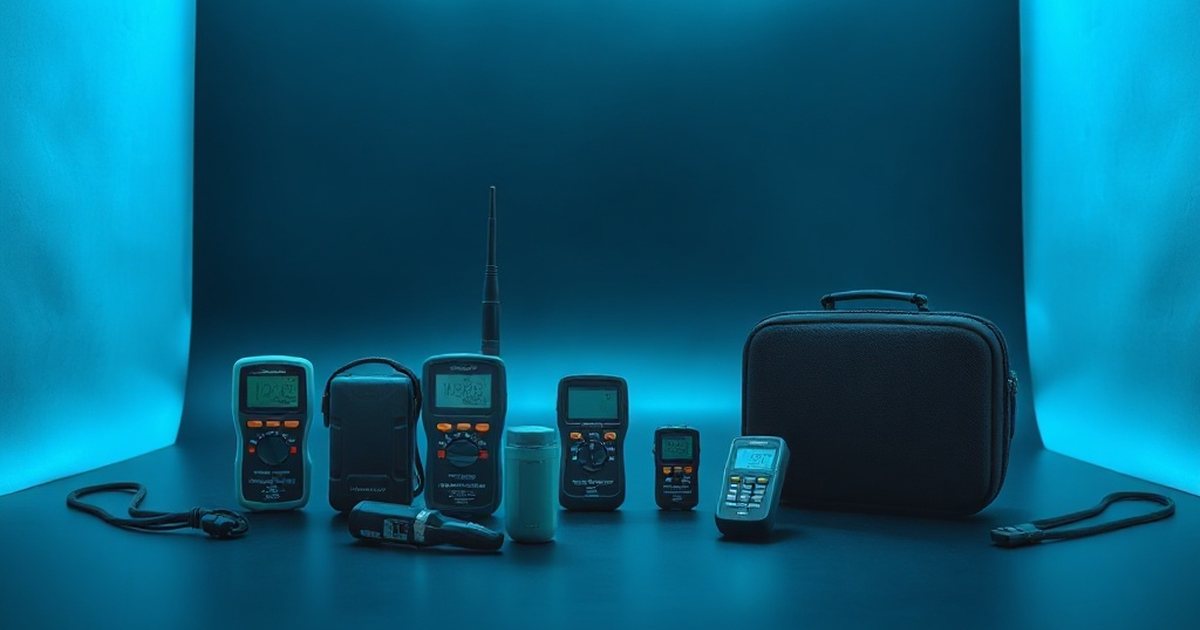
The MK08 measures electric field radiation up to 2000 mG and magnetic fields up to 200 uT simultaneously. It operates at 50/60 Hz frequency response, meaning it detects the ELF fields produced by household wiring and appliances. Like the ERICKHILL RT-100, it cannot detect RF radiation from wireless sources.
It includes a built-in temperature sensor (Celsius and Fahrenheit), a sound-light alarm that activates when readings exceed safe thresholds, a data hold button for locking readings, and auto shutoff after 10 minutes to conserve battery.
Pros and Cons
- Pro: The most affordable EMF meter that produces usable readings
- Pro: Measures electric and magnetic fields simultaneously
- Pro: Automatic alarm when readings exceed thresholds
- Pro: Built-in temperature sensor adds minor utility
- Pro: Lightweight at roughly 161 grams and genuinely pocket-portable
- Con: No RF measurement capability at all
- Con: Accuracy (plus or minus 5%) is lower than more expensive meters
- Con: Build quality reflects the price point. Feels less robust than mid-range options
- Con: Some users report inconsistent readings at low levels
Who Should Buy the Meterk MK08
The MK08 is for the purely curious buyer who wants to explore EMF readings around their home without committing to a significant purchase. It provides a real introduction to measuring magnetic and electric fields from appliances and wiring at a price lower than a restaurant dinner. If your readings spark a deeper interest, you will likely upgrade to a more capable meter, but the MK08 gives you a legitimate starting point.
How to Choose an EMF Meter
Choosing the right EMF meter depends on understanding the three types of electromagnetic fields and which ones matter for your situation.

The Three Types of EMF Measurement
Magnetic fields (measured in milligauss or microtesla) are produced by flowing electrical current. Sources include power lines, household wiring, transformers, motors, and most electrical appliances. These fields pass through walls and most materials. If your concern is proximity to power lines or the wiring in your walls, magnetic field measurement is essential.
Electric fields (measured in volts per meter) are produced by voltage, even when no current is flowing. A lamp that is plugged in but turned off still produces an electric field. These fields are easier to shield than magnetic fields, and they tend to drop off more quickly with distance. Electric field measurement matters most for evaluating the sleeping environment, where prolonged close-range exposure to wiring in walls is a common concern among EMF-aware individuals.
RF radiation (measured in microwatts per square meter or milliwatts per square meter) is produced by wireless communication devices. Cell towers, Wi-Fi routers, Bluetooth devices, smart meters, cordless phones, and baby monitors all emit RF. If your primary concern is wireless radiation, you need a meter with RF capability, and the budget models that only measure magnetic and electric fields will not help.
Budget vs. Pro-Grade: Where to Draw the Line
Under $50 (Meterk MK08, ERICKHILL RT-100): These meters measure magnetic and electric fields only. They are useful for identifying hot spots around appliances and wiring, but they have no RF capability. Accuracy is sufficient for identifying elevated readings and comparing relative levels, but should not be treated as laboratory-grade measurements.
$100 to $200 (GQ EMF-390, LATNEX AF-5000, TriField TF2, Cornet ED88TPlus): This is the sweet spot for most buyers. All four meters in this range measure magnetic fields, electric fields, and RF radiation. The differences come down to feature priorities: data logging (GQ EMF-390), frequency identification (Cornet ED88TPlus), RF range (LATNEX AF-5000), or ease of use (TriField TF2).
$300 and above (Safe and Sound Pro II): Professional-grade meters in this range typically excel at one measurement type rather than trying to cover everything. The Safe and Sound Pro II measures RF with sensitivity and certified accuracy that no combo meter can match. If you need that level of precision for a specific field type, a dedicated meter is worth the investment.
What About 5G?
All of the RF-capable meters in this guide detect sub-6 GHz 5G signals, which is the most common 5G deployment type. None of them detect millimeter-wave 5G (24 to 39 GHz), which requires specialized equipment and has very limited deployment due to its short range. For practical purposes, the meters in this guide cover the 5G signals you are most likely to encounter.
Our Top Pick
For most people buying their first EMF meter, the TriField TF2 remains the best overall choice. It measures all three field types, it is genuinely easy to use, and its accuracy is well-established across years of verified user reports. You can take it out of the box and start getting meaningful readings in under a minute.
If you want data logging capabilities or plan to do more detailed analysis, the GQ EMF-390 gives you significantly more functionality at a lower price point. And if RF radiation is your primary concern, the Safe and Sound Pro II provides a level of sensitivity and certified accuracy that no combo meter can match.
All seven meters on this list are legitimate tools that produce real measurements. The right one depends on your budget, what types of fields concern you most, and how much detail you want from your readings. Start with what fits your needs today. You can always add a more specialized meter later as your understanding deepens.
These statements have not been evaluated by the Food and Drug Administration. This information is not intended to diagnose, treat, cure, or prevent any disease. Content is for informational purposes only and is not medical advice; consult a qualified healthcare provider before starting any supplement. As an Amazon Associate we earn from qualifying purchases.