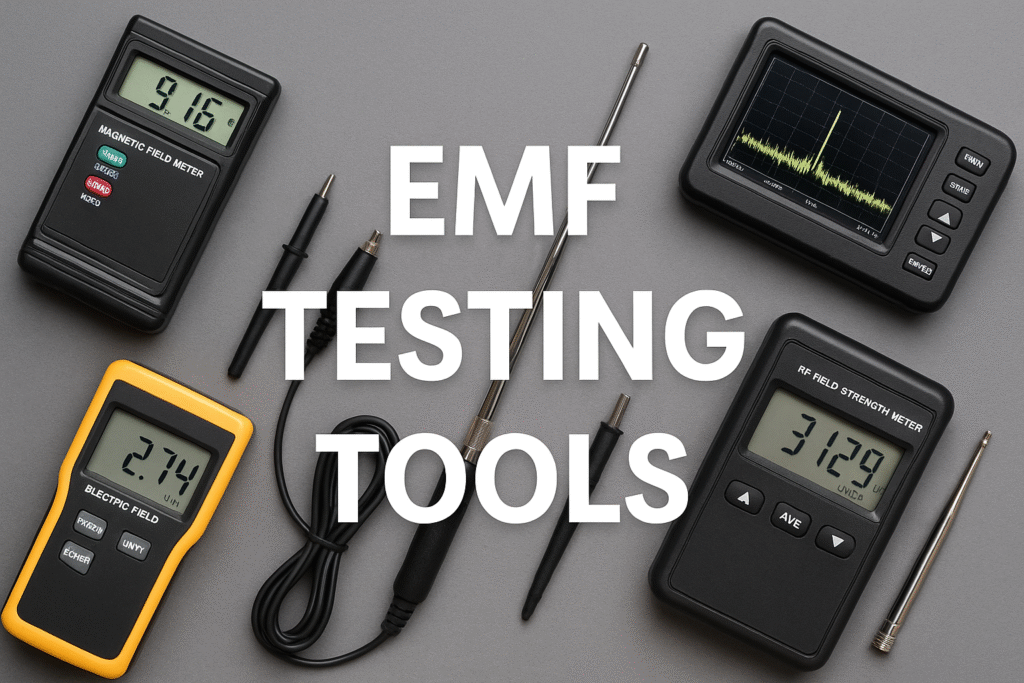
The TriField TF2 and GQ EMF-390 are two of the most popular all-in-one EMF meters on the market. Both measure magnetic fields, electric fields, and radio frequency (RF) radiation in a single handheld device. Both are made in the USA. And both show up in nearly every “best EMF meter” list you will find online.
So why do people have such a hard time choosing between them?
Because they take very different approaches to the same problem. The TriField TF2, made by AlphaLab Inc., is a straightforward analog-style meter that prioritizes accuracy and simplicity. The GQ EMF-390, from GQ Electronics LLC, packs in data logging, a spectrum analyzer, USB connectivity, and a wider RF range at a lower price. On paper, the EMF-390 looks like the obvious winner. In practice, the decision depends entirely on what you need the meter to do.
This article breaks down both meters using verified manufacturer specs, real-world strengths and weaknesses, and honest use-case recommendations. No filler, no hype.
Quick Comparison: TriField TF2 vs GQ EMF-390
Before we get into the details, here is a side-by-side look at the core specifications.
| Specification | TriField TF2 | GQ EMF-390 |
|---|---|---|
| Manufacturer | AlphaLab, Inc. (USA) | GQ Electronics LLC (Seattle, USA) |
| Magnetic Field Range | 0.1 to 100 mG | 0 to 500 mG |
| Magnetic Frequency Range | 40 Hz to 100 kHz | Up to 400 kHz |
| Magnetic Sensor | 3-axis | 3-axis |
| Electric Field Range | 1 to 1,000 V/m | 0 to 1,000 V/m |
| RF Frequency Range | 20 MHz to 6 GHz | Up to 10 GHz |
| RF Power Range | 0.001 to 19.999 mW/m² | 0.02 µW/m² to 9,999 mW/m² |
| Data Logging | No | Yes (built-in flash memory) |
| USB Connectivity | No | Yes (USB-C) |
| Spectrum Analyzer | No | Yes (6 bands, up to 2.5 GHz) |
| Battery | 9V alkaline (replaceable) | Rechargeable 3.7V Li-Ion (USB-C) |
| Battery Life | 20+ hours (backlight off) | Up to 24 hours (backlight off) |
| Frequency-Weighted Mode | Yes | No |
| Approximate Price | ~$175 | ~$120 |
| Weight | ~9 oz | ~10 oz |
| Dimensions | 1.5 x 2.75 x 5.25 in | 5.5 x 3 x 1 in |
The table tells part of the story. Now let’s look at what each meter actually does well in practice.
TriField TF2: The Trusted Standard
The TriField TF2 is made by AlphaLab, Inc., a scientific instrument company based in Utah. The TriField brand has been around since 1996, and the TF2 is the current model. It measures AC magnetic fields, AC electric fields, and RF radiation in three separate modes, selected with a physical dial on the front of the meter.
What It Measures
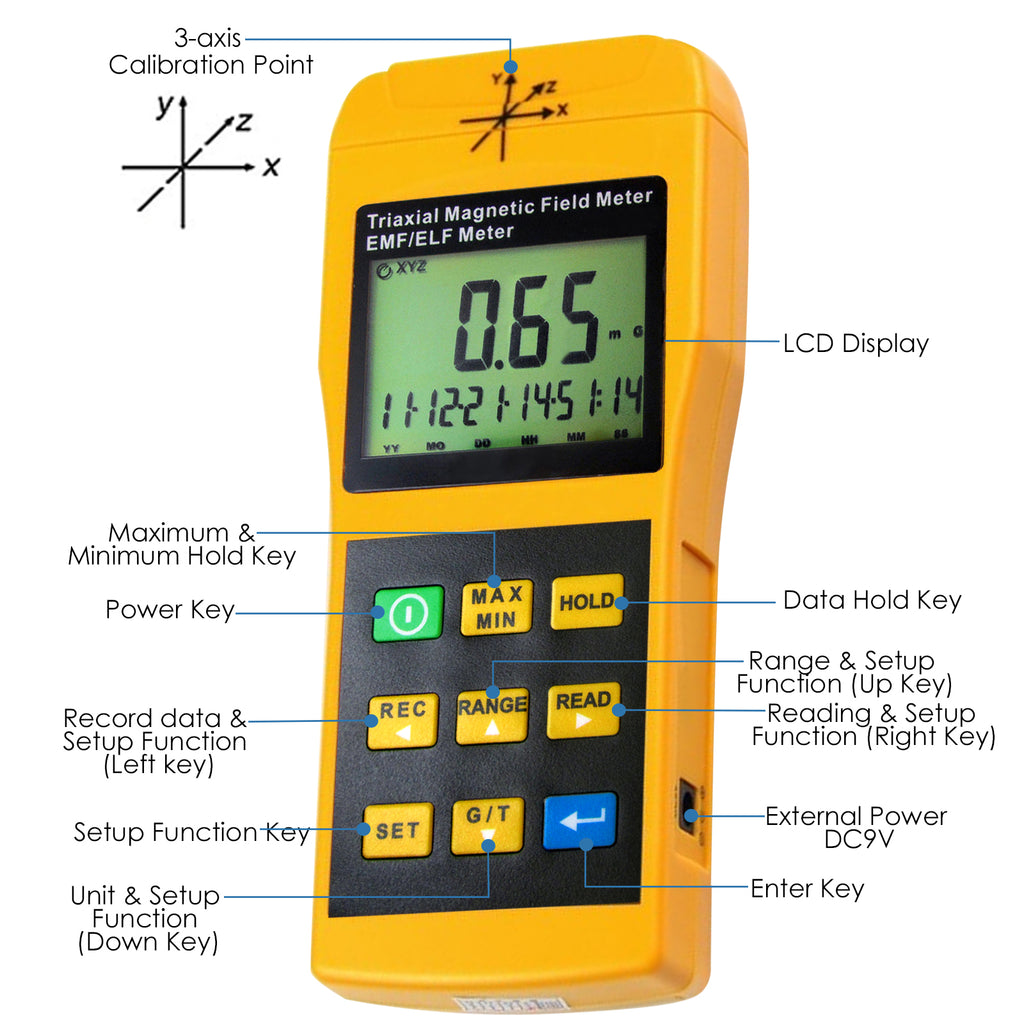
In AC Magnetic mode, the TF2 uses a true 3-axis sensor to measure magnetic fields from 0.1 to 100 milligauss (mG), covering frequencies from 40 Hz to 100 kHz. AlphaLab rates accuracy at plus or minus 4% at 50/60 Hz, which is strong for a meter in this price range.
In AC Electric mode, it measures from 1 to 1,000 V/m across the same 40 Hz to 100 kHz frequency range, with plus or minus 5% accuracy at 50/60 Hz. This mode uses a single-axis sensor.
In RF mode, it covers 20 MHz to 6 GHz with a measurement range of 0.001 to 19.999 mW/m². AlphaLab states plus or minus 20% accuracy at 1 GHz. This mode also uses a single-axis sensor.
Frequency-Weighted Mode
One feature that sets the TF2 apart is its frequency-weighted measurement mode. In Standard mode, the meter gives you the raw field strength. In Weighted mode, it adjusts the reading to reflect how different frequencies interact with the human body, scaling the measurement based on the frequency of the signal rather than treating all frequencies equally. This can be useful if you are trying to compare the relative significance of different sources, like a 60 Hz power line versus a higher-frequency source.
Build and Design
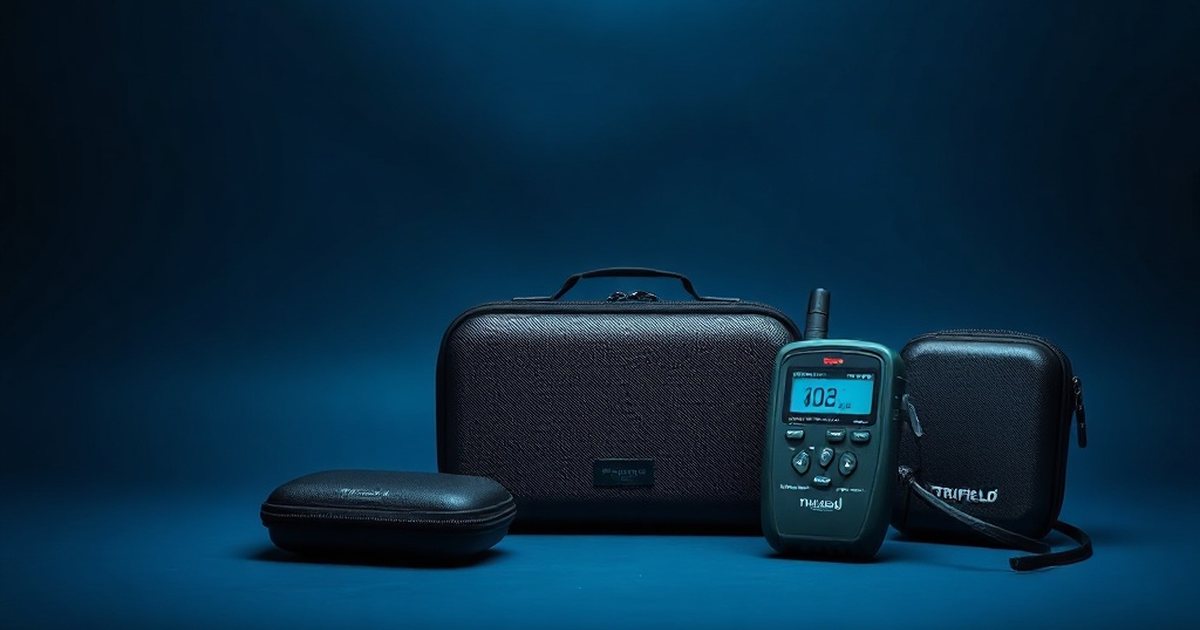
The TF2 has a clean, minimalist design. There is a backlit LCD display, a physical mode dial, and an audio indicator that increases in pitch as the field strength increases. It runs on a single 9V alkaline battery and lasts over 20 hours with the backlight off, or around 12 hours with the backlight on. The meter comes with a soft-shell zipper carry case, a quick-start card, and a detailed instruction manual.
It does not have data logging, USB connectivity, or any way to record readings over time. What you see on the screen is what you get, and you have to write it down or remember it.
Who It’s For
The TF2 is built for people who want a reliable, accurate meter they can pick up and use immediately without a learning curve. It is a strong choice for quick home assessments, checking appliances for magnetic field output, scanning rooms for elevated electric field levels, and getting a general sense of RF exposure from things like Wi-Fi routers and cell towers. Many EMF consultants use the TF2 as a starting point because of its known accuracy for magnetic and electric field measurements.
GQ EMF-390: The Feature-Packed Option
The GQ EMF-390 is made by GQ Electronics LLC, based in Seattle, Washington. GQ has been producing electronic measurement instruments since 2010 and reports over 200,000 customers globally, including government agencies, universities, and commercial enterprises. The EMF-390 is their flagship multi-field EMF meter.
What It Measures
The EMF-390 measures electromagnetic fields using a 3-axis sensor with a range of 0 to 500 mG, covering frequencies up to 400 kHz. That is a significantly higher ceiling than the TF2’s 100 mG maximum, which matters if you are measuring near high-output sources like industrial equipment or certain appliances at close range.
For electric fields, it covers 0 to 1,000 V/m, matching the TF2. The resolution is 1 V/m on both meters.
Where the EMF-390 really extends its reach is in RF detection. It measures RF fields up to 10 GHz, compared to the TF2’s 6 GHz ceiling. That additional 4 GHz of range means the EMF-390 can detect some 5G signals that operate above 6 GHz. The RF measurement range is also much wider: from 0.02 microwatts per square meter up to 9,999 milliwatts per square meter. On the low end, the EMF-390 is far more sensitive to weak RF signals. On the high end, it can measure much stronger fields before maxing out.

Built-in Spectrum Analyzer
The EMF-390 includes an RF spectrum analyzer that breaks its detection into six bands: 150 kHz to 531 kHz, 520 kHz to 1.71 MHz, 2.3 MHz to 25.34 MHz, 64 MHz to 108 MHz, 240 MHz to 1.04 GHz, and 2.4 GHz to 2.504 GHz. This lets you see which frequency bands have the most activity, rather than just seeing a single combined RF number. It is a useful feature for identifying specific sources of RF, like distinguishing between a Wi-Fi router (2.4 GHz band) and a cell tower signal (sub-1 GHz band).
Data Logging and USB
One of the biggest practical advantages of the EMF-390 is its built-in data logger. It records real-time measurements every second with timestamps, storing them in 1 MB of internal flash memory. You can connect the meter to a computer via USB-C to download logged data for analysis. It also has a built-in real-time clock so your logged readings have accurate time stamps.
If you want to monitor EMF levels overnight, track readings over a week in a specific room, or build a dataset for before-and-after comparisons when testing shielding products, data logging changes the game. The TF2 simply cannot do this.
Build and Design
The EMF-390 has a digital interface with multiple screens and menus. It takes a bit more time to learn than the TF2’s simple dial-and-read approach. The meter runs on a rechargeable 3.7V lithium-ion battery that charges via USB-C, with battery life rated at up to 24 hours with the backlight off. The rechargeable battery is a genuine convenience over the TF2’s replaceable 9V, especially for regular use.
The device weighs about 10 ounces and measures 5.5 x 3 x 1 inches, making it slightly larger than the TF2 but still easily pocketable.
Who It’s For
The EMF-390 is designed for people who want more data, more range, and more features from a single meter. It is particularly well-suited for anyone who plans to log readings over time, wants to identify specific RF sources using the spectrum analyzer, or needs to measure stronger magnetic fields above 100 mG. The lower price point and rechargeable battery also make it appealing for budget-conscious buyers who still want a capable, feature-rich meter.
Head-to-Head: TriField TF2 vs GQ EMF-390
Now that we have covered each meter individually, let’s compare them directly across the categories that actually matter when you are choosing between them.
Measurement Range
The GQ EMF-390 wins on raw range in almost every category. It measures magnetic fields up to 500 mG versus the TF2’s 100 mG. Its RF detection extends to 10 GHz versus 6 GHz. And its RF sensitivity floor is significantly lower, at 0.02 microwatts per square meter compared to 1 microwatt per square meter on the TF2.
That said, for typical home use, the TF2’s ranges are usually sufficient. Most household appliances produce magnetic fields well under 100 mG at any reasonable distance, and the vast majority of consumer RF sources (Wi-Fi routers, cell phones, smart meters, microwaves) operate below 6 GHz. You mainly benefit from the EMF-390’s extended range if you are measuring near industrial equipment, investigating 5G mid-band or higher-frequency sources, or trying to detect very weak RF signals.
Accuracy and Calibration
AlphaLab publishes specific accuracy figures for the TF2: plus or minus 4% for magnetic fields at 50/60 Hz, plus or minus 5% for electric fields, and plus or minus 20% for RF at 1 GHz. These numbers are well-documented and the TF2 has a long track record with EMF consultants and building biologists.
GQ Electronics provides less detailed accuracy specifications for the EMF-390. The meter performs well in general use, but AlphaLab’s transparency about calibration standards gives the TF2 an edge for anyone who needs to trust the numbers for professional or comparative purposes.
Ease of Use
The TF2 wins here, and it is not close. Turn the dial, read the screen. There is no menu system to navigate, no settings to configure, no firmware to update. If you have never used an EMF meter before, you can be taking accurate measurements within about 30 seconds of opening the box.
The EMF-390 has a steeper learning curve. Multiple display modes, a menu-driven interface, spectrum analyzer screens, and data logging settings all take time to understand. The user manual is essential reading, not optional. For technically inclined users, this complexity is a feature. For someone who just wants quick readings around the house, it can feel like overkill.
Price
The GQ EMF-390 typically sells for around $120, while the TriField TF2 sits around $175. That is a $55 difference, and the EMF-390 offers more features per dollar: data logging, spectrum analysis, wider measurement ranges, rechargeable battery, and USB connectivity.
The TF2’s higher price reflects its established reputation, documented accuracy specs, and the AlphaLab brand name. Whether that premium is worth it depends on whether you value brand trust and calibration transparency over raw feature count.
Build Quality
Both meters feel solid in the hand and are well-constructed for their price range. The TF2 has a slightly more premium feel with its included carry case and clean design. The EMF-390 is functional and durable but has more of a technical instrument aesthetic. Neither meter is fragile, but neither is military-grade either. Both should hold up fine with normal use and reasonable care.
What Each Meter Is Missing
The TF2 lacks data logging, USB connectivity, spectrum analysis, and any way to record or export readings. If you want to track EMF levels over time or compare readings from different dates, you are limited to pen and paper. It also maxes out at 100 mG for magnetic fields and 6 GHz for RF, which could be limiting in some scenarios.

The EMF-390 lacks a frequency-weighted measurement mode, which the TF2 offers. It also does not publish accuracy specifications with the same level of detail as AlphaLab. And while it is feature-rich, the interface complexity means it takes longer to learn and there is more room for user error when navigating between modes and settings.
Which EMF Meter Should You Buy?
Here is the honest breakdown by use case.
Choose the TriField TF2 If:
- You want the simplest possible user experience with minimal learning curve
- You need a meter with a strong reputation among EMF consultants and building biologists
- Documented accuracy and calibration specs matter to you
- You plan to do quick spot-checks around the home rather than long-term monitoring
- You value the frequency-weighted mode for understanding relative exposure significance
- You prefer a trusted, established brand and are willing to pay a modest premium for it
Choose the GQ EMF-390 If:
- You want to log EMF readings over time and export data to a computer
- You need a wider measurement range, especially for magnetic fields above 100 mG or RF above 6 GHz
- Identifying specific RF sources with the spectrum analyzer is valuable to your workflow
- Budget is a primary concern and you want the most features per dollar
- You prefer a rechargeable battery over replacing 9V batteries
- You are comfortable with a more complex interface and willing to spend time learning the meter
For Home Use
If you are scanning your home for elevated EMF levels from wiring, appliances, and nearby cell towers, and you want to keep things simple, the TriField TF2 is the more straightforward choice. Walk room to room, check the readings, done. The TF2’s accuracy at power-line frequencies (50/60 Hz) is well-documented, which matters when you are measuring household sources.
For Long-Term Monitoring
If you plan to monitor a bedroom overnight, track readings before and after installing shielding, or build a dataset of EMF levels over time, the GQ EMF-390 is the clear winner. The TF2 simply does not have the hardware for this. Data logging with timestamps is a feature that cannot be replicated with a pen and notepad in any practical way.
For Travel and Field Use
Both meters are portable and light enough to carry anywhere. The EMF-390’s rechargeable battery is more convenient for travel since you can charge it from any USB-C source. The TF2 requires a 9V battery, which is less common and means carrying a spare if you are on the road. For hotel room checks, office assessments, or any scenario where you are moving between locations, either meter works, but the EMF-390’s battery advantage and broader RF range give it a slight edge.
On a Budget
The GQ EMF-390 at around $120 offers more features than the TF2 at around $175. If price is the deciding factor and you do not specifically need the TF2’s calibration pedigree or frequency-weighted mode, the EMF-390 gives you more meter for less money.
Frequently Asked Questions
Can the TriField TF2 detect 5G signals?
The TF2 can detect 5G signals that operate below 6 GHz, which includes most low-band and some mid-band 5G. However, it cannot detect higher-frequency 5G signals above 6 GHz (sometimes called mmWave 5G). The GQ EMF-390, with its 10 GHz range, covers a wider portion of the 5G spectrum, though neither meter reaches the highest mmWave frequencies above 10 GHz.
Does the GQ EMF-390 require a computer to use?
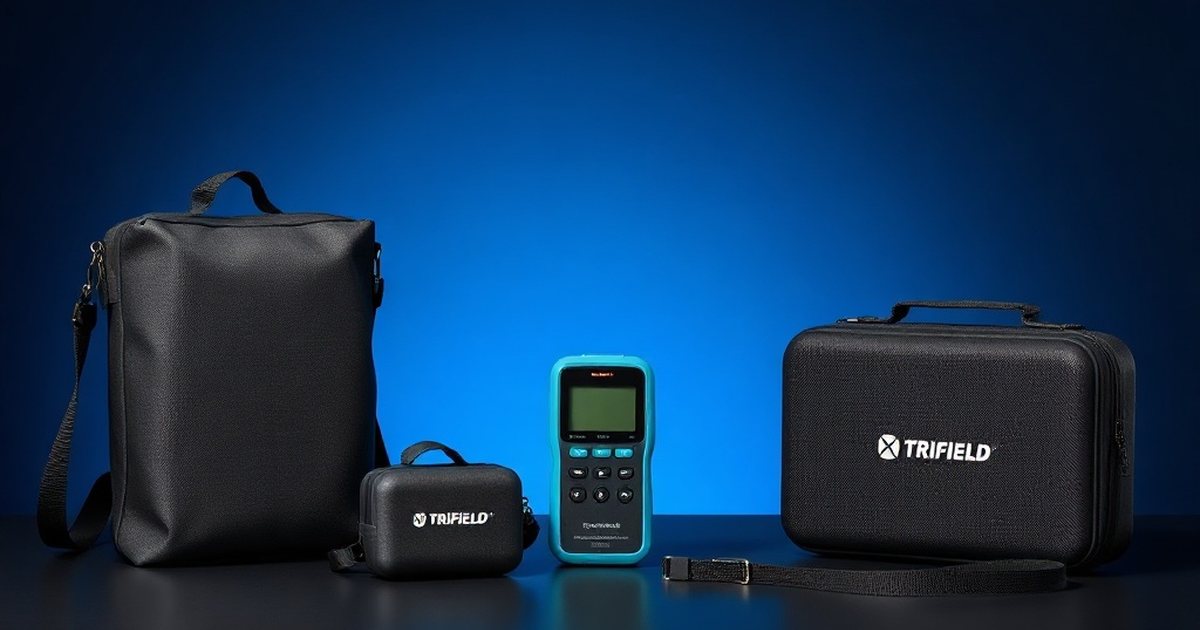
No. The EMF-390 works as a fully standalone meter. The USB-C connection is optional and used for charging the battery, downloading logged data, and connecting to GQ’s software on a computer. All measurement modes, including the spectrum analyzer, work without a computer connection.
Which meter is more accurate for measuring magnetic fields from power lines and appliances?
The TriField TF2 has more thoroughly documented accuracy specs for magnetic field measurement. AlphaLab rates it at plus or minus 4% accuracy at 50/60 Hz, which is the frequency produced by standard household wiring and most appliances. Both meters use 3-axis magnetic sensors, but the TF2’s published calibration data gives it a stronger claim to accuracy for power-frequency measurements.

Can I use either meter to test whether EMF shielding products are working?
Both meters can be used to take before-and-after readings when testing shielding products like paint, fabric, or window film. Take a baseline reading without shielding, install the shielding, and take a second reading. The GQ EMF-390 has an advantage here because its data logging feature lets you record continuous readings over time, making it easier to verify consistent shielding performance rather than relying on a single snapshot.
What does the frequency-weighted mode on the TF2 actually do?
The frequency-weighted mode adjusts the displayed reading to account for how different frequencies may interact with the human body. A 60 Hz magnetic field and a 10 kHz magnetic field of the same raw strength are not equivalent in terms of the currents they might induce. The weighted mode scales the reading accordingly, giving you a single number that factors in frequency. The GQ EMF-390 does not offer an equivalent mode.
Are there any ongoing costs with either meter?
The TriField TF2 uses a replaceable 9V alkaline battery, so you will need to buy replacement batteries periodically. The GQ EMF-390 has a built-in rechargeable lithium-ion battery that charges via USB-C, so there are no battery replacement costs. Neither meter requires a subscription, paid software, or calibration service to function, though you can send the TF2 back to AlphaLab for recalibration if needed.
The Bottom Line
There is no wrong choice between the TriField TF2 and GQ EMF-390. They are both legitimate, functional EMF meters that may help you better understand the electromagnetic environment in your home or workplace.
The TriField TF2 is the meter you buy when you want something simple, trusted, and accurate out of the box. It has earned its reputation over decades, and for quick home assessments at power-line frequencies, it remains a top recommendation.
The GQ EMF-390 is the meter you buy when you want more data, more range, and more capability at a lower price. Data logging alone makes it the better choice for anyone doing serious monitoring, shielding verification, or long-term tracking. The wider RF range and built-in spectrum analyzer add genuine value that the TF2 does not offer at any price.
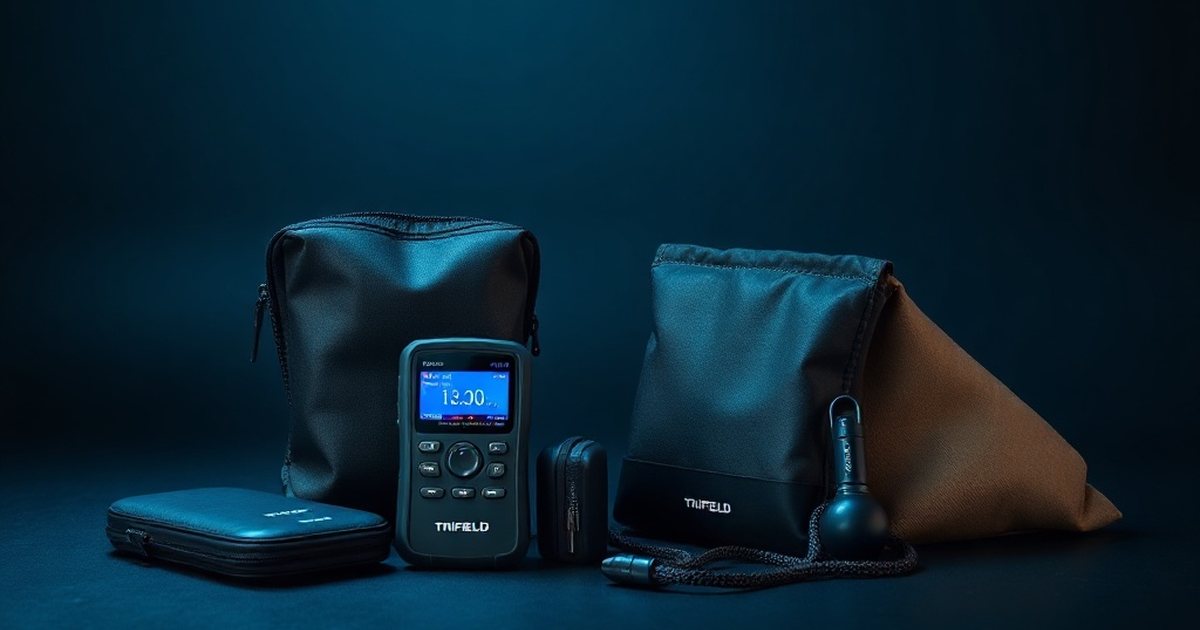
Pick the one that matches how you plan to use it. A meter that sits in a drawer because it was too complex helps no one. A meter that gets used regularly, even if it has fewer features, gives you the information you need to make informed decisions about your environment.
These statements have not been evaluated by the Food and Drug Administration. This information is not intended to diagnose, treat, cure, or prevent any disease. Content is for informational purposes only and is not medical advice; consult a qualified healthcare provider before starting any supplement. As an Amazon Associate we earn from qualifying purchases.