Disclaimer: This article is for informational purposes only and is not medical advice. If you have concerns about electromagnetic field (EMF) exposure during pregnancy, please consult your OB-GYN, midwife, or other qualified healthcare provider. Every pregnancy is different, and your doctor is the best person to address your individual situation.
Why Expecting Parents Are Asking About EMF
Pregnancy changes how you think about everything in your environment. The air you breathe, the food you eat, the products you use. So it makes sense that many expecting parents start wondering about the wireless signals passing through their homes every second of every day.
Phones, WiFi routers, baby monitors, smart speakers, Bluetooth devices. The average home now contains dozens of sources of radiofrequency electromagnetic fields (RF-EMF). And when you are growing a new human, the instinct to minimize any potential risk is completely natural.
This guide walks through what the actual research says (honestly, including where the science is still uncertain), the product categories parents consider for EMF reduction, and practical steps that cost nothing but may offer peace of mind.
What the Research Actually Says About Pregnancy and EMF
Let’s start with the honest picture. The relationship between everyday EMF exposure and pregnancy outcomes is an active area of research, and the evidence is genuinely mixed.
The WHO Position
The World Health Organization has been coordinating an international project to systematically review evidence on RF-EMF exposure and health effects. Reproductive health outcomes are among the six topics prioritized for evaluation. A WHO-affiliated systematic review examining pregnancy and birth outcomes found that in utero RF exposure does not appear to have a detrimental effect on fecundity, though it noted a possible small effect on fetal weight. The WHO’s main conclusion is that EMF exposures below the limits recommended in ICNIRP international guidelines do not appear to have any known consequence on health.
However, this position has not gone unchallenged. A 2025 critique published in Reviews on Environmental Health identified what the authors called “numerous issues” with the WHO’s systematic review methodology. The International Commission on the Biological Effects of EMF (ICBE-EMF) has argued that the WHO-commissioned reviews “provide no assurance of safety,” pointing to dose-related adverse effects found in studies on male fertility and pregnancy outcomes.
What Animal Studies Show
A systematic review of experimental studies on non-human mammals (published in Environment International) found high-certainty evidence that RF-EMF exposure can decrease the rate of pregnancy in animal models. But here is the critical detail: in subgroup analysis, this effect was only statistically significant in studies using exposures equal to or higher than 5 W/kg. Studies with exposures lower than 5 W/kg did not show a statistically significant effect. This suggests the observed effects occur primarily at very high exposure levels that cause tissue heating, well above what you would encounter from household electronics.

The Honest Bottom Line on the Science
From a radiation protection perspective, the limitations in study quality and the resulting overall very low certainty of evidence for most endpoints do not provide reliable evidence for or against a consistent RF-EMF effect at everyday exposure levels. The research landscape remains genuinely mixed. Mainstream radiation protection bodies consider the evidence of harm at typical consumer exposure levels to be inconsistent and of low certainty. At the same time, some independent researchers argue this uncertainty itself warrants a precautionary approach, especially during pregnancy.
What most experts on both sides agree on: more rigorous, standardized research is needed. And reducing unnecessary exposure during pregnancy is a reasonable precautionary step that carries no downside.
Common EMF Sources in Your Pregnancy and Nursery
Understanding where EMF exposure comes from helps you make informed decisions about what to address. Here are the most common sources in a typical home, especially relevant to expecting parents and new nurseries.
Your Phone
This is the single largest source of RF-EMF for most people. A phone held against the body (in a pocket, resting on the belly, tucked under a pillow) delivers more RF exposure than almost any other household device, simply because of proximity. The signal strength also increases when reception is poor, as the phone works harder to reach cell towers.
WiFi Router
A WiFi router broadcasts continuously, but its signal strength drops significantly with distance. A router in the same room as a crib or bed is a very different situation than one located in a hallway or another room. The router’s proximity matters far more than the fact that it exists in your home.
Baby Monitors
Baby monitors are worth particular attention because they are typically placed very close to where the baby sleeps and transmit continuously throughout the night. WiFi video monitors emit the most RF radiation due to constant data streaming. DECT audio monitors are moderate, and analog monitors (now largely discontinued) emitted the least. One study found that digital baby monitors placed less than one meter from a crib emit roughly the same level of radiation as a cell tower 150 meters away.
Smart Home Devices
Smart speakers, smart plugs, smart lights, and smart thermostats all communicate wirelessly. Individually each one is a low-level source, but in a heavily connected nursery they add up. Bluetooth devices (wearables, wireless headphones, smart scales) also emit RF, though at much lower power levels than WiFi or cellular signals.
Laptops and Tablets
When used on your lap during pregnancy, a laptop emits both RF (from WiFi and Bluetooth) and extremely low frequency (ELF) electromagnetic fields from its processor and battery. Using a laptop on a desk or table rather than directly on your body is a simple way to increase distance from these sources.
Product Categories Parents Consider for EMF Protection
A growing market of products aims to help reduce EMF exposure during pregnancy and in the nursery. Here is an honest look at what is available, how these products claim to work, and where the evidence stands.
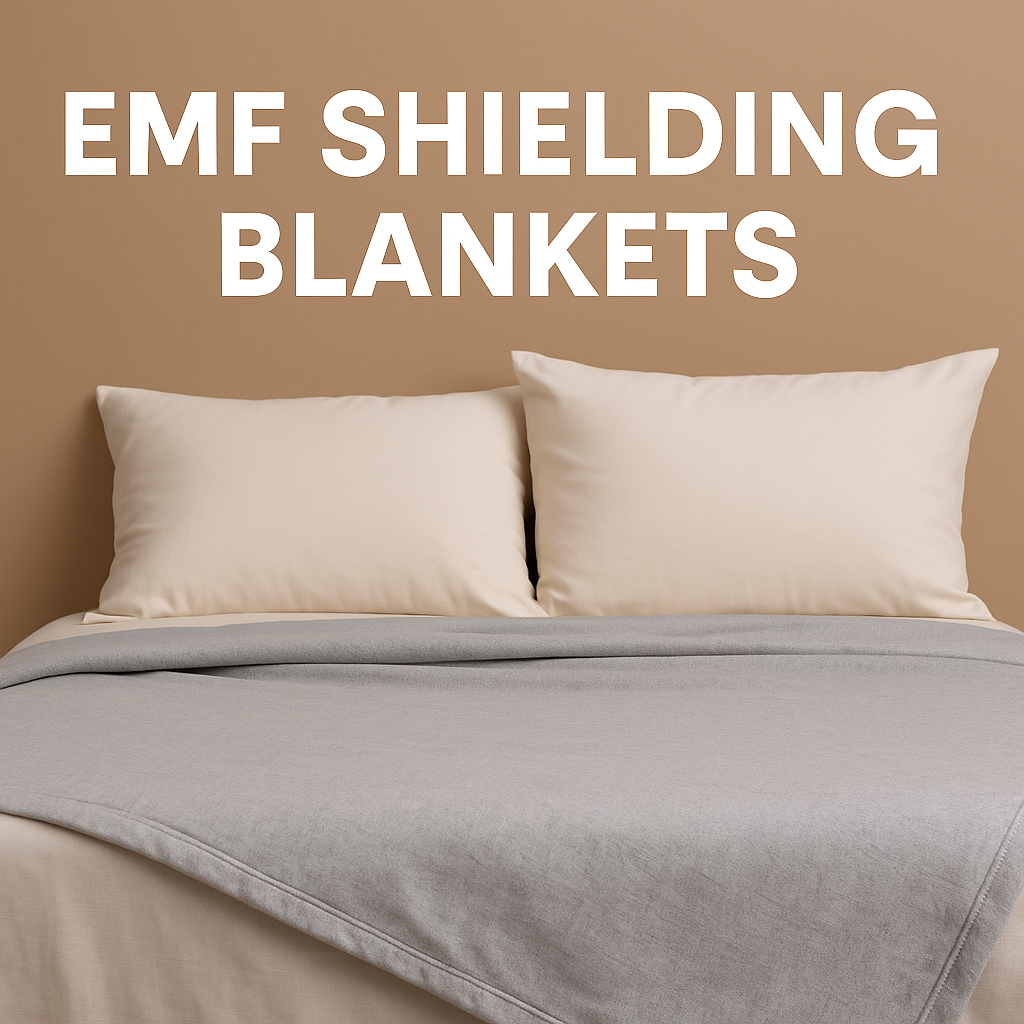
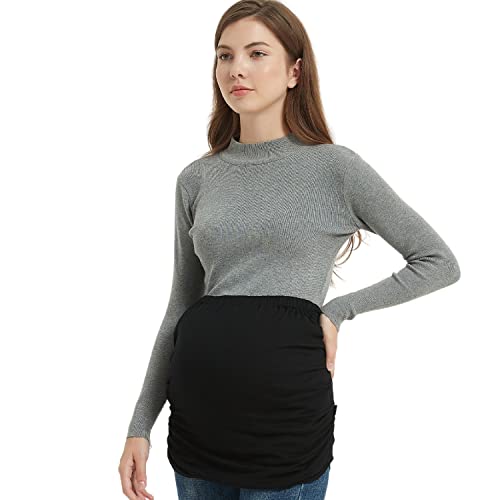
EMF Belly Bands and Blankets
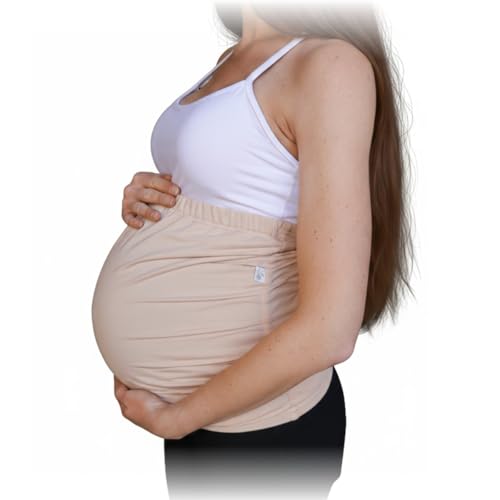
These are wearable wraps or blankets made from fabrics woven with conductive metals, typically silver fiber. They wrap around the abdomen during pregnancy with the goal of reducing the amount of RF radiation reaching the belly area.
How they claim to work: Silver fiber and similar conductive textiles can attenuate (reduce) radiofrequency signals. Lab testing by manufacturers typically shows attenuation rates of 30 to 50+ dB across frequencies from roughly 10 MHz to 10 GHz or higher, which translates to blocking 99% or more of RF energy in controlled test conditions.
What to understand: The lab attenuation numbers are measured under ideal conditions (flat fabric sample, single direction of exposure). In real-world use, a belly band does not create a sealed enclosure. RF signals can still reach the body from angles the band does not cover, reflected signals can enter from the sides, and the band does not shield against the magnetic component of extremely low frequency fields (such as those from power lines or appliances). A belly band may help reduce direct RF exposure to the covered area from a phone or laptop resting nearby, but it is not a complete shield.
Brands parents commonly consider: Belly Armor, DefenderShield, Radia Smart, Halsa, and Smart & Safe Solutions all produce silver-fiber belly bands. Prices typically range from $40 to $80. If you choose to try one, look for products that provide third-party lab testing data (not just manufacturer claims) and follow care instructions carefully, as improper washing can degrade the silver fibers and reduce shielding performance over time.
Nursery Shielding Options
For parents who want to reduce RF levels in the nursery itself, three main product categories exist:
Shielding canopies: These drape over the crib like a mosquito net but are made from conductive fabric (silver-coated cotton, silver mesh, or similar materials). Products like those from WOREMOR and Safe Living Technologies claim attenuation of 38 to 50 dB at 1 GHz. A crib canopy can meaningfully reduce ambient RF inside its enclosure, but only if it drapes fully around the crib without large gaps. These range from approximately $200 to $500 depending on size and material.
Shielding paint: Conductive paints (such as those from YSHIELD) can be applied to nursery walls and ceiling, then covered with regular paint. When properly grounded, they can reduce RF penetration through walls. This is a more involved (and expensive) project, typically costing several hundred dollars in materials alone, and requires correct grounding to be effective. It also only shields against signals coming through the painted surfaces, not from devices inside the room.

Shielding fabric and curtains: Companies like LessEMF offer fabrics that can be sewn into curtains or window coverings. These are a middle-ground option, potentially reducing RF entering through windows (from cell towers or neighbors’ WiFi) without the commitment of painting walls.
Important caveat for all nursery shielding: These products can reduce RF levels from external sources, but they do nothing about wireless devices you bring into the room. A shielded nursery with a WiFi baby monitor inside it still has a WiFi baby monitor inside it. Shielding works best as part of a broader approach that also addresses the devices in the room.
Low-EMF Baby Monitors
Baby monitors represent a unique concern because they sit close to the crib and transmit all night. The type of monitor you choose significantly affects RF exposure in the nursery.
WiFi video monitors emit the most RF because they continuously stream video data. They are convenient (you can view footage on your phone from anywhere), but that constant video stream means constant transmission.
DECT audio monitors with ECO/VOX mode are a lower-EMF wireless option. In ECO mode, many DECT monitors reduce their transmission power or stop transmitting entirely when no sound is detected, only activating when the baby makes noise. This can dramatically reduce cumulative RF exposure during quiet sleeping hours.
Wired (ethernet/PoE) cameras are the lowest-EMF video option. A camera connected via ethernet cable instead of WiFi emits zero RF from the camera unit itself. These require running an ethernet cable to the nursery, which is more work to set up but eliminates the primary RF source near the crib.
Regardless of which type you choose, placement matters enormously. Keeping any monitor at least 3 feet (1 meter) from the crib significantly reduces exposure, since RF intensity drops rapidly with distance.
EMF Meters
Some parents purchase RF meters to measure actual exposure levels in their home, rather than guessing. Basic RF meters start around $30 to $50 and can show you relative signal strength from WiFi, cell towers, and other sources. More capable “tri-field” meters that also measure electric and magnetic fields run $150 to $300. These can help you identify which spots in the nursery have higher exposure and verify whether changes you make (moving the router, switching baby monitors) actually reduce levels.

Practical Free and Low-Cost Steps for Expecting Parents
Before spending anything on shielding products, these no-cost and low-cost steps can meaningfully reduce EMF exposure during pregnancy and in the nursery.
Distance Is Your Best Tool
RF signal strength drops off rapidly with distance (following the inverse square law). Doubling your distance from a source reduces exposure by roughly 75%. This single principle drives most practical advice.

- Keep your phone away from your belly. Carry it in a bag rather than a pocket when possible.
- Use speakerphone or wired earbuds for calls instead of holding the phone against your head.
- Place your WiFi router as far from the bedroom and future nursery as practical. A different room or a different floor makes a significant difference.
- Position the baby monitor at least 3 feet from the crib, ideally across the room.
- Use laptops and tablets on a desk or table rather than on your lap.
Use Airplane Mode Strategically
Airplane mode turns off all wireless transmitters in your phone. When you are sleeping, reading, or otherwise not needing connectivity, switching to airplane mode eliminates the largest personal RF source entirely. Many phones let you re-enable WiFi while keeping cellular off (or vice versa) if you need partial connectivity.
Go Wired Where Easy
Any device you can connect via ethernet cable instead of WiFi is one less wireless transmitter in the home. Desktop computers, streaming boxes, smart TVs, and gaming consoles all typically have ethernet ports. You can also turn off WiFi on a device once it is wired in.
Turn Off What You Are Not Using
Disable Bluetooth on devices when not actively using Bluetooth accessories. Turn off WiFi on devices that do not need it. Some routers have a scheduling feature that lets you automatically shut off WiFi during sleeping hours. Smart home devices you are not actively using can be unplugged or switched off.
Audit the Nursery
Walk through the planned nursery and note every wireless device: baby monitor, sound machine (some are WiFi-connected), smart night lights, smart plugs, smart humidifiers. For each one, ask whether a non-wireless alternative would work just as well. A simple plug-in sound machine with no WiFi, a manual humidifier, and a basic night light on a timer replace three wireless devices with zero RF alternatives.
Questions to Ask Your Healthcare Provider
This article is a starting point for understanding the topic, not a substitute for personalized medical guidance. If EMF exposure during pregnancy is something you are thinking about, here are questions worth bringing up at your next prenatal appointment.
- “I have been reading about EMF exposure during pregnancy. Is this something you think I should be concerned about given my specific health situation?”
- “Are there any official guidelines you follow regarding phone use, WiFi, or electronic device proximity during pregnancy?”
- “I work at a computer all day. Are there any precautions you recommend for screen and device use during pregnancy?”
- “Do you have any recommendations about baby monitor placement in the nursery from an exposure standpoint?”
- “I am considering some EMF-reducing products. Do you have any thoughts on whether these are worthwhile, or should I focus my attention elsewhere?”
- “Are there other environmental exposures during pregnancy that you think are more important for me to address first?”
Your healthcare provider can help you weigh EMF concerns against the full picture of your pregnancy health and prioritize what matters most for your individual situation.
Frequently Asked Questions
Is EMF dangerous during pregnancy?
We do not know for certain. The WHO’s position is that EMF exposures below ICNIRP guideline limits do not appear to have known health consequences. Animal studies have shown effects only at very high exposure levels, far above typical household exposure. Most health authorities consider everyday EMF from consumer electronics to be within safe limits, while acknowledging more research is needed. Reducing unnecessary exposure is a reasonable precautionary step.
Do EMF belly bands actually work?
EMF belly bands made with silver fiber can attenuate radiofrequency signals in lab testing, with manufacturers reporting 30 to 50+ dB of reduction. However, real-world performance differs from lab conditions because the band does not create a sealed enclosure. RF can reach the body from uncovered angles. A belly band may help reduce direct exposure to the covered area from a nearby phone or laptop, but it should not be considered a complete shield. No clinical studies have demonstrated health benefits from wearing one during pregnancy.

What is the safest baby monitor for EMF?
A wired (ethernet or PoE) camera is the lowest-EMF option for video monitoring, since the camera unit emits zero RF. For wireless monitors, a DECT audio monitor with ECO or VOX mode is generally lower-EMF than a WiFi video monitor, because it reduces or stops transmission during quiet periods. Regardless of type, placing the monitor at least 3 feet from the crib is the single most impactful step.
How far should I keep my phone from my pregnant belly?
There is no official guideline specifying a specific distance. However, RF exposure drops dramatically with distance. Even a few inches of separation makes a measurable difference compared to direct contact. Keeping your phone in a bag or on a nearby table rather than in a front pocket or resting on your belly is a practical habit that reduces direct exposure with minimal inconvenience.
Should I turn off WiFi at night during pregnancy?
Turning off WiFi at night is one of the simplest ways to reduce ambient RF exposure during sleeping hours. Many routers support scheduling features that automate this. Whether this step is medically necessary is debatable, as everyday WiFi exposure falls within current safety guidelines. But it costs nothing, has no downside (assuming no devices need overnight connectivity), and can provide peace of mind for parents who prefer a precautionary approach.
Is shielding paint for nursery walls worth it?
EMF shielding paint can reduce RF penetration through walls when properly applied and grounded. It is most useful in homes near cell towers or in apartment buildings where neighbors’ WiFi signals are strong. However, it only blocks signals coming through the painted surfaces. Any wireless device inside the room still emits normally. It is also one of the more expensive and labor-intensive options. For most homes, simpler steps like relocating the router, switching to a wired baby monitor, and reducing wireless devices in the nursery may achieve meaningful reduction at a fraction of the cost and effort.
Can I use Bluetooth headphones during pregnancy?
Bluetooth operates at much lower power levels than WiFi or cellular signals (typically under 2.5 milliwatts for standard Bluetooth, compared to up to 200 milliwatts for WiFi). Current safety guidelines consider Bluetooth exposure to be well within safe limits. If you prefer to minimize RF exposure near your head, wired earbuds or headphones are a simple alternative. But from a regulatory and scientific standpoint, Bluetooth exposure is very low.
What EMF levels are considered safe by international guidelines?
The ICNIRP, recognized by the WHO, publishes guidelines covering RF exposure from 100 kHz to 300 GHz with built-in safety margins for the general public. Consumer electronics are required to operate within these limits. Whether these limits are sufficiently protective is debated, but they represent the current international consensus.
Bringing It All Together
EMF protection during pregnancy is a topic where the science, the marketing, and the parental instinct to protect your baby can pull in different directions. Here is what we can say with confidence.
Current international guidelines consider everyday EMF exposure from consumer electronics to be within safe limits. The evidence of harm at typical household exposure levels is not established, though it is also not definitively ruled out, and some researchers advocate for precaution.
The simplest, most effective steps are free: increase distance from wireless devices, use airplane mode when you do not need connectivity, go wired where practical, and audit the nursery for unnecessary wireless devices.
Products like belly bands, shielding canopies, and low-EMF baby monitors may help reduce exposure in specific scenarios, but none of them have been clinically proven to improve pregnancy outcomes. Their value lies in reducing RF levels, which is a reasonable precautionary step if it gives you peace of mind.
Most importantly, talk to your healthcare provider. They can help you put EMF concerns in context alongside all the other factors that matter during pregnancy and guide you toward the precautions that make sense for your specific situation.
These statements have not been evaluated by the Food and Drug Administration. This information is not intended to diagnose, treat, cure, or prevent any disease. Content is for informational purposes only and is not medical advice; consult a qualified healthcare provider before starting any supplement. As an Amazon Associate we earn from qualifying purchases.