Recreational vehicles and campers present a unique electromagnetic environment that differs significantly from a typical house. You are living, sleeping, and spending long hours inside a compact space that packs electrical systems, wireless devices, and power conversion equipment into an area smaller than most bedrooms. Inverters, solar charge controllers, generators, WiFi boosters, and cell signal amplifiers all operate within arm’s reach, and the metal or partially metal body of many RVs can interact with those signals in ways that a wood-framed house simply does not.
This guide breaks down the specific EMF sources found in RV and camper setups, explains the physics of how a metal enclosure can affect interior RF exposure, and walks through practical reduction steps and product categories worth considering. Every recommendation here is grounded in documented electrical engineering principles and real products available to RV owners today.
RV-Specific EMF and Dirty Electricity Sources
A stick-built house spreads its electrical systems across a basement, utility closet, and attic. An RV compresses all of that into a few cubic feet. Understanding the specific sources helps you prioritize where to focus your shielding and distancing efforts.
Power Inverters
Power inverters convert your RV’s 12V DC battery power into 120V AC power for household appliances. This conversion process is one of the most well-documented sources of high-frequency electrical noise in the RV community. The type of inverter you use matters significantly.
Modified sine wave (MSW) inverters produce a stepped, blocky approximation of AC power rather than the smooth wave your home’s grid delivers. This blocky output generates substantial harmonic distortion and high-frequency transients. You can often hear this noise as an audible buzz in speakers or audio equipment connected to a modified sine wave inverter. Field studies have found that electromagnetic interference is roughly 15 dB lower with pure sine wave inverters compared to modified sine wave models. Pure sine wave inverters maintain total harmonic distortion (THD) below 3%, which matches the electric utility standard. Modified sine wave inverters do not meet this threshold.
Efficiency also differs. Modified sine wave inverters typically operate at 70 to 80% efficiency, while pure sine wave inverters reach 90 to 95%. That lost efficiency translates partly into waste heat and electrical noise radiated into your RV’s wiring and surrounding space.
Solar Charge Controllers
Both PWM and MPPT solar charge controllers use high-frequency switching to convert solar panel voltage down to battery-charging voltage. This switching action produces conducted and radiated electromagnetic interference (EMI) that can extend through the HF spectrum and into VHF and UHF frequencies. Victron Energy community forums, for example, document reports of MPPT controllers generating significant RF noise up to approximately 100 MHz.

The RV environment makes this worse than a residential solar installation. The combination of short distances between the charge controller and your living space, compact wiring runs, and the metal enclosure of the RV means the noise has nowhere to dissipate. Multiple consumer complaints documented in FCC filings note that standard FCC emission limits designed for residential settings may be insufficient for the close quarters of an RV.
Generators
Portable generators and onboard gensets produce their own electromagnetic fields from the alternator and voltage regulation circuitry. Cheaper generators with poor voltage regulation can produce significant dirty electricity on their AC output. Even quality generators produce some level of electromagnetic interference from the engine ignition system and alternator windings, and this noise rides on the power lines feeding your RV’s electrical panel.
WiFi Boosters and Cell Signal Boosters
Many RVers install cell signal boosters like the weBoost Drive Reach RV to maintain connectivity while traveling. These systems use an external roof-mounted antenna that communicates with cell towers, a booster unit that amplifies the signal (up to 50 dB gain in the case of the Drive Reach RV), and an interior antenna that broadcasts the amplified signal inside your RV. FCC regulations limit the interior broadcast range to approximately 4 feet, and real-world experience confirms that signal improvement drops off significantly beyond 1 to 2 feet from the inside antenna.
WiFi range extenders and mobile hotspot devices also contribute to the overall RF environment inside the RV. In a house, you might place a router 20 or 30 feet from your bed. In an RV, that distance might shrink to 3 or 4 feet.
The Metal-Box Effect: How Your RV Body Interacts with RF
This is one of the most important and genuinely accurate physics concepts for RV owners to understand. A metal-bodied RV (or a van, or any vehicle with a significant amount of metal in its structure) acts as a partial Faraday cage. Named after physicist Michael Faraday, a Faraday cage is a conductive enclosure that interacts with electromagnetic fields in specific ways.
In a perfect Faraday cage, external RF signals cannot penetrate the enclosure. But the key detail for RV owners is what happens to RF signals generated inside the enclosure. Those signals bounce off the conductive walls and reflect back into the interior space rather than escaping outward. Research published by RFSafe has documented that cell phone use inside a metal vehicle can amplify RF radiation exposure by up to 10 times compared to open-air use, because the metal body acts as a concentrating reflector.
Your RV is an imperfect Faraday cage. Windows, rubber door seals, and gaps in the body panels create openings that let some RF energy escape. But the effect is still meaningful: RF energy from your cell phone, WiFi router, cell booster interior antenna, and Bluetooth devices bounces around inside the metal shell rather than radiating away freely. The smaller the space and the more metal in the construction, the more pronounced this effect becomes.
This is why the standard recommendation for cell signal boosters in vehicles is to use an externally mounted antenna. The roof of the RV provides a physical barrier that helps separate the exterior antenna’s signal from the interior broadcast, reducing the reflection and feedback effects.
Practical Reduction Steps
You do not need to gut your RV’s electrical system to meaningfully reduce your EMF exposure. Most of the highest-impact steps involve positioning, equipment selection, and simple add-on devices.
Inverter Selection and Placement
If you are still using a modified sine wave inverter, upgrading to a pure sine wave model is the single most impactful electrical change you can make. The 15 dB reduction in electromagnetic interference is substantial, and your appliances will run more efficiently with less heat generation. Quality brands like Victron, Xantrex, and Aims Power offer pure sine wave inverters designed for RV installations.
Regardless of inverter type, maximize the distance between your inverter and your sleeping area. Many RV owners install inverters under a dinette seat or in a rear cargo compartment. If your inverter is currently mounted near or under your bed, relocating it to the opposite end of the RV is worth the wiring effort. Even moving it a few extra feet makes a difference, since electromagnetic field strength drops rapidly with distance (following the inverse square law for most practical purposes).
Solar Charge Controller Noise Reduction
Several proven techniques reduce the RF noise generated by solar charge controllers. Keep the positive and negative solar panel wires running directly next to each other with no separate grounding connections in the solar wiring circuit. Twist the wire pairs where practical to reduce radiated noise. Adding ferrite chokes (snap-on ferrite cores) to the cables entering and leaving the charge controller can meaningfully reduce conducted noise. Keeping cable runs between the controller and batteries as short as possible also helps.
Mounting the charge controller in a metal enclosure or compartment (with proper ventilation for heat) can help contain some of the radiated emissions, especially if that compartment is away from your primary living and sleeping areas.
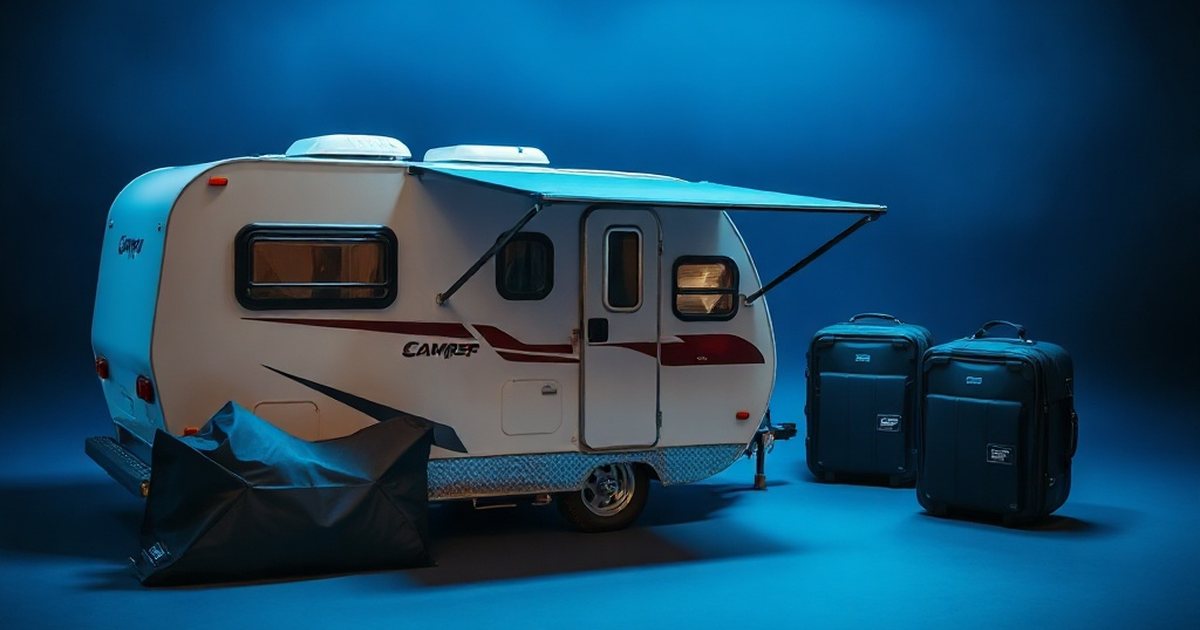
Signal Booster Antenna Placement
For cell signal boosters, place the interior antenna as far from your sleeping and primary seating areas as practical. The FCC-compliant effective range of about 4 feet means you do not need the antenna directly next to you. Mount the exterior antenna on the opposite end of the RV from the interior antenna, and use the RV’s roof as a natural RF barrier between the two. If you experience oscillation (the booster’s red indicator light), the roof alone may not provide sufficient separation, and RF blocking tape or fabric on the ceiling beneath the exterior antenna can help.
When not actively needing boosted signal, simply power off the booster. Most models draw modest power, but turning them off eliminates the interior RF broadcast entirely during sleeping hours.
Using a Portable EMF Meter for Site Selection
One advantage RV owners have over homeowners is mobility. If a boondocking spot sits directly below a cell tower or next to high-voltage power lines, you can simply move. A portable EMF meter lets you check potential campsites before settling in. Take readings inside the RV with all your own systems powered off to measure the ambient environment, then take readings with your systems on to understand your own contribution to the overall exposure.
This approach is especially useful when boondocking. Many dispersed camping areas on public land are near communication infrastructure, and some spots may have unexpectedly high ambient RF from nearby towers that are not visible from ground level.
Product Categories Worth Considering
The following product categories are relevant to RV EMF reduction. These are real products available from established manufacturers.
Portable EMF Meters
A combo meter that measures RF, magnetic fields, and electric fields in a single handheld device is the most practical choice for RV travel. You do not want to carry three separate meters.
The TriField TF2 (approximately $170) is widely considered the best entry-level combo meter. It measures AC magnetic fields with plus or minus 4% accuracy at 50/60 Hz, includes AC electric field measurement, and covers radio frequency power density. The large, clear display is easy to read in varied lighting conditions. Its main limitation is that it does not accurately measure higher-frequency 5G bands or some pulsed wireless signals.
The Cornet ED88T Plus (approximately $180 to $195) offers superior RF sensitivity with a frequency range up to 8 GHz, capturing more wireless signals than the TriField. It includes a histogram display that shows RF exposure over time, revealing patterns and peaks. The ED88T also has an SMA connector for external antennas. The tradeoff is a smaller screen and a steeper learning curve for the user interface.
The GQ EMF-390 covers an even wider frequency range (up to 10 GHz) and measures EMF, ELF, electric fields, and RF radiation with multiple sensors. It is a good option if you want the broadest detection coverage in a single device.
For RV use specifically, the TriField TF2 is the best starting point for most people due to its simplicity. If you are particularly concerned about RF from cell towers and want time-based logging of exposure at a campsite, the Cornet ED88T Plus is the better choice.
Dirty Electricity Filters
Plug-in dirty electricity filters attach to your RV’s standard 120V outlets and reduce high-frequency voltage transients on your wiring. The two main brands are Stetzerizer and Greenwave.
Greenwave filters have been tested to show up to a 90% reduction in dirty electricity levels. They include a pass-through outlet so you do not lose the socket, and they measure high-frequency noise up to 10,000 kHz. An RVer living full-time in a 40-foot RV reported using 8 filters across the rig at a cost of about $280. When purchasing more than 8 units, the per-filter price drops to around $28.
Stetzerizer filters are the original dirty electricity filter and are well-proven. They measure up to 150 kHz, a narrower range than Greenwave. One important consideration for RV owners: some users have reported that Greenwave filters caused issues when used on circuits powered by a backup generator, while Stetzerizer filters did not. If you frequently run a generator, the Stetzerizer may be the safer choice.
A word of caution: dirty electricity filters should not be used if your RV has wiring errors, as they could potentially worsen magnetic field levels in that scenario. Having your RV’s electrical system checked by a qualified technician before installing filters is good practice.
Both brands also offer companion meters. The Stetzerizer Line Noise Meter (approximately $150) and the Greenwave Broadband EMI Meter let you measure before and after installing filters so you can verify the reduction. The general benchmark is that readings above 50 GS units are considered undesirable.
Window Shielding Options
Windows are the primary RF entry point in a metal-bodied RV since they represent large gaps in the Faraday cage effect. Shielding the windows reduces exterior RF signals entering the RV, which is helpful when parked near cell towers or other RF sources.
EMF shielding curtains made with silver fiber or metallic mesh fabric are available from several manufacturers. Moondream offers EMF shielding fabric curtains specifically designed as barriers against radiofrequency signals from exterior sources. Silver fiber Faraday fabric panels are available on Amazon and eBay, typically featuring 100% silver fiber construction with surface resistance below 1 ohm. These can be hand-washed in cold water and reused.
For RV-specific installation, you can combine EMF shielding fabric with RV curtain tracks from retailers like Curtain-Tracks.com, which carry custom-sized curtain systems designed for the non-standard window sizes found in campers and motorhomes. This gives you a professional-looking installation rather than fabric taped over windows.
Keep in mind that shielding your windows blocks RF in both directions. If you rely on cell signal entering through the windows, shielding curtains will reduce that signal as well. This is another reason external antennas for cell boosters are important in a shielded RV.
Putting It All Together: A Practical RV EMF Reduction Plan
Rather than trying to do everything at once, consider a phased approach based on impact and cost.
Phase 1 (no cost): Rearrange what you already own. Move your inverter, charge controller, and cell booster interior antenna as far from sleeping and seating areas as possible. Turn off WiFi routers and cell boosters at night. Use your phone on speaker or wired earbuds rather than holding it against your head, especially inside the metal RV body where reflected RF can intensify exposure.
Phase 2 (under $200): Purchase a combo EMF meter (TriField TF2 or Cornet ED88T Plus) so you can measure and make informed decisions. Use it to survey your RV with systems on and off, and use it to evaluate campsites before settling in.
Phase 3 (under $500): Add dirty electricity filters to your most-used outlets and bedroom area. If you still have a modified sine wave inverter, start researching a pure sine wave upgrade. Add ferrite chokes to solar charge controller cables.
Phase 4 (variable cost): Consider window shielding fabric or curtains for the windows nearest your bed. Upgrade to a pure sine wave inverter if you have not already done so. Install external antennas for any interior signal boosters.
Frequently Asked Questions
Do all RVs have an EMF problem?
Not necessarily. The EMF environment in your RV depends heavily on what equipment is installed and how it is positioned. An RV running a quality pure sine wave inverter with well-routed wiring and no interior signal boosters will have a very different electromagnetic profile than one packed with modified sine wave inverters, multiple WiFi extenders, and a cell booster. Measuring with an EMF meter is the only way to know your specific situation.
Is a fiberglass RV better or worse than a metal one for EMF?
It depends on the source of concern. A fiberglass body does not create the Faraday cage reflection effect, so RF from interior devices like phones and routers will radiate outward rather than bouncing around inside. However, a fiberglass body also offers no shielding from external RF sources like nearby cell towers. Metal bodies can trap interior RF but block exterior signals. Neither is categorically better; the tradeoffs are different.
Are pure sine wave inverters worth the extra cost?
From both an EMF and a practical standpoint, yes. Pure sine wave inverters produce roughly 15 dB less electromagnetic interference than modified sine wave models, maintain total harmonic distortion below 3%, and run appliances 8 to 15% more efficiently. They also prevent the buzzing, overheating, and potential damage that modified sine wave power can cause in sensitive electronics. The price gap has narrowed considerably in recent years.
Can I use dirty electricity filters while running my generator?
Use caution here. Some users have reported that Greenwave filters caused issues on circuits powered by backup generators, including damaged surge protectors. Stetzerizer filters did not cause the same problems in those reports. If you frequently run a generator, Stetzerizer filters may be the safer option. Regardless of brand, consider installing a quality surge protector between your generator and your RV’s electrical panel before plugging in any filters.
How close to a cell tower is too close when choosing a campsite?
There is no single definitive answer, because tower output varies by carrier, frequency band, antenna configuration, and how many users the tower is serving. The practical approach is to use a portable RF meter. Take readings at a potential campsite and compare them to readings at sites you know are further from towers. This gives you a relative comparison based on your own measurement rather than relying on arbitrary distance rules.
Will EMF shielding curtains block my cell signal?
Yes, shielding curtains reduce RF transmission in both directions. If your cell signal enters through the windows, covering them with shielding fabric will weaken it. This is why pairing shielding curtains with an external cell antenna and booster is a good combination: the external antenna captures signal from outside the shielded space, and the booster delivers it to a controlled interior antenna.
What is the single most impactful change I can make?
For most RV owners, upgrading from a modified sine wave inverter to a pure sine wave inverter delivers the largest measurable reduction in dirty electricity and high-frequency noise. If you already have a pure sine wave inverter, maximizing distance between your electrical equipment and your sleeping area is the next highest-impact step, and it costs nothing.
Do ferrite chokes actually work on solar charge controller cables?
Yes, ferrite chokes (snap-on ferrite cores) are a proven, low-cost technique for reducing conducted RF noise on cables. They work by absorbing high-frequency noise and converting it to a small amount of heat. Ham radio operators and RV solar installers have documented measurable noise reductions after applying ferrites to charge controller input and output cables. They are not a complete solution on their own, but they are an effective and inexpensive part of a broader noise reduction approach.
Final Thoughts
RV and camper EMF shielding is not about perfection or paranoia. It is about understanding that the unique combination of compact spaces, close proximity to power conversion equipment, metal enclosures, and concentrated wireless devices creates an electromagnetic environment that genuinely differs from a house. The physics of the Faraday cage effect, the documented noise output of modified sine wave inverters, and the well-known RF interference from switching charge controllers are all real, measurable phenomena that the RV and electrical engineering communities have discussed extensively.
The good news is that the most impactful steps are either free (repositioning equipment, turning off devices at night) or relatively affordable (a combo EMF meter, a set of dirty electricity filters, ferrite chokes). More involved upgrades like pure sine wave inverters and window shielding fabric are available when you are ready. Start by measuring, address the largest sources first, and make changes based on what your own readings tell you about your specific RV setup.
These statements have not been evaluated by the Food and Drug Administration. This information is not intended to diagnose, treat, cure, or prevent any disease. Content is for informational purposes only and is not medical advice; consult a qualified healthcare provider before starting any supplement. As an Amazon Associate we earn from qualifying purchases.