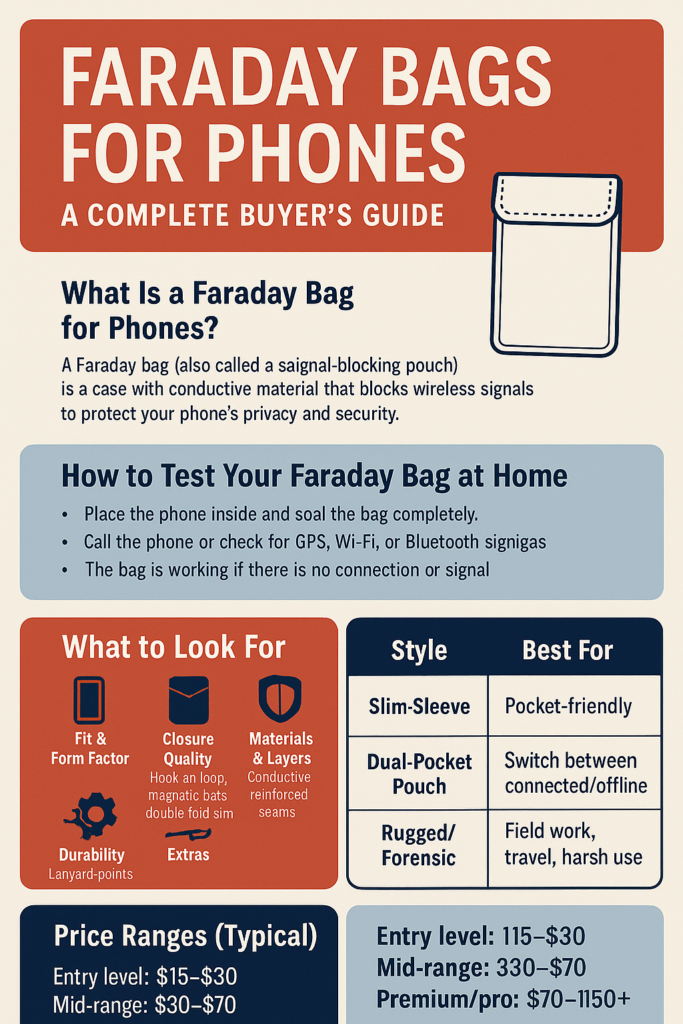
(Simple EMF Meter Methods)
You’ve bought high-quality frequency blocking materials (maybe silver-thread curtains, an EMF canopy, or conductive wall paint) but how do you know they’re working?
Fortunately, you don’t need a laboratory to test performance. With a few simple tools and techniques, you can measure the effectiveness of frequency blocking fabrics and materials right at home.
This guide explains step-by-step how to use consumer EMF meters, interpret readings, and verify that your setup is truly reducing exposure.
Why Testing Matters
The market for EMF and frequency blocking products is booming, but not all products live up to their claims.
Some fabrics block only narrow frequency ranges; others lose conductivity with washing or aging. Testing helps you:
- Confirm your material’s real-world performance
- Identify leaks or gaps in coverage
- Optimize placement for maximum benefit
- Separate scientifically effective products from marketing hype
Tools You’ll Need for Home Testing
You don’t need industrial equipment. The following tools work for most home users:
One caution on phone apps: in measurement tests, the phone’s orientation, the position of the source and the transmit power all changed signal-strength readings, and even after correction the readings were accurate only to under 5 dBm RMSE compared with professional equipment. Use an app to see whether a signal is present, not to rate a material [5].
| Tool | Purpose | Recommended Examples |
|---|---|---|
| RF/EMF Meter | Measures radiofrequency and magnetic field intensity | Safe and Sound Pro II, Cornet ED88T |
| Conductivity Tester (Optional) | Checks grounding or surface conductivity of fabrics and paints | YShield Multimeter |
| Smartphone Analyzer App | For Wi-Fi and Bluetooth signal readings | “WiFi Analyzer” (Android), “Network Analyzer” (iOS) |
| Notebook or Spreadsheet | To log readings before and after shielding | Any manual log or Google Sheet |
Understanding What You’re Measuring
1. Frequency Types
- Low-Frequency (ELF): From wiring and appliances (50 to 60 Hz).
- High-Frequency (RF): From Wi-Fi, cell towers, Bluetooth (800 MHz-6 GHz).
Most frequency blocking fabrics are designed for RF shielding, not power-line ELF.
Pick a meter that reads the field you want to block, or the test tells you nothing
Measured in mG or µT
From current in wiring, power lines, motors and appliances. Read it with a gaussmeter or the magnetic mode of a multi-field meter.
Measured in V/m
From voltage on unshielded cords and wiring, even with nothing switched on. Read it with an electric-field mode; grounding changes the reading.
Measured in µW/m² or V/m
From phones, Wi-Fi, Bluetooth, cell towers and smart meters. Read it with an RF meter whose range covers the bands you care about.
Noise on the wiring
High-frequency noise riding on the mains, conducted rather than radiated. A field meter cannot see it; it needs a plug-in line-noise meter.
Each field type needs its own sensor
Each field type needs its own sensor; a meter that reads one says nothing about the others.
Embed this chart
Free to reuse on your site. Copy the code below; please keep the credit link.
2. Measurement Units
Meters display readings in:
- µW/m² (microwatts per square meter): Power density of RF waves.
- V/m (volts per meter): Field strength (convertible to µW/m²).
For reference:
- Typical bedroom near Wi-Fi: varies widely from home to home. In one study of 267 everyday places, a body-worn meter found a median total RF exposure of 0.13 mW/m2, so record your own baseline [1]
- Shielded bedroom with canopy: <100 µW/m²
(Electronics Notes: Shielding Effectiveness)
Step-by-Step: Testing Frequency Blocking Materials at Home
Step 1: Establish a Baseline
Before testing fabrics, measure your environment.
- Turn off unrelated devices (TVs, microwaves).
- Note readings for:
- Wi-Fi router area
- Bedside
- Near windows or walls facing cell towers
- Record average readings for 30 to 60 seconds.
Step 2: Test the Material Directly
Hold your frequency blocking fabric between the meter and the signal source (like your router).
- Keep both about 12 to 18 inches apart.
- Move the fabric slowly to ensure coverage.
- Watch for reading drops on your meter.
Example Results:
| Setup | Reading (µW/m²) | Reduction |
|---|---|---|
| No fabric | 8,000 | |
| SilverAffect Fabric | 120 | 98.5% |
| Carbon Fiber Fabric | 380 | 95% |
| Copper Mesh | 45 | 99.4% |
Step 3: Test Installation Effectiveness
After applying materials (paint, curtain, or canopy), test again from the same location as your baseline.
- Measure through windows, walls, and under canopies.
- Take readings at multiple heights (bed level, standing height).
- Note both before and after averages.
Example: Bedroom Wall Test:
| Location | Before (µW/m²) | After (µW/m²) | % Reduction |
|---|---|---|---|
| Wall near tower | 6,500 | 230 | 96% |
| Ceiling | 2,800 | 180 | 93% |
| Bedside (after canopy) | 3,000 | 80 | 97% |
Step 4: Check Grounding
If you’re using conductive paint or fabric, grounding ensures static and electric charge safely dissipate.
Use a continuity or conductivity tester to confirm:
- Paint connects to the grounding plate.
- Fabric clips or cords show electrical continuity.
A reading under 5 ohms indicates proper grounding.
Step 5: Evaluate Real-World Function
Try simple practical checks:
- Wi-Fi Test: Does your phone lose connection when placed behind the material?
- Call Test: Does a phone call drop inside a canopy or shielded enclosure?
- Bluetooth Test: Does your speaker disconnect when shielded?
These help visualize the effectiveness for readers without meters.
Tips for Accurate Results
- Hold still: EMF meters react instantly: average your readings.
- Avoid reflections: Metal furniture or large appliances can distort numbers.
- Measure at night: Fewer external Wi-Fi sources reduce noise.
- Repeat tests over several days for consistency.
- Document everything, including time, position, and device activity.
Common Testing Mistakes to Avoid
| ❌ Mistake | ✅ Correct Approach |
|---|---|
| Testing too close to source (overload) | Stay 12 to 24 inches away |
| Using ungrounded fabrics | Always ground conductive materials |
| Comparing readings from different locations | Always test from same spot |
| Ignoring ambient fluctuations | Take averages over 30 to 60 seconds |
| Expecting “zero” EMF | Even effective shielding reduces, not eliminates signals |
Interpreting Results: What’s Good Performance?
| Attenuation (dB) | Approx. % Reduction of field strength (for power-density readings such as µW/m2, 20 dB is a 99% reduction) [2] | Typical Home Reading Result |
|---|---|---|
| 20 dB | 90% | Noticeable drop; minor improvement |
| 40 dB | 99% | Strong reduction; suitable for most uses |
| 60 dB | 99.9% | Professional-level attenuation |
| 80+ dB | 99.99% | Rare; industrial or lab-grade |
Example Consumer Result:
Before: 8,000 µW/m² (router wall)
After applying YShield paint: 180 µW/m²
Reduction: ~97.7% (about 16.5 dB attenuation)
(Electronics Notes: Decibel Explained)
Testing Wearable or Portable Products
Frequency blocking scarves, blankets, or clothing can also be tested:
- Place your phone (with Wi-Fi ON) under the fabric.
- Watch your meter reading drop as you cover it.
- Check for consistent reduction when moving around the fabric.
Sample Results (Radia Smart EMF Scarf):
| Test | Reading (µW/m²) | Reduction |
|---|---|---|
| Uncovered | 4,200 | |
| Covered | 260 | 93.8% |
Documenting and Comparing Results
Keep a simple log for your home tests:
- Record baseline, material test, and post-installation readings.
- Include photos of your setup.
- Note environmental changes (new routers, moved furniture, etc.).
Over time, this data helps you track performance and detect degradation in frequency blocking materials.
Troubleshooting Poor Results
If results aren’t matching expectations:
- Check gaps: Signals sneak through window edges or outlet plates.
- Inspect grounding: Loose or incorrect connections reduce performance.
- Test for reflections: Large metal surfaces nearby can create hotspots.
- Re-measure from multiple angles: RF can bounce unpredictably indoors.
If readings remain high, consider layering materials (e.g., fabric plus paint) for improved attenuation.
(Safe Living Technologies Grounding Guide)
Key Takeaways
- Testing your frequency blocking materials ensures they perform as claimed.
- Use a consumer EMF meter for before-and-after comparisons, and treat the readings as approximate [3][4].
- Always test before and after installation from identical locations.
- Proper grounding and documentation improve accuracy.
- Expect reduction, not elimination, even 90 to 99% reduction is excellent.
With a few readings, you’ll turn your frequency blocking setup from “I hope it’s working” to “I know it’s effective.”
References
- NIST EMF Metrology Program
- ASTM D4935-18 Standard Test Method
- Safe Living Technologies: EMF Testing Tools
- Electronics Notes: Shielding Effectiveness
- YShield Grounding & Multimeter Guide
- Radia Smart EMF Scarf
Featured Products
Looking for quality EMF protection? Check out these recommended products:
Frequently Asked Questions
Do I really need special equipment to test frequency blocking fabrics at home?
No, you don’t need industrial laboratory equipment. Consumer-grade EMF meters like the Safe and Sou model are affordable and useful for comparing before and after readings in your home, though low-cost sensors can read several dB away from a professional instrument [3][4].
What’s the difference between RF and magnetic field measurements when testing my materials?
RF (radiofrequency) and magnetic fields are different types of electromagnetic exposure measured in different units. Understanding which frequencies your blocking materials target helps you interpret meter readings accurately and identify whether your setup is protecting against the specific sources in your environment.
How can I tell if my frequency blocking curtains or canopy are losing effectiveness over time?
You can document baseline readings when you first install your materials, then retest them periodically at the same locations and distances. If readings increase significantly over months or after washing, this indicates the conductive properties may be degrading and you may need replacement or maintenance.
What are the most common mistakes people make when testing EMF blocking products at home?
Common errors include not establishing a proper baseline reading first, testing materials in inconsistent locations, forgetting to check for grounding issues, and misinterpreting measurement units. The article guides you through proper step-by-step testing to avoid these pitfalls and get accurate results that separate effective products from marketing hype.
References
- Huss A et al. Exposure to radiofrequency electromagnetic fields: Comparison of exposimeters with a novel body-worn distributed meter. Environment international (2021). PMID 34153890
- Pušić T et al. Electromagnetic Shielding Properties of Knitted Fabric Made from Polyamide Threads Coated with Silver. Materials (Basel, Switzerland) (2021). PMID 33800263
- Deprez K et al. Comparison of Low-Cost 5G Electromagnetic Field Sensors. Sensors (Basel, Switzerland) (2023). PMID 36992024
- Rathebe PC et al. Low-Cost Sensors in 5G RF-EMF Exposure Monitoring: Validity and Challenges. Sensors (Basel, Switzerland) (2026). PMID 41600329
- Yanis Boussad et al. Evaluating Smartphone Accuracy for RSSI Measurements. IEEE Transactions on Instrumentation and Measurement (2021). doi:10.1109/tim.2020.3048776
These statements have not been evaluated by the Food and Drug Administration. This information is not intended to diagnose, treat, cure, or prevent any disease. Content is for informational purposes only and is not medical advice; consult a qualified healthcare provider before starting any supplement. As an Amazon Associate we earn from qualifying purchases.