When your phone is in your pocket or bag, it still connects to the network from time to time. Phones use adaptive power control that can cut emitted power by orders of magnitude, up to a factor of 1,000, and a phone’s typical power is 0.25 W [4].
Get our complete guide with room-by-room strategies and product recommendations.
What a pouch does when the phone is inside
A Faraday pouch is lined with conductive fabric, so signals from the phone cannot get out and signals from the network cannot get in. The seal is what matters. A flap that does not close flat, or a pouch that has creased or worn, leaves a gap, and gaps let signal through.
Faraday pouches are made of conductive materials that block RF from entering or leaving. If a pouch blocks the network, the phone may raise its transmit power while it keeps searching, since a GSM phone with a weak signal must raise its power to keep a connection [7].
That is the catch with this tip. A phone that is sealed away from the network keeps searching, and searching can raise its power. A pouch is best for a phone you have switched off or put in airplane mode, or for moments when you truly do not need a connection.
How to use one
The Fix: When you’re not actively using your phone, slip it into a Faraday pouch. A well-sealed pouch can block most signals, but results vary: in a field test of forensic phone-shielding devices most test cases still reached the phone, and unsealed edges and gaps reduce shielding [5][6].
- Put the phone in the pouch, switched off or in airplane mode, when you are walking, commuting or between uses.
- Fold or seal the closure fully every time.
- Take the phone out when you want calls, messages or navigation, since a sealed phone cannot get them.
- Compare it with airplane mode, which turns the radios off without a pouch. The pouch versus airplane mode guide explains when each makes sense.
Mission Darkness Faraday Bag
A sealed Faraday pouch for carrying the phone. Test it with a call once it is closed, and take the phone out to use it rather than leaving the flap open.
View Product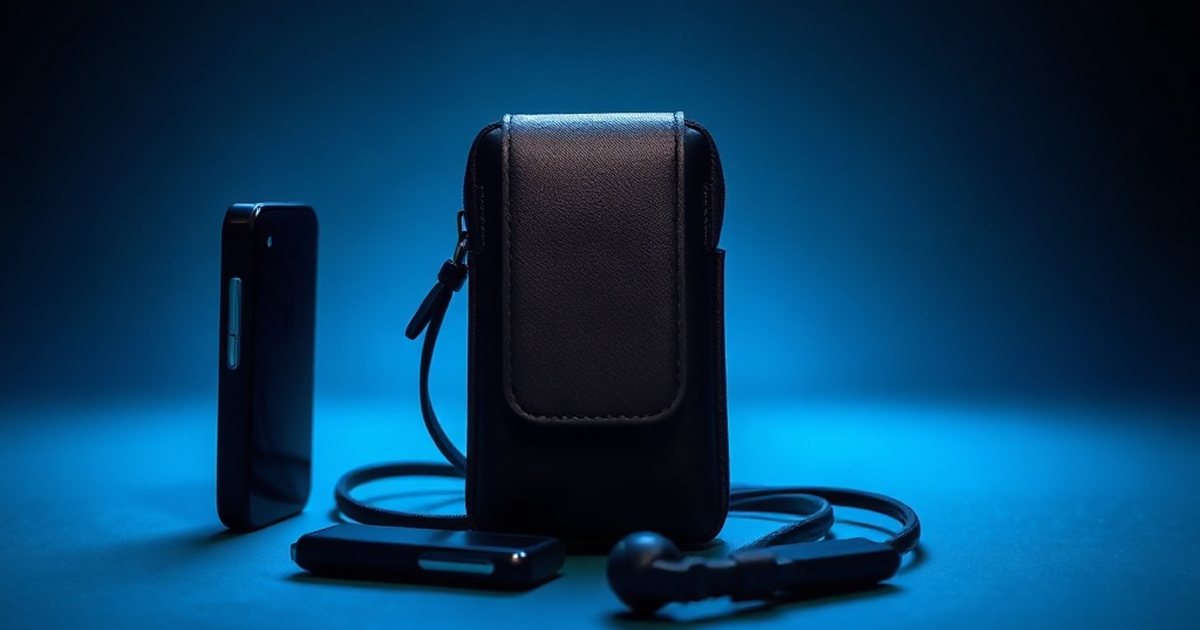
Test it before you trust it
Do not assume a pouch works because it says so. Seal the phone inside, with its radios on, and call it from another phone. If it rings or a message arrives, the pouch is leaking, usually at the closure. Try the same test with Wi-Fi and Bluetooth, and repeat it after the pouch has seen wear or a wash.
Test a Faraday pouch at home before you rely on it
A sealed phone should not ring.
A simple functional check, not a laboratory measurement of attenuation.
Data table
| Step | Stage | What happens |
|---|---|---|
| 1 | Baseline | Note signal bars, Wi-Fi and location with the phone outside the bag |
| 2 | Seal | Close the bag fully: roll-top folded, flap pressed flat |
| 3 | Call it | Call the sealed phone from another phone and wait |
| 4 | Read it | No ring: sealed. A ring, buzz or delayed text: a leak |
| 5 | Repeat | Test Wi-Fi and Bluetooth too, after any wear or a wash |
Chart: frequencyblockers.com: Test a Faraday pouch at home before you rely on it
Embed this chart
Free to reuse on your site. Copy the code below; please keep the credit link.
What the pocket-carrying research says
Carrying a phone in the front pocket is the common worry behind this tip. The cited studies are mixed and mostly reassuring.
Research note: A 2021 meta-analysis of human cross-sectional studies did not support an association between phone use and falling sperm quality overall, though results differed by region and showed declines in East Europe and West Asia [12].
Carrying a phone in a front pants pocket is a common worry. Two preconception cohorts found little overall link between front-pocket phone carrying and the chance of conceiving per cycle (fecundability ratio 0.94), and a WHO-commissioned review found there may be no or little effect of pocket carrying on sperm concentration, count, morphology or motility [10][11].
The International Agency for Research on Cancer (IARC) has classified radiofrequency electromagnetic fields as “possibly carcinogenic to humans,” a rating based on limited human evidence for glioma in wireless phone users. The US National Cancer Institute says the evidence to date suggests cell phone use does not cause brain or other kinds of cancer, and a WHO-commissioned meta-analysis found no association between ever or regular mobile phone use and glioma (pooled relative risk 1.01). Precautions are a personal choice, not a response to a demonstrated harm [1][2][3].
Ready for More EMF Protection Tips?
Our complete guide includes 100 actionable strategies for every room in your home, plus product recommendations from our curated collection.
Get the Complete GuideFrequently Asked Questions
Will carrying my phone in a Faraday pouch block important calls and messages?
Yes, Faraday pouches are designed to block all signals, so you won’t receive calls, texts, or notifications while your phone is inside. You can remove your phone from the pouch when you need to check messages or take calls, making it ideal for periods when you want to reduce EMF exposure without losing connectivity entirely.
How much EMF radiation am I exposed to if I keep my phone in my pocket all day?
Your phone continuously transmits radiation throughout the day as it searches for cell towers, syncs data, and receives notifications, meaning you’re constantly exposed to electromagnetic fields. Research on the health effects of that exposure is mixed, and a Faraday pouch is one simple way to reduce it for a phone you are not using.
Is a Faraday pouch better than just turning my phone off?
A Faraday pouch is more practical for daily life since it allows you to keep your phone accessible while blocking radiation, whereas turning your phone off makes it completely unavailable. The pouch blocks signals while the phone is inside, but no verified study shows that this lowers any health risk. Shielding performance varies by frequency and construction [8][5].

Can I use a regular bag or metal case instead of a Faraday pouch?
Ordinary bags do not block radio signals, but pouches vary too. In a field test of forensic phone-shielding devices most test cases still reached the phone, and a quoted shielding figure depends on frequency and test setup [5][9].
References
- International Agency for Research on Cancer IARC classifies radiofrequency electromagnetic fields as possibly carcinogenic to humans (Press release 208). International Agency for Research on Cancer (2011). source
- US National Cancer Institute Cell Phones and Cancer Risk. US National Cancer Institute (current). source
- Karipidis K et al. The effect of exposure to radiofrequency fields on cancer risk in the general and working population: A systematic review of human observational studies – Part I: Most researched outcomes. Environment international (2024). PMID 39241333
- ICNIRP (International Commission for Non-Ionizing Radiation Protection) Standing Committee on Epidemiology: et al. Epidemiology of Health Effects of Radiofrequency Exposure. Environmental Health Perspectives (2004). PMID 15579422
- Eric Katz et al. A field test of mobile phone shielding devices. Purdue e-Pubs (Purdue University System) (2011). source
- Andrew C. Marvin et al. A Method for the Measurement of Shielding Effectiveness of Planar Samples Requiring No Sample Edge Preparation or Contact. IEEE Transactions on Electromagnetic Compatibility (2009). doi:10.1109/temc.2009.2015147
- T. Buczkowski et al. Influence of Mobile Phones on the Quality of ECG Signal Acquired by Medical Devices. Measurement Science Review (2013). doi:10.2478/msr-2013-0035
- Pušić T et al. Electromagnetic Shielding Properties of Knitted Fabric Made from Polyamide Threads Coated with Silver. Materials (Basel, Switzerland) (2021). PMID 33800263
- Ming Li Jiao et al. Electromagnetic Interference Shielding Properties of Silver-Plated Polyester Fabric. Applied Mechanics and Materials (2012). doi:10.4028/www.scientific.net/amm.239-240.310
- Hatch EE et al. Male cellular telephone exposure, fecundability, and semen quality: results from two preconception cohort studies. Human reproduction (Oxford, England) (2021). PMID 33564831
- Pw Kenny R et al. The effects of radiofrequency exposure on male fertility: A systematic review of human observational studies with dose-response meta-analysis. Environment international (2024). PMID 38880061
- Yu G et al. Current progress on the effect of mobile phone radiation on sperm quality: An updated systematic review and meta-analysis of human and animal studies. Environmental pollution (Barking, Essex : 1987) (2021). PMID 33862271
These statements have not been evaluated by the Food and Drug Administration. This information is not intended to diagnose, treat, cure, or prevent any disease. Content is for informational purposes only and is not medical advice; consult a qualified healthcare provider before starting any supplement. As an Amazon Associate we earn from qualifying purchases.