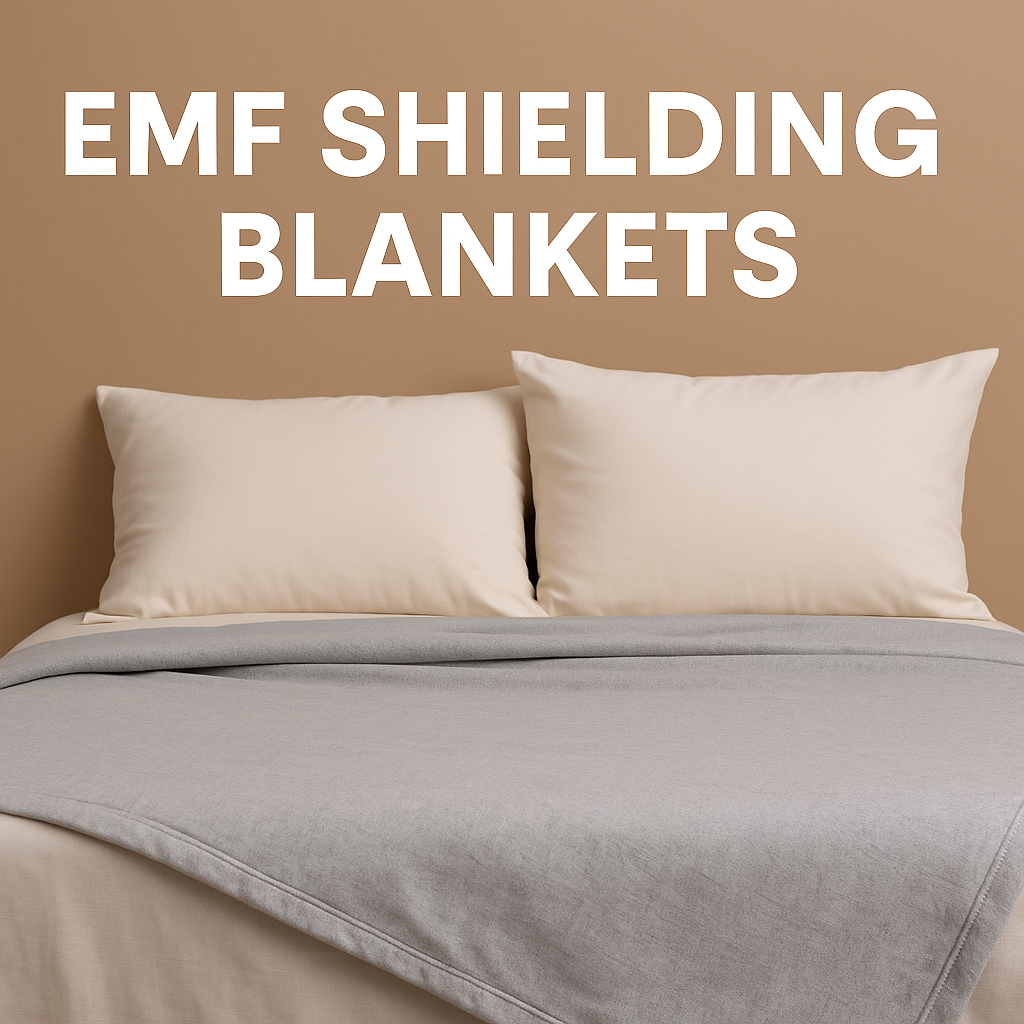
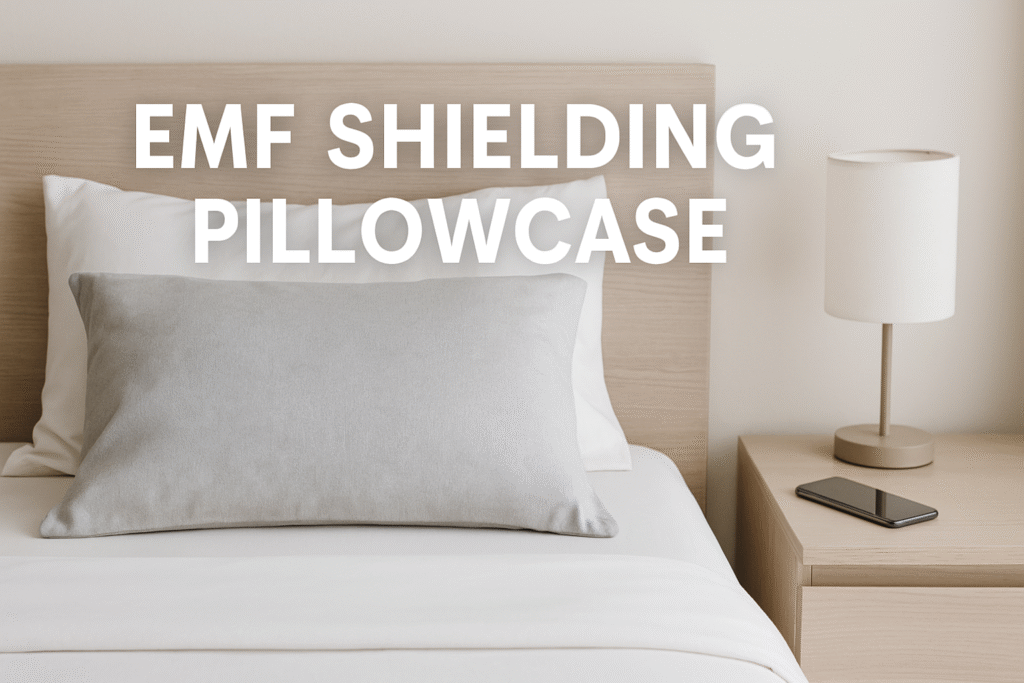
You spend roughly a third of your life in your bedroom. That makes it the single highest-priority room for reducing EMF exposure, simply because of how many continuous hours your body is there each night. While the research on EMF and sleep is covered in our companion article on the topic, this guide is about the practical side: how to physically set up your bedroom, which product categories to consider, and in what order to spend your money.
The good news is that the most effective steps cost nothing. Rearranging furniture, unplugging devices, and increasing distance from sources can meaningfully reduce your nighttime exposure before you spend a single dollar on shielding products.
Why the Bedroom Comes First
EMF exposure is cumulative. Seven to nine hours of uninterrupted exposure each night adds up to more total contact time than any other room in your home. During sleep your body is also engaged in repair and recovery processes, which some researchers believe may be more sensitive to environmental disruption. For these reasons, most EMF consultants and building biologists recommend starting with the bedroom when creating low-EMF spaces.
This guide walks through the setup in order of cost, starting with free changes and working up to professional-grade shielding. You do not need to do everything on this list. Even the first two or three steps can make a noticeable difference in your measured readings.
Room Layout: Free Changes That Matter Most
Bed Placement
Your bed position relative to hidden EMF sources is the single most impactful free change you can make. EMF intensity drops rapidly with distance (following the inverse square law), so even moving a bed 12 inches away from a problematic wall can reduce exposure significantly.
- Keep at least 8 inches between your headboard and the nearest wall. Electrical wiring runs through most interior walls, and those circuits emit electric fields even when no devices are turned on.
- Never place your bed against a wall shared with an electrical panel. Main breaker panels generate substantial magnetic fields during operation. Ideally, keep your sleeping position at least 10 feet from any panel or sub-panel. If that is not possible, position the bed on the opposite wall of the room.
- Check the other side of every wall. A wall that backs up to a kitchen (with a refrigerator compressor running 24/7), a home office with multiple devices, or a utility room with a smart meter can expose you to elevated fields you would never suspect from inside the bedroom.
- Avoid walls with dense wiring runs. In many homes, wiring runs horizontally along walls at outlet height. If your bedroom has multiple outlets on one wall, that wall likely carries more wiring. Place your headboard on a different wall when possible.
Nightstand and Device Setup
The nightstand is often the densest concentration of EMF sources near your head. A charging smartphone, a WiFi-connected alarm clock, a plugged-in lamp, and a baby monitor can collectively create a surprisingly high-exposure zone within inches of your pillow.
- Move your phone out of arm’s reach. If you use it as an alarm, place it across the room or switch to a battery-powered analog clock. The Braun Classic Analog Alarm Clock is a popular choice in the EMF-conscious community because it uses a single AA battery and produces no wireless emissions.
- Unplug devices you are not actively using. Even a phone charger with no phone attached emits a small electric field. Lamps, white noise machines, and clock radios all contribute. Unplugging eliminates both the electric field from the cord and any RF from wireless features.
- Replace wireless baby monitors with wired alternatives or increase distance. Baby monitors often transmit continuously at relatively high power levels compared to other household devices.
Router Placement and WiFi Management
Your WiFi router is one of the strongest RF sources in your home, broadcasting continuously. If it sits in or near the bedroom, it deserves immediate attention.
- Move the router to a central, non-bedroom location. Most routers perform well from a hallway, living room, or home office. Having it in the bedroom provides minimal connectivity benefit while maximizing your nighttime exposure.
- Use a timer to turn WiFi off overnight. A simple mechanical outlet timer can shut down the router at bedtime and restart it in the morning. This eliminates 7 to 9 hours of RF exposure per night at zero ongoing cost.
- If the router must stay nearby, consider a router guard. Brands like Smart Meter Guard and Faraday Defense make Faraday-cage enclosures that reduce RF emissions by roughly 85% to 90% (approximately 10 to 15 dB attenuation) while still allowing the router to function. Your WiFi speed may decrease somewhat, but for most households the tradeoff is acceptable. These typically cost $30 to $70.
Product Categories: From Low-Cost to Full Shielding
Once you have optimized your room layout, the next steps involve products. We have ordered these from least expensive to most expensive so you can stop at whatever level fits your budget and comfort. Each category addresses a different type of exposure.
Battery-Powered Alarm Clock ($10 to $30)
This is the simplest product swap in the entire guide. Replacing a phone alarm or a plugged-in digital clock with a battery-powered analog clock eliminates both RF (from the phone’s wireless radio) and electric fields (from the power cord) near your head. It also removes the temptation to check your phone during the night, which exposes you to both blue light and close-range RF.
Router Guard ($30 to $70)
If your router is in an adjacent room or cannot be moved far from the bedroom, a router guard provides a meaningful reduction in ambient RF. The Smart Meter Guard Router Guard and the Faraday Defense Router Shield 2 are two of the more established options. Both are essentially small Faraday cages made of perforated metal that attenuate RF while still allowing enough signal through for normal WiFi use. Expect roughly 85% to 90% reduction in emissions from the router itself.
Editor’s Pick: WiFi Router Cover, Smart High Protection Router Cover, Versatile Shielding WiFi Guard (14IN)
A fabric shield that slips over your router to cut WiFi and 5G exposure in the room without killing the signal to other rooms.
Grounding and Earthing Sheets ($60 to $250)
Grounding sheets are made from cotton interwoven with conductive silver threads and connect via a cord to the ground port of a standard wall outlet or to a grounding rod placed outdoors. The theory is that grounding your body to the earth’s electrical potential may help dissipate accumulated charge and reduce the electric field component of EMF exposure at the body surface.
Established brands in this space include Earthing (founded by Clint Ober, who pioneered the grounding movement), The Faraday Co. (organic cotton with conductive silver), and Grooni Wellness (HSA/FSA eligible mats). Some sheets also claim RF shielding properties, though the primary mechanism is electric field reduction through body grounding.
Important caveat: Grounding products work best in low-EMF environments. In spaces with significant dirty electricity or wiring errors, plugging a grounding sheet into a wall outlet can actually connect your body to unwanted electrical noise in the grounding system. Before investing in grounding sheets, it is wise to test your outlets with a simple outlet tester and, ideally, measure body voltage with a multimeter to confirm the ground connection is clean.

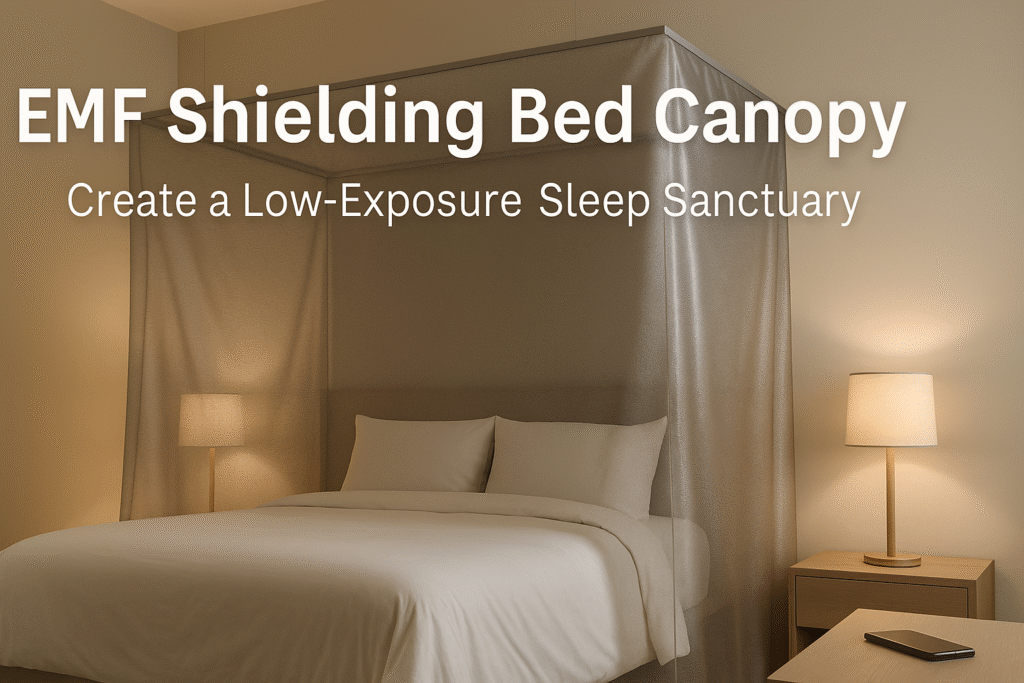
EMF Shielding Bed Canopy ($200 to $1,500+)
A bed canopy is the most targeted shielding product you can buy for sleep protection. Quality canopies use silver-threaded or copper-threaded fabric to create a Faraday cage around your sleeping area, blocking RF signals from WiFi, cell towers, smart meters, and nearby devices.
Attenuation performance varies significantly by fabric quality and construction. At the higher end, the SilverLoom canopy from EMR Shielding Solutions (WOREMOR) achieves up to 50 dB attenuation at 1 GHz with a single layer, which translates to blocking over 99.99% of RF at that frequency. Their Swiss Shield Voile canopy achieves approximately 36 dB with one layer. Shield Your Body (SYB) canopies typically provide 30 to 40 dB reduction. Budget canopies on Amazon from brands like UrGarding use silver-coated mesh and generally claim 20 to 40 dB, though independent verification of those numbers is harder to find.

When shopping for a canopy, look for attenuation data tested across a range of frequencies (not just one), since your bedroom is likely exposed to multiple signal types: cellular at 700 to 2600 MHz, WiFi at 2.4 and 5 GHz, and potentially 5G at 3.5 GHz or higher. Also check whether the canopy includes a floor mat, as a canopy without floor coverage can actually concentrate RF signals that enter from below.
EMF Shielding Paint ($150 to $400 per 5 liters)
Shielding paint is a more permanent, whole-wall solution. These are carbon-based or graphite-based paints applied like regular wall paint that create a conductive barrier blocking RF from entering through walls. This is most useful when your bedroom faces a cell tower, a neighbor’s WiFi, or other external sources you cannot control.
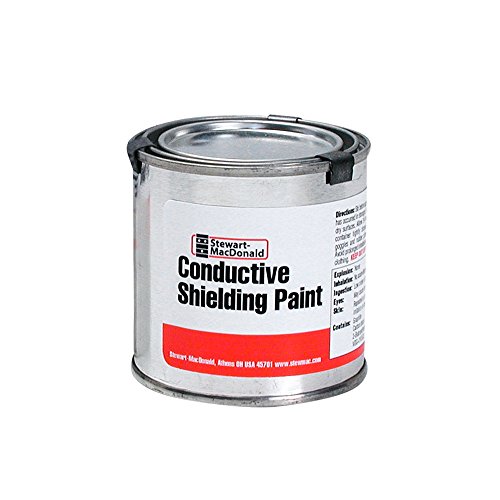
Editor’s Pick: StewMac Conductive Shielding Paint
A brush-on water-based conductive shielding paint that dries to a continuous conductive layer. Reduces hum and blocks RF when applied and grounded, ideal for smaller surfaces and enclosures.
The most established brand is YShield, a German manufacturer with over 20 years in the market. Their HSF54 paint achieves 44 dB attenuation (99.996% reduction) with a single coat, and up to 59 dB with three coats, tested up to 40 GHz. Their HSF64 is a silicate-based, preservative-free formula better suited for chemically sensitive individuals, achieving 36 dB with one coat. WOREMOR RF-IE50 is a comparable alternative at 36 dB per layer. CuPro-Cote is a copper-based option that claims over 75 dB attenuation from 30 MHz to 1.5 GHz.
Critical requirement: All conductive shielding paints must be grounded by a licensed electrician after application. Without proper grounding, the conductive layer can actually amplify electric fields rather than block them. This is not a DIY grounding job. Budget for professional installation when planning a shielding paint project.
Building Your EMF-Free Bedroom: Step-by-Step Checklist
Use this checklist to work through the process methodically. Each step builds on the previous one.
- Measure your baseline. Before making any changes, take readings with an EMF meter (RF, magnetic field, and electric field) at your pillow position, nightstand, and room center. Write these down. You need a starting point to know whether your changes are working.
- Map your walls. Identify which walls share space with an electrical panel, kitchen appliances, home office equipment, or a smart meter. Check the floor below and ceiling above as well.
- Reposition your bed. Move it away from high-exposure walls. Aim for at least 8 inches from any wall, and as far as possible from identified sources.
- Clear the nightstand. Remove or unplug all unnecessary electronics. Replace your phone alarm with a battery-powered clock. Move chargers to the other side of the room.
- Address the router. Relocate it out of the bedroom, put it on a timer for overnight shutoff, or install a router guard.
- Consider a kill switch. Have an electrician install a remote cut-off switch for bedroom circuits. Flipping it at bedtime de-energizes all wiring in the walls, eliminating electric fields from the wiring itself.
- Add grounding (if appropriate). Test your outlet’s ground connection first. If clean, install a grounding sheet or mat. If dirty electricity is present, address that first with filters.
- Install shielding products. Based on your remaining readings and budget, add a bed canopy, shielding curtains, or shielding paint as needed.
- Re-measure. Take the same readings at the same positions. Compare against your baseline. Adjust as needed.
Common Mistakes to Avoid
Even well-intentioned EMF reduction efforts can backfire if you overlook certain principles. These are the most common mistakes we see.
Over-Shielding Without Grounding
This is the single most common and most counterproductive mistake. Installing shielding paint, a canopy, or conductive fabric without properly grounding it can trap electric fields inside the shielded space rather than dissipating them. The conductive material becomes charged, and you end up sleeping inside an electrified enclosure. Every conductive shielding product, whether paint, fabric, or canopy, needs a verified path to ground.
Creating RF Reflections
Shielding one or two walls while leaving others open can create a situation where RF signals enter through the unshielded surfaces and bounce off the shielded ones, potentially concentrating radiation in certain spots rather than reducing it. If you shield walls, you need to think about complete coverage, including the floor. A bed canopy without a floor mat has the same problem: RF enters from below and reflects off the canopy fabric above.
Ignoring Dirty Electricity
Many people focus entirely on RF and magnetic fields while overlooking dirty electricity, the high-frequency voltage transients that ride on your home’s standard 60 Hz wiring. Sources include dimmer switches, LED drivers, variable-speed motors, and many modern electronics. Dirty electricity filters from brands like Greenwave and Stetzerizer plug into standard outlets and absorb these transients, typically reducing them by 50% to 95%. A dirty electricity meter (such as the Greenwave Broadband EMI Meter or the Graham-Stetzer Microsurge Meter) can tell you whether this is a significant issue in your bedroom. Most rooms need two to four filters.

Using a Metal Bed Frame
Metal bed frames and box springs with metal coils can conduct and amplify ambient electromagnetic fields. Building biologists often recommend switching to a solid wood frame with a non-coil mattress (natural latex, for example) as part of a low-EMF bedroom setup. This is not always practical or affordable, but it is worth knowing if you are measuring elevated fields near your bed and cannot find another source.
Shielding Before Measuring
Buying shielding products without first measuring your actual exposure is like buying medicine without a diagnosis. You might spend $500 on shielding paint for a wall that was not the problem, while ignoring a WiFi repeater in the next room that was. Always measure first, then target your spending at the actual sources.
Frequently Asked Questions
Does turning off WiFi at night actually reduce EMF exposure?
Yes. Your router broadcasts RF signals continuously, whether or not any device is actively using the internet. Turning it off overnight eliminates that source entirely during your longest stretch of potential exposure. A mechanical outlet timer is the simplest way to automate this. Your WiFi will reconnect automatically when power is restored in the morning.
Can I use my phone as an alarm and still reduce EMF?
You can switch your phone to airplane mode before placing it on the nightstand. Airplane mode disables WiFi, cellular, and Bluetooth radios, eliminating RF emissions. However, the phone’s power cord (if charging) still creates a small electric field. A battery-powered analog clock placed across the room is a more complete solution if you want to minimize all sources near your head.
How much does a full EMF bedroom shielding setup cost?
It depends on how far you go. Free rearrangement and unplugging costs nothing. A battery clock and router guard together run $40 to $100. A quality grounding sheet adds $60 to $250. A mid-range bed canopy costs $300 to $800. Shielding paint for one or two walls, including professional grounding, could run $300 to $800 depending on room size. A comprehensive setup might total $700 to $1,800, though most people find significant improvement with just the first few steps.

Do EMF bed canopies actually block 5G?
Quality canopies from brands like WOREMOR (SilverLoom and Swiss Shield lines) and SYB have published attenuation data tested up to 10 GHz and beyond, which covers the sub-6 GHz 5G bands used by most carriers. However, millimeter wave 5G (above 24 GHz) requires different fabric specifications. Check the manufacturer’s tested frequency range before assuming full 5G coverage. Most residential 5G exposure is in the sub-6 GHz range.
Is EMF shielding paint safe to live with?
Modern shielding paints like YShield HSF64 are solvent-free, preservative-free, and low-emission. They can be painted over with any standard interior wall paint. The paint itself is not the safety concern. The critical safety requirement is proper grounding by a licensed electrician. Ungrounded shielding paint on your walls is potentially worse than no shielding at all because it can concentrate electric fields in the room.
Should I ground my bed canopy?
Most EMF consultants recommend grounding conductive canopies, especially in environments with high electric field exposure. Some canopy manufacturers include a grounding cord with their product. Without grounding, the silver or copper threads in the fabric can accumulate charge from ambient electric fields. That said, some experts note that for RF-only shielding (blocking WiFi and cell signals), grounding is less critical than for electric field shielding. If your primary concern is RF, a canopy may still be effective without grounding, but grounding adds an extra layer of protection.
What is the single most impactful change for an EMF-free bedroom?
Moving your phone and other electronics away from your pillow and nightstand. This costs nothing and eliminates the highest-intensity EMF sources in immediate proximity to your head. After that, turning off WiFi overnight is the next highest-impact free change. These two steps alone address the most concentrated sources most people are exposed to during sleep.
Can dirty electricity filters interfere with my electronics?
Dirty electricity filters like those from Greenwave and Stetzerizer are designed to absorb high-frequency electrical noise without affecting the standard 60 Hz (or 50 Hz) power your devices use. They should not interfere with normal electronics. Some users report that sensitive audio equipment actually performs better with cleaner power. The main consideration is that each filter draws a tiny amount of power and occupies one outlet, which is why Greenwave designs theirs with a pass-through outlet on the base.
Putting It All Together
Creating an EMF-free bedroom is not an all-or-nothing project. The most effective approach is incremental: start with free layout changes, measure your results, and add products only where your readings show they are needed. Many people find that repositioning their bed, clearing electronics from the nightstand, and turning off WiFi overnight gets them 80% of the way to a low-EMF sleep environment without spending anything.
For those who want to go further, grounding sheets, bed canopies, and shielding paint each address different types of EMF exposure. The key is to measure before and after each change, ground every conductive product properly, and avoid the common mistake of partial shielding that creates reflections rather than blocking signals.
Your bedroom should be the lowest-EMF room in your home. With the steps in this guide, you can make it one, on whatever budget and timeline works for you.
{ “@context”: “https://schema.org”, “@type”: “FAQPage”, “mainEntity”: [ { “@type”: “Question”, “name”: “Does turning off WiFi at night actually reduce EMF exposure?”, “acceptedAnswer”: { “@type”: “Answer”, “text”: “Yes. Your router broadcasts RF signals continuously, whether or not any device is actively using the internet. Turning it off overnight eliminates that source entirely during your longest stretch of potential exposure. A mechanical outlet timer is the simplest way to automate this.” } }, { “@type”: “Question”, “name”: “Can I use my phone as an alarm and still reduce EMF?”, “acceptedAnswer”: { “@type”: “Answer”, “text”: “You can switch your phone to airplane mode before placing it on the nightstand. Airplane mode disables WiFi, cellular, and Bluetooth radios, eliminating RF emissions. However, the phone’s charging cord still creates a small electric field. A battery-powered analog clock across the room is a more complete solution.” } }, { “@type”: “Question”, “name”: “How much does a full EMF bedroom shielding setup cost?”, “acceptedAnswer”: { “@type”: “Answer”, “text”: “It depends on how far you go. Free rearrangement costs nothing. A battery clock and router guard run $40 to $100. A grounding sheet adds $60 to $250. A mid-range bed canopy costs $300 to $800. Shielding paint for one or two walls with professional grounding runs $300 to $800. A comprehensive setup might total $700 to $1,800.” } }, { “@type”: “Question”, “name”: “Do EMF bed canopies actually block 5G?”, “acceptedAnswer”: { “@type”: “Answer”, “text”: “Quality canopies from brands like WOREMOR and SYB have attenuation data tested up to 10 GHz and beyond, covering sub-6 GHz 5G bands. Millimeter wave 5G (above 24 GHz) requires different fabric specifications. Most residential 5G exposure is sub-6 GHz, which quality canopies can address.” } }, { “@type”: “Question”, “name”: “Is EMF shielding paint safe to live with?”, “acceptedAnswer”: { “@type”: “Answer”, “text”: “Modern shielding paints like YShield HSF64 are solvent-free, preservative-free, and low-emission. They can be painted over with standard wall paint. The critical safety requirement is proper grounding by a licensed electrician. Ungrounded shielding paint can concentrate electric fields in the room.” } }, { “@type”: “Question”, “name”: “Should I ground my bed canopy?”, “acceptedAnswer”: { “@type”: “Answer”, “text”: “Most EMF consultants recommend grounding conductive canopies, especially in high electric field environments. Without grounding, silver or copper threads can accumulate charge. For RF-only shielding, grounding is less critical, but it adds an extra layer of protection and is generally considered best practice.” } }, { “@type”: “Question”, “name”: “What is the single most impactful change for an EMF-free bedroom?”, “acceptedAnswer”: { “@type”: “Answer”, “text”: “Moving your phone and other electronics away from your pillow and nightstand. This costs nothing and eliminates the highest-intensity sources in proximity to your head. Turning off WiFi overnight is the next highest-impact free change. These two steps address the most concentrated sources most people face during sleep.” } }, { “@type”: “Question”, “name”: “Can dirty electricity filters interfere with my electronics?”, “acceptedAnswer”: { “@type”: “Answer”, “text”: “Dirty electricity filters from Greenwave and Stetzerizer absorb high-frequency electrical noise without affecting standard 60 Hz power. They should not interfere with normal electronics. Some audio enthusiasts report better performance with cleaner power. Each filter occupies one outlet, though Greenwave models include a pass-through outlet.” } } ] }These statements have not been evaluated by the Food and Drug Administration. This information is not intended to diagnose, treat, cure, or prevent any disease. Content is for informational purposes only and is not medical advice; consult a qualified healthcare provider before starting any supplement. As an Amazon Associate we earn from qualifying purchases.