If you live near a cell tower, you have probably wondered how much radiofrequency (RF) energy is reaching your home and whether it matters. The question “what is a safe distance from a cell tower” is one of the most common searches in the EMF space, and the answer is more nuanced than a single number.
The truth is that no major regulatory body publishes a single “safe distance” figure. Instead, agencies like the FCC and ICNIRP set maximum power density limits, and cell towers are required to comply with those limits at any point the public can access. Whether you find those limits reassuring depends on how you weigh the ongoing scientific debate about long-term, low-level RF exposure.
This guide covers how RF exposure actually changes with distance (including a counterintuitive pattern that surprises most people), how to find the towers near your home, what the published research and regulatory limits actually say, and a practical method for estimating your relative exposure without buying equipment. If your estimate raises concerns, we also cover when and how to measure properly and what shielding options actually work.
How RF Exposure Changes With Distance From a Cell Tower
RF energy follows what physicists call the inverse square law: power density decreases with the square of the distance from the source. In practical terms, when you double your distance from an antenna, your exposure drops to roughly one quarter. Triple the distance, and it falls to about one ninth.
Researchers in Switzerland measured power densities near base stations and found approximately 1 V/m at 20 meters, dropping to 0.2 V/m at 80 meters, and falling below 0.1 V/m at 300 meters. Broader measurement surveys have found median residential power densities around 200 microwatts per square meter at typical urban distances of about 250 meters with direct line of sight.
But here is the part that surprises most people: the area directly below a cell tower often has lower RF exposure than locations several hundred meters away.
Why Standing Below a Tower Can Mean Less Exposure
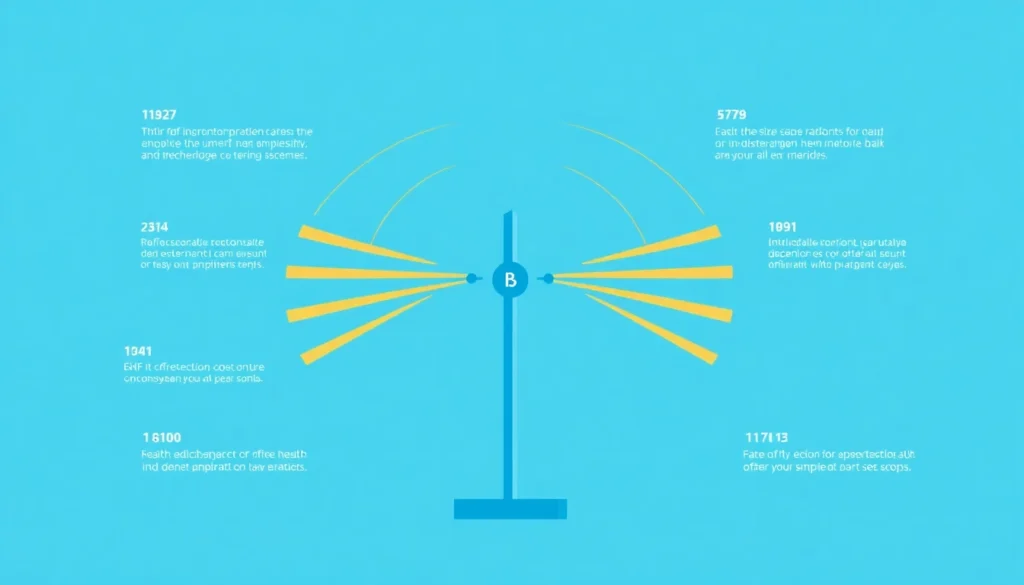
Cell tower antennas are directional. They do not broadcast energy in all directions equally. Instead, the main beam points outward and slightly downward (engineers call this “downtilt”) to cover ground-level users at a distance. Very little energy is directed straight down.
This means that if a cell antenna sits on top of your apartment building, the RF levels in your unit are typically lower than in a building across the street at the same height. The FCC has confirmed this pattern, noting that ground-level exposures directly below tower-mounted antennas are typically thousands of times less than the agency’s exposure limits. The peak ground-level exposure zone for a typical macro tower is roughly 50 to 300 meters away, where the main beam intersects the ground plane.

This is important for anyone evaluating a home or apartment near a tower. Proximity alone does not determine exposure. The direction the antenna faces, your elevation relative to the antenna, and any obstructions between you and the tower all matter more than raw distance.
How to Find Cell Towers Near Your Home
Before you can estimate your exposure, you need to know where the nearest towers are and roughly how far away they sit. Several free tools make this straightforward.
FCC Antenna Structure Registration (ASR) Database
The FCC maintains the official Antenna Structure Registration database, which logs every registered antenna structure in the United States. You can access it in two ways:
Radius search: The FCC’s “ASRN Records Within a Radius” tool lets you enter your latitude and longitude (or a street address converted to coordinates) and a search radius. It returns every registered antenna structure within that circle, including structure height, registration number, and owner information.
Interactive map: The FCC Antenna Structure Registration Map provides a visual interface where you can zoom into your neighborhood and see registered structures plotted on the map. This is often the fastest way to get an overview of what is near your home.
AntennaSearch.com
AntennaSearch pulls from the FCC database but adds a more user-friendly interface. Enter your address including city and state, and it returns all towers and antennas within a 3-mile radius, plotted on a map. Clicking any tower shows construction date, ground elevation, structure height, and ownership details. It is free for basic searches.
Other Tower Locator Resources
CellTowerMaps.com sources directly from the FCC ASR database (over 2.8 million records) and color-codes towers by technology generation: red for 5G, orange for 4G/LTE, yellow for 2G/3G, and blue or green for broadcast towers. Mobile apps like Network Cell Info, OpenSignal, and LTE Discovery can also identify the general position of the nearest tower using your phone’s connection data, though these are less precise than the FCC database for determining exact locations.
One useful field tip: cell tower sites are generally required to post a sign with their FCC Antenna Structure Registration number, usually on the perimeter fencing. If you can see a tower from your home, walking to it and noting this number lets you look up its exact specifications in the FCC database.
What Regulatory Bodies and Research Say About Safe Distances
It is worth stating clearly: no major regulatory agency sets an official “safe distance” from cell towers. Instead, they set maximum permissible RF power density levels and require tower operators to comply.
FCC Limits (United States)
The FCC’s general public exposure limit for frequencies commonly used by cell towers (around 900 MHz to 2 GHz) is approximately 0.6 to 1.0 milliwatts per square centimeter (mW/cm²), depending on the exact frequency. At 2 GHz (a common 4G/LTE band), the limit is 1.0 mW/cm². These limits are codified under 47 CFR 1.1310 and are based on preventing established thermal effects of RF exposure. For 5G millimeter wave frequencies above 6 GHz, the general public limit remains 1.0 mW/cm² averaged over 4 cm² and 30 minutes.
ICNIRP Guidelines (International)
The International Commission on Non-Ionizing Radiation Protection updated its guidelines in 2020. For frequencies around 2 GHz, the general public reference level is 10 W/m² (equivalent to 1.0 mW/cm²), matching the FCC limit at that frequency. ICNIRP occupational limits are five times higher at 50 W/m². At 900 MHz, ICNIRP is slightly more restrictive than the FCC (0.45 vs 0.6 mW/cm²). Both sets of guidelines are designed to protect against confirmed thermal effects with substantial safety margins built in.
What the Published Research Shows
The scientific picture is genuinely unsettled. A 2010 review by Khurana et al. examined 10 epidemiological studies and found that eight of them reported increased prevalence of adverse symptoms or cancer in populations living within 500 meters of base stations, even at exposure levels below international guidelines. A 2022 review by Balmori in Environmental Research examined studies from 20 countries and found that 73.6% reported health effects associated with proximity to cell antennas. A Brazilian study (Dode et al., 2011) published in Science of the Total Environment tracked cancer mortality over 10 years and found elevated relative risk at residential distances of 500 meters or less from cell towers.
On the other side, the World Health Organization, most national regulatory bodies, and many scientists maintain that RF exposure below international guidelines has not been confirmed to cause health effects. The established safety limits carry large built-in safety margins (typically 50-fold for the general public), and measured exposures near towers are routinely hundreds to thousands of times below those limits.
Precautionary perspectives, including the review by Pearce (2020), suggest maintaining setback distances of at least 500 meters from cell towers, particularly for schools and hospitals. This is not an official regulatory requirement in any country we are aware of, but it reflects the distance threshold that appears most frequently in the epidemiological literature.
Estimating Your Relative RF Exposure by Distance
You do not need an RF meter to get a rough sense of how your location compares to various distance benchmarks. The table below applies the inverse square relationship to show how relative power density drops as distance from a cell tower increases, assuming direct line of sight to the main beam and no building attenuation.
Important: These are estimates based on the inverse square law for an idealized scenario. Real-world exposure depends on antenna power, directionality, downtilt angle, frequency, building materials between you and the tower, and whether you are in the main beam path. Use this as a rough comparison tool, not a measurement substitute.
| Distance from Tower | Relative Exposure (vs. 50m baseline) | Typical Measured Range (open air, line of sight) | Context |
|---|---|---|---|
| 50 meters (164 ft) | 1.0x (baseline) | 1,000 to 10,000 µW/m² | Uncomfortably close; still well below FCC limits |
| 100 meters (328 ft) | 0.25x | 250 to 2,500 µW/m² | Common in dense urban areas |
| 200 meters (656 ft) | 0.0625x | 60 to 625 µW/m² | Typical suburban residential distance |
| 300 meters (984 ft) | 0.028x | 28 to 280 µW/m² | Below 0.1 V/m in Swiss measurements |
| 400 meters (1,312 ft) | 0.016x | 16 to 160 µW/m² | Often cited precautionary minimum |
| 500 meters (1,640 ft) | 0.01x | 10 to 100 µW/m² | Threshold in most epidemiological studies |
| 1,000 meters (3,280 ft) | 0.0025x | 2.5 to 25 µW/m² | Negligible for most practical purposes |
To use this table: find your nearest tower using the tools described above, estimate the distance (Google Maps measuring tool works well), then look up your approximate row. If you are behind a building or not in line with the antenna’s main beam direction, your actual exposure is likely lower still. Standard construction materials (wood frame, drywall) reduce RF exposure by roughly 50% to 70%, while concrete and brick can block 80% to 90%.
Remember the beam direction factor. If the nearest tower’s antennas point away from your home, your exposure may be substantially less than the table suggests for your distance. Conversely, if you are directly in the main beam path at antenna height (for example, in an upper-floor apartment facing a tower across the street), exposure could be at the higher end of the range.

When You Should Actually Measure With an RF Meter
The distance estimation method above is useful for general awareness, but it has real limitations. You should consider measuring with an actual RF meter if any of these apply:
Editor’s Pick: TriField TF2 EMF Meter
A 3-in-1 meter measuring AC magnetic, AC electric, and RF fields in one device. The gold-standard pick building biologists and home inspectors reach for first.
You are within 200 meters of a tower and in the beam path. At this range, the difference between being in the main beam versus off-axis is large enough that distance alone does not tell you much. A measurement will settle it.
Multiple towers are nearby. The inverse square table assumes a single source. If you have three towers within 300 meters, the combined exposure from all of them is what matters, and that requires measurement.
You want to evaluate shielding effectiveness. If you are planning to install window film or shielding paint, a before-and-after measurement is the only way to verify the investment is working.
You are making a real estate decision. Buying or renting a home near a tower is a long-term commitment. A one-time professional RF survey (or a quality consumer meter like the Safe and Sound Pro II or Acoustimeter) gives you actual numbers rather than estimates.
Your situation has unusual geometry. A tower mounted on an adjacent building’s rooftop, a small cell on a streetlight outside your window, or an antenna you can see through your bedroom window all create exposure patterns that do not follow simple distance modeling. Measurement is the right tool here.
For most consumer purposes, an RF meter that covers 200 MHz to 8 GHz and reads in microwatts per square meter is sufficient. If 5G millimeter wave coverage is active in your area (primarily dense urban zones), you may need a meter that also covers the 24 to 40 GHz range.

Protection Options If You Are Concerned
If your tower is close, your measurements are higher than you would like, or you simply prefer to reduce exposure as a precaution, several shielding approaches are proven to work. The key principle is to shield the side of your home that faces the tower, not the entire house (which would also block your own cell signal and Wi-Fi).
RF Shielding Window Film
Windows are the weakest point in any wall for RF penetration. A quality RF shielding window film applied to tower-facing windows can reduce RF transmission through the glass by 95% to 99% (20 to 40 dB attenuation, depending on the product and frequency). Products like Signal Defense window film and similar metallized films are applied like standard window tint. They also reduce solar heat gain and glare, which can offset the cost through energy savings. The tradeoff is that they will also reduce your cell signal strength indoors on that side of the house.
RF Shielding Paint
For walls facing a tower, RF shielding paint (such as Yshield HSF54 or similar carbon and nickel-based formulations) can be applied under your regular wall paint. One or two coats typically provide 30 to 40 dB of attenuation across a broad frequency range. The paint must be grounded with a grounding strip connected to your home’s electrical ground for best performance. This is a more involved project than window film but very effective for the tower-facing wall of a bedroom or living space.
RF Shielding Curtains and Fabric
Shielding curtains made with silver-threaded or copper-nickel fabric offer a less permanent alternative to window film. They provide 20 to 40 dB of attenuation when drawn closed and can be opened during the day when you are not in the room. Swiss Shield, Blocsilver, and similar fabrics are available as ready-made curtains or by the yard for custom projects. These are particularly practical for bedrooms where you want reduced exposure during sleep without permanently altering windows.
Targeted Shielding Strategy
The most cost-effective approach is to shield only the surfaces that face the primary source. Use the tower locator tools to identify which direction the nearest tower sits relative to your home, then focus your shielding budget on windows and walls on that side. Bedrooms deserve priority since you spend 7 to 9 hours there nightly. Taking a quick RF meter reading at each window helps identify which openings are actually receiving the most signal, so you avoid shielding windows that do not need it.

Frequently Asked Questions
What is a safe distance to live from a cell tower?
No regulatory agency defines an official safe distance. FCC and ICNIRP set power density limits instead, and towers must comply regardless of distance. Most precautionary recommendations in the published literature cite 400 to 500 meters as a minimum preferred setback. At 400 meters with line of sight, typical RF exposure drops to roughly 1.6% of the level at 50 meters.
Is living directly below a cell tower more dangerous than living across the street?
Generally no. Cell tower antennas are directional and point outward, not downward. Apartments directly beneath rooftop antennas typically measure lower RF than units at antenna height in buildings across the street. The peak exposure zone at ground level is usually 50 to 300 meters from the base, where the main beam reaches ground elevation.
How much RF does a typical cell tower actually emit at my home?
At a typical suburban distance of 200 to 300 meters with line of sight, measured power densities are generally in the range of 60 to 600 microwatts per square meter. The FCC general public limit at 2 GHz is 10,000,000 microwatts per square meter (10 W/m²). Real residential exposures are routinely hundreds to thousands of times below this limit, though some researchers argue the limit itself may not account for long-term non-thermal effects.
Do building walls block cell tower radiation?
Yes, substantially. Standard wood-frame construction with drywall reduces RF transmission by roughly 50% to 70%. Brick and concrete walls block 80% to 90%. Windows are the weak point, which is why RF shielding window film or shielding curtains are the most impactful single upgrade for reducing indoor exposure from an external cell tower.
Are 5G small cells more concerning than traditional macro towers?
5G small cells operate at much lower power than macro towers (often 10 watts or less versus 50 to 100 watts per channel for macro sites). However, they are mounted much closer to people, often on streetlights or utility poles at 15 to 30 feet height. Precautionary guidelines for small cells suggest a minimum of 50 to 100 feet of separation. Millimeter wave 5G (above 24 GHz) has very short range and is absorbed primarily by the skin surface.
How can I find out exactly which direction a cell tower’s antennas point?
FCC registration data includes tower location and height but not always individual antenna orientation. You can visually inspect the tower (sector antennas are flat panels that point in the direction they serve) or request the site’s RF emissions study from the tower owner. Most macro towers use three sectors covering 120 degrees each for 360-degree coverage.
Should I measure RF before buying a home near a cell tower?
It is a reasonable precaution, especially if a tower is within 300 meters and visible from the property. A professional RF survey typically costs $200 to $500 and gives you actual power density measurements room by room. Alternatively, a consumer RF meter in the $300 to $500 range lets you measure yourself. Either provides real data rather than distance-based estimates.

Do trees and landscaping reduce cell tower exposure?
Dense foliage provides modest attenuation, typically 3 to 10 dB depending on leaf density, species, and season. A thick stand of evergreen trees between your home and a tower offers year-round reduction. However, trees alone are not a substitute for purpose-built shielding if your measured levels are a concern. They are best viewed as a supplemental layer.
Conclusion
The question of cell tower EMF safe distance does not have a single clean answer because regulatory agencies, independent researchers, and precautionary advocates are working from different frameworks. What you can do is move from guessing to informed decision-making.
Start by locating your nearest towers using the FCC ASR database or AntennaSearch. Estimate your relative exposure using the distance table above, keeping antenna direction and building materials in mind. If that estimate puts you in a range you are not comfortable with, or if the geometry of your situation is complex, invest in an actual RF measurement. And if the numbers warrant action, targeted shielding on the tower-facing side of your home is the most cost-effective way to reduce exposure without losing cell service entirely.
Whether you are evaluating a new home, retrofitting your current one, or simply trying to understand what the tower down the street means for your family, the tools and data in this guide give you a basis for making that call with real information rather than anxiety.
These statements have not been evaluated by the Food and Drug Administration. This information is not intended to diagnose, treat, cure, or prevent any disease. Content is for informational purposes only and is not medical advice; consult a qualified healthcare provider before starting any supplement. As an Amazon Associate we earn from qualifying purchases.