Most EMF concerns can be handled with targeted fixes. Moving a Wi-Fi router, swapping to a wired connection, or increasing distance from a device solves the problem without major renovation. But sometimes the source is not something you control. Cell towers, neighboring smart meters, or a dense cluster of external antennas can saturate a room with radio frequency (RF) energy from every direction. That is when whole-room shielding starts to make sense.
This guide covers the two primary materials used for room-level RF shielding: conductive paint for walls and ceilings, and shielding fabric for windows and other openings. Used together, they create something close to a Faraday cage around your living space. Used individually, they still reduce exposure significantly, though with obvious gaps wherever the shield is incomplete.
A word on expectations: shielding a room can measurably reduce RF exposure from external sources. Whether that reduction translates to health benefits is a question the research has not settled conclusively. This guide focuses on the practical engineering side. If you want to reduce RF levels in a specific room, these methods work. The materials are real, the attenuation figures are lab-tested, and the process is well-documented.
How Conductive Shielding Paint Works
EMF shielding paint is not regular paint with a marketing label. It is a specialized coating loaded with conductive particles that form a continuous conductive layer on your wall. When properly applied and grounded, this layer absorbs and redirects incoming RF signals to earth ground, preventing them from passing through into the room.
The three main conductive ingredients used across brands are:
Natural graphite and carbon black: The most common formula. YShield HSF54, the long-standing market standard, uses a blend of natural graphite and carbon black suspended in a pure acrylic binder. The particles are finely pigmented at 20 micrometers, forming a hard, continuous conductive film. This approach produces a paint that is VOC-free, breathable, and compatible with most wall surfaces including drywall, plaster, wood, and concrete.
Potassium silicate (mineral) base: WOREMOR’s RF-IE50 line uses a potassium silicate binder with graphite and carbon black pigments. The silicate base creates a mineral bond with the wall surface, which some installers prefer for masonry and concrete applications. Like the acrylic formulas, it is solvent-free and non-toxic.
Metal-particle formulas: Some specialty paints use copper or nickel particles instead of carbon. These tend to be more expensive and are typically used in industrial EMC (electromagnetic compatibility) applications rather than residential shielding.

All conductive shielding paints share one non-negotiable requirement: the painted surface must be grounded by a licensed electrician. This is not optional. An ungrounded conductive layer does not simply fail to shield. It can reflect RF energy in unpredictable directions, potentially concentrating exposure in parts of the room rather than reducing it. Grounding gives the induced electrical charges a safe path to dissipate into the earth.
How Shielding Fabric Works
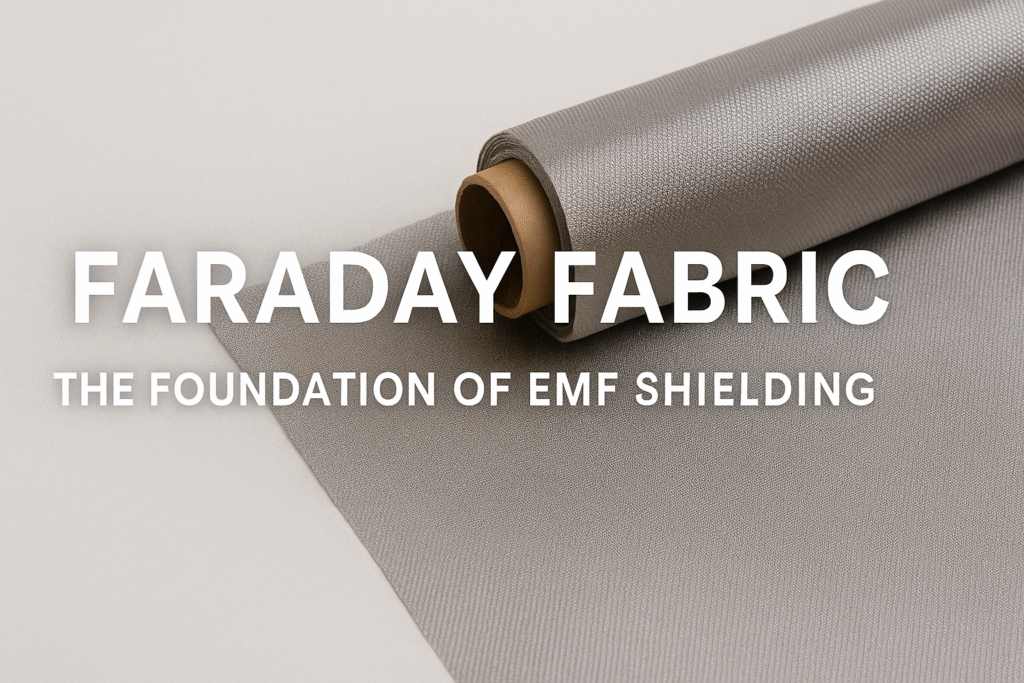
Shielding fabrics are textiles woven with conductive metal threads or coated with conductive metal layers. They block RF signals through the same principle as paint: creating a conductive barrier that absorbs or reflects electromagnetic energy. The difference is in the form factor. Fabric is flexible, removable, and does not require permanent modification to your walls.
The most common applications for shielding fabric in a room are:
Window curtains: Windows are the biggest gap in any painted room. Glass does almost nothing to block RF. Purpose-built shielding curtains, like the Mission Darkness TitanRF line, use multiple layers of copper-nickel fabric sandwiched behind a decorative polyester face. They hang on standard curtain rods and look like normal blackout curtains.
Wall-mounted panels: For renters who cannot paint, large fabric panels can be mounted over walls using temporary fasteners. This is less effective than paint (gaps at seams and edges let RF through), but it provides meaningful attenuation without permanent modification.
Canopy enclosures: Bed canopies made from shielding mesh create a shielded sleeping area without touching the room’s walls at all. These are popular for people who want protection during sleep without committing to a full-room project.
When Fabric Makes More Sense Than Paint
Fabric is the better choice when you are renting and cannot modify walls, when you need a temporary or portable solution, when the RF source is directional and you only need to shield one wall or window, or when you want to start with a lower-cost test before committing to a full paint job. Paint is superior for permanent, seamless coverage of large wall areas, but fabric fills the gaps that paint cannot cover (windows, doors) and works well as a standalone solution for less demanding situations.
Combining Paint and Fabric for Complete Room Coverage
The most effective room shield uses both materials together. The strategy is straightforward: paint the walls (and ideally the ceiling), then cover windows with shielding curtains or fabric panels. This combination eliminates the two largest surface areas where RF can enter.
Here is how the coverage breaks down for a typical bedroom:
Walls: Two coats of conductive paint. This is the foundation of the shield and covers the largest surface area. Two coats bring most paints into the 45-53 dB attenuation range at 1 GHz, which represents a reduction of over 99.99% of incoming RF energy at that frequency.

Windows: Shielding curtains or fabric panels mounted with overlap beyond the window frame. The curtain should extend at least 4-6 inches past each edge of the window to minimize leakage around the perimeter. For maximum effectiveness, the curtain edges can be sealed to the painted wall using conductive tape.
Floor and ceiling: These are the surfaces most people skip, and it matters. RF energy does not just come from the sides. Cell tower signals come from above; signals from a downstairs neighbor’s router come from below. For a truly complete enclosure, the ceiling should be painted and the floor should have a conductive layer (paint, conductive mat, or shielding fleece under the flooring). In practice, many people accept the floor and ceiling as partial gaps, especially in single-story homes or top-floor apartments where the exposure path is less direct.
Door: A standard wooden door offers minimal RF shielding. Options include mounting a shielding fabric panel on the back of the door or installing a door seal with conductive gasket tape. This is the most commonly ignored gap in room shielding projects.
Product Comparison: Shielding Paints
The table below compares three widely available shielding paints. All attenuation figures are manufacturer-reported values tested per IEEE 299-2006 standards at 1 GHz unless noted otherwise.
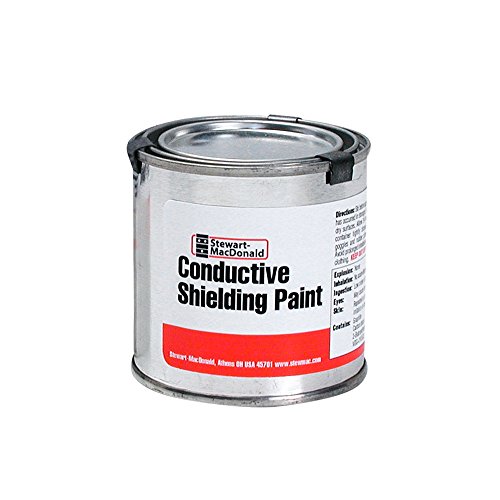
Editor’s Pick: StewMac Conductive Shielding Paint
A brush-on water-based conductive shielding paint that dries to a continuous conductive layer. Reduces hum and blocks RF when applied and grounded, ideal for smaller surfaces and enclosures.
| Product | Attenuation (1 coat / 2 coats at 1 GHz) | Base / Binder | Coverage per Liter | Approx. Price (5L) | Frequency Range |
|---|---|---|---|---|---|
| YShield HSF54 | 39-46 dB / 45-53 dB | Pure acrylic with natural graphite and carbon black | ~7.5 sq m (thick coat) | $200-250 USD | 600 MHz to 40 GHz |
| WOREMOR RF-IE50 | 39 dB / 46 dB | Potassium silicate with graphite and carbon black | ~7.5 sq m | $230 USD | 600 MHz to 40 GHz |
| WOREMOR RF-IE50 PLUS | 40 dB / 48 dB | Potassium silicate (enhanced formula) | ~7.5 sq m | $230-289 USD | 600 MHz to 40 GHz |
All three paints are black and must be covered with a standard interior topcoat for a finished appearance. All three require grounding. The YShield HSF54 has the longest track record and is monitored by TUV-SUD for quality. The WOREMOR RF-IE50 PLUS offers slightly higher attenuation per coat, which matters if you want maximum shielding with fewer coats.
Product Comparison: Shielding Fabrics
| Product | Attenuation | Material | Width | Key Features |
|---|---|---|---|---|
| Mission Darkness TitanRF Faraday Fabric | ~65 dB (single layer), 80-100 dB (double layer) | 66% polyester, 25% copper, 9% nickel | Varies by cut | MIL-STD-188-125 certified; also available as ready-made blackout curtains (52″ x 84″ panels with grommets) |
| LessEMF Nickel-Copper Ripstop | 80 dB average (80-118 dB across tested range) | Nickel-copper plated polyester ripstop | Varies | IEEE 299-2006 tested across 84 frequency points; surface resistivity 0.03 Ohms/sq; tear-resistant ripstop weave |
| LessEMF HertzCloth | ~35-40 dB | 70% cotton, 30% stainless steel (316L) | 59 inches | Machine washable; no coatings to wear off; natural feel; budget-friendly for large areas |
The TitanRF and Nickel-Copper Ripstop fabrics are the high-performance options, suitable for windows and critical gaps where maximum attenuation matters. HertzCloth is the practical choice for large-area coverage where cost is a concern and moderate attenuation (35-40 dB, which still represents over 99.9% reduction) is acceptable. For window curtains specifically, the Mission Darkness ready-made curtain panels are the easiest option since they come with grommets and hang on standard rods.
Step-by-Step: Applying EMF Shielding Paint
Painting with shielding paint follows the same basic process as any interior paint job, with a few critical additions around electrical safety and grounding. Here is the full process.

1. Surface Preparation
The wall surface must be clean, dry, and free of loose material. Fill any cracks or holes with standard filler and sand smooth. Remove wallpaper completely; shielding paint needs direct contact with the wall substrate to form a reliable conductive layer. Lightly sand glossy surfaces to improve adhesion.
Apply standard primer if the wall surface is porous, chalky, or has never been painted. The shielding paint manufacturers generally recommend a standard acrylic primer on fresh drywall or plaster.
2. Mask Electrical Outlets and Switches
This step is critical for safety. Mask all electrical outlets, switches, and junction boxes with painter’s tape, leaving approximately 2 inches of clearance around each one. Because the shielding paint is electrically conductive, it must never contact live wiring, outlet boxes, or electrical components. Getting this wrong creates a direct shock and fire hazard.

3. Install Grounding Strips Before or During Painting
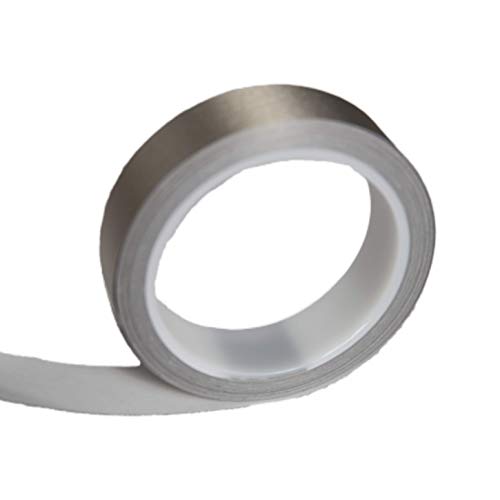
Plan where your grounding connection will go before you start painting. The typical setup uses a conductive grounding strip (copper tape or specialized grounding tape like the YShield GSX series) embedded in or pressed against the wet paint along the base of the wall. This strip connects to a grounding plate, which will later be wired to your home’s earth ground by an electrician.
Editor’s Pick: GSX10 Grounding Tape for RF Shielding Paint
Position the grounding strip during the first coat, pressing it firmly into the wet paint to ensure full electrical contact with the conductive layer. One grounding plate per room is typically sufficient if all painted walls are connected by continuous paint coverage.
4. Apply First Coat
Stir the paint thoroughly before use. Apply with a short-nap roller (standard paint rollers work fine) in even, overlapping passes. Avoid leaving thin spots or holidays (missed areas). Coverage is approximately 7.5 square meters per liter for a thick coat. A thick coat provides better attenuation than a thin one; do not over-stretch the paint to save material.
The paint goes on black and dries to a matte dark gray or black finish. It will be covered with topcoat later, so the appearance at this stage does not matter.
5. Drying Time and Second Coat
Allow the first coat to dry completely before applying the second. Drying time depends on temperature and humidity but is typically 2-4 hours at room temperature. A second coat is strongly recommended. The jump from one coat (~39 dB) to two coats (~46-53 dB) is substantial. That additional 7-14 dB represents roughly 5 to 25 times more RF energy blocked.

For maximum shielding, some projects go to three coats. YShield reports up to 59 dB at three coats (1 GHz), and WOREMOR RF-IE50 reports 51 dB at three coats (1 GHz). Whether the third coat is worthwhile depends on your measured RF levels and how much residual exposure you want to eliminate.
6. Apply Decorative Topcoat
After the shielding paint has fully cured (24-48 hours for most products), apply your chosen decorative topcoat. Use a standard water-based interior latex or emulsion paint. Do not use oil-based paints, as some formulations can interfere with the conductive layer. The topcoat does not reduce the shielding performance.
7. Professional Grounding by an Electrician
This is the final and most important step. A licensed electrician connects the grounding plate to your home’s electrical ground. They will verify that your home’s grounding system is adequate (some older homes may need a new ground rod driven into the earth) and test the connection with a multimeter to confirm continuity between the painted wall surface and earth ground.
Do not skip this step. Do not attempt it yourself unless you are a qualified electrician. The grounding connection is what makes the entire system safe and functional.
Common Mistakes That Undermine Shielding
Skipping grounding entirely. This is the most common and most dangerous mistake. Without grounding, the conductive paint layer can act as an antenna, reflecting and concentrating RF energy instead of dissipating it. Every shielding paint manufacturer explicitly requires grounding, and the physics behind it is not optional.
Incomplete coverage creating reflection zones. A wall that is 90% painted and 10% bare does not give you 90% shielding. RF energy finds gaps and can actually concentrate at the boundary between shielded and unshielded areas. If you are going to paint a wall, paint the entire wall. A partial shield can be worse than no shield at all in certain configurations.
Forgetting internal sources. Shielding a room from external RF is counterproductive if you then use a Wi-Fi router, cordless phone, or Bluetooth device inside the shielded space. The conductive walls trap those signals inside and reflect them back, potentially increasing your exposure to your own devices. Either eliminate wireless devices inside the room or accept that your shield addresses external sources only.
Using the wrong paint for the surface. Acrylic-based shielding paints (like YShield HSF54) adhere well to most surfaces but may struggle on very smooth or non-porous materials without proper primer. Silicate-based paints (like WOREMOR RF-IE50) bond chemically to mineral surfaces like concrete and masonry but may not adhere well to smooth drywall without preparation. Check the manufacturer’s compatibility chart before committing.

Insufficient curtain overlap at windows. A shielding curtain that covers only the glass leaves gaps at the frame. RF leaks through these gaps, reducing your effective attenuation dramatically. Extend curtains at least 4-6 inches beyond each edge of the window frame, and consider using conductive tape or Velcro strips with conductive backing to seal the curtain edges against the painted wall.
Cost Estimate for a Typical Bedroom
The following estimate assumes a 10 x 12 foot bedroom (roughly 3 x 3.7 meters) with 8-foot ceilings, one standard door, and two windows. Walls only; ceiling and floor shielding are additional.
| Item | Quantity / Notes | Estimated Cost (USD) |
|---|---|---|
| Shielding paint (2 coats on walls) | ~29 sq m of wall area = ~7.7 L needed for 2 coats. Two 5L containers recommended. | $400-500 |
| Shielding curtains for 2 windows | Mission Darkness TitanRF curtain panels or equivalent, 2 sets | $150-300 |
| Grounding kit (tape + plate) | 1 kit per room | $50-100 |
| Electrician for grounding | Connection to earth ground, 1-2 hours | $150-300 |
| Primer + decorative topcoat | Standard interior paint for walls | $40-80 |
| Painter’s tape, rollers, supplies | Standard painting supplies | $20-40 |
| Total estimate (walls + windows) | $810-1,320 |
Adding ceiling coverage would roughly double the paint cost (an additional 11 sq m of surface). Floor shielding with conductive matting or paint adds another $200-400 depending on the material chosen. A complete six-sided enclosure for this room could run $1,400-2,200 including all materials and electrician fees.
For comparison, buying shielding fabric instead of paint for walls (a renter-friendly approach using LessEMF HertzCloth at roughly $20-30 per linear foot for 59-inch-wide material) would cost more per square foot of coverage but involves zero permanent modification and no electrician.
Frequently Asked Questions
Does EMF shielding paint really work?
Yes, when properly applied and grounded, conductive shielding paint measurably reduces RF levels. Products like YShield HSF54 and WOREMOR RF-IE50 are lab-tested to IEEE 299-2006 standards and deliver 39-53 dB of attenuation (two coats at 1 GHz), which corresponds to blocking over 99.99% of incoming RF energy at those frequencies. The key word is “properly.” Incomplete coverage or missing grounding will significantly reduce or negate the effectiveness.
Can I apply shielding paint myself, or do I need a professional?
You can apply the paint yourself using standard rollers and painting techniques. The paint application is no more difficult than any interior paint job. However, the grounding step must be performed by a licensed electrician. This is a non-negotiable safety requirement because the conductive paint layer carries induced electrical charges that need a safe path to earth ground.
What happens if I do not ground the shielding paint?
An ungrounded conductive surface can reflect RF energy unpredictably within the room, potentially concentrating exposure in certain areas instead of reducing it. It also creates an electrical safety hazard. If the conductive layer contacts live wiring, it could energize the entire painted wall surface. Grounding eliminates both of these risks.
Will shielding paint block my cell phone signal inside the room?
Yes, that is exactly what it does. A properly shielded room blocks RF signals from entering and from leaving. Your cell phone, Wi-Fi devices, and Bluetooth connections will have degraded or no signal inside the shielded space. If you need cellular connectivity inside the room, you will need to use a wired connection or accept that the shield works both ways.

How long does shielding paint last?
Shielding paint is designed to be a permanent installation. The conductive layer is sealed beneath a decorative topcoat, which protects it from physical damage and oxidation. YShield reports that HSF54 maintains its shielding performance indefinitely under normal interior conditions. The carbon and graphite particles do not lose conductivity the way some metal coatings might over decades.
Is shielding fabric as effective as shielding paint?
Per square foot of coverage, high-end shielding fabrics like the LessEMF Nickel-Copper Ripstop (80 dB average) or Mission Darkness TitanRF (65 dB single layer) can actually exceed the attenuation of most shielding paints. The limitation of fabric is in the seams, edges, and gaps. Paint creates a seamless conductive layer. Fabric panels inevitably have joints where RF can leak through.
Can I use aluminum foil instead of shielding paint or fabric?
Aluminum foil does block RF signals, but it is impractical for room shielding. It tears easily, cannot be painted over, creates condensation problems on walls, and is extremely difficult to make seamless at joints. Every gap, wrinkle, or tear becomes an RF leak. Shielding paint and purpose-built fabrics are engineered to solve these problems.
Do I need to shield the floor and ceiling too?
For maximum effectiveness, yes. RF energy enters from all directions. In practice, many people shield only walls and windows because those face the primary external sources. If you live in a multi-story building with Wi-Fi routers above and below you, ceiling and floor shielding become more important. For a ground-floor room with primary exposure from a nearby cell tower, walls and windows may be sufficient.
Conclusion
Shielding a room from EMF is a real engineering project, not a weekend hack. The materials are proven and lab-tested. Conductive paints from YShield and WOREMOR deliver 39-53 dB of attenuation when properly applied in two coats. Shielding fabrics from LessEMF and Mission Darkness provide 40-80+ dB of attenuation for windows and other openings. Combined, they create an effective barrier against external RF sources across the full range of modern wireless frequencies from 600 MHz through 40 GHz, including all 5G bands.
The process requires careful surface preparation, multiple coats with adequate drying time between them, and professional electrical grounding. The total cost for a typical bedroom runs $800-1,300 for walls and windows, with full six-sided enclosure costing more. The most important thing to get right is grounding. Without it, everything else is wasted effort and potentially counterproductive.
Start by identifying your actual RF sources with a meter if possible. Shield the surfaces that face those sources first. Measure again after shielding to confirm the reduction. This is the only way to verify that your installation is working as intended and to identify any gaps that need attention.

These statements have not been evaluated by the Food and Drug Administration. This information is not intended to diagnose, treat, cure, or prevent any disease. Content is for informational purposes only and is not medical advice; consult a qualified healthcare provider before starting any supplement. As an Amazon Associate we earn from qualifying purchases.