A laptop on your lap puts its underside, with the wireless antenna and the power electronics, very close to your body for as long as you work. Heat is the part people notice. The fields are the part a shielding pad is meant to address.
Get our complete guide with room-by-room strategies and product recommendations.
What sits under the keyboard
A laptop concentrates several EMF sources in one place: the WiFi/Bluetooth antenna, the CPU and its switching power supply, and (on many models) the charging circuit. All of it sits directly beneath the keyboard deck, a few centimeters from your body when the laptop is on your lap.
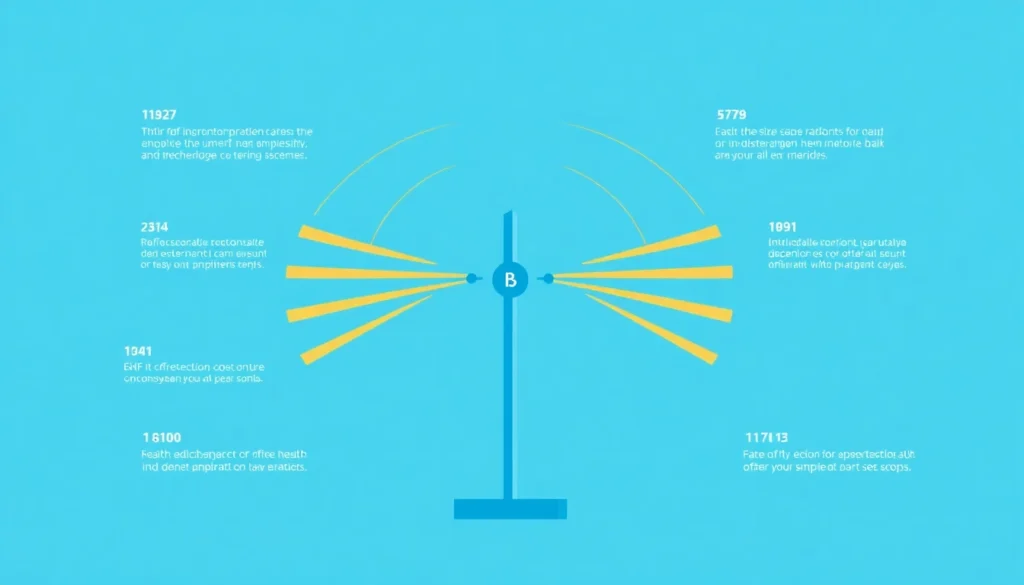
A shielding pad reflects RF only where it sits between you and the laptop
A conductive layer bounces RF
Metal-coated fabric, foil, mesh and conductive paint reflect most incoming radio-frequency energy.
Some energy is lost inside
Thicker or multi-layer materials also absorb part of the signal as it passes through.
Gaps let signals through
Seams, open weaves, zips and unsealed edges leak, and short wavelengths slip through smaller gaps.
Low-frequency magnetic fields pass
Thin fabric or paint does little against 50/60 Hz magnetic fields; distance or special high-permeability metal is needed.
It covers one side, not every path.
How well a material shields depends on the frequency and on how completely it covers the space.
Chart: frequencyblockers.com: A shielding pad reflects RF only where it sits between you and the laptop
Embed this chart
Free to reuse on your site. Copy the code below; please keep the credit link.
The shield material matters:
- Material of the shielding layer: Conductive fabrics and shielding foams attenuate radio-frequency fields more effectively than plastic or wood, but thin conductive layers do little against the low-frequency magnetic fields from charging circuitry [1][2]
What a shielding pad can and cannot do
A shielding pad placed between the laptop and your body adds a conductive or attenuating layer exactly where the field is strongest, without requiring you to change how or where you work.
A pad only helps where it sits between you and the laptop. Radio signals can still escape around the edges, and the antenna may sit near the corner of the machine rather than the middle, so a small pad that does not cover the whole underside leaves gaps.
One simulation of a laptop on a lap found that 1 W of 2.4 and 5 GHz antenna radiation produced a peak SAR that could be ignored next to the laptop’s heat [4].
The fields from charging circuitry are a different matter. Low-frequency magnetic fields pass through thin conductive layers, so a pad is not the tool for those, and distance or running on battery does more.
Choosing and using a pad
- Check the spec sheet. A pad sold for cooling is not necessarily EMF-rated, and a heat-insulating cushion with no conductive layer shields nothing.
- Look for a pad that covers the whole footprint of the laptop, with the shield layer facing the machine.
- Use it any time the laptop is on your lap, and on the desk when you can.
- Use the same approach for a tablet that rests on your lap.
- Pair the pad with a laptop stand or an external keyboard when you can, so you gain distance as well as a barrier.
Signal-blocking fabrics are explained in how signal-blocking bags work, and the Faraday bag buying guide covers the wider category.
Frequency Shielding Foam Padding
A foam pad that puts space between the laptop and your lap. Most of what it does comes from that extra distance, so a desk or a stand does more.
View Product
Confirming the pad does something
A meter is the only honest way to find out, because there is no felt sensation to notice. Use an RF meter and hold its probe at the lap side of the pad with the laptop on, Wi-Fi active and the machine working. Read it with the pad in place and again without it, from the same position.
Expect the reading to fall where the pad covers the antenna and to stay higher near the edges. A multi-field meter also lets you check the magnetic field near the charger, which a thin pad should barely change.


Where the research stands
The wider evidence on radio-frequency fields mostly comes from studies of mobile phones rather than laptops, but it is the best available guide to how seriously to take the exposure.
For context, IARC rated the human evidence for glioma and acoustic neuroma among wireless phone users as limited, and the evidence for other cancers as inadequate. A WHO-commissioned meta-analysis later found that ever or regular mobile phone use was not associated with glioma risk, and the US National Cancer Institute says the evidence to date suggests cell phone use does not cause brain or other cancers [5][6][7].
On that basis a pad is a low-cost precaution rather than a response to a demonstrated hazard.
Ready for More EMF Protection Tips?
Our complete guide includes 100 actionable strategies for every room in your home, plus product recommendations from our curated collection.
Get the Complete GuideFrequently Asked Questions
Does a laptop EMF shielding pad actually work?
It can, for some of what the laptop emits. A conductive pad can reduce the radio-frequency signal from the WiFi antenna that reaches your lap, but thin conductive fabrics and foil do not shield the low-frequency magnetic fields from charging circuitry, and the most certain benefit of a pad is insulating you from heat. Check that the pad lists the frequencies it was tested at, because one fabric can rate very differently by frequency [1][3][4].


Is a laptop shielding pad the same as a cooling pad?
No. Most cooling pads are designed purely for heat dissipation and have no EMF shielding properties. Look specifically for a pad with a conductive or EMF-rated shielding layer if reducing exposure is the goal.
What other EMF protection strategies pair well with a shielding pad?
A shielding pad pairs well with a laptop stand for the times you can get distance, and with wired keyboard/mouse and Ethernet connections to reduce the wireless radios contributing to the overall field around your workstation.
References
- Satpute N et al. Manufacturing of Pure Iron by Cold Rolling and Investigation for Application in Magnetic Flux Shielding. Materials (Basel, Switzerland) (2022). PMID 35407962
- M. Zucca et al. Open Screens for Local Magnetic Shielding at Low Frequencies. IEEE Transactions on Magnetics (2014). doi:10.1109/tmag.2014.2330002
- Pušić T et al. Electromagnetic Shielding Properties of Knitted Fabric Made from Polyamide Threads Coated with Silver. Materials (Basel, Switzerland) (2021). PMID 33800263
- Safari M et al. Thermal mapping on male genital and skin tissues of laptop thermal sources and electromagnetic interaction. Bioelectromagnetics (2017). PMID 28799651
- International Agency for Research on Cancer IARC classifies radiofrequency electromagnetic fields as possibly carcinogenic to humans (Press release 208). International Agency for Research on Cancer (2011). source
- Karipidis K et al. The effect of exposure to radiofrequency fields on cancer risk in the general and working population: A systematic review of human observational studies – Part I: Most researched outcomes. Environment international (2024). PMID 39241333
- US National Cancer Institute Cell Phones and Cancer Risk. US National Cancer Institute (current). source
These statements have not been evaluated by the Food and Drug Administration. This information is not intended to diagnose, treat, cure, or prevent any disease. Content is for informational purposes only and is not medical advice; consult a qualified healthcare provider before starting any supplement. As an Amazon Associate we earn from qualifying purchases.