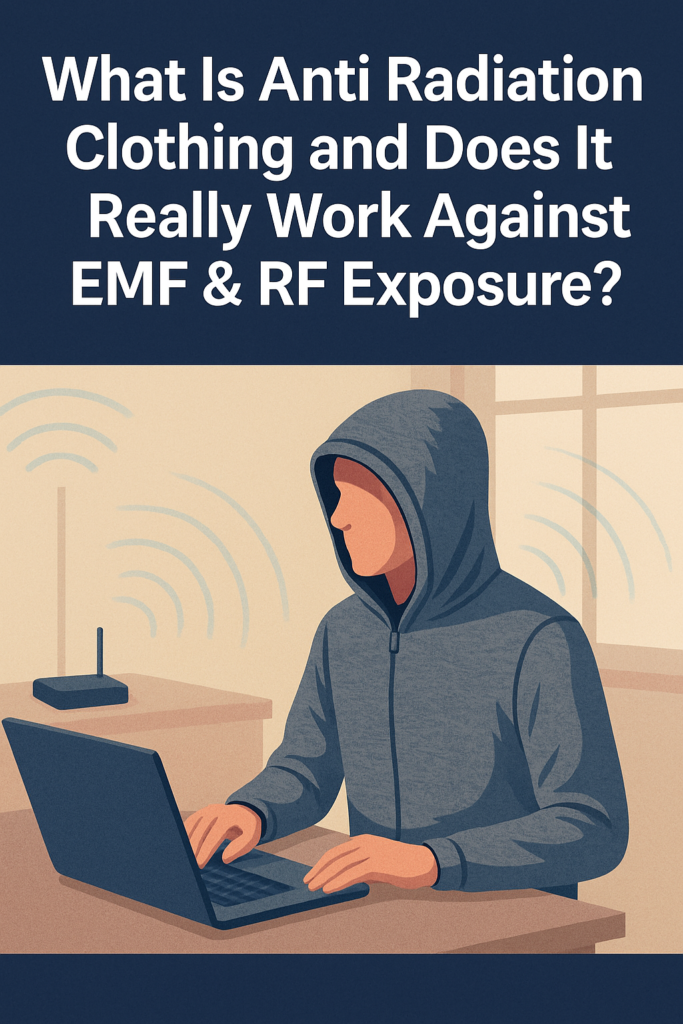
Does EMF Clothing Actually Work? A Practical Guide to Faraday Fabric and Shielding Garments
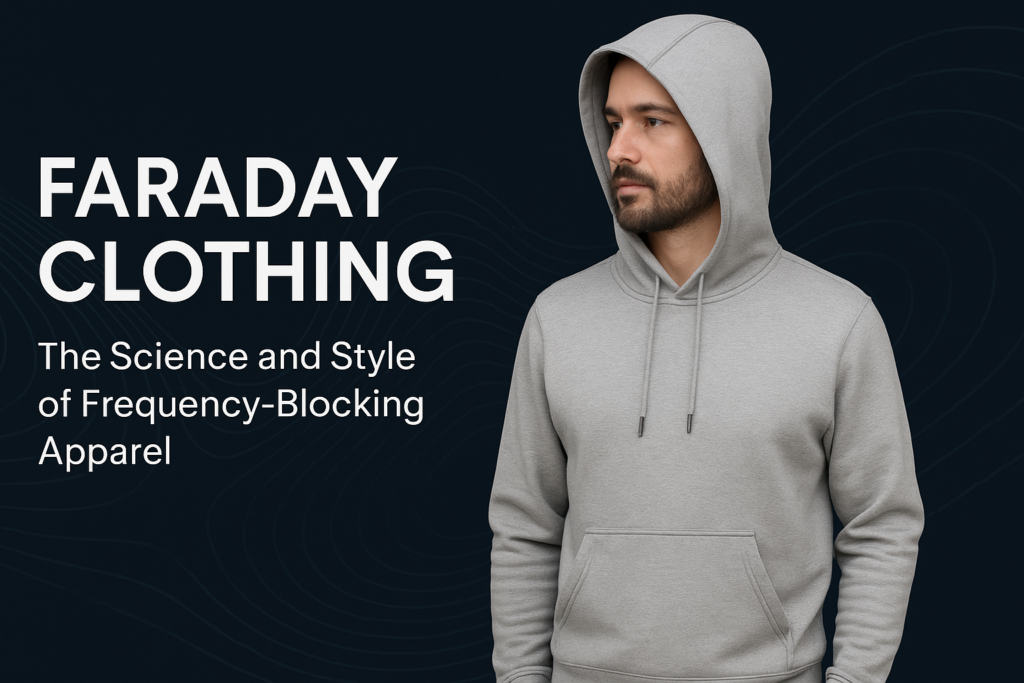
EMF clothing is regular-looking apparel woven with conductive metal fibers, usually silver, that reflect and absorb radio-frequency radiation before it reaches your body. Worn as a shirt, hoodie, beanie, boxers, or a scarf, the fabric forms a flexible partial shield against Wi-Fi, cell signals, and Bluetooth. The honest answer to “does it work” is yes, with real limits: a shielding garment reduces exposure to the covered part of your body, but it is not a full-body Faraday cage and it will not block signals your own devices are emitting from your pocket.
This guide explains how EMF clothing works, what the science supports, which garments make sense, and how to choose and care for them so the shielding lasts.
Introduction
Most EMF-reduction tools shield a place or a device, a painted wall, a phone pouch, a bed canopy. EMF clothing is different because it shields the person, wherever they go. That mobility is the appeal for people who spend time in high-RF environments such as offices full of Wi-Fi, dense apartment buildings, or public transit. The trade-off is coverage: a garment only protects the skin it covers, so expectations have to match what the fabric can physically do.
What Is EMF Clothing?
EMF clothing (also called Faraday clothing, RF-shielding apparel, or anti-radiation clothing) is fabric engineered with a conductive metal woven or knitted into the fibers. Silver is the most common because it is highly conductive, naturally antimicrobial, and comfortable against skin; copper and stainless-steel blends are also used. A typical shielding fabric is a nylon or cotton base with a percentage of silver fiber, and the higher and more evenly distributed the metal content, the more attenuation the garment provides.
How EMF Clothing Works
The Shielding Principle
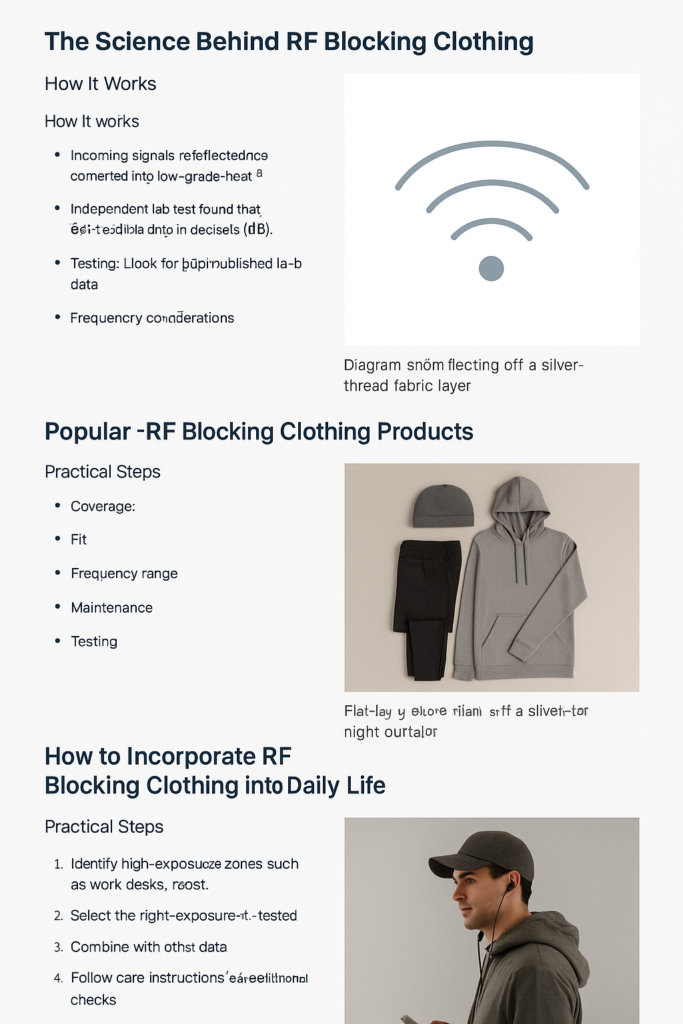
The conductive threads in the fabric behave like a flexible, partial Faraday cage. When radio-frequency radiation reaches the garment, the metal fibers reflect a portion of the energy and absorb another portion, converting it to a tiny amount of heat. The signal that reaches the skin beneath is measurably reduced. Quality shielding fabrics are rated in decibels of attenuation, and good garments block a large fraction of RF across the covered area, though the exact figure depends on the metal content, weave density, and frequency.
Why Coverage and Fit Matter
Because the shield only exists where the fabric is, coverage determines real-world benefit. A shielding beanie protects the head; it does nothing for the torso. A shielding shirt protects the chest and back but not the arms if it is sleeveless. Gaps, open cuffs, and loose fits let signal in around the edges. This is why shielding garments are designed to fit closer and cover more than fashion apparel.
Does EMF Clothing Actually Work? What the Evidence Shows
Laboratory testing of the fabrics themselves is clear: certified silver-fiber shielding textiles reliably attenuate RF, and reputable manufacturers publish third-party shielding-effectiveness measurements for their material. Where honesty matters is the gap between fabric performance and whole-body protection:
- The fabric works; a tested silver-fiber textile does reduce RF passing through it, often substantially.
- Coverage is partial. Clothing shields only the covered skin, so it lowers local exposure rather than eliminating whole-body exposure.
- Your own devices still emit. A phone in a shielded pocket can actually reflect back toward you; keep transmitting devices out of shielded pockets or in a Faraday pouch.
- Claims should be verifiable. Choose brands that publish attenuation data and fiber content, and be skeptical of vague “blocks 99%” marketing without a test report.
Types of EMF Clothing
| Garment | Protects | Common Use |
|---|---|---|
| Shielding beanie / cap | Head | Everyday head coverage in high-Wi-Fi areas |
| Shielding shirt / base layer | Torso | Office, transit, general daily wear |
| Shielding hoodie | Torso + head (hood up) | Versatile everyday shielding |
| Shielding boxers / underwear | Pelvic area | Reducing exposure from laptops and phones in laps/pockets |
| Faraday pants / leggings | Legs and lower body | Full lower-body coverage |
| Shielding scarf / blanket | Flexible / lap | Draped coverage, pregnancy, seated work |
Popular Brands and Product Examples
Established EMF apparel makers include Silverell (silver-knit shirts, hats, and scarves), Leblok and WaveWall (RF-shielding underwear and everyday wear), Lambs (silver-lined tees and beanies marketed for everyday use), and specialty retailers like LessEMF that sell shielding fabric by the yard for DIY garments. When comparing options, look for stated silver content, published attenuation figures, and clear care instructions, since these separate genuine shielding apparel from decorative “anti-radiation” products.
How to Choose EMF Clothing
- Verify the fabric: look for silver (or copper/steel) fiber content and a published shielding-effectiveness rating in dB, benchmarked against testing methodologies used in accredited electromagnetic compatibility labs.[1]
- Match coverage to your goal: pick the garment that covers the area you most want to protect.
- Prioritize fit: closer-fitting garments with minimal gaps shield better than loose ones.
- Check care requirements: silver fabrics need gentle, specific washing to preserve conductivity.
- Buy from transparent brands: a test report and clear fiber percentages are the strongest signals of a real product.
Caring for EMF Clothing
The conductive metal in shielding fabric is the whole point of the garment, and harsh laundering degrades it. To keep EMF clothing effective: hand-wash or use a gentle cycle in cold water, use a mild pH-neutral detergent, avoid bleach, fabric softener, and chlorine, do not wring aggressively, and air-dry rather than machine-drying. Silver fabrics are naturally antimicrobial and rarely need frequent washing. Following the manufacturer’s care guidance is the difference between a garment that shields for years and one that fades after a few washes.

Limitations and Realistic Expectations
- Partial coverage only. Clothing reduces local exposure; it is not a whole-body shield.
- Not a substitute for source reduction. Turning off Wi-Fi at night or keeping a phone out of your pocket often does more than any garment.
- Shielded pockets can reflect. A transmitting phone inside a shielded pocket can bounce signal back toward the body; use a Faraday pouch for devices instead.
- Performance degrades with wear. Washing, abrasion, and time reduce conductivity, so garments need eventual replacement.
Frequently Asked Questions
Does EMF protection clothing actually work?
Yes, for the area it covers. Certified silver-fiber shielding fabric measurably reduces the RF passing through it. The limitation is coverage: a garment lowers exposure to the covered skin rather than shielding the whole body.
How does EMF clothing work?
Conductive metal fibers woven into the fabric reflect and absorb radio-frequency radiation, acting like a flexible partial Faraday cage so less signal reaches the skin beneath.
What is EMF clothing made of?
Most shielding garments use a base fabric like nylon or cotton blended with silver fiber. Silver is favored for its high conductivity and natural antimicrobial properties; copper and stainless-steel blends are also used.
Do Faraday pants or shielding underwear work?
Yes, they reduce RF exposure to the lower body and pelvic area, which is why they are popular for people who carry phones in their pockets or use laptops on their laps. As with all EMF clothing, they protect only the covered area.
Can I wash EMF clothing?
Yes, but gently. Use cold water, a mild pH-neutral detergent, and no bleach or fabric softener, then air-dry. Harsh washing degrades the conductive silver and reduces shielding.
Does EMF clothing block 5G and Wi-Fi?
Quality shielding fabrics attenuate the high-frequency bands used by Wi-Fi and 5G sub-6 GHz across the covered area. Check the manufacturer’s published attenuation data for the specific frequencies.
Is EMF clothing worth it?
It depends on your situation. For people in consistently high-RF environments who want to lower local exposure, tested shielding apparel is a reasonable tool. It works best combined with source reduction like turning off Wi-Fi at night and keeping devices out of pockets.
Key Takeaways
- EMF clothing is apparel woven with conductive silver fibers that reflect and absorb RF radiation over the area it covers.
- The fabric genuinely works in testing, but clothing provides partial, local protection, not a whole-body shield.
- Coverage and close fit determine real-world benefit; gaps and loose fits let signal in.
- Keep transmitting devices out of shielded pockets, since they can reflect signal back toward you.
- Choose transparent brands that publish silver content and attenuation data, and wash gently to preserve the shielding.
References
- NIST – Electromagnetic Compatibility and Telecommunications LAP
- Frequency Blockers – EMF Protective Clothing
Related reading: EMF Protective Clothing · Best Faraday Bags of 2026 · Top 10 Frequency-Blocking Materials
These statements have not been evaluated by the Food and Drug Administration. This information is not intended to diagnose, treat, cure, or prevent any disease. Content is for informational purposes only and is not medical advice; consult a qualified healthcare provider before starting any supplement. As an Amazon Associate we earn from qualifying purchases.