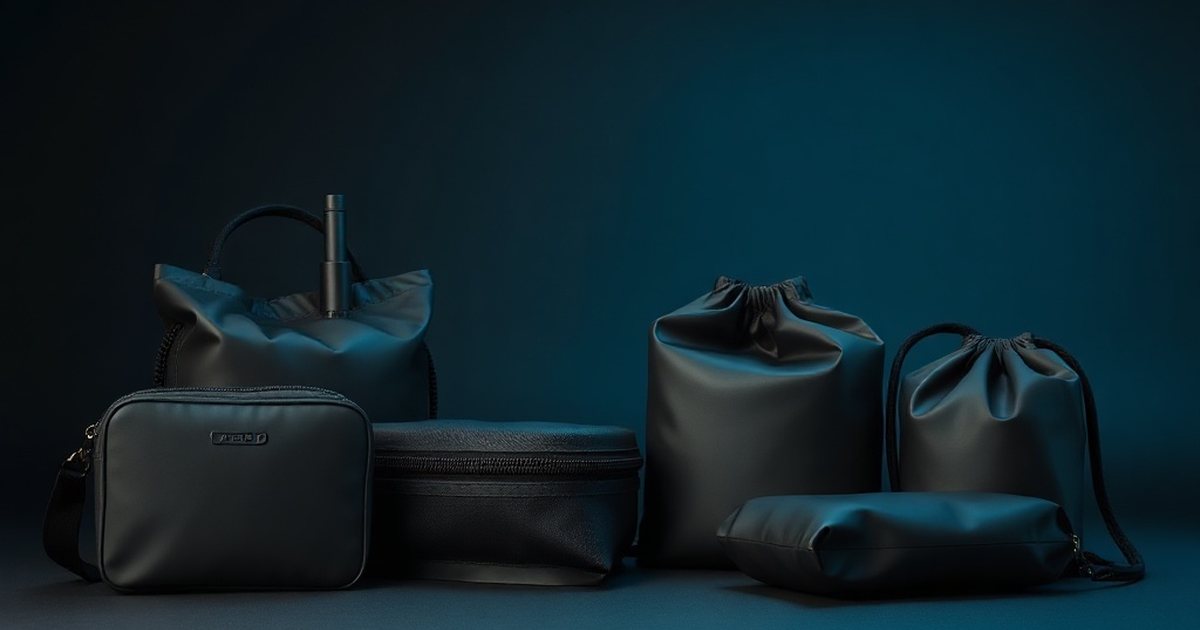
Faraday bags for digital privacy are one of the few tools that can cut off most wireless signals when a device is sealed fully inside [4][5], making them a core component of modern digital privacy strategies. Whether you want to prevent passive location tracking, protect sensitive conversations, disable background connections, or secure devices during travel or meetings, a faraday bag can cut off most outgoing and incoming wireless communication once a device is fully sealed inside [4][5].
This guide explains how faraday bags enhance digital privacy, who benefits most from them, what features matter in 2026, and how to choose the right type based on your personal or professional risk profile. For a full overview of faraday bags and the current 2026 market, see our main comparison guide:
https://frequencyblockers.com/best-faraday-bags-2026/
Why Faraday Bags for Digital Privacy Matters More in 2026
Wireless technologies generate significantly more traffic today than even a few years ago, as global wireless connection density continues to climb.[3] Modern mobile devices communicate using:
- WiFi beacons
- Bluetooth Low Energy (BLE) scans
- Ultra-Wideband (UWB) pulses
- GPS location updates
- 4G/5G cell tower handshakes
- NFC/RFID
- App-level telemetry and analytics
- Background cloud syncing
Many of these occur even when the user is not actively doing anything and even when airplane mode is turned on. Apps and services often transmit:
- Location metadata
- Device identifiers
- Network IDs
- Sensor data
- Bluetooth presence signals
A faraday bag is one of the only ways to instantly stop this communication, without relying on software permissions or phone settings that may or may not behave as expected.
How Faraday Bags Enhance Digital Privacy
Faraday bags enhance digital privacy by providing close to complete radio silence when the bag is sealed correctly [4][5] for any device placed inside.
A Faraday bag stops new signals, but it does not erase what was already logged
Bag the phone before you travel, not on arrival
A bag stops new signals while sealed; it does not erase what was recorded before, or stop software already on the device.
Data table
| Step | Stage | What happens |
|---|---|---|
| 1 | Before | The last cell, Wi-Fi and GPS position is already logged |
| 2 | Sealed | No new connections; calls and messages wait on the network |
| 3 | The gap | A phone that drops off the network at a time and place is itself a signal |
| 4 | Unsealed | It reconnects, queued messages arrive, apps sync |
Embed this chart
Free to reuse on your site. Copy the code below; please keep the credit link.
When a device enters a sealed faraday bag:
1. All wireless tracking stops
No GPS, Bluetooth, WiFi, UWB, RFID, or cellular connections can occur.
2. The device becomes unreachable
No calls, texts, or signals get in or out.
3. App-based location and analytics transmissions stop
Cloud syncing, telemetry, and beaconing all cease instantly.
4. The device’s wireless identifiers become invisible
MAC addresses
IMEI connections
Bluetooth UUIDs
WiFi probe requests
all are blocked.
5. Devices inside cannot be remotely activated or accessed
This prevents remote exploitation, remote wiping, and unauthorized connection attempts.
6. Faraday bags for digital privacy protects against active tracking methods
Including:
- Bluetooth direction finding
- High-precision UWB location tracking
- WiFi triangulation
- Cell tower multi-band triangulation
- RFID/NFC scans
- GPS location queries
This is why faraday bags are commonly used by digital security experts, privacy-conscious consumers, and high-risk professionals.
Who Needs a Faraday Bag for Digital Privacy?
While faraday bags are not necessary for everyone, certain groups benefit greatly from using them.
1. Journalists & Investigators
Protecting sources, field notes, travel movements, and sensitive communications.
2. Executives & Professionals
Preventing corporate espionage, meeting leaks, and passive tracking.
3. Travelers
Airports and hotels are high-risk digital environments, and devices are often scanned without user knowledge.
4. Everyday Privacy Seekers
Anyone who wants to prevent apps and services from tracking their location or behavior.
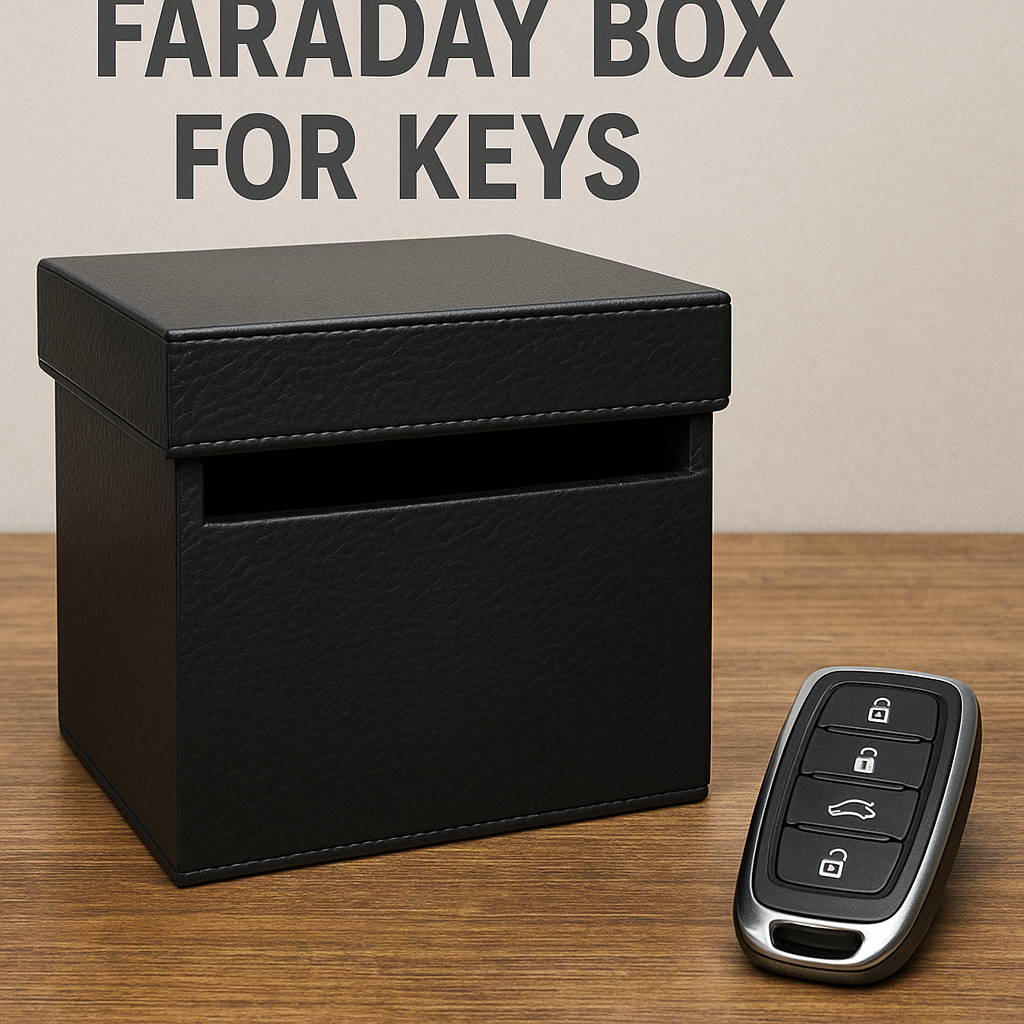
5. Car Owners (Key Fob Protection)
Modern vehicles are vulnerable to relay attacks; a faraday bag blocks key fob signals when not in use.
6. Parents
Controlling when children’s devices can connect to WiFi or cell networks.
7. People with High Social or Online Exposure
Public figures, activists, influencers, or anyone dealing with targeted harassment.
Digital Threats a Faraday Bag Protects Against
Faraday bags for digital privacy is effective against:
Passive Tracking
Apps quietly collecting location and movement data.
Real-Time Location Monitoring
Devices pinging towers or WiFi networks.
Metadata Harvesting
Tracking through Bluetooth identifiers or probe requests.
Unauthorized Access
Remote access attempts or device wake-ups.
Signal Interception
RF-based eavesdropping or data extraction methods.
Relay Attacks
Particularly common in vehicle theft.
Social Engineering & Stalking
Bluetooth-based proximity tracking devices exploited by malicious actors.
A faraday bag blocks these threats by cutting off most wireless communication when the bag is sealed correctly [4][5].
Key Features to Look for in a Faraday Bag for Privacy
1. Shielding Strength (dB Rating)
Shielding effectiveness is typically measured in decibels of attenuation, following testing frameworks similar to those used in accredited electromagnetic compatibility labs.[2]
Look for:
- A tested dB rating, with the test frequencies and method listed, [6][7] for everyday privacy
- An independent test of the finished bag, not only the fabric, [6][7][5] for high-risk or investigative work
2. Closure Type
- Magnetic closure (best for convenience)
- Roll-top seal (best for maximum blocking)
- Velcro overlap (common in budget models)
3. Material Quality
Prefer multi-layer blends of:
- Silver
- Copper
- Nickel
- Stainless steel fiber mesh
Avoid single-layer “thin foil” designs.
4. Device Fit
Ensure enough space for:
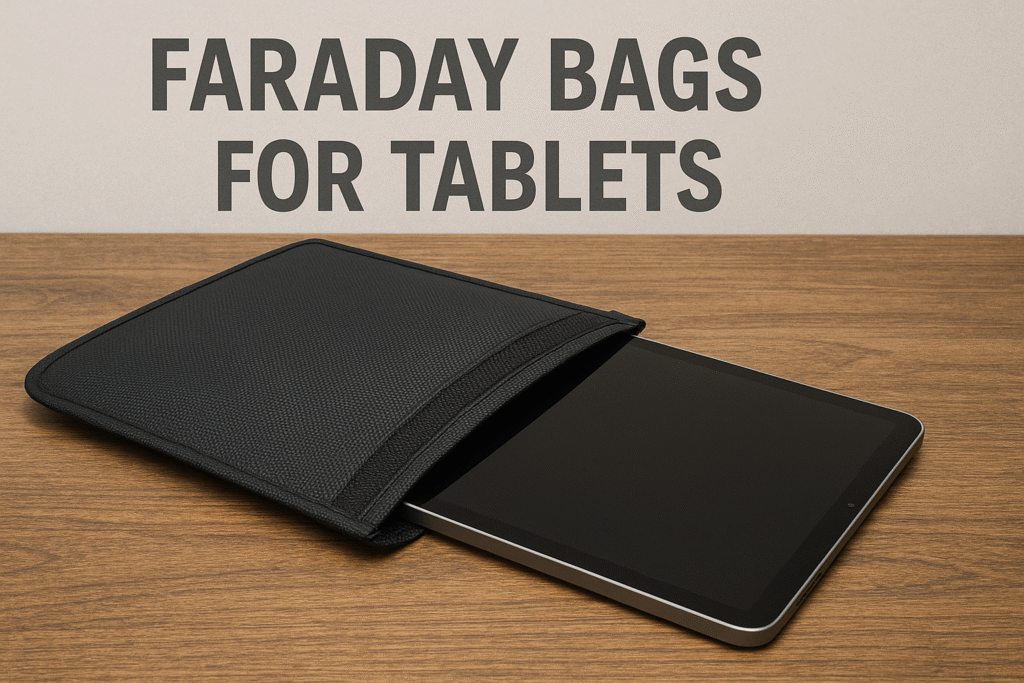
- Phone plus case
- Tablet
- Laptop
- Key fobs
- AirTags or small trackers
5. Durability
Look for:
- Reinforced seams
- Tear-resistant exterior material
- Water resistance (optional but beneficial)
How to Use a Faraday Bag for Maximum Privacy
1. Fully power the device on or off
Both work: the bag blocks signals either way.
2. Seal the closure completely
Even a small gap can allow signal leakage.
3. Avoid opening the bag in high-risk areas
Especially airports, hotels, coworking spaces, or sensitive meetings.
4. Test the bag regularly
Attempt to call, text, or ping the device while it’s inside.
5. Do not store a powered device in the bag long-term
Some phones produce heat when searching for a signal.
Best Faraday Bags for Digital Privacy (2026 Recommendations)
Below is a list of the top-performing faraday bags for privacy-focused users:
1. GoDark Faraday Bag
Best shielding for phone/tablet protection.
2. Silent Pocket Privacy Pouch
Best choice for daily, stylish carry.
3. Mission Darkness Dry Shield
Best for travel and rugged environments.
4. Faraday Defense NX3
Best for high-security or technical use.
5. Mission Darkness Key Fob Shield
Best compact option for vehicle security.
For a larger comparison across all categories, see our 2026 buyer guide:
https://frequencyblockers.com/best-faraday-bags-2026/
Faraday Bag Limitations (Important for Privacy Planning)
A faraday bag does not:
- Delete stored data
- Block low-frequency magnetic fields
- Prevent physical access to the device
- Stop someone from accessing your unlocked device before sealing it
It does:
- Stop most wireless activity when sealed correctly [4][5]
- Prevent passive location tracking
- Block Bluetooth/UWB discovery
- Deny remote commands
- Prevent network-based attacks
- Protect sensitive meetings and travel routes
Faraday bags should be part of a broader digital privacy strategy, not the only tool.
Internal Frequency Blockers Links
Faraday Bags Overview
https://frequencyblockers.com/faraday-bags/
Faraday Bags for Phones
https://frequencyblockers.com/faraday-bags-for-phones/
Best Faraday Bags 2026
https://frequencyblockers.com/best-faraday-bags-2026/
References
- FCC, RF Consumer Information
- NIST, Electromagnetic Compatibility and Telecommunications LAP
- ITU, Wireless Density Reports
- Andrew C. Marvin et al. A Method for the Measurement of Shielding Effectiveness of Planar Samples Requiring No Sample Edge Preparation or Contact. IEEE Transactions on Electromagnetic Compatibility (2009). doi:10.1109/temc.2009.2015147
- Eric Katz et al. A field test of mobile phone shielding devices. Purdue e-Pubs (Purdue University System) (2011). source
- Pušić T et al. Electromagnetic Shielding Properties of Knitted Fabric Made from Polyamide Threads Coated with Silver. Materials (Basel, Switzerland) (2021). PMID 33800263
- Ming Li Jiao et al. Electromagnetic Interference Shielding Properties of Silver-Plated Polyester Fabric. Applied Mechanics and Materials (2012). doi:10.4028/www.scientific.net/amm.239-240.310
Featured Products
Looking for quality EMF protection? Check out these recommended products:
Frequently Asked Questions
Will a Faraday bag completely stop my phone from being tracked?
A well-made Faraday bag, fully sealed, can stop most wireless tracking by cutting off GPS, cellular, Wi-Fi and Bluetooth signals. It does not undo tracking that happened before you sealed the device, and a poor seal or damaged bag can let signals through, so test it by trying to call or text the device while it is inside [4][5].
What should I look for when choosing a Faraday bag for digital privacy?
You should prioritize shielding strength measured in dB rating, a complete seal closure, high-quality materials, and proper device fit for your specific phone or item. The bag should be durable enough for regular travel use and tested to ensure it blocks all wireless signals effectively.
How long can I safely keep my device inside a Faraday bag?
You should avoid storing a powered device in a Faraday bag long-term because it prevents normal battery drainage and can cause heat buildup. For maximum safety and device health, use the bag only when you need signal isolation, such as during travel, meetings, or high-risk situations.

Who actually needs a Faraday bag for privacy protection?
Anyone concerned about digital privacy can benefit, including journalists, business executives, frequent travelers, and everyday privacy seekers. Parents, people with high social media exposure, and car owners wanting to protect key fobs from relay attacks are also common users who need this protection.
These statements have not been evaluated by the Food and Drug Administration. This information is not intended to diagnose, treat, cure, or prevent any disease. Content is for informational purposes only and is not medical advice; consult a qualified healthcare provider before starting any supplement. As an Amazon Associate we earn from qualifying purchases.