Faraday Bags for Journalists & Investigators (2026 Guide)
Journalists, field reporters, and investigators operate in increasingly complex digital environments. In 2026, the risk landscape for source protection, device interception, targeted surveillance, and real-time digital tracking has grown dramatically. Mobile devices continuously transmit identifiers, app telemetry, Bluetooth and WiFi signals, and location data, even when they appear idle, and even when airplane mode is activated.
For professionals working with sensitive information, confidential sources, or high-risk investigations, a faraday bag provides a simple but highly effective method of isolating a device from all wireless communication. A well-made, properly sealed faraday bag can block cellular, WiFi, Bluetooth, GPS, RFID, and UWB signals, which makes tracking and interception much harder during vulnerable moments. Results vary by bag, frequency and closure: in a field test of forensic phone-shielding devices, most test cases still reached the phone [4].
This guide explains why faraday bags have become standard tools for journalists and investigators, how they improve operational security, and what features matter most in 2026. If you need broader context on faraday bags, see:
https://frequencyblockers.com/best-faraday-bags-2026/
Why Journalists and Investigators Need a Faraday Bag in 2026
Modern smartphones generate constant wireless activity, reflecting the continued growth in global wireless connection density.[3]
- GPS location updates
- WiFi and Bluetooth beacons
- Passive app telemetry
- Tower handshakes
- Cloud syncing
- Background connections for messaging apps
- UWB pulses from modern devices
For journalists or investigators, this presents several risks:
1. Location Exposure
A phone’s presence at a site can reveal:
- Where a source lives
- Meeting locations
- Investigative patterns
- Sensitive travel routes
A faraday bag cuts off all location-based identifiers immediately.
2. Device Exploitation & Remote Access
Remote exploitation tools can activate microphones, cameras, or data extraction systems without physical access.
Placing the device in a faraday bag prevents:
- Remote wake-ups
- Push-based malware
- Zero-click exploits that require connectivity
- Unauthorized cloud syncing
Spyware already on a device can keep recording inside a bag, but it cannot send anything out until the device reconnects.
3. Metadata Monitoring
Metadata can reveal:
- Contact patterns
- Proximity events
- Shared WiFi environments
- Device movement timing
A faraday bag stops metadata from being broadcast entirely.
4. Surveillance at Borders & Checkpoints
Airports, foreign crossings, and government facilities often scan or clone devices during inspections.
A sealed faraday bag prevents:
- Unauthorized NFC/RFID scans
- Forced cloud synchronization
- Passive device interrogation
- Network associations with monitored routers
This is critical for journalists entering or exiting sensitive countries.
5. Protecting Sources
Confidentiality requires controlling digital footprints.
Even silent wireless activity can reveal:
- A source’s location
- Meeting times
- Insider communication patterns
A faraday bag ensures a device cannot betray a source unintentionally.
How a Faraday Bag Increases Operational Security
When a device is placed inside a sealed faraday bag:
Bag the phone before the meeting, because earlier location data is already logged
Bag before the meeting, not at the door
A bag stops new signals while sealed; it does not erase what was recorded before, or stop software already on the device.
Data table
| Step | Stage | What happens |
|---|---|---|
| 1 | Before | The last cell, Wi-Fi and GPS position is already logged |
| 2 | Sealed | No new connections; calls and messages wait on the network |
| 3 | The gap | A phone that drops off the network at a time and place is itself a signal |
| 4 | Unsealed | It reconnects, queued messages arrive, apps sync |
Embed this chart
Free to reuse on your site. Copy the code below; please keep the credit link.
1. All wireless communication immediately stops
A sealed bag with enough attenuation at those frequencies should stop most GPS, Bluetooth, WiFi, cellular, and UWB signals, but leakage through a poor seal or a weak fabric is possible [4][5].
2. Device identifiers become invisible
IMEI, MAC addresses, and Bluetooth UUIDs become undetectable.
3. Remote exploits and monitoring attempts fail
No connection = no remote access.
4. Passive tracking through beacons ceases
The device becomes digitally silent.
5. Movement cannot be logged by nearby networks
This protects investigative patterns.
6. The device cannot be discovered by tracking devices
AirTags, Bluetooth trackers, and UWB location beacons cannot locate a shielded device.
For journalists working with sensitive material, this physical layer of protection is irreplaceable.
Common Scenarios Where Journalists Use a Faraday Bag
1. Meeting a Confidential Source
Preventing metadata correlations and location exposure.
2. Entering a High-Surveillance Area
Airports, checkpoints, intelligence-heavy regions.
3. Transporting Sensitive Digital Media
Memory cards, USB drives, phone backups, and documents.
4. Field Reporting in Conflict Zones
Preventing tracking of teams or fixers.
5. Investigating Corporate or Political Corruption
Ensuring a device is not used to track meetings or movements.
6. Storing a Secondary or “Clean” Device
Many journalists carry a secondary phone for sensitive work; keeping it in a faraday bag ensures it remains isolated until needed.
Best Faraday Bag Features for Journalists & Investigators
1. Strong Attenuation (70 to 85+ dB)
High shielding is crucial for preventing sophisticated tracking, and attenuation performance is typically benchmarked against testing methodologies used in accredited electromagnetic compatibility labs.[2]
Recommended range:
- 70 to 80 dB: general investigative work
- 80 to 90 dB: high-risk zones, foreign borders, conflict regions
2. Reliable Closure System
Look for:
- Dual-fold roll-top
- Magnetic flap with deep overlap
- Reinforced Velcro with conductive interior flap
These reduce the risk of signal leakage.
3. Professional Durability
Journalists often operate in unpredictable environments.
Choose:
- Tear-resistant outer shell
- Water-resistant construction
- Double-stitched seams
- Heat-resistant interior fabrics
4. Form Factor Options
Depending on the assignment, you may need:
- Phone-sized pouch
- Tablet pouch
- Laptop bag
- Document-sized faraday sleeve
- Backup drive pouch
- Camera battery shield (for wireless-enabled batteries)
5. Discreet Appearance
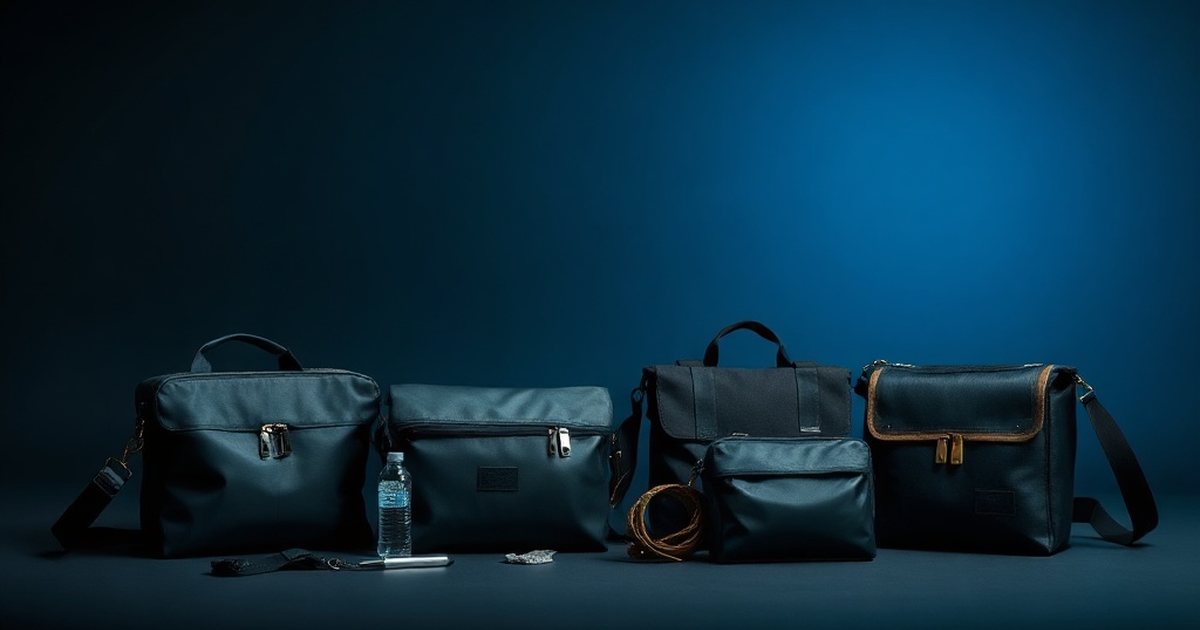
Faraday bags used by journalists should not look overtly tactical or military.
A low-profile, unbranded pouch reduces unwanted attention.
Best Faraday Bags for Journalists & Investigators (2026 Recommendations)
1. GoDark Faraday Bag (Phone & Tablet Sizes)
Best shielding for fieldwork.
- Extremely high attenuation
- Magnetic closure for fast use
- Durable but low-profile exterior
- Excellent for domestic & international travel
2. Mission Darkness Dry Shield
Best for rugged, unpredictable environments.
- Waterproof roll-top
- Reinforced seams
- Strong shielding for devices & media
- Suitable for conflict zones
3. Silent Pocket Faraday Sleeve
Best for urban investigative reporting.
- Modern, discreet, leather or fabric designs
- Dual-pocket layout (shielded + unshielded)
- Good daily usability
- Ideal for city-based journalism
4. Faraday Defense NX3 Series
Best for high-security or technical investigations.
- Multi-layer metallic mesh
- Stable attenuation across frequencies
- Excellent for storing sensitive media during transport
5. Mission Darkness Key Fob Shield
Best for preventing proximity-based vehicle tracking.
Some investigative vehicles can be targeted; keeping key fobs shielded prevents unauthorized tracking attempts.
How Journalists Should Use Faraday Bags in the Field
1. Preemptively Isolate Devices Before Meetings
Do not wait until you reach the location.
2. Keep Backup Drives Sealed During Travel
Unpowered memory cards and drives do not transmit, so a bag adds little for them; seal any device that has a radio, such as a laptop, a camera with Wi-Fi or a drive with wireless sync.
3. Never Power On a Device Inside the Bag
Power it on before placing it inside, or keep it fully off.
4. Avoid Opening the Bag in Monitored Areas
Airports, embassies, hotels, and government-heavy zones.
5. Test the Bag Before Major Assignments
Attempt calls, Bluetooth pairing, and WiFi connections.
Limitations to Be Aware Of
Faraday bags:
- Do not protect against physical access
- Do not delete stored data
- Do not prevent malware already installed
- Do not block low-frequency magnetic fields
- Must be properly sealed to work
They are a powerful tool, but part of a broader security protocol.
Internal Frequency Blockers Links
Faraday Bags Overview
https://frequencyblockers.com/faraday-bags/
Best Faraday Bags 2026 (Pillar)
https://frequencyblockers.com/best-faraday-bags-2026/
Faraday Bags for Digital Privacy
https://frequencyblockers.com/faraday-bags-for-digital-privacy-2026-guide/
References
- FCC, RF Consumer Information
- NIST, Electromagnetic Compatibility and Telecommunications LAP
- ITU, Wireless Density Reports
- Eric Katz et al. A field test of mobile phone shielding devices. Purdue e-Pubs (Purdue University System) (2011). source
- Andrew C. Marvin et al. A Method for the Measurement of Shielding Effectiveness of Planar Samples Requiring No Sample Edge Preparation or Contact. IEEE Transactions on Electromagnetic Compatibility (2009). doi:10.1109/temc.2009.2015147
- Pušić T et al. Electromagnetic Shielding Properties of Knitted Fabric Made from Polyamide Threads Coated with Silver. Materials (Basel, Switzerland) (2021). PMID 33800263
- Ming Li Jiao et al. Electromagnetic Interference Shielding Properties of Silver-Plated Polyester Fabric. Applied Mechanics and Materials (2012). doi:10.4028/www.scientific.net/amm.239-240.310
Featured Products
Looking for quality EMF protection? Check out these recommended products:
Frequently Asked Questions
Can a Faraday bag really stop my phone from being tracked?
Yes, a quality Faraday bag blocks all wireless signals including cellular, GPS, Bluetooth, and WiFi, so the device cannot answer new tracking or location requests while sealed (its last location before bagging is still recorded). This works because the shielded material creates a barrier that prevents any radio frequency signals from entering or leaving the bag.
What attenuation level should I look for in a Faraday bag for journalists?
Look for published attenuation data tested across the frequencies you care about, since a single dB figure depends on frequency and test setup [6][7]. Higher attenuation ratings provide stronger blocking of RF signals and greater assurance that your devices remain truly isolated.
Will my devices work normally after I take them out of a Faraday bag?
Yes, your devices will resume normal operation immediately when removed from the bag with no damage or long-term effects. Faraday bags only block signals while devices are inside and do not harm hardware, batteries, or data.

Is it suspicious to carry a Faraday bag in public?
Faraday bags designed for journalists and professionals come in discreet, professional form factors that resemble regular laptop sleeves, tablet cases, or document pouches. Many are specifically designed for field use to blend into normal professional environments without drawing attention.
These statements have not been evaluated by the Food and Drug Administration. This information is not intended to diagnose, treat, cure, or prevent any disease. Content is for informational purposes only and is not medical advice; consult a qualified healthcare provider before starting any supplement. As an Amazon Associate we earn from qualifying purchases.