A canopy is the heavy option on the shielding ladder. It is a fabric enclosure that hangs over the bed and is meant to reduce radio signals that arrive from outside the house, such as a neighbor’s Wi-Fi, a nearby cell tower or a smart meter on the wall. Those are the sources that moving devices around the room cannot touch.
Get our complete guide with room-by-room strategies and product recommendations.
Measure the room before you buy anything
A canopy only makes sense if the bed really sits in a strong signal, and most homes are quieter than people expect. An RF meter takes a few minutes: read the level at pillow height, then walk the room and note which wall or window gives the highest number.
Measured levels inside homes are usually low: in Belgian homes the average total electric field was 0.1 V/m (maximum 1.1 V/m), and smart meters transmit so rarely (duty cycle at most 1%) that individually they add little to a home’s exposure. Also, where a signal is weak a phone raises its transmit power to hold the connection, so a phone left inside a canopy may emit more [10][11][12][13].
If the readings are already low, a canopy changes very little. If one window or wall stands out, a simpler step such as moving the bed or switching off the nearest router is usually the better first move.
How the fabric works and where it leaks
The conductive fabric creates a Faraday cage around your sleep space, reducing RF signals entering, by an amount that depends on the fabric, the frequency and how well seams and openings are closed [2][3]. It lowers the signal rather than removing it [2][4][3].
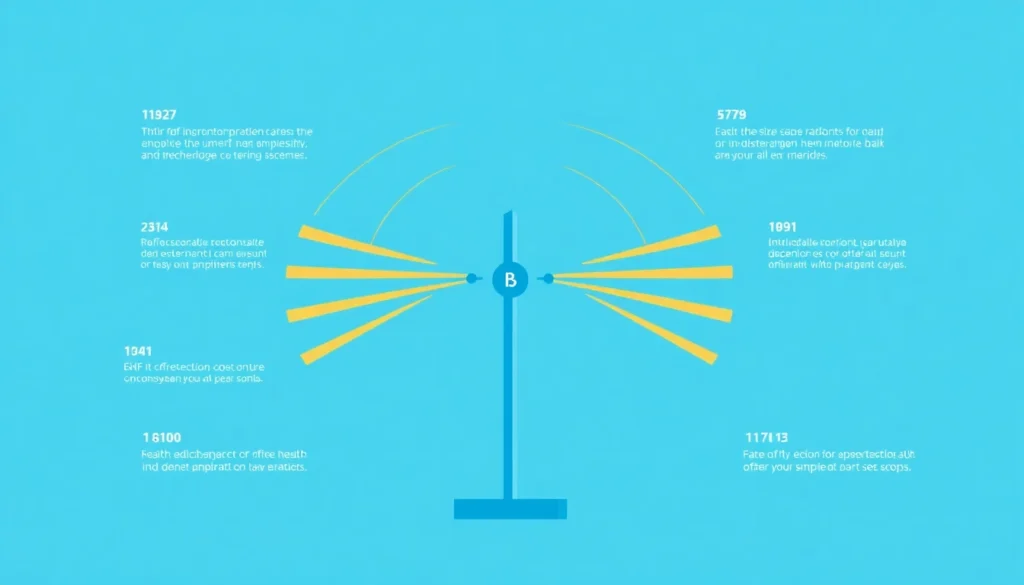
A bed canopy reflects some outside signal and leaks wherever it does not cover
A conductive layer bounces RF
Metal-coated fabric, foil, mesh and conductive paint reflect most incoming radio-frequency energy.
Some energy is lost inside
Thicker or multi-layer materials also absorb part of the signal as it passes through.
Gaps let signals through
Seams, open weaves, zips and unsealed edges leak, and short wavelengths slip through smaller gaps.
Low-frequency magnetic fields pass
Thin fabric or paint does little against 50/60 Hz magnetic fields; distance or special high-permeability metal is needed.
The canopy only works where it covers.
How well a material shields depends on the frequency and on how completely it covers the space.
Embed this chart
Free to reuse on your site. Copy the code below; please keep the credit link.
Seams, the entrance, the gap under the hem and the open top are all places where signal gets around the fabric. A canopy closed on every side behaves very differently from one hung loosely from a frame, so check the product’s own test data and the frequencies it was tested at before relying on it.
Shielding can lower exposure to a given source, although whole-body exposure from everyday sources is already below the general-public limit [1].

Checking whether it did anything
Put the RF meter on the bed and take a reading with the canopy open, then close it and read again at the same spot, with the router and phones in the same state. Repeat with the meter near the side facing the strongest source. The gap between the two numbers is the actual reduction for your room.
Keep the phone out of the enclosure. The measurements above explain why a canopy can make a phone left inside it work harder, and the point holds for any shielded space.
Research note: A 2009 review found some emerging evidence of a GSM-signal effect on the sleep EEG, but results were still variable [14].
Where a canopy sits among the alternatives
A canopy shields RF only. It does not reduce the electric field from wiring in the walls or the magnetic field from a panel or appliance, and it does nothing for a laptop used in bed. For low-frequency fields, distance and switching off circuits do more.
The International Agency for Research on Cancer (IARC) has classified radiofrequency electromagnetic fields as “possibly carcinogenic to humans,” based on limited evidence for glioma in wireless phone users. The US National Cancer Institute says the evidence to date suggests cell phone use does not cause brain or other kinds of cancer, though some people still choose to take precautions [8][9].

EMF Shielding Bed Canopy
A silver fiber canopy that hangs over the bed. It needs to close fully, underneath too, to do much, so measure the bedroom before deciding it is worth it.

Ready for More EMF Protection Tips?
Our complete guide includes 100 actionable strategies for every room in your home, plus product recommendations from our curated collection.
Frequently Asked Questions
What is a Faraday canopy for your bed and how does it work?
A Faraday canopy is a shielding frame that surrounds your bed and blocks radiofrequency (RF) signals from WiFi, cell towers, and smart meters using conductive materials. It works by creating a protective barrier that redirects electromagnetic fields away from you while you sleep, reducing your nightly RF exposure by an amount that depends on the fabric, frequency and fit [2][4].
Can a bed canopy shield block signals from my neighbors’ WiFi and nearby cell towers?
Yes, a properly installed Faraday canopy can reduce RF penetration from external sources [2][4] like neighbors’ WiFi and cell towers. However, effectiveness depends on the quality of materials, installation method, and grounding, so it’s important to choose a canopy specifically designed for comprehensive EMF shielding.
Is using a Faraday canopy safe for long-term use while sleeping?
Yes, Faraday canopies are safe for long-term nightly use since they simply block electromagnetic fields rather than emitting anything harmful. The FDA says the weight of scientific evidence has not linked cell phone radio frequency radiation with any health problems, so a canopy is a precaution rather than a treatment [7].
How do I know if a Faraday canopy is actually working to reduce my EMF exposure?
You can measure your success by using an RF meter before and after installation to document the reduction in electromagnetic field levels around your bed. Reported improvements in sleep or symptoms are not a reliable test of shielding, because in blinded studies the belief that a field was present, not the field itself, drove reported symptoms; an RF meter reading before and after is the better check [5][6].
References
- Joseph W et al. Estimation of whole-body SAR from electromagnetic fields using personal exposure meters. Bioelectromagnetics (2010). PMID 20041435
- Pušić T et al. Electromagnetic Shielding Properties of Knitted Fabric Made from Polyamide Threads Coated with Silver. Materials (Basel, Switzerland) (2021). PMID 33800263
- Andrew C. Marvin et al. A Method for the Measurement of Shielding Effectiveness of Planar Samples Requiring No Sample Edge Preparation or Contact. IEEE Transactions on Electromagnetic Compatibility (2009). doi:10.1109/temc.2009.2015147
- Ming Li Jiao et al. Electromagnetic Interference Shielding Properties of Silver-Plated Polyester Fabric. Applied Mechanics and Materials (2012). doi:10.4028/www.scientific.net/amm.239-240.310
- Rubin GJ et al. Idiopathic environmental intolerance attributed to electromagnetic fields (formerly 'electromagnetic hypersensitivity'): An updated systematic review of provocation studies. Bioelectromagnetics (2010). PMID 19681059
- Eltiti S et al. Symptom Presentation in Idiopathic Environmental Intolerance With Attribution to Electromagnetic Fields: Evidence for a Nocebo Effect Based on Data Re-Analyzed From Two Previous Provocation Studies. Frontiers in psychology (2018). PMID 30210397
- US Food and Drug Administration Scientific Evidence for Cell Phone Safety. US Food and Drug Administration (current). source
- International Agency for Research on Cancer IARC classifies radiofrequency electromagnetic fields as possibly carcinogenic to humans (Press release 208). International Agency for Research on Cancer (2011). source
- US National Cancer Institute Cell Phones and Cancer Risk. US National Cancer Institute (current). source
- Leen Verloock et al. Assessment of Radio Frequency Exposures in Schools, Homes, and Public Places in Belgium. Health Physics (2014). PMID 25353235
- Aerts S et al. Emissions From Smart Meters and Other Residential Radiofrequency Sources. Health physics (2019). PMID 30883437
- T. Buczkowski et al. Influence of Mobile Phones on the Quality of ECG Signal Acquired by Medical Devices. Measurement Science Review (2013). doi:10.2478/msr-2013-0035
- ICNIRP (International Commission for Non-Ionizing Radiation Protection) Standing Committee on Epidemiology: et al. Epidemiology of Health Effects of Radiofrequency Exposure. Environmental Health Perspectives (2004). PMID 15579422
- van Rongen E et al. Effects of radiofrequency electromagnetic fields on the human nervous system. Journal of toxicology and environmental health. Part B, Critical reviews (2009). PMID 20183535
These statements have not been evaluated by the Food and Drug Administration. This information is not intended to diagnose, treat, cure, or prevent any disease. Content is for informational purposes only and is not medical advice; consult a qualified healthcare provider before starting any supplement. As an Amazon Associate we earn from qualifying purchases.