Electromagnetic fields are invisible, so without a meter every claim about your home, good or bad, is a guess. A meter turns that guess into a reading you can compare from room to room and before and after a change.
Get our complete guide with room-by-room strategies and product recommendations.
Why measure before you buy anything
Measured numbers keep the effort pointed at the right things. Surveys that measured actual homes found that overall radio exposure indoors is low, and that the devices which dominate it are the ones held against the body, such as phones, plus wireless access points that run all day. A smart meter on the wall contributes little because it transmits so rarely.
For scale, in a representative sample of French dwellings only 5% had indoor magnetic field levels above 0.120 uT, and in Belgian schools, homes and public places ninety-four percent of broadband RF measurements were below 1 V/m [4][5].
Research note: In UK homes, a few appliances exceeded 0.2 uT at 1 m: microwave cookers 0.37, washing machines 0.27, dishwashers 0.23 and can openers 0.20 uT [9].
Which meter reads which field
No single reading covers everything, because the fields behave differently and a meter only senses the types it is built for.
- An RF meter reads radio signals from routers, phones and towers.
- A gaussmeter reads magnetic fields from wiring, appliances and transformers.
- An electric field meter reads the fields around cords and live wiring.
- An all-in-one such as the one below covers all three at a basic level.
A meter only tells you about the field types it can sense
Measured in mG or µT
From current in wiring, power lines, motors and appliances. Read it with a gaussmeter or the magnetic mode of a multi-field meter.
Measured in V/m
From voltage on unshielded cords and wiring, even with nothing switched on. Read it with an electric-field mode; grounding changes the reading.
Measured in µW/m² or V/m
From phones, Wi-Fi, Bluetooth, cell towers and smart meters. Read it with an RF meter whose range covers the bands you care about.
Noise on the wiring
High-frequency noise riding on the mains, conducted rather than radiated. A field meter cannot see it; it needs a plug-in line-noise meter.
Match the sensor to what you want to measure.
Each field type needs its own sensor; a meter that reads one says nothing about the others.
Chart: frequencyblockers.com: A meter only tells you about the field types it can sense
Embed this chart
Free to reuse on your site. Copy the code below; please keep the credit link.
The Trifield TF2 is an all-in-one option for home users. For serious assessment, you may want separate dedicated meters for each EMF type.
TriField TF2 EMF Meter
A three-mode meter covering magnetic, electric and RF fields in one handheld unit. Learn one mode at a time, and record where and when each reading was taken.
View ProductWalking through the house with it
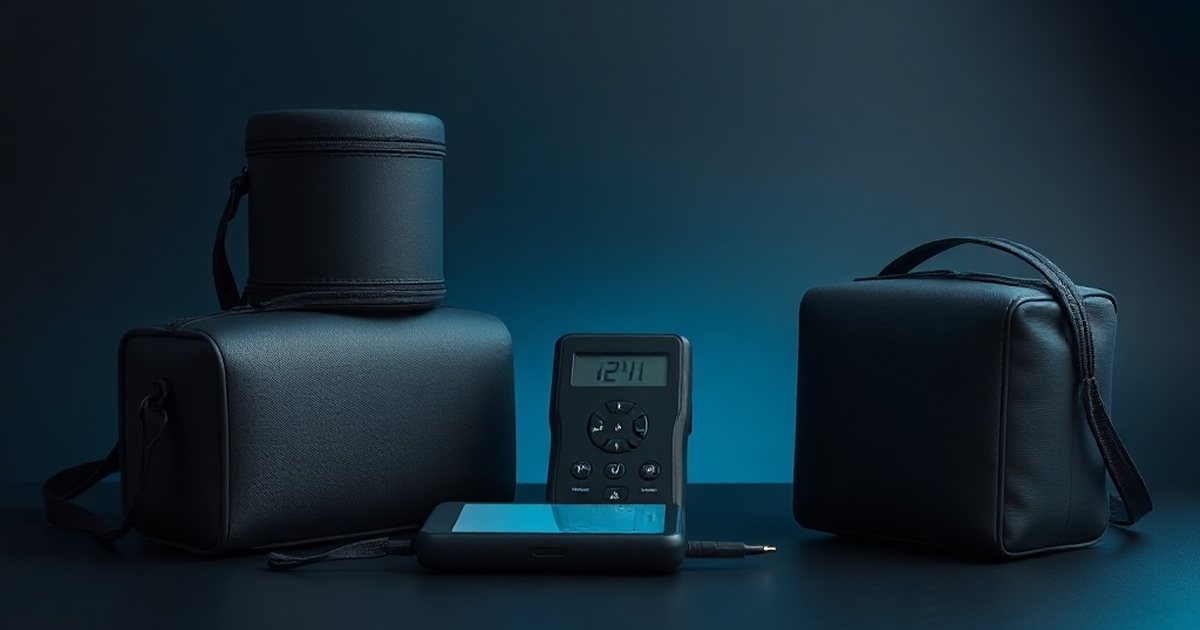
Start where you spend the most time. Measure at the pillow, the desk and the couch, then by the router, the microwave and the electrical panel. Hold the meter steady, give the reading a few seconds to settle, and write each value next to the place you took it.
A meter gives you measured data with limits: low-cost RF sensors differed from one another by 1.78 dB on average, with a maximum deviation of 5.26 dB, so compare readings from the same meter in the same positions [1][2].
Do the same walk after you change something, such as moving a router or switching a device off, and compare against your notes. Use the same meter, the same height and the same spots every time.
What a reading can and cannot tell you
A number tells you how strong a field is at one point. It does not tell you whether that field matters for your body, and the research on that question is mixed.
The IARC rating rested on limited evidence about brain cancer risk. A later WHO-commissioned meta-analysis found that ever or regular mobile phone use was not associated with glioma risk (pooled relative risk 1.01, confidence interval 0.89-1.13), and the US National Cancer Institute says the evidence to date suggests cell phone use does not cause brain or other kinds of cancer in humans [6][7][8].
Ready for More EMF Protection Tips?
Our complete guide includes 100 actionable strategies for every room in your home, plus product recommendations from our curated collection.
Get the Complete GuideFrequently Asked Questions
Why do I need an EMF meter if I can’t see electromagnetic fields?
An EMF meter lets you measure invisible radiation levels in your home so you can identify actual exposure hotspots rather than guessing. Without measurement data, you won’t know if your protection efforts are actually working or where to focus your reduction strategies.
What specific areas of my home should I test with an EMF meter?
Start by testing areas where you spend the most time, like your bedroom, living room, and workspace, as well as near common EMF sources like smart meters, Wi-Fi routers, and electrical panels. Sleeping areas are worth checking because you spend many hours there, though a one-year Swiss cohort found no association between modelled environmental RF exposure and sleep disturbance or daytime sleepiness [3].
How does measuring EMF fit into a complete protection strategy?
Measurement is part of the SHIELD principle, which addresses the root cause of EMF exposure rather than just treating symptoms. Once you identify your actual exposure levels with a meter, you can implement targeted shielding solutions and verify their effectiveness over time.
What should I do after I get EMF meter readings in my home?
Document your baseline readings and identify the highest exposure areas, then implement targeted protection measures like shielding, distance, or reducing device usage in those zones. Retest after making changes to confirm your protection efforts have reduced your EMF exposure effectively.
References
- Deprez K et al. Comparison of Low-Cost 5G Electromagnetic Field Sensors. Sensors (Basel, Switzerland) (2023). PMID 36992024
- Rathebe PC et al. Low-Cost Sensors in 5G RF-EMF Exposure Monitoring: Validity and Challenges. Sensors (Basel, Switzerland) (2026). PMID 41600329
- Evelyn Mohler et al. Exposure to Radiofrequency Electromagnetic Fields and Sleep Quality: A Prospective Cohort Study. PLoS ONE (2012). PMID 22624036
- Clinard F et al. Residential magnetic field measurements in France: comparison of indoor and outdoor measurements. Bioelectromagnetics (1999). PMID 10407517
- Leen Verloock et al. Assessment of Radio Frequency Exposures in Schools, Homes, and Public Places in Belgium. Health Physics (2014). PMID 25353235
- Mireille B. Toledano et al. Cohort profile: UK COSMOS, a UK cohort for study of environment and health. International Journal of Epidemiology (2015). PMID 26534947
- Karipidis K et al. The effect of exposure to radiofrequency fields on cancer risk in the general and working population: A systematic review of human observational studies – Part I: Most researched outcomes. Environment international (2024). PMID 39241333
- US National Cancer Institute Cell Phones and Cancer Risk. US National Cancer Institute (current). source
- Preece AW et al. Magnetic fields from domestic appliances in the UK. Physics in medicine and biology (1997). PMID 9015809
These statements have not been evaluated by the Food and Drug Administration. This information is not intended to diagnose, treat, cure, or prevent any disease. Content is for informational purposes only and is not medical advice; consult a qualified healthcare provider before starting any supplement. As an Amazon Associate we earn from qualifying purchases.