For most people the phone is within reach from the moment they wake until they fall asleep, so the radio in it is on nearly all day. A set daily window with the devices off or away is the simplest way to cut that time, and it needs no equipment.
Get our complete guide with room-by-room strategies and product recommendations.
What a device-free window removes
This is a source fix. A phone in airplane mode, or a laptop that is shut down, is not transmitting, so there is nothing to block. The time you spend near an active device falls by exactly the length of the window.
Device-free hours are a source fix you can schedule
Remove or switch it off
The most reliable fix: wire it, schedule it off, or choose a model without the radio.
Move it away
Fields from a device fall off quickly with distance, so the nightstand beats the pillow.
Block the path
Only for what you cannot remove or move; it must cover the path fully to work.
Measure before and after
Use a meter that reads the field type the change targets, so you know it worked.
Switch it off on a schedule.
The usual order of fixes: source first, shielding last.
Chart: frequencyblockers.com: Device-free hours are a source fix you can schedule
Embed this chart
Free to reuse on your site. Copy the code below; please keep the credit link.
Scheduled breaks reduce the time you spend close to your devices. In a small randomized pilot, four weeks of no phone use before bed reduced time to fall asleep, lengthened sleep and lowered pre-sleep arousal, though the trial was small and cannot separate content or light from radiation [2].
Distance helps even outside the window. A device on a desk or in a bag is farther from your body than one in your hand or pocket, and fields from a small source weaken quickly as the gap grows.
Picking the hours and making them stick
Tie device-free time to existing routines: first hour after waking, last hour before bed, and mealtimes.
- Choose the same hours each day so the window becomes a routine and not a decision.
- Put the phone in another room, or in a drawer, instead of face down on the desk.
- Tell the people who need to reach you when the window is, and agree on how an urgent call gets through.
- Plan something to do offline, such as cooking, a walk or a book, before the window begins.
Start smaller than you think you need to. A window you keep every day is worth more than a long one you abandon by the second day, and you can lengthen it once the habit holds. If a device has to stay on, such as a work phone, say so up front and keep it in one spot across the room instead of in your pocket.
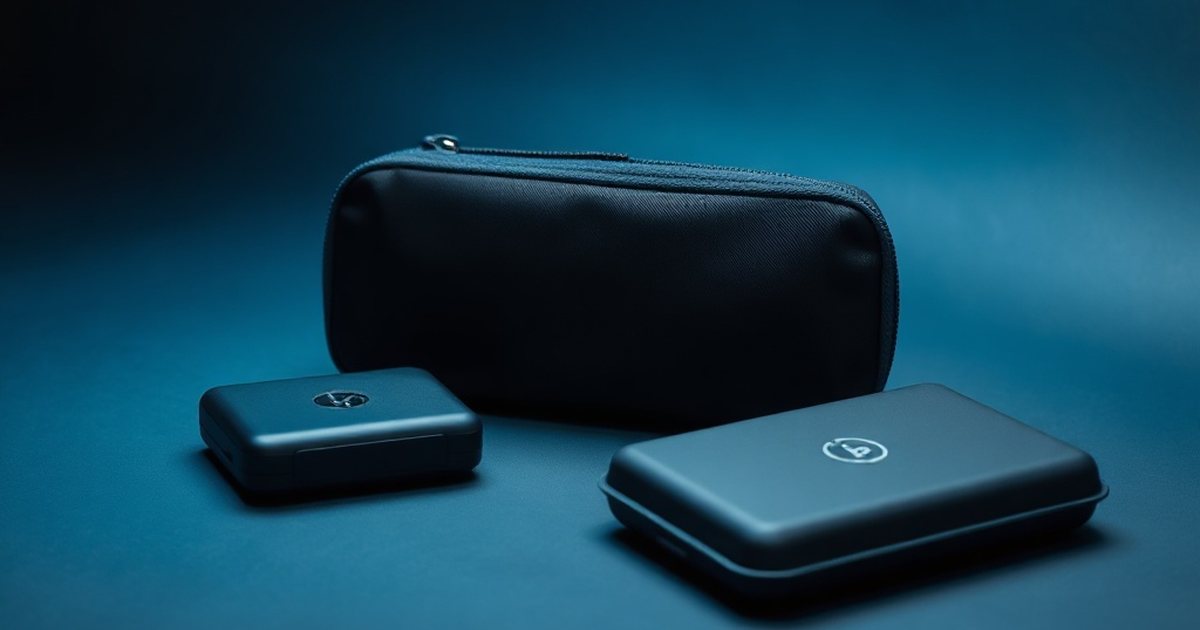
Mission Darkness Faraday Bag
Putting the phone in a sealed bag makes device-free hours easier to keep. It cannot ring or buzz until you take it out, so tell people when you are offline.
View ProductHow to check the quiet
An RF meter can show the difference. Take a reading in the room during a normal evening, then another with phones in airplane mode and laptops off. Your own router will still show up, so if it is yours and you don’t need it, switch it off at the wall for the window as well and read again. The readings give you evidence that the sources are really off, which is separate from how you feel.
What the evidence says about it
Time without devices has benefits that are easier to document than any change from radio exposure itself. The research below is cautious, and so should your expectations be.
The paper titled “Wi-Fi is an important threat to human health” argues that Wi-Fi is harmful. Larger reviews disagree: a WHO expert workshop report concluded that the evidence provides little support for adverse health effects from RF exposure below current international standards [1].
Research note: In a Shanghai school survey, each extra hour of mobile phone playing was associated with 30% higher odds of daytime tiredness and 27% higher odds of difficulty maintaining sleep among secondary students [7].
Ready for More EMF Protection Tips?
Our complete guide includes 100 actionable strategies for every room in your home, plus product recommendations from our curated collection.
Get the Complete GuideFrequently Asked Questions
What are device-free hours and why should I schedule them daily?
Device-free hours are designated periods where you intentionally avoid using screens and wireless devices to reduce your EMF exposure. By scheduling these breaks daily, you reduce the time your own devices spend near you. It is not a complete respite from radio-frequency fields: in one personal-exposure study, excluding the wearer’s own calls, environmental exposure came mostly from other people’s mobile phone calls, cordless DECT phones and base stations [3].
How does constant EMF exposure from devices affect my health?
Evidence on health effects of everyday radio-frequency exposure is mixed: a WHO-commissioned meta-analysis found that ever or regular mobile phone use was not associated with glioma risk (pooled relative risk 1.01, 95% CI 0.89-1.13), while the heaviest callers (over 276 minutes per week) in a Swedish and Finnish cohort had a weak suggestive increase in weekly headaches (odds ratio 1.13, 95% CI 0.95-1.34) [4][5]. Since most people now have screens and wireless devices within arm’s reach from waking to sleeping with no break from exposure, understanding these impacts is the first step toward implementing meaningful protection strategies.
What’s the difference between natural and artificial EMF sources?
Natural EMFs come from the earth and sun and have always been part of our environment, while artificial EMFs are produced by electrical devices, Wi-Fi, and infrastructure that have increased over recent decades. Measured everyday exposure is mostly well below limits: whole-body SAR computed from everyday personal meter readings was below the 0.08 W/kg basic restriction for the general public [6].
How can I start reducing my EMF exposure if I’m new to this?
Begin by implementing device-free hours daily as a foundational strategy, then learn about the distance principle, as EMF intensity decreases significantly the farther you are from a source. Whether you’re new to EMF awareness or enhancing existing protection strategies, starting with scheduled breaks from devices is one of the most actionable and effective steps you can implement today.
References
- Peter A. Valberg et al. Workgroup Report: Base Stations and Wireless Networks, Radiofrequency (RF) Exposures and Health Consequences. Environmental Health Perspectives (2006). PMID 17431492
- Jingwen He et al. Effect of restricting bedtime mobile phone use on sleep, arousal, mood, and working memory: A randomized pilot trial. PLoS ONE (2020). PMID 32040492
- Bolte JF et al. Personal radiofrequency electromagnetic field measurements in The Netherlands: exposure level and variability for everyday activities, times of day and types of area. Environment international (2012). PMID 22906414
- Karipidis K et al. The effect of exposure to radiofrequency fields on cancer risk in the general and working population: A systematic review of human observational studies – Part I: Most researched outcomes. Environment international (2024). PMID 39241333
- Anssi P. Auvinen et al. Headache, tinnitus and hearing loss in the international Cohort Study of Mobile Phone Use and Health (COSMOS) in Sweden and Finland. International Journal of Epidemiology (2019). PMID 31302690
- Joseph W et al. Estimation of whole-body SAR from electromagnetic fields using personal exposure meters. Bioelectromagnetics (2010). PMID 20041435
- Xiaoxiao Jiang et al. Sleep Duration, Schedule and Quality among Urban Chinese Children and Adolescents: Associations with Routine After-School Activities. PLoS ONE (2015). PMID 25611973
These statements have not been evaluated by the Food and Drug Administration. This information is not intended to diagnose, treat, cure, or prevent any disease. Content is for informational purposes only and is not medical advice; consult a qualified healthcare provider before starting any supplement. As an Amazon Associate we earn from qualifying purchases.