Building Invisible Barriers Against Wireless Radiation
With the rapid expansion of 5G networks, Wi-Fi connectivity, and smart home devices, electromagnetic exposure has become part of modern living. For those looking to reduce EMF and radiofrequency (RF) penetration through walls and ceilings, RF shielding paint offers a discreet, science-based solution. This specialized conductive coating can reduce wireless signals passing through ordinary walls without changing how they look [1][2].
What Is RF Shielding Paint?
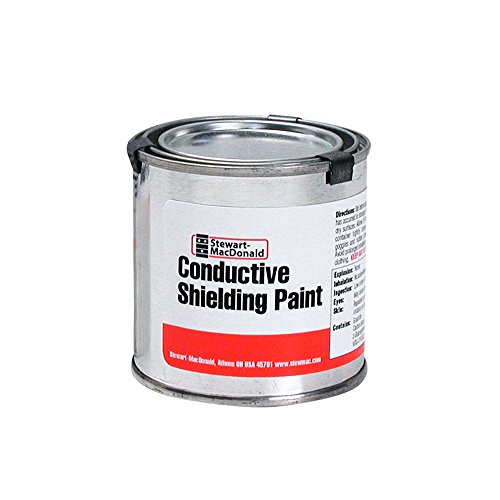
RF shielding paint is a liquid coating infused with conductive carbon, graphite, or metallic particles that reflect and absorb electromagnetic radiation. Once dry, it forms a continuous, electrically conductive surface that blocks or attenuates EMF and RF energy.
Applied like standard wall paint, it can be used in homes, offices, laboratories, and healthcare environments to create “quiet zones” protected from high-frequency fields originating from:
- Cell towers and 5G transmitters
- Wi-Fi routers and access points
- Bluetooth and IoT devices
- Smart meters and power lines
This type of shielding paint is sometimes referred to as Faraday paint because, when properly grounded, it acts like the conductive shell of a Faraday cage: redirecting electromagnetic energy safely to ground.
How RF Shielding Paint Works
RF shielding paint functions through surface conductivity and reflection. Its conductive particles (carbon, graphite, or metallic) disperse evenly across the wall to form a continuous film.
Shielding paint turns a wall into a reflective layer, if every surface is covered
A conductive layer bounces RF
Metal-coated fabric, foil, mesh and conductive paint reflect most incoming radio-frequency energy.
Some energy is lost inside
Thicker or multi-layer materials also absorb part of the signal as it passes through.
Gaps let signals through
Seams, open weaves, zips and unsealed edges leak, and short wavelengths slip through smaller gaps.
Low-frequency magnetic fields pass
Thin fabric or paint does little against 50/60 Hz magnetic fields; distance or special high-permeability metal is needed.
One missed surface is an open path
How well a material shields depends on the frequency and on how completely it covers the space.
Embed this chart
Free to reuse on your site. Copy the code below; please keep the credit link.
When electromagnetic waves contact this surface:
- Reflection: The paint reflects RF and EMF radiation back toward the source.
- Absorption: Some energy is absorbed and dissipated as heat.
- Grounding: Grounding connections safely discharge electric fields.
Proper installation, especially grounding, is crucial. Without grounding, reflection may still occur, but electric field reduction is limited.
Key Materials and Their Shielding Performance
| Material Type | Conductive Component | Typical Shielding Range (Single Coat) | Appearance |
|---|---|---|---|
| Carbon-Based Paint | Graphite or carbon black | 30 to 40 dB | Matte black/gray finish |
| Graphite-Enhanced Paint | Graphite and carbon composite | 40 to 50 dB | Smooth black finish |
| Nickel or Silver-Infused Paint | Metallic pigments | 50 to 70 dB | Metallic gray sheen |
| Hybrid Carbon-Metal Formulations | Mixed carbon + metallic | 60 to 80 dB | Slightly reflective black |
Each 10 dB of attenuation equates to roughly a tenfold reduction in signal strength, meaning a 50 dB coating blocks 99.999% of incoming RF energy.
Benefits of RF Shielding Paint
1. High-Level EMF Protection
Reduces signals across the frequencies it was tested at; shielding varies with frequency, so check the maker data at the band you care about [1][3].
2. Invisible After Finishing
Though most RF paints are dark gray or black, they can be top-coated with standard latex paint, maintaining aesthetic freedom while preserving function.
3. Multi-Surface Compatibility
Adheres to drywall, plaster, concrete, wood, and even exterior facades with the proper primer.
4. Safe and Non-Toxic
Modern formulas are water-based and low-VOC, making them suitable for residential and indoor applications.
5. Durable and Long-Lasting
Provides long-term protection (10+ years) with minimal maintenance when properly grounded and sealed.
Applications
- Homes: Bedrooms, nurseries, or entire living areas near strong Wi-Fi or 5G sources.
- Apartments: Ideal for shared walls between units or areas facing cell towers.
- Offices and Data Centers: Reduces interference with sensitive electronics.
- Hospitals and Laboratories: Ensures stable environments for instruments and shielding of MRI or monitoring rooms.
- Recording Studios: Minimizes radio interference in professional audio spaces.
Installation Process
1. Preparation
- Clean and dry walls thoroughly.
- Remove existing paint flakes, dirt, or oil residues.
- Apply an RF shielding primer if required by the manufacturer.
2. Application
- Apply 1 to 2 coats using a roller or spray gun.
- Allow proper drying time between coats (typically 12 to 24 hours).
- Ensure even coverage with no gaps or missed sections.
3. Grounding
- Attach grounding tape or a grounding plate to the coated wall, connected to an electrical ground.
- Grounding is essential for reducing electric fields and ensuring performance consistency.
4. Topcoat (Optional)
- Once dry, the surface can be painted over with any standard decorative color.
- Avoid oil-based paints that may reduce conductivity: use water-based latex paints for best results.
Comparison: Popular RF Shielding Paint Brands
| Brand / Product | Base Material | Shielding (1 Layer) | Grounding Required |
|---|---|---|---|
| YShield HSF54 | Carbon/graphite | 36 to 44 dB | Yes |
| LessEMF CuPro-Cote | Copper-based | 50 to 70 dB | Yes |
| Swiss Shield ElectroPaint | Graphite/carbon blend | 40 to 50 dB | Yes |
| BlocPaint EMF Shield | Carbon hybrid | 45 to 55 dB | Recommended |
| Safe Living Technologies ShieldPaint | Carbon + nickel | 50 to 60 dB | Yes |
These coatings can be used individually or layered for enhanced attenuation: each additional coat typically increases shielding by 5 to 10 dB.
Testing Shielding Effectiveness
After installation, it’s important to verify performance using an RF meter (such as the Safe Living Technologies Safe and Sound Pro II).
Steps:
- Measure baseline RF levels before painting.
- Apply and ground the paint.
- Measure again in the same location.
- Confirm the signal reduction against your baseline readings.
Maintenance and Longevity
- Durability: Once sealed, shielding paint can last a decade or more without performance loss.
- Cleaning: Use gentle, non-abrasive methods. Do not sand or scrape coated walls.
- Repainting: If refinishing, ensure grounding remains intact beneath any new layers.
- Humidity: Avoid using in high-moisture areas without proper sealing: metal-based paints may corrode.
Safety and Environmental Notes
Modern RF shielding paints are:
- Non-toxic and water-based
- Low odor and VOC-free
- Compatible with standard home ventilation
They do not interfere with Wi-Fi inside the shielded area if routers are located within the same zone; the shielding acts primarily on outside sources.

Integrating RF Shielding Paint Into a Whole-Home Strategy
For maximum EMF mitigation, combine RF shielding paint with other technologies:
- RF shielding window film for glass surfaces
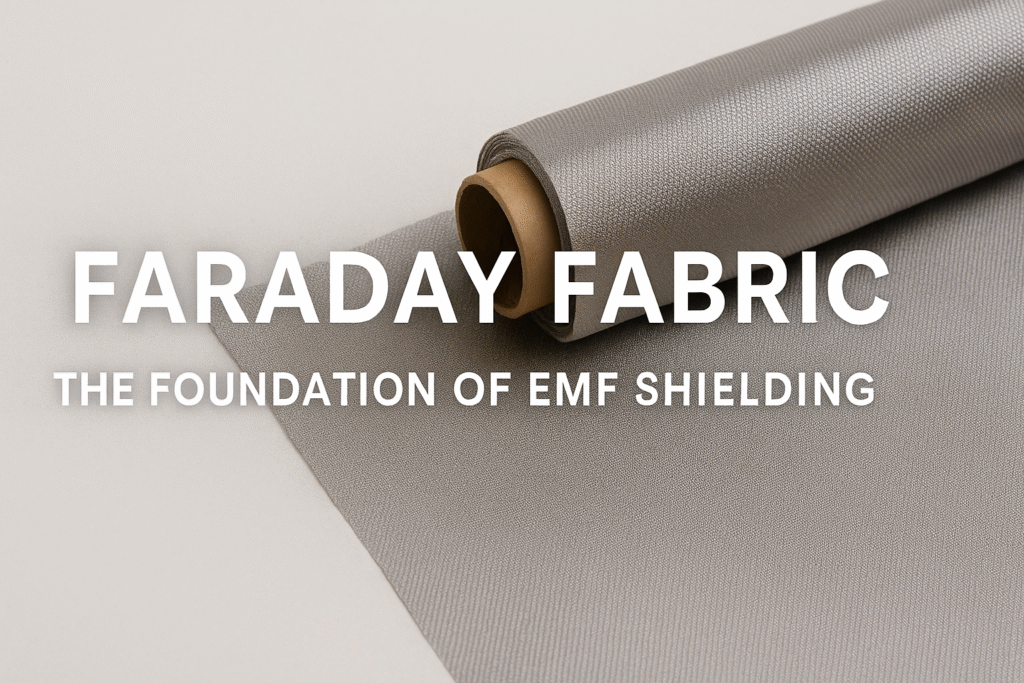
- Faraday fabrics or mesh grounding layers for floors and ceilings
- Shielding drapes or canopies in bedrooms
- Smart device management (router timers, airplane mode, etc.)
A layered approach ensures comprehensive protection from multiple angles and frequencies.
For context on what this paint is guarding against: in Belgian measurements, 94 percent of broadband readings in schools, homes and public places were below 1 V/m, and base station measurements in several countries reached at most 7.7 percent of the ICNIRP 2020 limit. A WHO workshop report concluded that the evidence provides little support for adverse health effects from RF exposure below current international standards. Measuring first shows whether there is anything to reduce [4][5][6].
Key Takeaways
- RF shielding paint adds a conductive layer to walls that can reduce RF passing through, depending on frequency, coverage and grounding [1][2].
- Attenuation depends on the product, the frequency, the number of coats and how well gaps and edges are sealed [2].
- The paint can be top-coated with regular wall colors for invisible protection.
- Grounding is essential to achieve full shielding potential.
- Ideal for homes, offices, and professional spaces, this paint offers a clean, aesthetic way to reduce wireless radiation exposure.
Further Reading
- YShield: HSF54 and HSF64 EMF Paints
- LessEMF: CuPro-Cote Conductive Paint
- Safe Living Technologies: Shielding Paint Systems
- Swiss Shield: EMF Shielding Solutions
- Electronics Notes: RF Reflection and Absorption Theory
Featured Products
Looking for quality EMF protection? Check out these recommended products:
Frequently Asked Questions
Does RF shielding paint actually work, or is it just marketing hype?
RF shielding paint does work when properly applied and grounded, as it contains conductive particles that reflect and absorb electromagnetic radiation similar to a Faraday cage. However, effectiveness depends on correct installation, including proper grounding connections, so you’ll want to follow manufacturer guidelines carefully for optimal protection.
Can you apply RF shielding paint yourself, or do you need a professional?
You can apply RF shielding paint yourself using standard painting techniques, but the critical factor is proper grounding installation, which may require professional help to ensure safety and effectiveness. If you’re comfortable with electrical grounding or hire an electrician for that portion, DIY application of the paint itself is achievable for most homeowners.
Will RF shielding paint block my Wi-Fi signal inside the room I paint it in?
Yes, RF shielding paint will reduce Wi-Fi and other wireless signals inside the painted room, which is intentional for creating protected spaces but means you may experience weaker connectivity. You’ll need to plan router placement carefully or use signal boosters and alternative internet solutions if you need connectivity in heavily shielded areas.
Is RF shielding paint safe to use in bedrooms and living spaces?
Manufacturers describe their water-based paints as low-VOC, but check the safety data sheet for the specific paint you choose, ventilate while applying, and allow full curing time. You should ensure proper ventilation during application and allow adequate drying time, and verify that your grounding installation meets electrical safety standards.
References
- Pušić T et al. Electromagnetic Shielding Properties of Knitted Fabric Made from Polyamide Threads Coated with Silver. Materials (Basel, Switzerland) (2021). PMID 33800263
- Andrew C. Marvin et al. A Method for the Measurement of Shielding Effectiveness of Planar Samples Requiring No Sample Edge Preparation or Contact. IEEE Transactions on Electromagnetic Compatibility (2009). doi:10.1109/temc.2009.2015147
- Ming Li Jiao et al. Electromagnetic Interference Shielding Properties of Silver-Plated Polyester Fabric. Applied Mechanics and Materials (2012). doi:10.4028/www.scientific.net/amm.239-240.310
- Leen Verloock et al. Assessment of Radio Frequency Exposures in Schools, Homes, and Public Places in Belgium. Health Physics (2014). PMID 25353235
- Deprez K et al. IN-SITU 5G NR BASE STATION EXPOSURE OF THE GENERAL PUBLIC: COMPARISON OF ASSESSMENT METHODS. Radiation protection dosimetry (2022). PMID 35511688
- Peter A. Valberg et al. Workgroup Report: Base Stations and Wireless Networks, Radiofrequency (RF) Exposures and Health Consequences. Environmental Health Perspectives (2006). PMID 17431492
These statements have not been evaluated by the Food and Drug Administration. This information is not intended to diagnose, treat, cure, or prevent any disease. Content is for informational purposes only and is not medical advice; consult a qualified healthcare provider before starting any supplement. As an Amazon Associate we earn from qualifying purchases.