Compared by Type and Application
Wireless technology powers modern life, but it also surrounds us with invisible electromagnetic waves. From Wi-Fi routers to smart meters, 5G towers, and even household wiring, our homes constantly interact with a range of frequencies.
That’s where frequency blocking materials come in. These fabrics, paints, foils, and films are designed to reduce exposure to radio frequencies (RF), electromagnetic fields (EMFs), and other signals by reflecting or absorbing them.
This guide breaks down the top 10 frequency blocking materials consumers can buy online, explains how they’re tested, and shows which ones perform best for specific home applications.
Quick Comparison: Top 10 Frequency Blocking Materials
| # | Material Type | Example Product | Typical Attenuation (dB) | Frequency Range | Best For |
|---|---|---|---|---|---|
| 1 | Silver EMF Shielding Fabric | SilverAffect Silver Jersey Fabric | 40 to 50 dB | 30 MHz-10 GHz | Curtains, bedding, DIY projects |
| 2 | Carbon-based Conductive Paint | MG Chemicals 841WB Paint | 45 to 55 dB | 10 MHz-2 GHz | Small wall sections or electronics |
| 3 | Graphite-Rich Wall Paint | YShield HSF54 Paint | Up to 67 dB | 30 MHz-18 GHz | Full-room coverage |
| 4 | Copper Mesh Fabric | Aaronia Copper Shield Mesh | 60 to 100 dB | 100 kHz-40 GHz | Walls, floors, DIY Faraday cages |
| 5 | Nickel/Copper Film | Aaronia Magnetic Foil Tape | 55 to 75 dB | 1 MHz-10 GHz | Grounding, seams, or cable shielding |
| 6 | EMF Shielding Bed Canopy Fabric | Redemption Shield Breathable Fabric | 35 to 45 dB | 30 MHz-6 GHz | Sleeping areas |
| 7 | Silver-Thread Scarf (Wearable) | Radia Smart EMF Scarf | 25 to 35 dB | 800 MHz-6 GHz | Personal protection |
| 8 | Aluminum Foil Tape | 3M Aluminum Shield Tape | 40 to 60 dB | 10 MHz-3 GHz | Gaps, seams, grounding |
| 9 | Transparent Window Film | Signals Defense RF Window Film | 20 to 30 dB | 800 MHz-40 GHz | Windows and glass doors |
| 10 | Grounding Mesh (Stainless Steel) | Swiss Shield Steel Ground Mesh | 50 to 70 dB | 100 kHz-6 GHz | Under flooring, walls |
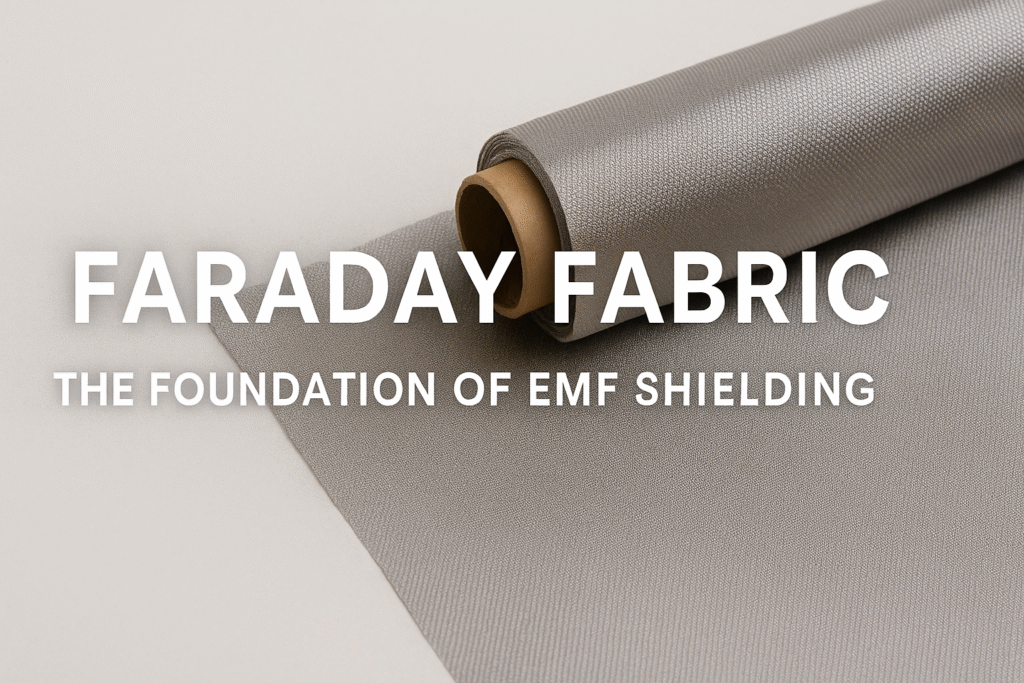
1. Silver EMF Shielding Fabric
Why it’s effective: Silver is an exceptional conductor, capable of reflecting and absorbing a wide range of frequencies. Silver-lined fabrics are lightweight, breathable, and ideal for home projects like curtains, bed canopies, or clothing.
Example: SilverAffect Silver Jersey Fabric
- Blocks up to 50 dB (99.999% reduction) across 30 MHz-10 GHz
- Comfortable to wear, but washing can reduce shielding [1][2][3]
Best for: Bedrooms, DIY curtains, bedding, or wearable accessories
2. Carbon-Based Conductive Paint
Why it’s effective: Conductive paints use carbon or nickel particles to create a barrier that absorbs electromagnetic energy. Once applied and grounded, they can reduce both RF and electric field exposure.
Example: MG Chemicals 841WB Paint
- ~50 dB attenuation
- Ideal for small surface areas or behind wall art
- Easy water-based cleanup

3. Graphite-Rich Wall Paint
Why it’s effective: High-performance carbon paints, like YShield HSF54, are the go-to choice for home shielding. Once grounded, they turn walls into RF-blocking barriers that can reduce exposure from nearby towers or routers.
Example: YShield HSF54 Paint
- Attenuation up to 67 dB
- Water-based, low-VOC
- Used in entire-room or apartment installations
4. Copper Mesh Fabric
Why it’s effective: Copper provides superb conductivity across both low and high frequencies. Meshes are flexible, easy to cut, and work for both architectural shielding and DIY projects.
Example: Aaronia Copper Shield Mesh
- 60 to 100 dB attenuation
- Usable for walls, under floors, or wrapped around electronics
5. Nickel/Copper Foil Tape
Why it’s effective: These foils combine reflective and magnetic properties, offering solid blocking performance at a fraction of the cost. Often used for grounding or closing seams in shielding projects.
Example: Aaronia Magnetic Foil Tape
- Up to 75 dB attenuation
- Great for joining edges or electrical bonding
6. EMF Shielding Bed Canopy Fabric
Why it’s effective: Bed canopies create low-exposure “sleep zones.” Breathable fabrics allow airflow while deflecting Wi-Fi and cellular frequencies.
Example: Redemption Shield Breathable Fabric
- 35 to 45 dB attenuation
- Soft, semi-transparent weave
- Silver-coated polyester
7. Silver-Thread Scarf (Wearable)
Why it’s effective: Lightweight and portable, these scarves or shawls are sold for personal frequency blocking, but a flat-swatch dB rating does not carry over to a worn garment: in simulations of anti-radiation pregnancy bands, the average field fell by no more than 30 percent and the maximum field rose in more than 90 percent of the scenarios [4].
Example: Radia Smart EMF Protection Scarf
- 25 to 35 dB attenuation
- Breathable, organic cotton and silver blend
8. Aluminum Foil Tape
Why it’s effective: A classic and affordable option for grounding or sealing seams in shielding installations. Aluminum reflects radio frequencies effectively and is used for both DIY and professional EMF reduction.
Example: 3M Aluminum Shield Tape
- 40 to 60 dB attenuation
- Excellent adhesive backing
- Works with conductive paints and meshes
9. Transparent RF Window Film
Why it’s effective: Windows are one of the biggest weak points for EMF entry. Conductive window films maintain visibility while providing measurable signal attenuation.
Example: Signals Defense RF Window Film
- 20 to 30 dB attenuation
- Blocks 3G, 4G, 5G, and Wi-Fi frequencies
- UV protection included
10. Grounding Mesh (Stainless Steel)
Why it’s effective: Stainless-steel meshes are highly durable and act as both an RF and electric field shield when installed under floors or behind drywall.
Example: Swiss Shield Ground Mesh
- 50 to 70 dB attenuation
- Used under flooring or walls
- Essential for grounding large shielded zones
How to Choose the Right Frequency Blocking Material
Selecting the right material depends on your environment, exposure sources, and goals.
For sleeping areas:
- Choose soft silver or copper-blend fabrics (curtains, canopies).
- Aim for ≥35 dB attenuation for noticeable improvement.
For walls and ceilings:
- Use conductive paints or copper meshes grounded properly.
- Apply at least two coats of paint for consistent coverage.
For windows:
- Apply transparent RF films rated above 20 dB.
For DIY setups:
- Combine foil tape and fabric panels to reduce gaps and leaks.
For personal use:
- Wear silver-thread scarves or use frequency-blocking phone pouches for on-the-go shielding.
Understanding the Numbers: dB and Frequency Range
A quick rule of thumb: every 10 dB increase equals a tenfold improvement in signal reduction.
- 10 dB ≈ 90% reduction
- 20 dB ≈ 99% reduction
- 40 dB ≈ 99.99% reduction
Attenuation figures compare materials, but only if you can read what they mean
A bigger decibel number blocks far more signal
Shielding effectiveness compares the field with and without the shield (SE = 20 log E0/E1), so every 20 dB cuts the field tenfold and the power a hundredfold. Values are lab measurements on material samples, not finished products. Source: Materials (2021); Nanomaterials (2024); Journal of Physics D: Applied Physics (2023); Polymers (2022)
Data table
| Item | Value |
|---|---|
| Silver-coated knit at 0.9 GHz | 14.8 dB |
| Same knit at 2.4 GHz | 24.1 dB |
| Metallic decorative coatings (up to) | 30.0 dB |
| Low-e window glass (upper end) | 40.0 dB |
| Carbon-fibre fabric laminate, 1 to 3 GHz | 60.0 dB |
Embed this chart
Free to reuse on your site. Copy the code below; please keep the credit link.
Look for materials that publish tested dB performance and frequency ranges. Many reputable manufacturers, such as DefenderShield, Aaronia, and WOREMOR, publish lab results based on ASTM or IEEE standards.
A dB figure only holds for the frequency and test setup it was measured in. In lab tests, one silver-coated knit gave 24.1 dB at 2.4 GHz but only 14.8 dB at 0.9 GHz, and a silver-plated polyester knit measured differently in open space than in an enclosed test space [2][6].
Final Thoughts
Frequency blocking materials allow everyday consumers to take a proactive approach to reducing exposure from Wi-Fi, 5G, and household EMFs. With more products being independently tested and certified, it’s easier than ever to create lower-exposure spaces [5]without sacrificing connectivity or comfort.
When choosing, remember:
These materials lower radio signal strength, which is a measurable effect. They do not by themselves show a health benefit: a Swiss cohort of 955 adults found that neither phone use nor modelled environmental RF exposure was associated with sleep disturbance or daytime sleepiness [7][5].
- Look for verified attenuation in dB and a clear frequency range.
- Combine materials thoughtfully: fabric, paint, and tape together create stronger results.
- Proper grounding and coverage matter just as much as the material itself.
By understanding how these materials perform and where they work best, you can confidently select the right products for your home, your comfort, and long-term well-being.
References
- SilverAffect: Silver Jersey Shielding Fabric
- MG Chemicals 841WB Conductive Paint
- YShield HSF54 Paint Data Sheet
- Aaronia Shielding Materials
- Redemption Shield Fabrics
- Signals Defense RF Window Film
- Swiss Shield Ground Mesh
- Electronics Notes: Shielding Effectiveness Explained
Featured Products
Looking for quality EMF protection? Check out these recommended products:
Related: Discover more ways to reduce EMF exposure throughout your home in our EMF Protection for Your Home guide.

Frequently Asked Questions
What is the best frequency blocking material for protecting my bedroom?
For bedroom protection, silver EMF shielding fabric and mu-metal are top choices. Silver fabric works well for curtains and bed canopies with 40-50 dB attenuation across Wi-Fi and 5G frequencies, while mu-metal excels at blocking magnetic fields from household wiring and electronics.
How much attenuation do I need to effectively block EMF signals?
Most effective frequency blocking materials provide 40-55 dB of attenuation, which significantly reduces RF and EMF exposure in your home. The specific amount you need depends on your proximity to the signal source and which frequencies are of concern, such as 5G, Wi-Fi, or smart meter radiation.
Can I use aluminum foil as a frequency blocking material for my home?
Yes, aluminum foil is an affordable frequency blocking material that works well for RF shielding, though it typically provides slightly lower attenuation than copper mesh or silver-coated fabrics. It’s best used as a temporary solution or for small DIY projects like window coverings or device wrapping rather than whole-room protection.
Which frequency blocking materials work best for wearable EMF protection?
Silver-thread scarves and silver-coated fabrics are ideal for wearable EMF protection because they’re lightweight, flexible, and provide 40-50 dB of attenuation across multiple frequency ranges. These materials allow you to carry personal EMF shielding throughout your day without the bulk of heavier options like copper mesh or grounding materials.
References
- Tanja Pušić et al. Electromagnetic Shielding Effectiveness of Woven Fabric with Integrated Conductive Threads after Washing with Liquid and Powder Detergents. Polymers (2022). PMID 35746018
- Pušić T et al. Electromagnetic Shielding Properties of Knitted Fabric Made from Polyamide Threads Coated with Silver. Materials (Basel, Switzerland) (2021). PMID 33800263
- Li‐Chuan Jia et al. Highly Conductive and Machine‐Washable Textiles for Efficient Electromagnetic Interference Shielding. Advanced Materials Technologies (2018). doi:10.1002/admt.201800503
- Fatemeh Dehrouyeh et al. On the Shielding Effectiveness of Anti-Electromagnetic-Radiation Clothes for Pregnant Females. (2023). doi:10.36227/techrxiv.22890860.v1
- US Food and Drug Administration Scientific Evidence for Cell Phone Safety. US Food and Drug Administration (current). source
- Ming Li Jiao et al. Electromagnetic Interference Shielding Properties of Silver-Plated Polyester Fabric. Applied Mechanics and Materials (2012). doi:10.4028/www.scientific.net/amm.239-240.310
- Evelyn Mohler et al. Exposure to Radiofrequency Electromagnetic Fields and Sleep Quality: A Prospective Cohort Study. PLoS ONE (2012). PMID 22624036
These statements have not been evaluated by the Food and Drug Administration. This information is not intended to diagnose, treat, cure, or prevent any disease. Content is for informational purposes only and is not medical advice; consult a qualified healthcare provider before starting any supplement. As an Amazon Associate we earn from qualifying purchases.