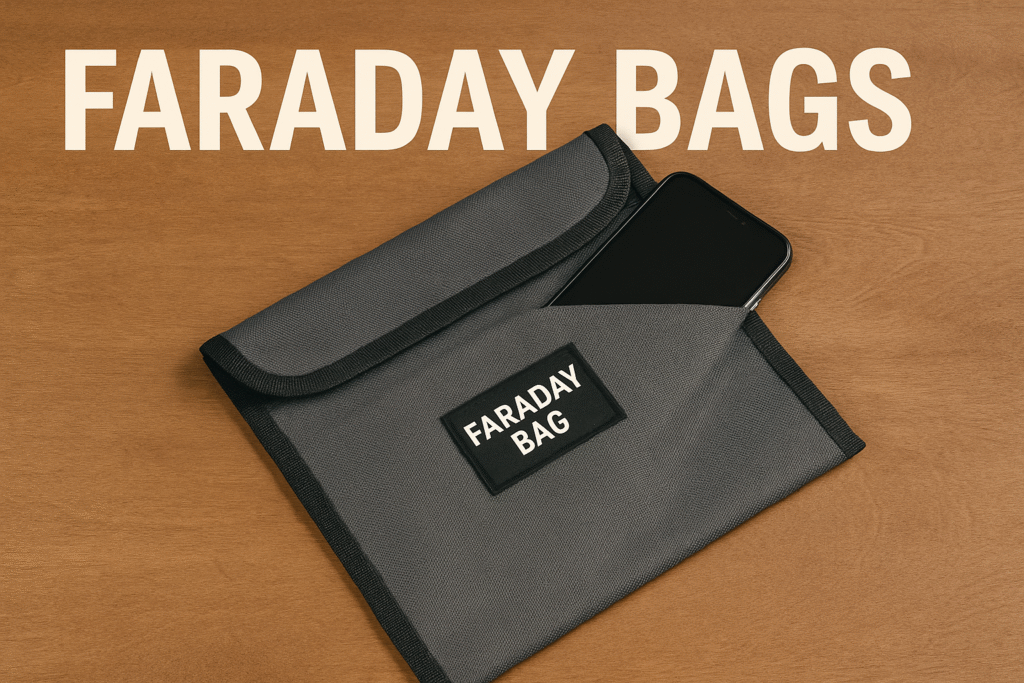
Which One Actually Blocks 5G and RFID?
In an always-connected world where our phones, key fobs and wearables constantly emit and receive wireless signals, a properly designed top Faraday pouches can create a truly isolated signal-off environment. But with so many options on the market, how do you know which one actually works, especially when it comes to newer bands like 5G and RFID?
This article examines the top five consumer-ready Faraday pouches, outlines the specifications that matter (frequency range, attenuation in dB, closure quality) and gives you a clear framework for selecting the right one among the top faraday pouches.
✅ What Makes Top Faraday Pouches?
Before diving into product comparisons, these are the must-have criteria:
- Frequency range covered: The wider the spectrum (e.g., up to 24-40 GHz or more), the stronger the protection for 5G, GPS and RFID.
- Attenuation (dB): Shielding effectiveness is measured in decibels. Rough guide: 20 dB ≈ 90% signal reduction; 60 dB ≈ 99.9% reduction.
- Independent testing / standard compliance: References to standards like ASTM D4935-18 or IEEE 299 indicate credible performance.
- Seal & enclosure quality: A pouch with a weak closure, open seam or loose fit undermines shielding.
- Fit & size: The device must fit fully inside with room for closure; crowding or bulging reduces performance.
With these in mind, here are five strong options.
🧮 The Top 5 Faraday Pouches Compared
| # | Model | Approx. Price* | Target Device(s) | Claimed Frequency Range | Approx. Attenuation | Highlights |
|---|---|---|---|---|---|---|
| 1 | GoDark Vault Key-Fob / Phone Bag | ~$49 | Key fob, small phone | Up to ~30-40 GHz | ~60-80 dB range | Durable shell, high spec for smaller devices |
| 2 | Mission Darkness Key-Fob Bag | ~$15 | Car key fob | 300-400 MHz (relay attack) | ~60 dB+ | Very budget-friendly for key security |
| 3 | GoDark Phone Carrier | ~$55 | Smartphones up to ~6.5″ | Up to ~40 GHz | ~70-80 dB | Mid-range starter for phone signal block |
| 4 | Mission Darkness Phone Bag | ~$23 | Smartphones | Up to ~40 GHz | ~65-75 dB | Strong performance at low price point |
| 5 | OffGrid Extract Travel Faraday Bag | ~$52 | Phone + passport/cards | Up to ~30-40 GHz | ~60-80 dB | Travel-friendly, multi-device use |
*Prices approximate and may vary.
🔍 Real-World Spec Highlights
- Some top faraday pouches claim >100 dB attenuation and compliance with MIL-STD-188-125-2 or IEEE 299 for 1–40 GHz.
- Others focus more narrowly (car key fobs or basic RFID) with lower range specs.
- When specs list “up to 90 GHz” coverage, it means the material was tested at those frequencies, giving higher future-proofing.
🎯 Choosing the Right Pouch for Your Use-Case
Use-Case: Car Key Fob / Relay Attack Prevention
If your main goal is fob security, a compact, low-cost pouch suffices — size matters more than extreme dB specs.
Use-Case: Smartphone Privacy / Travel Mode
For blocking phone GPS, Wi-Fi and 5G during travel or privacy scenarios, target pouches that cover up to ~40 GHz or higher with verified attenuation.
Use-Case: Multi-Device or Cards & Passport
If you carry multiple items, choose a larger pouch with ample interior space and full coverage, with premium spec for broad range blocking.
Use-Case: Budget vs Premium / Top Faraday Pouches
- Budget ($15-30): Basic protection, ideal for key fobs or casual use.
- Mid-range ($40-60): Balanced for phones and travel.
- Premium ($80+): Highest spec, broadest range, best materials — more than many consumers need.
🧪 How to Verify “It Works” at Home
You don’t need a lab. Try these tests:
- Place your phone inside, close the top faraday pouches fully.
- Attempt a call or text — should fail.
- Enable Wi-Fi or Bluetooth and check if the device still sees networks.
- Use an RF meter (if available) to check signal strength outside vs inside: e.g., 5,000 µW/m² outside, 50 µW/m² inside (~99% reduction).
Simple home testing confirms practical performance, though very high frequencies (>24 GHz) require specialised equipment.
⚠️ Common Pitfalls & What to Avoid
- Cheap pouches with “metallic look” fabric but no conductive layer or test data.
- Pouches with weak closure or uneven seams — leakage reduces shielding.
- Using a pouch while expecting your device to stay connected — true shielding means the device is isolated.
- Ignoring device behaviour: a powered phone inside will search for signal and drain battery faster if still trying to connect.
📌 Final Thoughts
A well-chosen one of the top Faraday pouches can give meaningful signal isolation for phones, key fobs, passports and more. When selecting yours:
- Confirm the frequency range, attenuation rating, and test standard.
- Ensure the device fits properly and the closure is secure.
- Match the pouch to your actual need: key fob vs phone vs multi items.
- Don’t overpay for specs you won’t use — balanced performance is often enough.
🔑 Key Takeaways
- Look for coverage up to 40 GHz+, strong attenuation (50-80 dB+), and verified lab data.
- Fit and total closure are as critical as materials.
- Choose your pouch based on use-case first, then price & specs.
- Simple home tests (call block, Wi-Fi loss) give quick assurance.
- Cheap pouches may look good — check specs before buying.
References
- “Low Surface Radiation Shielding and Attenuation…” – Electronics Notes: Link
- ASTM D4935-18 Standard Test Method: Link
- NICB – Keyless Entry Theft Prevention: Link
- Police1 – Why Every Officer Needs a Faraday Bag: Link
- Safe Living Technologies – EMF Testing Tools: Link
Featured Products
Looking for quality EMF protection? Check out these recommended products:
Frequently Asked Questions
Do Faraday pouches actually block 5G signals?
Yes, properly designed Faraday pouches can block 5G if they cover a wide frequency range (typically 24-40 GHz or higher) and achieve sufficient attenuation levels. The key is verifying that the pouch has been independently tested to standards like ASTM D4935-18 or IEEE 299 to ensure genuine shielding effectiveness.
What’s the difference between a 20 dB and 60 dB Faraday pouch?
A 20 dB attenuation pouch reduces signals by roughly 90%, while a 60 dB pouch reduces them by approximately 99.9%. The higher decibel rating means significantly stronger protection, though both can be effective depending on your specific use case and threat level.
Can I use a top Faraday pouch to protect my car key fob from relay attacks?
Yes, Faraday pouches are specifically designed for this purpose and can prevent relay attacks by blocking the wireless signals that thieves use to intercept your key fob’s signal. You should ensure the pouch has a quality seal and closure to maintain full shielding protection when your fob is stored inside.
How do I know if my Faraday pouch is actually working?
You can verify shielding at home by checking if your phone loses signal strength when fully enclosed in the pouch, or by testing RFID card blocking with a compatible reader. Look for products with published independent test results and compliance certifications, which provide credible evidence of performance.