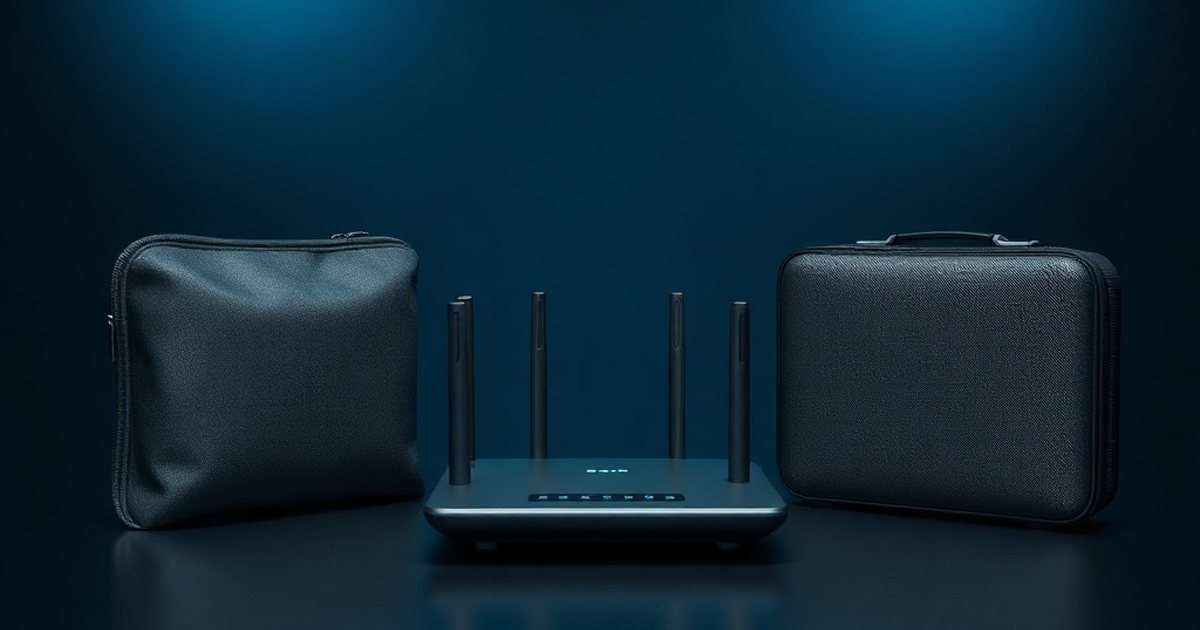
Some devices in a home only work over Wi-Fi, so switching the router off is not always an option. A router guard is the middle path: a metal mesh enclosure that sits around the router and cuts how much of its radio output reaches the room, while the router keeps running.
Watch our quick tip on YouTube Shorts
Get our complete guide with room-by-room strategies and product recommendations.
What the mesh is doing
Radio waves from a router are reflected and absorbed by conductive material. A mesh with small openings and tight seams stops much of the signal, and larger openings or gaps let it through. That is the whole principle of a Faraday cage, and it is why the details of the build matter as much as the metal.
The Fix: Place your router inside a Router Guard: a mesh Faraday cage that reduces RF emissions by an amount that depends on the frequency, the test setup and how well the seams are closed, while still allowing some signal through [1][2][3].
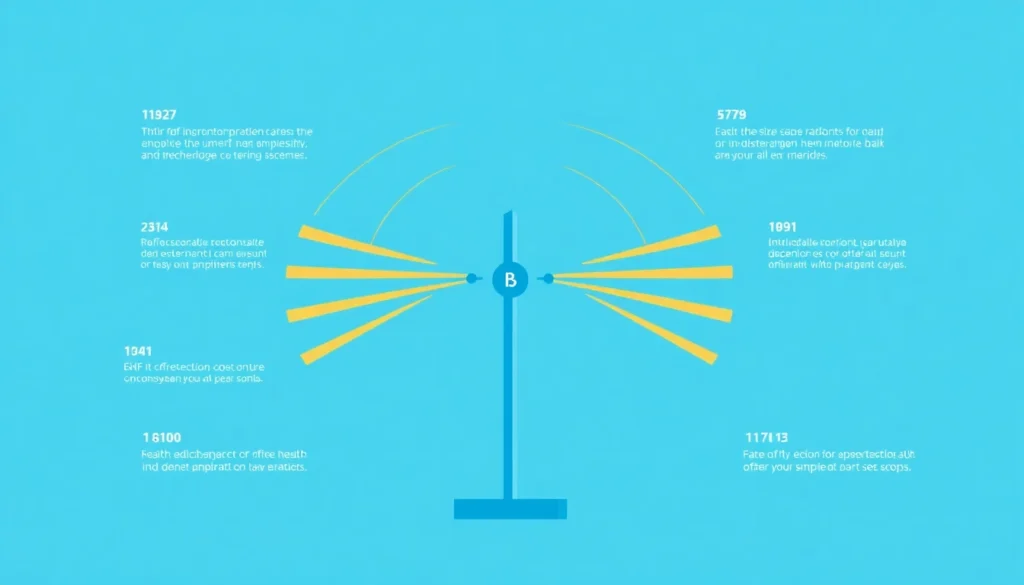
A router guard shields only the directions it covers, so placement matters
A conductive layer bounces RF
Metal-coated fabric, foil, mesh and conductive paint reflect most incoming radio-frequency energy.
Some energy is lost inside
Thicker or multi-layer materials also absorb part of the signal as it passes through.
Gaps let signals through
Seams, open weaves, zips and unsealed edges leak, and short wavelengths slip through smaller gaps.
Low-frequency magnetic fields pass
Thin fabric or paint does little against 50/60 Hz magnetic fields; distance or special high-permeability metal is needed.
Coverage decides what a guard blocks.
How well a material shields depends on the frequency and on how completely it covers the space.
Chart: frequencyblockers.com: A router guard shields only the directions it covers, so placement matters
Embed this chart
Free to reuse on your site. Copy the code below; please keep the credit link.
The guard is also not a sealed box. Wi-Fi still has to reach your devices, so the enclosure is designed to let some signal out, and any loose lid, open back or wide cable slot becomes the main exit. Treat it as a way to point the router’s output away from where people sit, not to switch it off.
Setting up a router guard so it helps
- Put the open side, if the guard has one, toward an unused part of the room or an outside wall, not toward the sofa, desk or bed.
- Close every seam and flap fully, and run the power and Ethernet cables through the smallest opening you can.
- Leave air around the router. A router runs warm, and a tightly packed enclosure with no ventilation invites overheating and unreliable Wi-Fi.
- Combine it with distance: place the guarded router in the room or corner furthest from where anyone sits or sleeps.

If you want the background on how mesh enclosures differ from pouches and bags, see Faraday bags vs Faraday cages. The enclosure used for this tip is listed on the Smart Meter Guard page.
How to check what the guard changed
Use an RF meter, the kind that reads radio-frequency power, and keep every other condition the same. Stand or sit at your normal spot, with the router running and the guard open or removed, and note the reading. Then close the guard fully and read again in the same place, at the same time of day, with the same devices connected.
Wi-Fi traffic makes readings jump, so compare the typical level and the peaks rather than a single number. Also test the connection in the furthest room. If a device there drops out, the guard is costing you signal you may want back, and you can loosen the placement a little.
Safe and Sound Classic II RF Meter
An RF meter is how you tell whether a router guard is doing anything. Read the same spot with and without the guard, and check the devices still connect.
What a guard does not do, and what the research says
A guard only lowers the router’s output in the directions it covers. It does nothing about your phone, your laptop or a neighbor’s router, and those can sit much closer to you than the router in the next room. If your goal is lower exposure overall, those sources deserve the same attention.
The study “Wi-Fi is an important threat to human health” is one argument for precaution. For scale, in a Belgian survey the average total radiofrequency electric field was 0.1 V/m in homes and 0.2 V/m in schools [4].
This is a precaution rather than a treatment. A review of 46 blind or double-blind provocation studies with 1175 volunteers who attribute symptoms to EMF found no robust evidence that the fields trigger those symptoms, and found support for a nocebo effect, meaning expectation of harm [5].
The IARC rating of radiofrequency fields rested on limited evidence about brain cancer risk. A later WHO-commissioned meta-analysis found that ever or regular mobile phone use was not associated with glioma risk (pooled relative risk 1.01, confidence interval 0.89-1.13), and the US National Cancer Institute says the evidence to date suggests cell phone use does not cause brain or other kinds of cancer in humans [6][7][8].
Ready for More EMF Protection Tips?
Our complete guide includes 100 actionable strategies for every room in your home, plus product recommendations from our curated collection.
Frequently Asked Questions
What is a router guard and how does it work as a Faraday cage?
A router guard is a shielding enclosure that acts as a Faraday cage to contain electromagnetic radiation from your WiFi router. It allows your devices to connect to WiFi while significantly reducing the EMF exposure in your home by blocking a substantial portion of the radiofrequency signals from escaping into your living spaces.
Will using a Faraday cage on my router affect my WiFi signal strength?
Yes, a router guard will reduce your WiFi signal range since it’s designed to contain the electromagnetic fields. However, most quality Faraday cages are engineered to maintain adequate signal strength within close proximity while still providing meaningful EMF protection for your family.
Is reducing router power alone enough to protect my family from EMF exposure?
No, according to the article, simply turning down your router’s power isn’t sufficient for most families seeking meaningful EMF reduction. Using a router guard addresses the root cause of exposure by shielding the source, which is more effective than power reduction alone as part of the SHIELD principle of EMF protection.
Can I use a router guard alongside other EMF protection strategies?
Yes, a router guard works best as part of a comprehensive EMF protection strategy that includes multiple approaches. Combining shielding devices like router guards with other techniques creates a layered defense that provides maximum effectiveness in reducing your overall electromagnetic field exposure.
References
- Pušić T et al. Electromagnetic Shielding Properties of Knitted Fabric Made from Polyamide Threads Coated with Silver. Materials (Basel, Switzerland) (2021). PMID 33800263
- Ming Li Jiao et al. Electromagnetic Interference Shielding Properties of Silver-Plated Polyester Fabric. Applied Mechanics and Materials (2012). doi:10.4028/www.scientific.net/amm.239-240.310
- Andrew C. Marvin et al. A Method for the Measurement of Shielding Effectiveness of Planar Samples Requiring No Sample Edge Preparation or Contact. IEEE Transactions on Electromagnetic Compatibility (2009). doi:10.1109/temc.2009.2015147
- Leen Verloock et al. Assessment of Radio Frequency Exposures in Schools, Homes, and Public Places in Belgium. Health Physics (2014). PMID 25353235
- Rubin GJ et al. Idiopathic environmental intolerance attributed to electromagnetic fields (formerly 'electromagnetic hypersensitivity'): An updated systematic review of provocation studies. Bioelectromagnetics (2010). PMID 19681059
- Mireille B. Toledano et al. Cohort profile: UK COSMOS, a UK cohort for study of environment and health. International Journal of Epidemiology (2015). PMID 26534947
- Karipidis K et al. The effect of exposure to radiofrequency fields on cancer risk in the general and working population: A systematic review of human observational studies – Part I: Most researched outcomes. Environment international (2024). PMID 39241333
- US National Cancer Institute Cell Phones and Cancer Risk. US National Cancer Institute (current). source
These statements have not been evaluated by the Food and Drug Administration. This information is not intended to diagnose, treat, cure, or prevent any disease. Content is for informational purposes only and is not medical advice; consult a qualified healthcare provider before starting any supplement. As an Amazon Associate we earn from qualifying purchases.