This article is for educational purposes only and is not medical advice. If you have health concerns about your child, consult a qualified pediatrician or medical professional.
Few parenting decisions create as much quiet anxiety as placing a wireless device inches from a sleeping newborn and leaving it there for eight to twelve hours every night. WiFi baby monitors have become the default choice for modern nurseries, offering HD video, sleep tracking, and smartphone alerts. But the tradeoff is a transmitter operating continuously in your infant’s sleep space, often for years.
Parents searching for clarity on wifi baby monitor emf exposure often land in one of two camps: articles that dismiss the concern entirely, or fear-driven content that overstates what we actually know. The honest answer sits between those extremes. In this guide, we break down how different baby monitor technologies work, what the available research says (and does not say), and practical steps you can take to reduce exposure regardless of which monitor you choose.
How Different Baby Monitor Technologies Actually Work
Not all baby monitors emit the same type or amount of radiofrequency (RF) radiation. The technology inside the monitor determines how much it transmits, how often, and at what power level. Understanding these categories helps you make an informed decision.
WiFi Baby Monitors (2.4 GHz / 5 GHz)
WiFi monitors like the Nanit Pro and Eufy E21 connect to your home network and stream video to a smartphone app. They operate on the 2.4 GHz or 5 GHz bands and transmit data continuously whenever the camera is powered on. Even when your baby is sleeping silently, the video feed keeps streaming. This constant transmission is why WiFi monitors sit at the higher end of RF output among baby monitor categories.
The convenience is obvious: you can check the nursery from anywhere with cell service, share access with a partner, and get push notifications for sound or motion. Some models offer sleep analytics, breathing monitoring, and integration with smart home devices. The Nanit Pro, for example, uses 256-bit AES encryption and two-factor authentication, so the security side is well handled. But from an RF perspective, you are placing a continuously transmitting WiFi access point in the crib zone.
DECT and FHSS Monitors (Non-WiFi Digital)
DECT (Digital Enhanced Cordless Telecommunications) and FHSS (Frequency-Hopping Spread Spectrum) monitors use a dedicated wireless signal between a camera unit and a portable parent unit. They do not connect to the internet. Products like the Infant Optics DXR-8 Pro and Eufy SpaceView use 2.4 GHz FHSS, while VTech monitors like the RM5764HD use DECT 6.0 technology at 1.9 GHz.
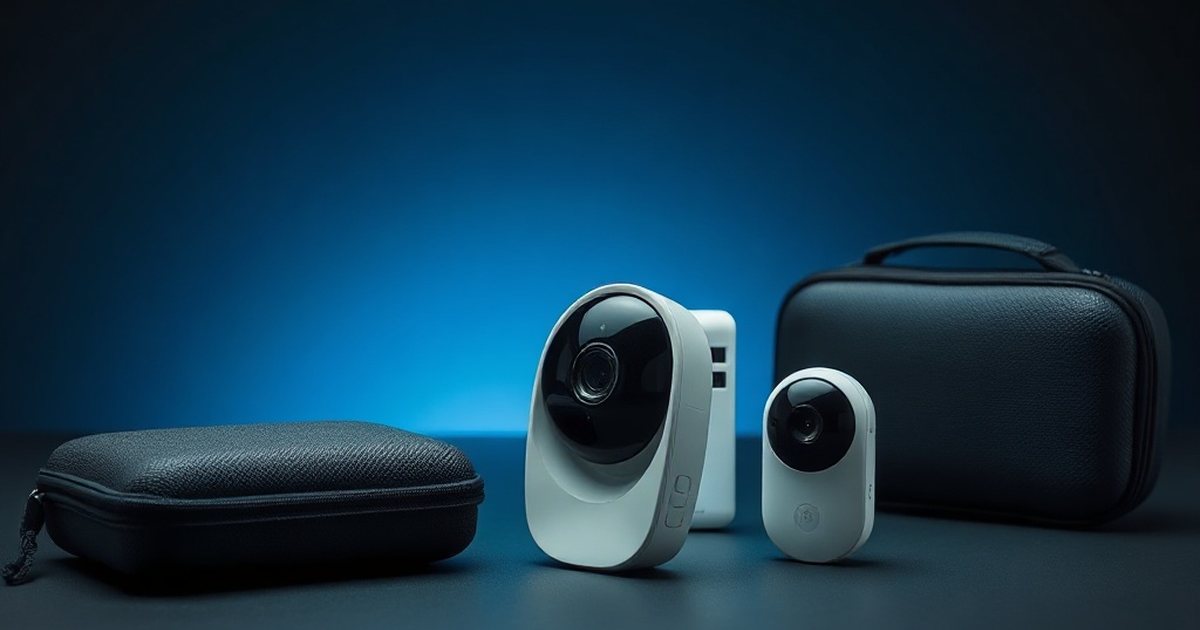
The key difference is that many of these monitors support an ECO or VOX mode. In ECO mode, the transmitter powers down when the nursery is quiet and only activates when the baby makes a sound above a set threshold. This means the monitor is not transmitting continuously through the night. Audio-only models like the Bebcare Hear take this further with a proprietary low-power signal at 865 MHz that shuts off transmission entirely during silence.
The tradeoff: you lose remote smartphone access (you need the dedicated parent unit within range), and range is limited to a few hundred feet indoors. The Infant Optics DXR-8 Pro offers about 100 feet through walls, while WiFi monitors work anywhere your phone has service.
Wired (PoE) Baby Cameras
The lowest-EMF video option is an ethernet-connected Power over Ethernet (PoE) camera. Brands like Reolink and Amcrest sell PoE IP cameras that receive both power and data through a single ethernet cable. The camera unit emits zero RF radiation because it has no wireless transmitter. You view the feed through your home network on a phone, tablet, or computer.
A basic DIY setup with a Reolink PoE camera and a TP-Link PoE switch runs around $125. The Tech Wellness wired baby monitor offers a turnkey solution at a higher price point. The obvious downside is that you need to run an ethernet cable to the nursery, which may require drilling or surface-mounting cable clips. But if minimizing RF in the nursery is your top priority, a wired camera is the only way to reach effectively zero.
What the Research Actually Shows
This is where honest reporting matters, because the research landscape is more limited than either side of the debate usually admits.
The Regulatory Framework
All baby monitors sold in the U.S. must comply with FCC limits on RF emissions. Internationally, the ICNIRP (International Commission on Non-Ionizing Radiation Protection) sets exposure guidelines with a 50-fold safety factor below levels known to cause thermal (heating) effects. Baby monitors operate far below these limits. Published measurements of WiFi baby monitors at typical use distances of 2 to 5 feet show peak readings below 3 mW/m² and averages under 0.3 mW/m². The FCC and ICNIRP public exposure limit is 10,000 mW/m² averaged over time. No baby monitor comes close to that threshold.
Why Children Are Considered Differently
The World Health Organization’s International EMF Project notes that children may absorb more RF energy per unit of body weight than adults. Infants have thinner skulls, higher water content in their tissues, and rapidly developing nervous systems. Research suggests the Specific Absorption Rate (SAR) in children’s heads can be approximately twice that of adults exposed to the same RF field. This is the primary scientific rationale for a precautionary approach: not proven harm, but a recognition that infant exposure characteristics differ meaningfully from the adult models used to set safety limits.
What Studies Have and Have Not Found
In 2011, the International Agency for Research on Cancer (IARC), part of the WHO, classified radiofrequency electromagnetic fields as “possibly carcinogenic to humans” (Group 2B). This classification covers all RF sources, not baby monitors specifically. Group 2B means the evidence is limited and not conclusive. For context, pickled vegetables and aloe vera extract share the same classification.
A 2018 systematic review by Foster and Moulder published in Health Physics found no consistent evidence of health effects from WiFi-level RF exposure in the range of 0.002 to 0.2 W/m². The Australian Radiation Protection and Nuclear Safety Agency (ARPANSA) concluded in a 2021 assessment that WiFi devices operate at exposure levels “well below” those that could cause known health effects.
No published study has demonstrated health effects from baby monitors specifically at typical use distances. One small, double-blind study in adults found worse self-reported sleep quality during overnight RF exposure from a 2.45 GHz source (the same frequency band as WiFi monitors), though objective sleep measures did not change. Data on long-term effects in newborns remains limited, and researchers have noted the need for further study of dose-response effects in infants.
The honest summary: current evidence does not show that WiFi baby monitors cause harm at normal use distances, but the research specifically examining infant exposure during prolonged overnight use is thin. Regulatory limits were designed primarily around adult exposure models. Parents who want to take a cautious approach have reasonable grounds for doing so, even without proof of harm.
WiFi vs. DECT vs. Wired: A Practical Comparison
Each monitor type involves a tradeoff between convenience, features, and RF profile. Here is how they compare on the factors that matter most.
| Factor | WiFi Monitor | DECT / FHSS Monitor | Wired (PoE) Camera |
|---|---|---|---|
| RF Emission Level | Highest (continuous streaming) | Moderate (lower with ECO mode) | None from camera unit |
| Transmission Pattern | Continuous while powered on | Continuous or intermittent (ECO mode) | No wireless transmission |
| Remote Access | Anywhere via smartphone app | Parent unit only, limited range | Via home network or VPN |
| Video Quality | 1080p typical (Nanit Pro) | 720p typical (Infant Optics DXR-8 Pro) | 720p to 4K depending on camera |
| Setup Complexity | Simple (download app, connect WiFi) | Simple (plug in, pair units) | Moderate (run ethernet cable, PoE switch) |
| Hack Risk | Possible if WiFi network is compromised | Very low (closed-loop, no internet) | Very low (no wireless signal to intercept) |
| Typical Cost | $150 to $400+ (may require subscription) | $90 to $250 (no subscription) | $80 to $175 for DIY setup |
| Example Products | Nanit Pro, Eufy E21 | Infant Optics DXR-8 Pro, Eufy SpaceView, VTech RM5764HD, Bebcare Hear | Reolink PoE cameras, Amcrest PoE cameras |
A few notes on this comparison. WiFi monitors that offer a “local only” mode (like the Eufy E21, which can operate without WiFi in local mode) bridge the gap somewhat. Some VTech DECT monitors also offer optional WiFi for remote app access, letting you choose whether to enable it. And audio-only monitors like the Bebcare Hear produce the lowest RF output of any wireless option, since audio data requires far less bandwidth than video.
How to Reduce Exposure If You Use a WiFi Monitor
If you already own a WiFi baby monitor or prefer its features, there are straightforward steps to meaningfully reduce your baby’s RF exposure without giving up the monitor entirely.
1. Maximize Distance from the Crib
This is the single most effective step. RF power drops sharply with distance following the inverse-square law. Moving a monitor from 6 inches to 3 feet from your baby reduces RF exposure by approximately 97%. Wall-mounting or shelf-mounting the camera across the room at 6 to 10 feet is far better than clipping it to the crib rail. Never place the monitor inside the crib or directly on a surface touching the crib.
2. Use ECO, VOX, or Sound-Activated Modes
If your monitor offers a mode that reduces or suspends transmission when the nursery is quiet, enable it. On WiFi monitors, some models allow you to disable continuous streaming and rely on motion or sound-triggered alerts instead. This means the transmitter is not running at full power for every silent hour of sleep.
3. Consider a Wired Ethernet Backhaul
Some WiFi cameras can connect to your network via an ethernet cable instead of WiFi, disabling the wireless radio entirely while still providing app-based access through your home network. If your camera supports this, running an ethernet cable to the nursery gives you the software features of a WiFi monitor with zero RF from the camera unit itself.
4. Turn It Off During Supervised Time
If you are in the room with your baby or the baby is awake and with you, power off the monitor. This eliminates hours of unnecessary exposure during the day. The monitor serves its purpose during naps and overnight sleep; it does not need to run 24 hours.
5. Reduce Other RF Sources in the Nursery
A baby monitor is not the only RF source in most nurseries. WiFi routers, smart speakers, Bluetooth sound machines, and phones on nightstands all contribute to the ambient RF level. If reducing exposure is a priority, consider whether a WiFi router needs to be in or adjacent to the nursery, and keep phones and tablets away from the crib.
6. Choose Audio-Only When Video Is Not Needed
Audio-only monitors transmit far less data and therefore use less RF power than video monitors. If your primary need is hearing when the baby wakes or cries, an audio-only DECT monitor with ECO mode (like the Bebcare Hear or TimeFlys) provides the functionality you need at a fraction of the RF output.
Frequently Asked Questions
Do WiFi baby monitors emit radiation constantly?
Most WiFi baby monitors transmit video data continuously whenever the camera is powered on, even during silence. Some models offer motion-activated or sound-activated modes that reduce streaming during quiet periods. If your monitor has this option, enabling it will reduce overall RF output. DECT monitors with ECO mode go further, suspending transmission entirely when no sound is detected.
How far should a baby monitor be from the crib?
At minimum, place your monitor at least 3 feet (1 meter) from the crib. Wall-mounting across the room at 6 to 10 feet is better. Moving the monitor from 6 inches to 3 feet away reduces RF exposure by roughly 97% due to how quickly signal strength drops with distance. This applies to all wireless monitor types, not just WiFi.
Are DECT baby monitors safer than WiFi monitors?
DECT and FHSS monitors generally produce less RF than WiFi monitors, especially when equipped with ECO or VOX mode, which stops transmission during quiet periods. They also operate on a closed-loop system without internet access, which eliminates hacking risk. However, “safer” in terms of health outcomes is not something current research can definitively confirm for either type. From an RF-output perspective, DECT with ECO mode is lower than WiFi.
Is there a baby monitor with zero EMF?
The only baby monitors that produce zero RF are wired models. An ethernet-connected PoE camera (such as a Reolink or Amcrest PoE unit) delivers video and audio over a physical cable with no wireless transmission from the camera. This requires running an ethernet cable to the nursery. All wireless monitors, including low-EMF models, produce some RF during transmission.
Has the WHO said baby monitors are dangerous?
No. The WHO has not made any specific statement that baby monitors are dangerous. In 2011, the IARC (part of the WHO) classified all radiofrequency electromagnetic fields as “possibly carcinogenic” (Group 2B), but this covers all RF sources broadly and is based on limited evidence. Current regulatory guidance from the FCC, WHO, and ICNIRP indicates that baby monitors operating within their published limits pose no established health risk.
Can I use my WiFi baby monitor safely?
WiFi baby monitors operate well within international safety limits. Published measurements at typical use distances show RF levels thousands of times below regulatory thresholds. If you want to be cautious, mount the camera at least 3 feet from the crib (farther is better), enable any available sound-activation or reduced-streaming mode, and turn the monitor off when you are supervising your baby directly. These steps meaningfully reduce exposure while preserving the convenience features.
What about wearable baby monitors like Owlet?
Wearable monitors that attach directly to the baby (like sock-style pulse oximeters) use Bluetooth Low Energy, which transmits at very low power but sits directly against the skin. The RF levels are low, but the distance is zero. If both proximity and RF output concern you, a wall-mounted non-WiFi video monitor paired with a traditional crib sensor pad is an alternative approach that keeps the transmitter away from the infant’s body.
Do baby monitors interfere with baby sleep?
One small double-blind study in adults found worse self-reported sleep quality during overnight RF exposure at 2.45 GHz, though objective sleep measurements did not show a difference. No equivalent study has been published for infants. If you are concerned, using a DECT monitor with ECO mode (which stops transmitting during quiet sleep) or a wired camera would eliminate RF in the nursery during the sleep periods when exposure would be longest.
A Balanced Recommendation
Baby monitors are genuinely useful tools. They let parents rest while keeping an ear (and often an eye) on their infant. The question is not whether to use one, but which type best fits your comfort level and needs.
If RF exposure is a concern for you, the evidence supports a few clear steps: choose a non-WiFi DECT or FHSS monitor with ECO mode (the Infant Optics DXR-8 Pro and Bebcare Hear are both well-regarded options), mount it as far from the crib as practical, and turn it off when you do not need it. For parents who want the lowest possible exposure with video, a wired PoE camera setup eliminates RF from the nursery entirely.
If you prefer a WiFi monitor for its remote access and smart features, that is a reasonable choice too. The measured RF levels from these devices at normal distances are far below any established safety threshold. Mounting the camera across the room rather than on the crib rail, and enabling any available reduced-streaming mode, addresses the primary exposure variable (proximity) without requiring you to change devices.
What the current research does not support is either extreme: claiming WiFi monitors are proven harmful, or dismissing the concern as irrational. The science on long-term RF exposure in infants is incomplete. Following the precautionary principle, which simply means reducing exposure where it is easy and inexpensive to do so, is a reasonable middle path that costs nothing and keeps your options open.
These statements have not been evaluated by the Food and Drug Administration. This information is not intended to diagnose, treat, cure, or prevent any disease. Content is for informational purposes only and is not medical advice; consult a qualified healthcare provider before starting any supplement. As an Amazon Associate we earn from qualifying purchases.