This article is for educational and informational purposes only. It is not medical advice. If you have specific health concerns about your child, consult a qualified pediatrician or healthcare professional.
If you’re a parent reading about EMF and wondering whether your child’s tablet, the school WiFi router, or the baby monitor in the nursery could be affecting their health, you’re not alone. It’s a reasonable question, and it deserves a straightforward answer rather than fearmongering or dismissal.
Here’s the honest starting point: the science on radiofrequency electromagnetic fields (RF-EMF) and children’s health is genuinely unsettled. There is no confirmed proof that everyday wireless device exposure causes harm at typical levels. There is also no long-term research proving it’s completely harmless, especially for developing children who will accumulate decades more exposure than any previous generation. Reasonable people and credible institutions land in different places on this spectrum.
This guide takes the practical middle ground: reduce exposure where it’s easy and costs you nothing, don’t panic about what you can’t control, and understand what the actual research does and doesn’t say. No scare tactics, no miracle products, just informed parenting.
What Does the Research Actually Say About Kids and EMF?
Before diving into practical steps, it helps to understand the current scientific landscape. It’s more nuanced than either side of the debate usually presents.
The Key Organizations and Their Positions
In 2011, the International Agency for Research on Cancer (IARC), which is part of the World Health Organization, classified radiofrequency electromagnetic fields as “possibly carcinogenic to humans” (Group 2B). This classification was based on limited evidence of an increased risk of glioma (a type of brain tumor) among heavy mobile phone users. Group 2B means the evidence suggests a possible link but cannot rule out chance, bias, or confounding factors. For context, this is the same category that includes pickled vegetables and aloe vera extract.
The American Academy of Pediatrics (AAP) has taken a precautionary stance. In a 2013 letter to the FCC and FDA, the AAP stated that “children are not little adults and are disproportionately impacted by all environmental exposures, including cell phone radiation.” The AAP has called for updated RF exposure standards that account for children’s unique physiology, noting that children’s thinner skulls and developing brains may absorb more radiation than adult tissue.
The National Toxicology Program (NTP) completed a landmark $30 million study in 2018, the most comprehensive assessment of RF radiation health effects in animals to date. The study found “clear evidence” that high levels of RF radiation caused cancerous heart tumors (malignant schwannomas) in male rats, along with “some evidence” of brain and adrenal gland tumors. However, the NTP itself cautioned that the exposure levels used were significantly higher than what humans typically experience from cell phones, and the rats received whole-body exposure for nine hours daily.
Why Children Come Up Specifically
Several factors make children a distinct concern in this discussion, even when the overall science remains inconclusive:
- Children’s skulls are thinner and their brain tissue contains more fluid, which some research suggests allows deeper RF absorption compared to adults
- Their brains and nervous systems are still developing, potentially making them more sensitive to environmental exposures
- Today’s children will have a much longer cumulative lifetime exposure to wireless devices than any generation before them
- Current FCC safety standards, established in 1996, are based on a model representing a 220-pound adult male and have not been updated to account for children’s physiology
A 2022 systematic review published in the journal Environmental Research examined the physiological and health-related effects of RF-EMF exposure from wireless devices on children and adolescents. The review concluded that due to inconsistency in outcomes and limitations in scientific rigor across most studies, the overall evidence “allows no final conclusion on the question whether exposure to RF EMF from mobile communication devices poses a particular risk to children and adolescents.”
That uncertainty itself is the point. We don’t have a clear answer yet, and the precautionary steps outlined below cost little to nothing while potentially reducing an exposure that future research may clarify.
School WiFi and Classroom Devices: What Parents Can (and Can’t) Control
Let’s be direct: you have very limited control over your child’s EMF exposure at school. Most schools now use WiFi networks throughout the building, and many classrooms rely on tablets or Chromebooks for daily instruction. That’s the reality, and it’s unlikely to change based on individual parent requests.
What You Can’t Realistically Change
- Whether the school uses WiFi (nearly all do)
- How close access points are to your child’s desk
- Whether classrooms use wireless devices for instruction
- Other children’s device use near your child
What You Can Influence
- Device habits during school: Talk to your child about not resting laptops or tablets directly on their lap during use. A desk or table creates distance between the device and their body.
- After-school exposure: Since you can’t control the school day, focus your attention on the hours you do control, evenings, nights, and weekends.
- Wired headphones for school devices: If your child uses a school-issued device with earbuds, wired headphones eliminate the Bluetooth signal next to their head.
- Advocacy if it matters to you: Some school districts have responded to parent concerns by positioning access points away from classrooms where students sit for extended periods, or by using enterprise-grade equipment that reduces output power when fewer devices are connected.
The main takeaway for school exposure: it exists, it’s relatively low-power compared to holding a phone against your head, and your best response is to focus on the environment you actually control, your home.
Practical Steps for Reducing EMF Exposure at Home
Home is where you have real leverage. These steps range from zero-cost habit changes to modest equipment adjustments. None of them require turning your house into a tech-free zone.
Device Habits That Make a Real Difference
RF exposure drops rapidly with distance. Doubling the distance between a wireless device and your child’s body reduces exposure by roughly 75%. That single fact drives most of the practical advice worth following.
- Tablets and phones on a table, not on the lap: When kids watch videos or play games, set the device on a surface rather than having them hold it against their body. A tablet stand or case with a kickstand makes this easy.
- Speakerphone or wired headphones for calls: Holding a phone against the head produces the highest exposure scenario for any consumer device. Speakerphone mode or wired earbuds solve this completely.
- Airplane mode for offline content: If your child is watching a downloaded movie, playing an offline game, or using an educational app that doesn’t need internet, switch the device to airplane mode. This shuts off all wireless transmissions while keeping the screen fully functional.
- TV over tablet for video: If a child is going to watch something, a TV several feet away produces far less personal RF exposure than a tablet held at arm’s length. The screen-time question is separate from the EMF question.
Bedtime and Nighttime Rules
Nighttime is the easiest win for reducing cumulative exposure. Children sleep 9 to 12 hours per night, and that’s a long stretch where wireless devices serve no purpose.
- No devices in the bedroom overnight: This one addresses both EMF exposure and sleep quality. Charge phones and tablets in a central location outside bedrooms.
- If a device must be in the room, use airplane mode: Some families use a phone as an alarm clock. Airplane mode eliminates wireless emissions while keeping the alarm functional.
- Consider a WiFi router timer: Many routers allow you to schedule WiFi to turn off automatically at night and turn back on in the morning. If your family doesn’t use WiFi while sleeping, this is a simple set-and-forget reduction.
WiFi Router Placement
Where you place your WiFi router matters more than most parents realize. A router sitting on a shelf in your child’s bedroom emits a continuous signal at close range for hours every day.
- Position the router away from rooms where children spend extended time: Keep it out of bedrooms and playrooms. A hallway closet, home office, or utility area works well.
- Elevation helps: Mounting a router high on a wall or on a top shelf keeps it physically distant from children, who are shorter and typically sit or play on the floor.
- Don’t place it near cribs or beds: This seems obvious once stated, but many families end up with a router on a nightstand or dresser because that’s where the cable outlet is. Use an ethernet cable extension if needed to relocate it.
Wired vs. Wireless: Where It’s Worth the Effort
Wired connections eliminate RF emissions from the connected device entirely. You don’t need to wire everything, but a few strategic choices can meaningfully reduce household wireless traffic.
- Gaming consoles and desktop computers: These sit in fixed locations and benefit from faster, more stable ethernet connections anyway. A simple ethernet cable gives you better performance and zero WiFi emissions from that device.
- Streaming devices: If your TV’s streaming stick or box is near an ethernet port, a wired connection is faster and eliminates another wireless signal.
- Powerline adapters as an alternative: If running ethernet cables isn’t practical, powerline adapters use your home’s existing electrical wiring to carry network data. They’re not as fast as direct ethernet but they reduce the number of devices broadcasting WiFi.
Product Categories Worth Knowing About
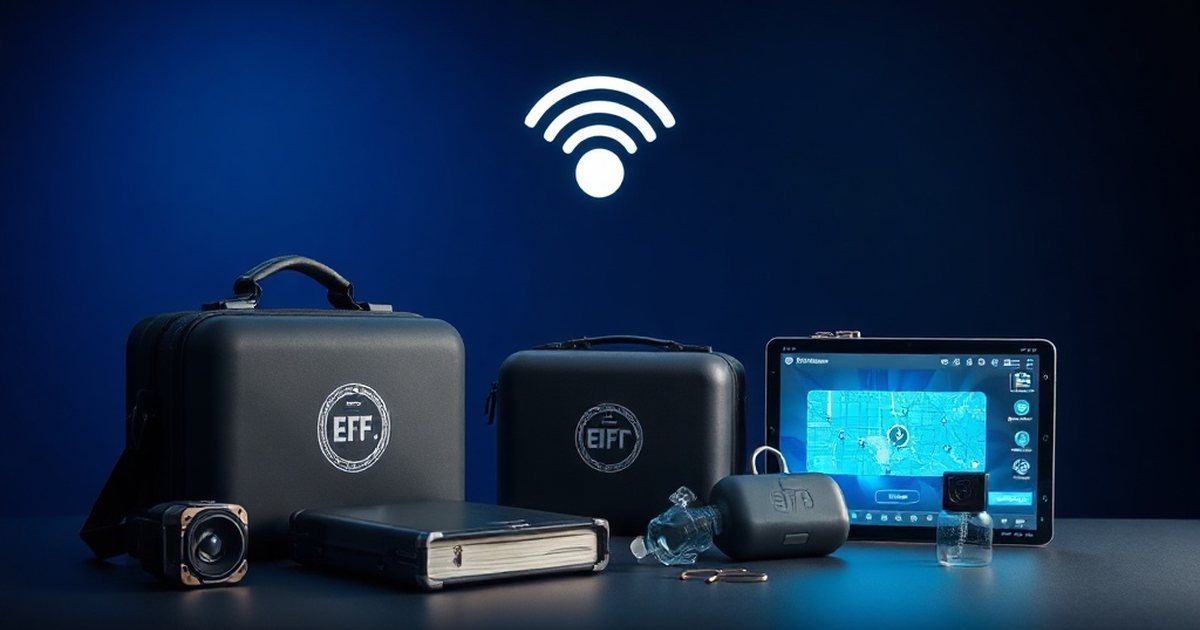
Several product categories exist specifically for parents concerned about children’s EMF exposure. Here’s an honest overview of what’s useful, what’s situational, and what to approach with skepticism.
Baby Monitors: Wired vs. Wireless
Standard wireless baby monitors transmit a continuous radio signal from the nursery unit, typically positioned close to the crib. For parents concerned about RF exposure during a baby’s extended sleep periods, this is worth considering.
- Wired (analog audio) monitors connect via a physical cable and produce no RF emissions. They’re less convenient but eliminate the exposure question entirely.
- Low-emission digital monitors use technologies like DECT with eco-mode, which reduces transmission power when audio is quiet and cuts emissions significantly compared to standard digital monitors.
- WiFi-based smart monitors (the kind you view on your phone) tend to transmit continuously and add another WiFi device to the nursery. If EMF is a concern, these are the least favorable option from an exposure standpoint.
- Distance matters here too: Whatever monitor type you choose, placing the transmitter unit at least 3 feet from the crib rather than clipped to the rail reduces exposure substantially.
EMF Meters for Home Assessment
Handheld EMF meters allow you to measure RF levels in your home. These can be useful for identifying unexpected hotspots (a router you forgot was behind your child’s headboard, for example) and verifying that your distance-based strategies are working.
- Look for meters that measure in the RF range relevant to WiFi and cellular (typically 800 MHz to 6 GHz)
- Entry-level RF meters suitable for home assessment are available in the $30 to $150 range
- They’re most useful as a one-time diagnostic tool rather than something you need to use daily
- Keep expectations realistic: an EMF meter confirms relative exposure levels but doesn’t tell you whether those levels are “safe” or “dangerous,” because science hasn’t established clear thresholds for chronic low-level RF exposure
Shielding Products
Various shielding products exist, from laptop pads to phone cases to router covers to bed canopies. A few honest notes:
- Laptop and tablet shields (pads that go between the device and the child’s lap) can reduce RF and heat exposure from below the device. These make sense if your child regularly uses a device on their lap despite your best efforts.
- Router guards (mesh cages that surround the router) reduce signal strength in all directions. Be aware that this also reduces WiFi performance and range, which may cause devices to work harder to maintain connections.
- Phone cases with shielding typically redirect RF emissions away from the head during calls. Quality varies significantly between brands. Look for independent SAR testing data rather than marketing claims.
- Be skeptical of “harmonizing” or “neutralizing” stickers and pendants: Products claiming to “harmonize” or “neutralize” EMF without physically blocking or absorbing the signal have no scientific basis. Legitimate shielding works by physically blocking or redirecting RF energy using conductive materials.
Talking to Kids About EMF
If you’re making changes to how your family uses wireless devices, your kids will notice and ask questions. How you frame this matters, especially because children pick up on parental anxiety quickly.
For Younger Children (Under 8)
Keep it simple and non-scary. You don’t need to explain RF radiation to a five-year-old.
- “We put the tablet on the table instead of our laps because it’s better for our bodies.”
- “Phones sleep in the kitchen at night, just like we sleep in our beds.”
- “We use the speaker button so we can both hear.”
Frame device rules as normal household habits, like washing hands or wearing a seatbelt, rather than as responses to danger. Children this age don’t benefit from understanding the “why” behind RF concerns.
For Older Children and Teens (8+)
Older kids can handle more nuance, and they’ll respect honesty over vague rules.
- “Scientists are still studying whether the signals from phones and WiFi could affect health over a really long time. Nobody knows for sure yet. We follow some basic habits just to be smart about it, the same way we wear sunscreen even on cloudy days.”
- “Your generation is the first to grow up with this much wireless tech around. We’re just being thoughtful about it.”
- “These aren’t panic rules. You’re not in danger from your phone. We’re just choosing the lower-exposure option when it doesn’t cost us anything.”
The sunscreen analogy works well because most teens understand that UV protection is a reasonable precaution even though most sun exposure doesn’t cause cancer. It normalizes the behavior without creating fear.
Frequently Asked Questions
Is WiFi actually dangerous for my child?
Current research has not established that WiFi at typical home or school exposure levels causes harm to children. The World Health Organization’s IARC classified RF electromagnetic fields as “possibly carcinogenic” (Group 2B) in 2011, which means the evidence suggests a possible link but is not conclusive. Regulatory bodies like the FCC maintain that current exposure limits are protective, though critics note those limits were set in 1996 based on adult models. The honest answer is that we don’t have long-term data on children growing up immersed in WiFi from birth, and the precautionary steps in this guide are low-cost ways to reduce exposure while the science catches up.
Do children absorb more EMF radiation than adults?
Several studies and the American Academy of Pediatrics suggest that children may absorb more RF radiation due to their thinner skulls, higher tissue conductivity, and smaller body mass. The AAP has noted that children’s brains may absorb significantly more radiation than adult brains. However, “absorb more” does not automatically mean “harmed by it,” as the health consequences of that differential absorption remain under investigation.
Should I ask my child’s school to remove WiFi?
This is unlikely to succeed and may not be necessary. School WiFi access points are typically low-power commercial units, and students sit several feet from them. The exposure from a school WiFi network is generally much lower than the exposure from holding a cell phone against your head. Your time is better spent optimizing the home environment where your child spends more total hours and where you have full control.

Are Bluetooth headphones safe for kids?
Bluetooth operates at much lower power levels than WiFi or cellular signals. That said, Bluetooth earbuds sit directly inside or against the ear canal for extended periods, which means very close proximity to brain tissue. If you want to minimize RF exposure near your child’s head, wired headphones eliminate the question entirely. They also tend to be cheaper and never need charging.
What about 5G? Is it worse for kids?
5G operates across several frequency bands, some similar to 4G and some using higher-frequency millimeter waves. Higher-frequency signals are absorbed more by the skin surface and penetrate less deeply into tissue compared to lower frequencies. There is currently very limited research on 5G-specific health effects in children. The same precautionary principles apply: distance reduces exposure, and wired connections eliminate it.
Do EMF protection stickers or pendants work?
Products claiming to “harmonize,” “neutralize,” or “transform” EMF without using physical shielding materials have no credible scientific support. Legitimate EMF reduction works through physical principles: conductive materials block or redirect radio waves, distance reduces exposure, and turning off transmitters eliminates emissions. If a product doesn’t do one of those three things, be skeptical of its claims.
At what age should I start worrying about my child’s EMF exposure?
There’s no specific age threshold. If you want to apply precautionary measures, younger children may warrant more attention simply because their bodies are smaller (less distance between a device and internal organs) and they have more years of cumulative exposure ahead of them. Infants and toddlers also have less control over how close they hold devices to their bodies. That said, simple habits like device-on-table and no-devices-in-bedroom apply to all ages and are easiest to establish when children are young.
Can I measure the EMF levels in my home?
Yes. Handheld RF meters can measure the radiofrequency energy in your home from WiFi routers, cell phones, baby monitors, and other wireless devices. They’re useful for identifying which devices and locations produce the highest readings and for verifying that moving a router or increasing distance actually reduces exposure at a given spot. Entry-level meters suitable for home use typically cost between $30 and $150.
Putting It All Together
EMF protection for kids isn’t about eliminating wireless technology from your family’s life. That’s neither practical nor, based on current evidence, necessary. It’s about making small, low-effort adjustments that reduce unnecessary exposure, especially during the hours your child sleeps and in the spaces where they spend the most time.
The highest-impact changes are also the simplest: devices on tables instead of laps, phones charging outside bedrooms at night, the WiFi router positioned away from where kids sleep and play, wired connections for stationary devices, and speakerphone or wired headphones for calls.
The science will continue to evolve. The IARC has flagged RF-EMF for high-priority reassessment, and the WHO is funding systematic reviews that may clarify the picture in coming years. In the meantime, reasonable precaution is neither paranoid nor negligent. It’s just good parenting applied to a relatively new environmental factor.
Focus on what you can control, skip the fear, and teach your kids healthy device habits they’ll carry into adulthood. Those habits serve them well regardless of where the EMF science eventually lands.
These statements have not been evaluated by the Food and Drug Administration. This information is not intended to diagnose, treat, cure, or prevent any disease. Content is for informational purposes only and is not medical advice; consult a qualified healthcare provider before starting any supplement. As an Amazon Associate we earn from qualifying purchases.