Broadband RF Detectors: A Complete Guide to Fast and Reliable Wireless Exposure Measurement
Wireless technologies surround us every day—Wi-Fi routers, smart meters, cell towers, Bluetooth devices, smart appliances, and IoT systems all create radiofrequency signals that fluctuate throughout the day. For quick, effective measurement of these signals, professionals and home users commonly rely on Broadband RF Detectors, handheld devices designed to pick up a wide range of frequencies simultaneously.
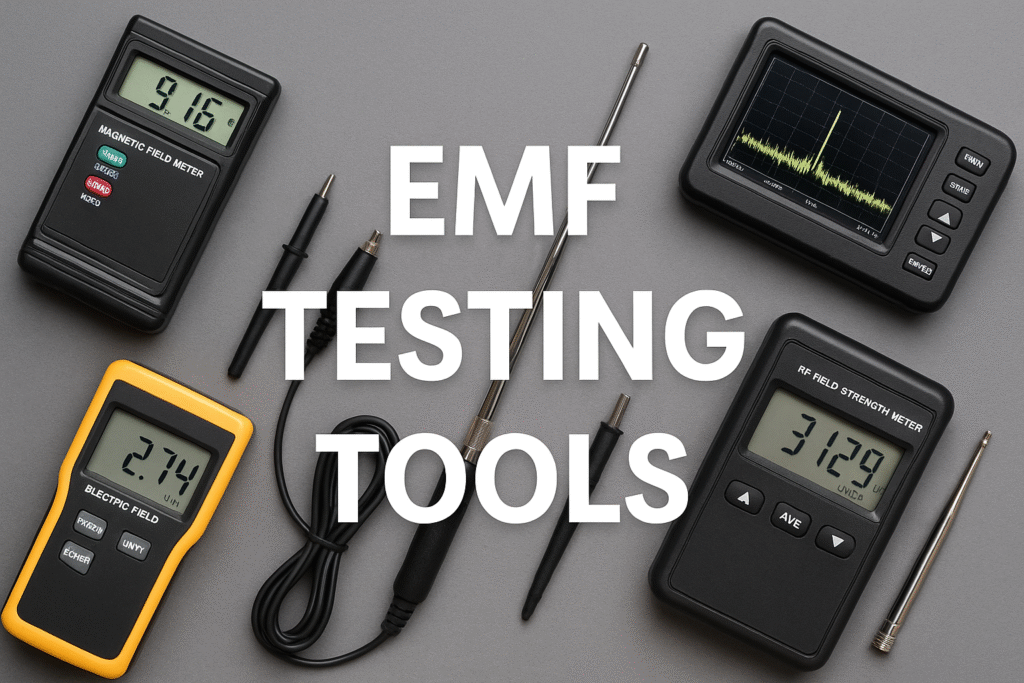
Unlike RF spectrum analyzers, which isolate specific frequencies, Broadband RF Detectors provide an overall snapshot of radiofrequency intensity, consistent with RF signal measurement fundamentals established by national metrology bodies.[1] This makes them one of the most practical tools for evaluating general RF exposure, identifying hotspots, and guiding mitigation strategies. For a complete overview of all EMF testing tools, visit:
https://frequencyblockers.com/emf-testing-tools/
What Broadband RF Detectors Measure
Broadband RF Detectors measure cumulative radiofrequency energy across a wide swath of the electromagnetic spectrum. Depending on the model, they typically detect:
- Wi-Fi (2.4 GHz & 5 GHz)
- Cellular (700 MHz–2.6 GHz and above)
- Bluetooth
- Smart meters
- Baby monitors
- Cordless phones
- Wireless home security systems
- Radar-based systems
Because they detect a broad frequency range, Broadband RF Detectors give users a clear sense of the overall wireless exposure in an environment.
Why Broadband RF Detectors Are Essential for EMF Assessment
Broadband tools are often the first instrument an EMF assessor reaches for because they provide instant feedback on RF radiation levels.
Key advantages include:
1. Fast, Real-Time Scanning
Allows users to walk through a space and immediately identify areas with elevated RF intensity.
2. Intuitive Interpretation
Broadband RF Detectors typically display readings as:
- µW/m²
- mW/m²
- V/m
These metrics are easy to interpret without advanced RF knowledge.
3. Ideal for Residential and Office Use
Most RF sources in homes and workplaces fall well within the detection range of these instruments.
4. Reliable for Locating Hotspots
Helps pinpoint sources such as:
- Routers
- Mesh networks
- Smart TVs
- Wireless speakers
- Utility meters
5. Great for Pre-Mitigation and Post-Mitigation Testing
Broadband RF Detectors make it easy to verify whether shielding measures successfully reduce exposure.
How Broadband RF Detectors Work
Broadband RF Detectors generally contain:
1. Omnidirectional Antennas
Capture RF signals from all directions.
2. Broadband RF Sensors
Integrated circuits that detect power density across a continuous band of frequencies.
3. Signal Processing Algorithms
Convert incoming RF signals into readable values.
4. Real-Time Display
Shows fluctuating RF levels as the user moves through different environments.
Because these devices do not break down signals by frequency, they excel at total exposure measurement rather than signal identification.
Key Applications for Broadband RF Detectors
Broadband RF Detectors are used extensively for:
1. Home EMF Assessments
Evaluate:
- Bedrooms
- Living rooms
- Kitchens with smart appliances
- Home offices
2. Identifying Wireless Hotspots
Measure proximity to routers, boosters, mesh nodes, and connected devices.
3. Monitoring Smart Meter Output
Smart meters often pulse at predictable intervals, which these detectors capture well.
4. Evaluating Children’s Spaces
Nurseries and playrooms frequently contain Wi-Fi cameras, tablets, and smart toys.
5. Commercial Environments
Highly relevant in:
- Schools
- Hospitals
- Multi-tenant offices
- Apartment complexes
6. Pre- and Post-Shielding Tests
Helps verify the performance of shielding paint, window film, and shielding fabrics.
How to Use Broadband RF Detectors Effectively
1. Hold the Detector at Chest or Head Height
Wireless exposure affects the body differently at various heights; consistent measurement is key.
2. Walk Slowly Through Each Room
RF exposure fluctuates rapidly, so slow movements provide more accurate readings.
3. Test at Different Distances From Known Sources
Measure:
- At the source (1–3 feet)
- At typical use distances (6–12 feet)
- Across the room
4. Compare Day vs. Night Exposure
RF patterns often shift during peak usage hours.
5. Turn Devices On and Off
This helps identify exactly which products contribute to exposure.
6. Record Peak and Average Levels
Peaks represent short bursts; averages reflect general exposure.
Understanding Readings From Broadband RF Detectors
While exact numbers vary by model, the following interpretive ranges are commonly used in EMF assessments:
| Level | Range (µW/m²) | Interpretation |
|---|---|---|
| Very Low | 0–10 | Ideal for sleeping areas |
| Low | 10–100 | Acceptable for most rooms |
| Moderate | 100–1,000 | Investigate sources |
| High | 1,000–10,000 | Exposure likely elevated |
| Very High | 10,000+ | Strong exposure; consider mitigation |
Broadband RF Detectors excel in quickly identifying these ranges.
Types of Broadband RF Detectors
1. Basic Consumer Models
Affordable and easy to use.
Ideal for quick scans.
2. Mid-Range Professional Models
Provide more sensitive detection and faster sampling rates.
Suitable for EMF consultants and serious home users.
3. High-End Broadband Tools
Often include:
- Peak-hold modes
- Audio signatures
- Adjustable weighting
- Logging features
Designed for professional diagnostics.
4. Wearable Broadband Detectors
Some personal RF monitors act as broadband detectors, offering continuous logging over time.
Price Ranges for Broadband RF Detectors
| Category | Typical Price | Best For |
|---|---|---|
| Entry-Level | $80–$200 | Basic home scanning |
| Mid-Range | $200–$400 | More precise assessments |
| Professional | $400–$900+ | Advanced RF diagnostics |
Even entry-level units provide valuable insight into general exposure patterns.
Advantages of Broadband RF Detectors
- Fast and intuitive
- Lightweight and portable
- Broad frequency coverage
- Ideal for hotspot identification
- Excellent as a first-line tool
- Useful for verifying shielding results
Broadband RF Detectors are often regarded as the most practical everyday RF tool.
Limitations of Broadband RF Detectors
- Cannot identify specific frequencies
- Cannot differentiate between multiple overlapping RF sources
- Less accurate at extremely low or extremely high frequencies
- Not suitable for engineering-level diagnostics
- May require supplemental testing tools for full analysis
Despite these limitations, they remain indispensable for general RF evaluation.
Broadband RF Detectors vs. RF Spectrum Analyzers
| Broadband RF Detectors | RF Spectrum Analyzers |
|---|---|
| Fast, overall exposure reading | Detailed frequency breakdown |
| Easy to use | Requires technical knowledge |
| Affordable | More expensive |
| Great for home scans | Ideal for advanced diagnostics |
Most assessors use both tools together for a complete RF assessment.
Common Mistakes When Using Broadband RF Detectors
- Standing too close to wireless devices
- Measuring only peak values without averages
- Failing to test multiple times per day
- Holding the detector against the body
- Testing too quickly
- Assuming one reading represents the entire room
Reliable data requires consistent technique.
FAQs About Broadband RF Detectors
Do Broadband RF Detectors detect 5G?
Yes—provided the unit covers frequencies up to at least 6 GHz, which most modern detectors do.
Can they detect smart meters?
Yes. Smart meters produce pulsed RF bursts that broadband tools capture well.
Do walls block readings?
Partially. RF signals pass through most household materials, but strong barriers like concrete reduce readings.
Can these detectors replace RF analyzers?
Not entirely—they complement spectrum analyzers.
Key Takeaways
- Broadband RF Detectors provide fast, real-time measurement of total wireless exposure across multiple frequency bands.
- They are invaluable for identifying hotspots, evaluating home and office environments, and validating mitigation strategies.
- While not frequency-specific, they offer unmatched convenience and speed.
- They pair well with spectrum analyzers for comprehensive RF diagnostics.
- For a full overview of EMF testing tools, visit:
https://frequencyblockers.com/emf-testing-tools/
References
- NIST – Electromagnetic Compatibility and Telecommunications LAP
- Frequency Blockers – EMF Testing Tools Overview
Recommended EMF Testing Equipment
Ready to start testing? Check out our top-rated EMF meters:
- Safe and Sound Pro II RF Meter
- Safe and Sound Classic II RF Meter
- Safe and Sound Pro mmWave 20GHz Meter
Browse all EMF protection products →
Frequently Asked Questions
What exactly do broadband RF detectors measure and how is that different from other EMF detection tools?
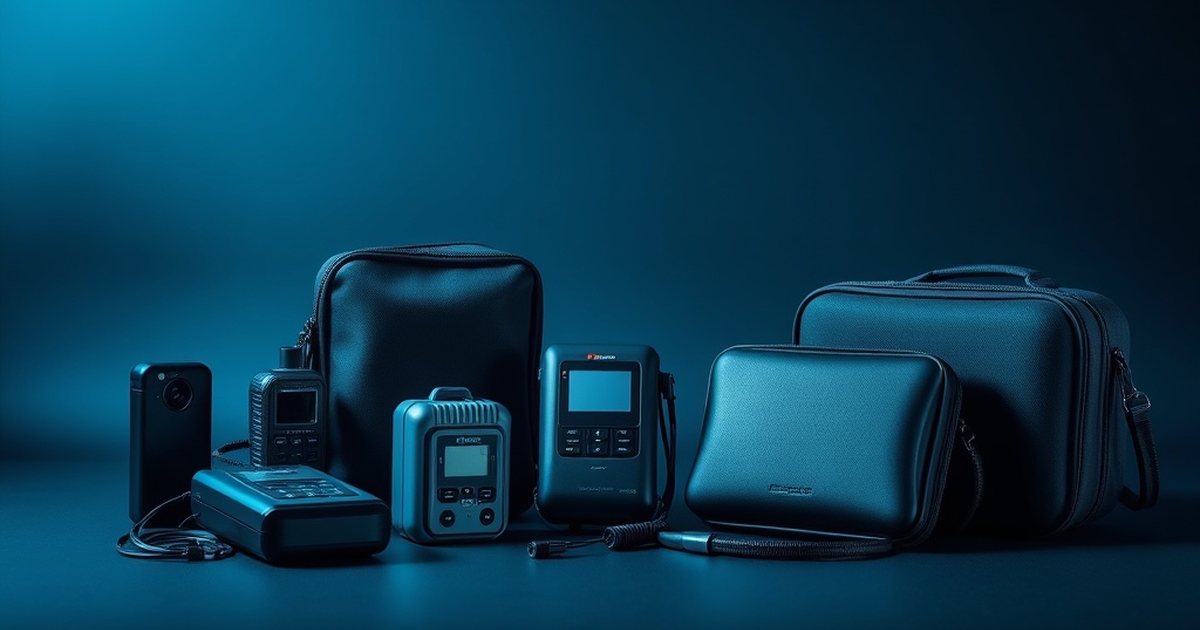
Broadband RF detectors measure radiofrequency signals across a wide range of frequencies simultaneously, picking up Wi-Fi, cell signals, smart meters, and Bluetooth emissions in real-time. Unlike spectrum analyzers that identify specific frequencies, broadband RF detectors give you quick overall exposure readings, making them ideal for home users who want fast, general wireless exposure measurement without technical complexity.
Can I use a broadband RF detector to test if my home is properly shielded?
Yes, broadband RF detectors are excellent for pre- and post-shielding tests. You can measure RF levels in a room before installing Faraday bags or RF shielding materials, then measure again afterward to verify that your protection is working effectively and reducing your wireless exposure.
How much does a quality broadband RF detector cost?
Broadband RF detectors range from basic consumer models starting around $50-$150, to mid-range professional devices costing $200-$500, and high-end broadband tools exceeding $1,000 depending on accuracy, frequency range, and features. Your budget should match whether you need casual home monitoring or professional-grade measurements.

What are the main limitations I should know about before buying a broadband RF detector?
Broadband RF detectors cannot identify which specific frequencies are causing high readings, may have less accuracy than spectrum analyzers, and can sometimes give inconsistent results if not held properly or used in highly variable RF environments. They’re also best for general assessment rather than detailed technical analysis or regulatory compliance testing.
These statements have not been evaluated by the Food and Drug Administration. This information is not intended to diagnose, treat, cure, or prevent any disease. Content is for informational purposes only and is not medical advice; consult a qualified healthcare provider before starting any supplement. As an Amazon Associate we earn from qualifying purchases.