EMF Data Loggers: A Complete Guide to Long-Term Electromagnetic Field Recording
Electromagnetic fields change throughout the day depending on appliance use, wireless activity, utility load cycles, and environmental conditions. Spot checks using handheld meters only capture a moment in time—but true exposure patterns unfold over hours or days. This is why professionals and advanced home assessors rely on EMF Data Loggers, devices designed to continuously record electric, magnetic, and radiofrequency fields at set intervals.
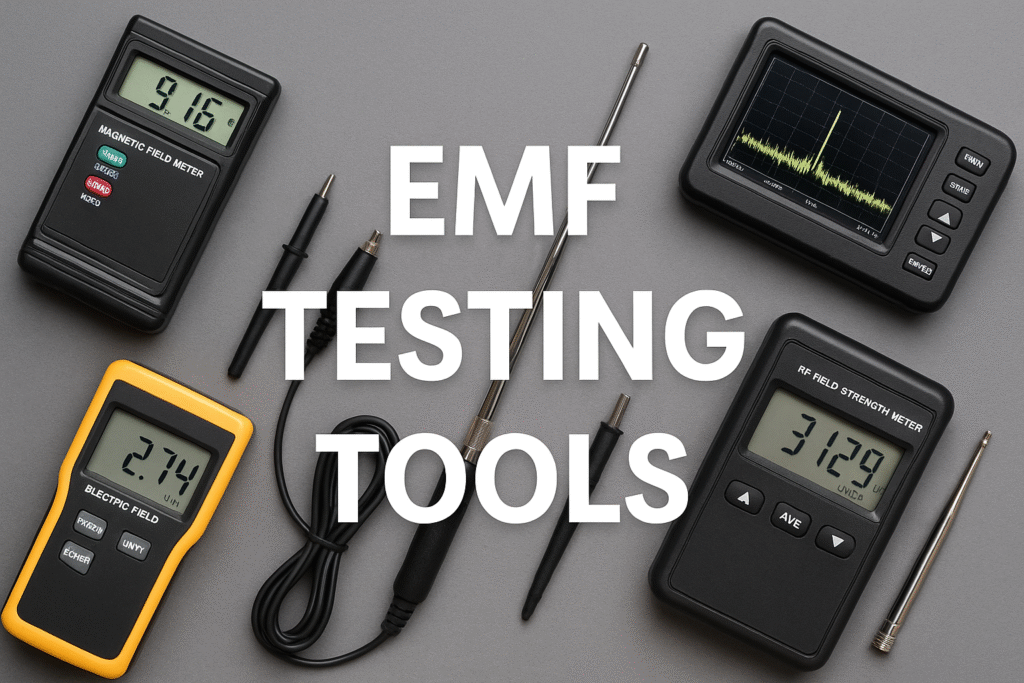
EMF Data Loggers provide the most accurate long-term exposure profiles and are essential for identifying patterns that short-term measurements cannot reveal, using measurement and logging principles consistent with those established by national metrology bodies.[1] For a complete overview of EMF testing tools, visit:
https://frequencyblockers.com/emf-testing-tools/
What EMF Data Loggers Measure
Depending on the device and sensor configuration, EMF Data Loggers can record:
1. Magnetic Fields (ELF & VLF)
- 50/60 Hz fields from wiring, transformers, and appliances
- Magnetic surges from motors, HVAC compressors, and elevators
- Low-frequency fluctuations across day/night cycles
2. Electric Fields
- Voltage-induced fields near outlets, cords, and walls
- Field differences based on grounding conditions
- Fluctuations during circuit activation
3. Radiofrequency (RF) Signals
Some advanced EMF Data Loggers include RF modules capable of tracking:
- Wi-Fi
- Cellular
- Smart meter transmissions
- Bluetooth
- IoT wireless devices

4. Time-Stamps & Duty Cycles
Every data point includes exact time, allowing correlation with:
- Activities
- Device usage
- Sleep patterns
- Work cycles
- External RF events
5. Environmental Data (Optional)
Some models include temperature, humidity, and motion sensors to contextualize the EMF readings.
Why EMF Data Loggers Are Essential
1. EMF Exposure Is Dynamic
In a typical home or office, EMF levels can vary dramatically within minutes. Logging provides a complete picture.
2. Identifies Hidden Patterns
Common findings from EMF Data Loggers include:
- High magnetic fields only when HVAC turns on
- Morning RF spikes from neighbors’ networks
- Elevated nighttime electric fields near beds
- Smart meter bursts at predictable intervals
3. Critical for Sleep Assessments
Nighttime EMF exposure often differs drastically from daytime conditions.
4. Supports Professional Reporting
EMF Data Loggers are frequently used in consultant reports, workplace safety analysis, and technical documentation.
5. Validates Mitigation Efforts
After changes such as:
- Router relocation
- Shielding installation
- Circuit adjustments
- Grounding upgrades
data logging confirms whether the improvement worked.
6. Essential for Pre- and Post-Remediation Comparisons
Before-and-after logs demonstrate the effectiveness of EMF reduction strategies.
How EMF Data Loggers Work
EMF Data Loggers use built-in sensors and internal memory to store EMF measurements over long periods.
Core components include:
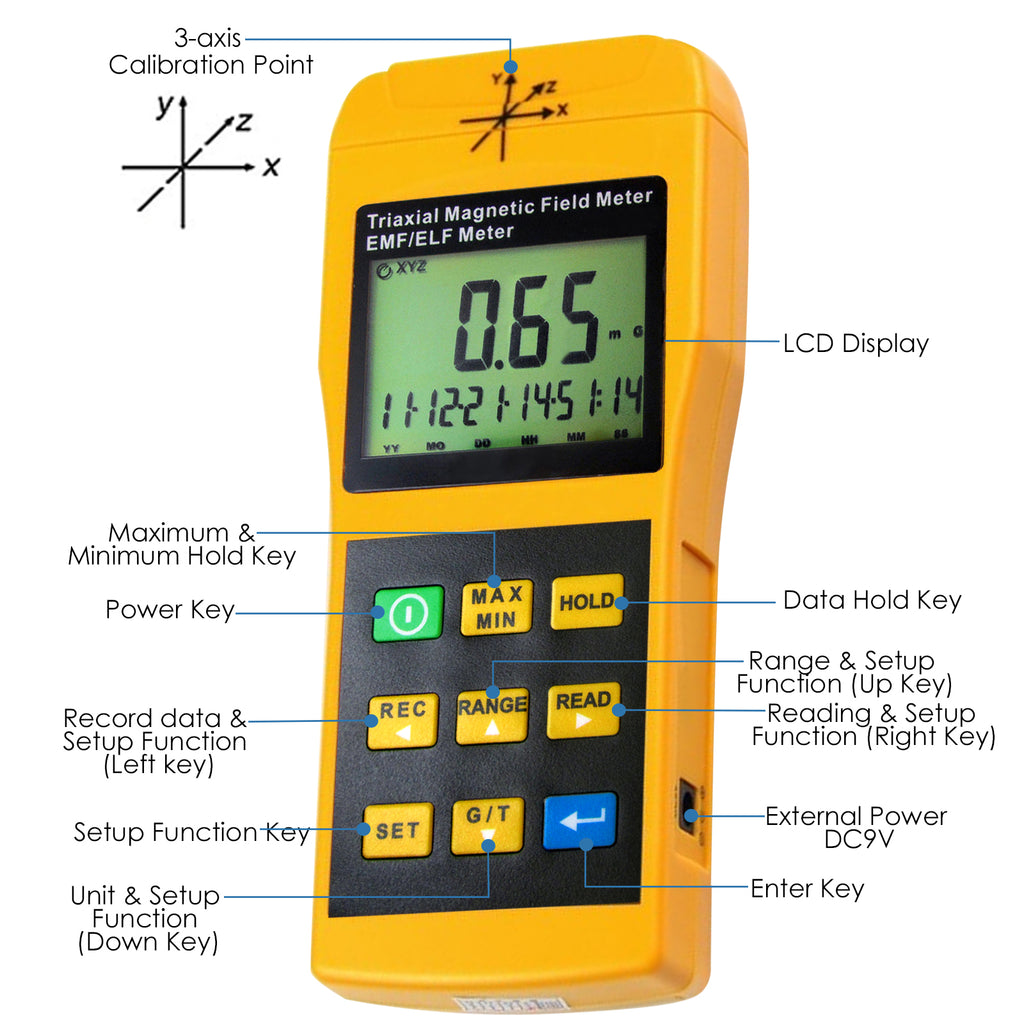
1. Multi-Axis Magnetic Field Sensors
Detect ELF/VLF magnetic fields across X, Y, Z axes.

2. Electric Field Sensors
Measure voltage-induced fields.
3. RF Modules (Optional)
Track power density or duty cycles.
4. Internal Memory
Stores thousands to millions of data points.
5. Configurable Sampling Rates
Typical intervals:
- 1 second
- 5 seconds
- 30 seconds
- 1 minute
- 5 minutes
6. USB or Wireless Data Export
Data is downloaded and analyzed on a computer or mobile app.
7. Analytics Software
Creates:
- Time-series graphs
- Exposure averages
- Statistical summaries
- Heat maps
- Event correlation timelines
Common Applications for EMF Data Loggers
1. Bedroom Exposure Assessment
Track EMF levels during sleep, including nighttime surges.
2. Appliance Diagnostics
Monitor magnetic or electric fields from:
- Refrigerators
- Washers
- Furnaces
- Induction cooktops
- EV chargers
3. Office Exposure Tracking
Useful in environments with:
- Computers
- Standing desks
- Printers
- Server racks
4. Schools & Daycares
Evaluate children’s long-term EMF exposure in classrooms.
5. Industrial EMF Analysis
Monitor machinery cycles and fields around production areas.
6. Research and Clinical Studies
EMF Data Loggers provide continuous datasets essential for scientific analysis.
How to Use EMF Data Loggers Effectively
1. Choose a Strategic Location
Place loggers where exposure matters most:
- Pillow height
- Workstation height
- Areas with suspected hotspots
2. Log for a Long Enough Period
24 hours is a minimum.
72 hours is ideal.
7 days provides highly reliable patterns.
3. Avoid Obstructions
Keep the EMF Data Logger away from metal objects unless specifically measuring localized fields.
4. Use Multiple Loggers for Detailed Studies
One logger can monitor:
- Bedrooms
- Living rooms
- Utility rooms
Simultaneously.
5. Compare Logs Before and After Interventions
This validates mitigation strategies.
Understanding EMF Data Logger Results
EMF Data Loggers typically produce:
1. Time-Series Graphs
Visualize fields minute-by-minute.
2. Peak vs. Average Exposure
Shows how intense and how frequent exposure events are.
3. Exposure Threshold Exceedance
Determines how often certain levels are surpassed.
4. Harmonic & Frequency Content (Advanced Units)
Useful for diagnosing wiring problems or power quality issues.
5. Duty Cycle Signatures (RF Loggers)
Wireless devices produce distinct transmission cycles.
6. Statistical Summaries
Including min/max, mean, median, and standard deviation.
Types of EMF Data Loggers
1. Magnetic-Only Loggers
Ideal for tracking ELF magnetic fields.
2. Electric Field Loggers
Measure low-frequency electric fields at high resolution.
3. Combined ELF Loggers
Track both electric and magnetic fields concurrently.
4. RF Data Loggers
Measure wireless exposure over time.
5. Full-Spectrum EMF Data Loggers
Record ELF, VLF, and RF together.
6. Wearable EMF Data Loggers
Provide personal exposure insight through portable tracking.
Price Ranges for EMF Data Loggers
| Category | Typical Price | Best For |
|---|---|---|
| Basic Magnetic Loggers | $100–$250 | Appliance & room monitoring |
| Mid-Range ELF Loggers | $250–$500 | Home assessments |
| Professional Multi-Field Loggers | $500–$1,200+ | Consulting & research |
| RF Data Loggers | $300–$1,500 | Wireless exposure tracking |
Advanced models with multi-field capability cost more but offer unmatched detail.
Advantages of EMF Data Loggers
- Provide long-term exposure visibility
- Capture nighttime patterns
- Ideal for real-world assessments
- Validate mitigation improvements
- Useful in research & compliance reporting
- Store high-resolution data for analysis
Limitations of EMF Data Loggers
- Interpretation requires careful review
- Not real-time tools (data analyzed after logging)
- Placement affects accuracy
- Some models track only one field type
Despite these limitations, EMF Data Loggers remain one of the most powerful tools for understanding electromagnetic exposure over time.
EMF Data Loggers vs. EMF Wearable Loggers
| EMF Data Loggers | EMF Wearable Loggers |
|---|---|
| Stationary monitoring | Mobile monitoring |
| Great for rooms & appliances | Tracks personal exposure |
| Higher precision | Useful for lifestyle tracking |
| Strong analytics | Moderate analytics |
Both tools complement each other.
Common Mistakes When Using EMF Data Loggers
- Logging for too short a duration
- Placing the logger inside cabinets or behind furniture
- Situating near metal objects that distort fields
- Forgetting to sync time stamps
- Misinterpreting short-term spikes
Accurate data requires thoughtful placement and proper review.
FAQs About EMF Data Loggers
How long should EMF Data Loggers run?
At least 24 hours; ideally 72 hours or more.
Do EMF Data Loggers measure RF?
Only if the model is designed for RF logging.
Are EMF Data Loggers safe?
Yes—these are passive sensors.
Can EMF Data Loggers replace handheld meters?
No—they serve different purposes and complement spot testing.
Key Takeaways
- EMF Data Loggers provide long-term tracking of electric, magnetic, and sometimes RF fields, delivering insights unavailable through handheld spot measurements.
- They are essential for sleep assessments, workplace evaluations, appliance diagnostics, and professional EMF reports.
- When used properly, EMF Data Loggers reveal patterns and correlations vital for effective mitigation.
- For more EMF testing tools, visit:
https://frequencyblockers.com/emf-testing-tools/
References
- NIST – Electromagnetic Compatibility and Telecommunications LAP
- Frequency Blockers – EMF Testing Tools Overview
Recommended EMF Testing Equipment
Ready to start testing? Check out our top-rated EMF meters:
- Safe and Sound Pro II RF Meter
- Safe and Sound Classic II RF Meter
- Safe and Sound Pro mmWave 20GHz Meter
Browse all EMF protection products →
Frequently Asked Questions
What’s the difference between using a handheld EMF meter and an EMF data logger?
Handheld meters give you a snapshot reading at one moment in time, while EMF data loggers continuously record electromagnetic fields over hours or days to reveal your actual exposure patterns. Data loggers capture the dynamic changes in EMF throughout your day, which is why they’re essential for identifying hidden patterns that spot checks would miss.
How long should I leave an EMF data logger running to get accurate results?
You should log for at least 24 to 48 hours to capture a full cycle of appliance use, wireless activity, and utility load changes in your environment. For comprehensive bedroom exposure assessment or before and after mitigation comparisons, logging for 7 days provides the most reliable data for identifying patterns and validating your EMF reduction efforts.
Can EMF data loggers measure radiofrequency signals from WiFi and cell phones?
Yes, many EMF data loggers include RF modules specifically designed to continuously record radiofrequency signals from WiFi routers, cell towers, and wireless devices. These RF-equipped loggers capture duty cycle signatures and frequency content, allowing you to track wireless exposure patterns throughout your home or office.
What types of reports or data can you get from an EMF data logger?
EMF data loggers generate time-series graphs, peak versus average exposure readings, and statistical summaries showing how often you exceed safety thresholds. Advanced units also provide harmonic and frequency content analysis, helping you understand exactly which appliances or sources are contributing most to your EMF exposure.
These statements have not been evaluated by the Food and Drug Administration. This information is not intended to diagnose, treat, cure, or prevent any disease. Content is for informational purposes only and is not medical advice; consult a qualified healthcare provider before starting any supplement. As an Amazon Associate we earn from qualifying purchases.