Body Voltage Meters: A Complete Guide to Measuring Your Personal Electric Field Exposure
Electric fields from household wiring, lighting, electronics, and appliances can extend several feet into indoor spaces. When you lie in bed, sit at a desk, or rest near walls or cords, these fields can couple into your body, creating a measurable voltage relative to ground. Body Voltage Meters are designed to measure this effect directly. Rather than measuring the electric field in the room, they measure how much voltage your body absorbs from its environment.
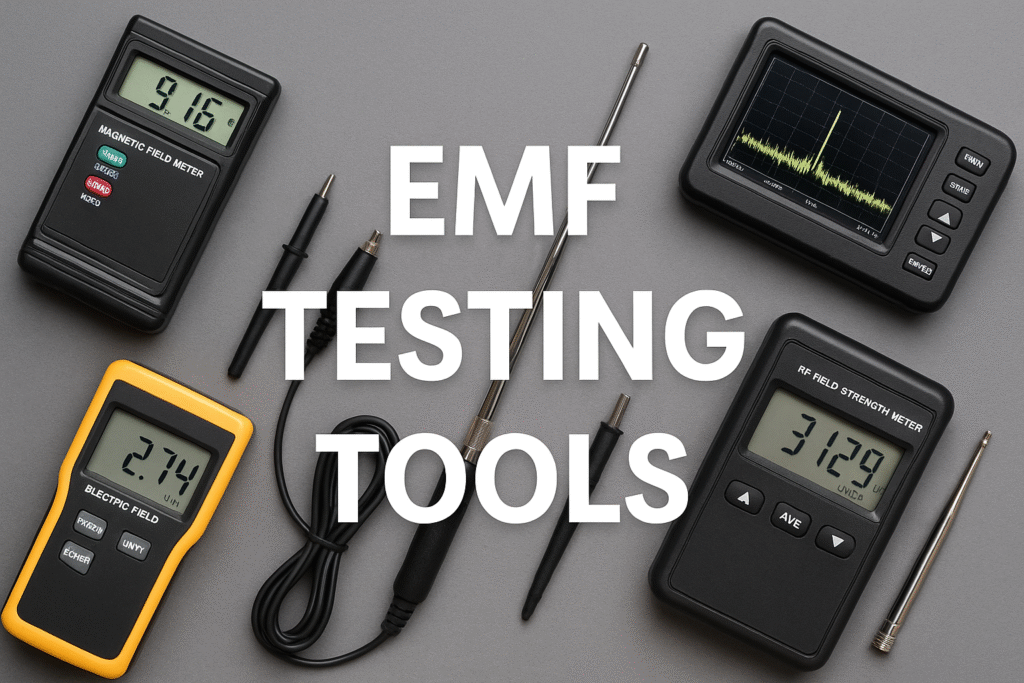
Body Voltage Meters have become essential tools for EMF consultants, building biologists, and individuals concerned about nighttime or workstation exposure. They reveal conditions that conventional EMF meters cannot detect and provide a clear metric for improving sleep environments, grounding strategies, and furniture layouts. For a complete overview of EMF testing tools, visit:
https://frequencyblockers.com/emf-testing-tools/
What Body Voltage Meters Measure
Body Voltage Meters measure the voltage difference between a person’s body and a known electrical ground. This voltage is primarily influenced by:
- Low-frequency electric fields from walls and wiring
- Electrified metal bed frames or lamps
- Improperly grounded outlets
- Extension cords near the bed
- Electronic devices left plugged in
- Power strips and chargers
- Floors or mattresses that enhance capacitive coupling
The meter quantifies how much electric field from the room is being absorbed into the body—a far more relevant exposure metric than simply measuring ambient fields.
Typical measurement units:
- Volts (V)
- Millivolts (mV)
Most Body Voltage Meters offer precise readings down to very low millivolt levels.
Why Body Voltage Meters Are Essential for EMF Assessments
1. Measure What the Body Actually Experiences
Electric fields behave differently depending on body position, moisture, proximity to wiring, and grounding. Body Voltage Meters show the real exposure level, not just what exists in the room.
2. Critical for Evaluating Sleeping Areas
Sleep is when the body is most sensitive to environmental stressors. Body Voltage Meters help optimize:
- Bed placement
- Lamp and cord positioning
- Use of grounding solutions
- Shielding effectiveness
3. Identify Hidden Sources of Electric Fields
Even when ambient readings are low, the body may pick up significant voltage due to coupling effects.
4. Essential for Grounding and Shielding Verification
After implementing:
- Grounded shielding paint
- Conductive mesh
- Grounded canopies
- Outlet grounding improvements
Body Voltage Meters confirm whether exposure truly decreased.
5. Useful for Desks and Workspaces
Keyboards, monitors, lamps, and ungrounded metal frames can significantly elevate body voltage.
How Body Voltage Meters Work
Body Voltage Meters measure electric potential using:
1. A Ground Reference
Connected via a grounding rod, water pipe, or grounded outlet.
2. A Handheld Electrode or Direct Body Contact
The person touches or holds a conductive electrode to complete the circuit.
3. A High-Resistance Input Circuit
Allows the meter to measure voltage without drawing current.
4. Digital or Analog Display
Shows voltage levels in real time.
As electric fields change—even from moving a lamp or adjusting posture—the reading updates instantly.
Common Applications for Body Voltage Meters
1. Bedroom Evaluations
Measure voltage while lying in typical sleeping positions.
2. Desk & Workstation Assessments
Identify electric fields near:
- Laptops
- Monitors
- Lamps
- Power strips
- Chargers
- Sit/stand desks
3. Testing Grounding Products
Verify whether grounding sheets, mats, or conductive textiles effectively reduce body voltage.
4. Checking for Problematic Wiring
High readings near walls or floors can indicate wiring faults or heavily loaded circuits.
5. Shielding Verification
Confirm whether shielding paint or window film reduces electric fields as intended.
How to Use Body Voltage Meters Effectively
1. Position the Ground Lead Properly
Grounding should be connected to:
- A properly grounded outlet
- A cold-water copper pipe
- An outdoor grounding rod
2. Lie or Sit in Normal Posture
Measure body voltage in the exact positions where exposure matters.
3. Turn Lighting & Appliances On and Off
This reveals how each device affects body voltage.
4. Move Cords Away from the Body
See real-time changes as the environment shifts.
5. Test at Multiple Times of Day
Electric fields vary depending on load and neighboring activity.
6. Record Baseline and Post-Mitigation Readings
Documenting improvements is key for EMF reduction strategies.
Understanding Body Voltage Readings
Typical Body Voltage Meter readings and interpretations:
| Body Voltage (mV) | Interpretation |
|---|---|
| 0–100 mV | Excellent, very low exposure |
| 100–300 mV | Good exposure level |
| 300–1,000 mV | Moderate; consider improvements |
| 1,000–2,500 mV | Elevated; focus on reducing electric fields |
| 2,500+ mV | High; indicates significant electric field coupling |
Someone sleeping near active wiring or electrified metal frames may measure several thousand millivolts.
Types of Body Voltage Meters
1. Simple Analog Body Voltage Meters
Affordable and easy to use.
2. Digital Body Voltage Meters
More precise with clearer displays.
3. Multi-Function Meters
Combine body voltage with:
- Electric field measurement
- Grounding resistance
- Magnetic field monitoring
4. Professional High-Impedance Meters
Used by building biologists for accurate assessments.
5. Logging Body Voltage Systems
Record continuous measurements across hours or nights.
Price Ranges for Body Voltage Meters
| Category | Typical Price | Best For |
|---|---|---|
| Basic Analog | $50–$120 | Beginners, simple testing |
| Digital Meters | $120–$250 | Home assessments |
| Professional Meters | $250–$700+ | EMF consultants & building biologists |
| Logging Systems | $400–$1,200 | Long-term monitoring |
Higher-end models provide greater stability and better noise filtering.
Advantages of Body Voltage Meters
- Measure actual exposure absorbed by the body
- Excellent for optimizing sleep environments
- Real-time feedback for quick adjustments
- Reveal hidden electric field sources
- Essential for grounding and shielding verification
- More accurate than ambient-only measurements for personal exposure
Limitations of Body Voltage Meters
- Require correct grounding connection
- Do not measure magnetic or RF fields
- Body movement can affect results
- Not ideal in rooms with improper wiring until addressed
Still, they remain one of the most insightful tools for low-frequency electric exposure assessment.
Body Voltage Meters vs. Electric Field Meters
| Body Voltage Meters | Electric Field Meters |
|---|---|
| Measure what the body absorbs | Measure ambient field intensity |
| Highly specific | Broad environmental readings |
| Great for sleep & workspaces | Great for room mapping |
| Require grounding | No grounding needed |
Most EMF professionals use both tools.
Common Mistakes When Using Body Voltage Meters
- Forgetting to ground the meter properly
- Holding electronics too close during measurement
- Measuring while phone is in pocket
- Using an ungrounded outlet or faulty extension cord
- Interpreting readings without understanding wiring behavior
Correct setup ensures accurate results.
FAQs About Body Voltage Meters
Do Body Voltage Meters reduce EMF exposure?
No—they only measure the exposure your body receives.
Can Body Voltage Meters detect magnetic or RF fields?
No—they are specific to electric fields only.
Are they safe to use?
Yes—they measure voltage passively and do not emit electricity.
Can they diagnose wiring issues?
They can indicate problems, which can then be confirmed using other EMF or electrical tools.
Key Takeaways
- Body Voltage Meters measure how much electric field your body absorbs, making them essential for accurate sleep and workspace EMF assessments.
- They provide real-world data that ambient meters cannot capture and are especially useful for troubleshooting and mitigation.
- Ideal for use in bedrooms, offices, and anywhere low-frequency electric fields are a concern.
- For more EMF testing tools, visit:
https://frequencyblockers.com/emf-testing-tools/
References
- National Institute of Standards and Technology (NIST) — Electric Field Measurement Methods
https://www.nist.gov - Frequency Blockers — EMF Testing Tools Overview
https://frequencyblockers.com/emf-testing-tools/
Recommended EMF Testing Equipment
Ready to start testing? Check out our top-rated EMF meters:
- Safe and Sound Pro II RF Meter
- Safe and Sound Classic II RF Meter
- Safe and Sound Pro mmWave 20GHz Meter
Browse all EMF protection products →
Frequently Asked Questions
What exactly does a body voltage meter measure?
A body voltage meter measures the voltage your body absorbs from electric fields in your environment, rather than measuring the field itself. It shows how much electrical charge couples into you from household wiring, lighting, and electronics when you’re near them.
Why should I test my bedroom with a body voltage meter?
Your bedroom is critical to test because you spend 7-8 hours there daily in close proximity to walls, cords, and electrical outlets. High body voltage readings near your bed can indicate problematic electric field exposure during sleep, which is when your body is most vulnerable.
Can body voltage meters help me verify if my grounding products actually work?
Yes, body voltage meters are essential for grounding and shielding verification. You can take baseline readings before using grounding products, then measure again after implementation to confirm that the voltage coupling into your body has actually decreased.
How much do body voltage meters cost and what types are available?
Body voltage meters range from simple analog models on the lower end to professional high-impedance meters and logging systems at higher price points, depending on features and accuracy. Common options include basic analog meters, digital handheld meters, and multi-function devices that measure multiple EMF parameters.