EMF Smartphone Testers: A Complete Guide to Mobile EMF Measurement Adapters
Smartphone-based EMF tools are becoming increasingly popular as users look for affordable, convenient, and portable ways to measure electromagnetic fields. While traditional EMF meters remain far more accurate, many beginners and homeowners now use EMF Smartphone Testers, small hardware adapters or sensor modules designed to connect to a phone and display EMF readings through an app.
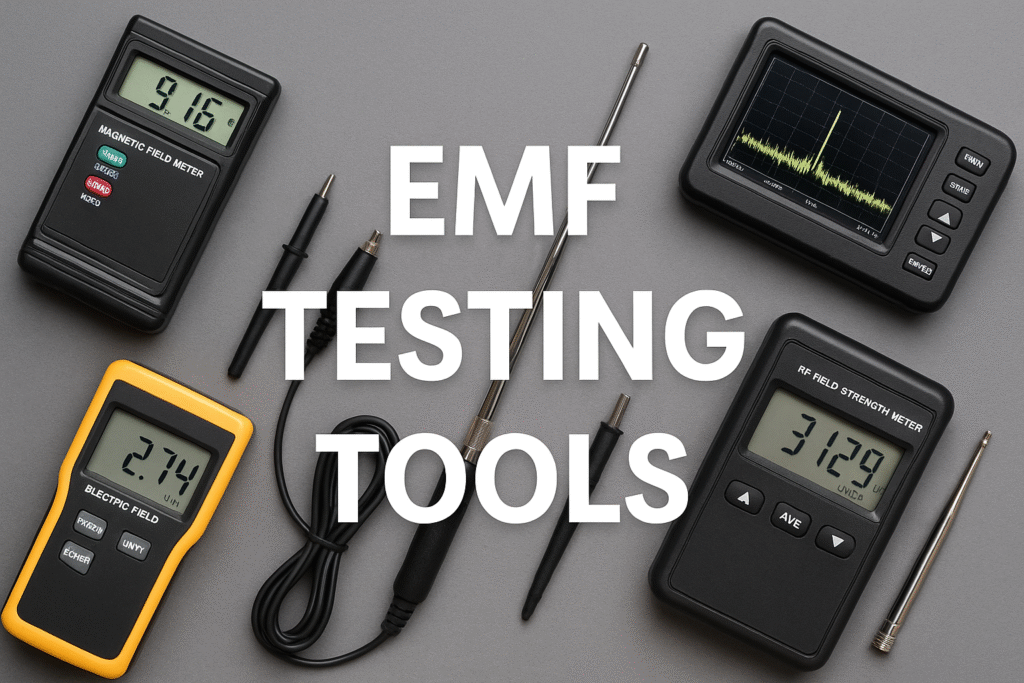
EMF Smartphone Testers allow users to visualize EMF exposure on a device they already own, making EMF testing more accessible and user-friendly. However, they vary widely in accuracy, function, and limitations. This comprehensive guide explains what EMF Smartphone Testers can (and cannot) do, how they compare with dedicated EMF meters, and when they’re useful in real-world assessments. For a deeper overview of all EMF testing tools, visit:
https://frequencyblockers.com/emf-testing-tools/
What EMF Smartphone Testers Are
EMF Smartphone Testers are small plug-in adapters—typically USB-C, Lightning, or wireless—that pair with an app to measure one or more types of EMF. Because phones do not contain native magnetic or electric field sensors suitable for EMF diagnostics, the hardware adapter provides the sensing component, while the phone supplies processing and visualization.
Most EMF Smartphone Testers target one or more of the following:
- Magnetic fields (ELF/VLF)
- Electric fields (low frequency)
- RF energy patterns (coarse detection)
- Environmental noise or interference signatures
While these testers are not professional scientific instruments, they can offer a baseline understanding of EMF intensity for users who want to explore the environment before investing in specialized meters.
Why EMF Smartphone Testers Are Becoming Popular
1. Low Cost Compared to Professional Meters
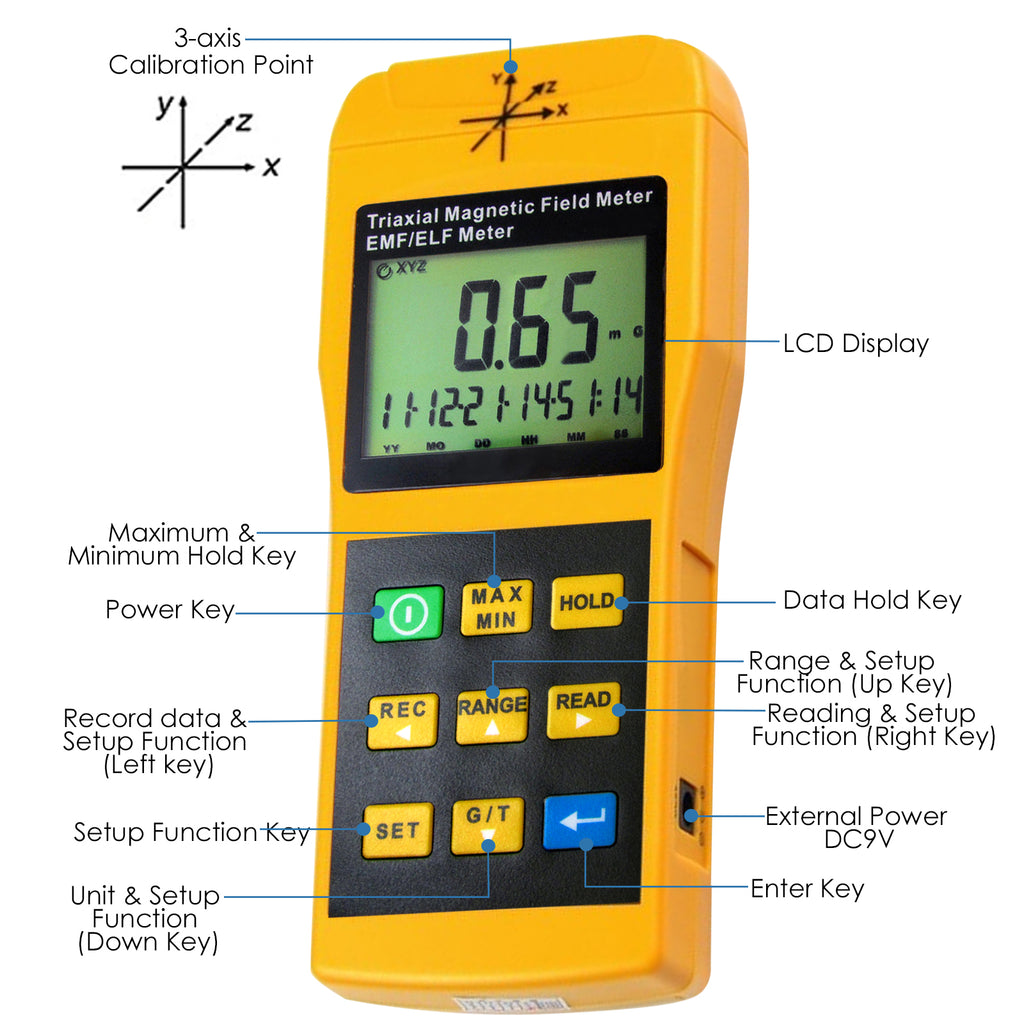
Dedicated EMF meters—especially 3-axis magnetic field meters or RF analyzers—start around $150 and can exceed $1,000. EMF Smartphone Testers often cost between $20 and $100, making them accessible for beginners.
2. Portable and Convenient
Users can keep the tester in a pocket and perform quick checks anywhere—home, office, vehicles, schools, hotels, or travel environments.
3. App-Based Visualization
Smartphone apps provide:
- Clear, modern interfaces
- Graphs and real-time plots
- Logging features
- Alerts for high readings
4. Good for Educational and Introductory Assessments
For users unfamiliar with EMF terminology, EMF Smartphone Testers help them learn about field strength, variation, and common exposure sources.
5. Helpful for Non-Critical Testing
Smartphone adapters offer quick directional guidance—useful for:
- Locating hotspots
- Identifying active electronics
- Checking distances
- Teaching concepts of EMF exposure
What EMF Smartphone Testers Actually Measure
Because these devices vary significantly, it’s important to understand their capabilities.
1. Magnetic Fields (60 Hz)
Most EMF Smartphone Testers measure magnetic fields generated by:
- Wiring
- Appliances
- Panel boxes
- Transformers
- AC motors
This is typically the most reliable function among smartphone-based testers.
2. Electric Fields
Some adapters include a conductive probe to detect voltage-induced electric fields from:
- Lamps
- Chargers
- Outlets
- Cords
- Bedside electronics
Electric field readings tend to be more sensitive to user handling, grounding, and posture.
3. Radiofrequency (RF) Exposure
RF measurement is the weakest area for EMF Smartphone Testers. These devices typically offer:
- Coarse RF activity detection
- Relative strength indicators
- No accurate power density measurement
Accurate RF evaluation still requires dedicated broadband RF meters or spectrum analyzers.
How EMF Smartphone Testers Work
EMF Smartphone Testers function using one or more sensors housed in a small module:
1. Induction Coils for Magnetic Fields
These detect changing magnetic fields, converting them into measurable voltage.
2. Capacitive Sensors for Electric Fields
These detect electric potential in the environment.
3. RF Diode Detectors
These respond to high-frequency emissions but only offer presence/strength indicators, not calibrated power density.
4. Smartphone Integration
Once connected, the phone app interprets sensor data to produce graphs, gauges, alerts, or logging timelines.
5. Software Enhancements
Smartphone apps often include:
- Calibration controls
- Background noise filtering
- Max/Avg values
- Exposure level categories
These features give EMF Smartphone Testers convenience and usability, even if not laboratory-level accuracy.
Applications for EMF Smartphone Testers
Despite their limitations, EMF Smartphone Testers are surprisingly useful for real-world applications.
1. Identifying Basic Magnetic Field Hotspots
Such as:
- Breaker panels
- Large appliances
- Power transformer boxes
- Unusual hotspots from wiring errors
2. Locating Electric Field Sources
Helpful in bedrooms and work areas.
3. Demonstrating EMF Concepts
Excellent for:
- Parents
- Teachers
- Students
- Wellness practitioners
4. Apartment and Rental Testing
Quick assessment before moving into a space.
5. Travel and Hotel Scanning
Check:
- Wi-Fi intensity
- Smart device proximity
- High-magnetic-field zones near walls
6. Vehicle Testing
Some EMF Smartphone Testers can detect elevated magnetic fields from:
- EV batteries
- Engine components
- Cabin wiring
How to Use EMF Smartphone Testers Effectively
1. Hold the Sensor Still
Movement can distort readings, especially for magnetic fields.
2. Keep the Phone Away From the Sensor
Some testers work best when the phone is held behind or above the module.
3. Test at Multiple Distances
One inch vs. three feet often produces dramatically different readings.
4. Compare Baseline vs. Activated Conditions
Turn appliances or Wi-Fi routers on and off.
5. Avoid Testing While Charging the Phone
Charging creates electrical noise that can affect readings.
6. Log Results Over Time
Some apps allow multi-hour logging for better insight.
Understanding EMF Smartphone Tester Readings
Because these devices are not calibrated scientific tools, they should be interpreted as:
- Relative strength indicators
- Directional guidance
- Qualitative comparisons
For example:
| Reading Type | Interpretation |
|---|---|
| Low/Very Low | Minimal EMF activity |
| Medium | Nearby electronics or wiring |
| High | Strong field, close proximity |
| Very High | Direct source location |
To obtain actual exposure metrics, dedicated meters are required.
Types of EMF Smartphone Testers
1. Magnetic-Only Smartphone Testers
Most accurate type; inexpensive and reliable.
2. Combo Magnetic + Electric Testers
Useful for basic home assessments.
3. Smartphone RF Testers
Detect RF presence but do not quantify exposure.
4. Multi-Sensor Modules
Include magnetic, electric, RF, temperature, or environmental sensors.
5. DIY / Open-Source EMF Sensors
Used with Arduino or USB-SDR components.
Price Ranges for EMF Smartphone Testers
| Category | Typical Price | Best For |
|---|---|---|
| Budget Magnetic Testers | $15–$30 | Beginners, demos |
| Magnetic + Electric | $25–$60 | Basic household surveys |
| Multi-Sensor Units | $60–$120 | Enhanced app features |
| RF-Only Presence Detectors | $30–$80 | Locating RF sources (non-calibrated) |
Even at the low end, the convenience factor is high.
Advantages of EMF Smartphone Testers
- Extremely affordable
- Easy to use
- Portable and always accessible
- Great for quick screening
- App-based visualization
- Good starting point for beginners
- Useful for educational demonstrations
Limitations of EMF Smartphone Testers
- Not calibrated for scientific accuracy
- RF readings are approximate at best
- Hands and body can influence results
- Electric field readings depend on grounding
- Cannot replace professional EMF meters
- Limited frequency range
They are best viewed as entry-level scanning tools—not diagnostic instruments.
EMF Smartphone Testers vs. Dedicated EMF Meters
| EMF Smartphone Testers | Dedicated EMF Meters |
|---|---|
| Very affordable | More expensive |
| Convenient & app-driven | Highly accurate |
| Good for quick surveys | Essential for real diagnostics |
| Limited frequency response | Full-spectrum sensitivity |
| Not calibrated | Professionally calibrated options |
Most professionals recommend using Smartphone Testers only as a first step.
Common Mistakes When Using EMF Smartphone Testers
- Holding the phone too close
- Not isolating the sensor from the hand
- Interpreting relative readings as precise measurements
- Testing while phone receives notifications
- Measuring in direct contact with electronics
Proper technique improves reliability.
FAQs About EMF Smartphone Testers
Do EMF Smartphone Testers measure 5G?
They can detect activity within their RF range, but cannot precisely identify 5G signals.
Are they accurate?
They are directionally accurate but not numerically precise.
Can they replace a full EMF meter?
No—professional testing requires calibrated instruments.
Do they emit EMF themselves?
No—the adapters are passive.
Key Takeaways
- EMF Smartphone Testers offer convenient, lightweight, and affordable ways to explore EMF exposure in everyday environments.
- They provide relative indicators, not calibrated measurements, and are best used for quick surveys, education, and basic source detection.
- For accurate exposure evaluation, they should be paired with dedicated EMF meters.
- For more EMF testing tools, visit:
https://frequencyblockers.com/emf-testing-tools/
References
- National Institute of Standards and Technology (NIST) — Electromagnetic Measurement Techniques
https://www.nist.gov - Frequency Blockers — EMF Testing Tools Overview
https://frequencyblockers.com/emf-testing-tools/
Recommended EMF Testing Equipment
Ready to start testing? Check out our top-rated EMF meters:
- Safe and Sound Pro II RF Meter
- Safe and Sound Classic II RF Meter
- Safe and Sound Pro mmWave 20GHz Meter
Browse all EMF protection products →
Frequently Asked Questions
Are EMF smartphone testers accurate enough to rely on for measuring radiation in my home?
EMF smartphone testers are good for introductory assessments and identifying basic hotspots, but they’re significantly less accurate than professional EMF meters. You should use them for educational purposes or initial screening, but consider professional testing if you need precise, critical measurements for health concerns.
What types of electromagnetic fields can smartphone-based EMF measurement adapters actually detect?
Smartphone EMF adapters can typically measure magnetic fields at 60 Hz, electric fields, and radiofrequency (RF) exposure depending on the model you choose. Most devices use induction coils, capacitive sensors, or RF diode detectors to capture these different types of EMF readings through your phone’s app.
How much should I expect to spend on an EMF smartphone tester compared to a traditional meter?
EMF smartphone testers are significantly cheaper than professional meters, typically ranging from budget-friendly options to mid-range adapters. One of their main advantages is the low cost compared to professional EMF meters, making them accessible for homeowners and beginners who want to get started with EMF testing without a large investment.
Can I use an EMF smartphone tester to check radiation levels while traveling or in hotels?
Yes, EMF smartphone testers are ideal for travel and hotel scanning because they’re portable, convenient, and easy to use on the go. You can quickly test your temporary accommodations for magnetic and electric field sources, giving you peace of mind about your EMF exposure in unfamiliar environments.