If you’re looking to reduce your daily EMF (electromagnetic field) exposure, one of the simplest changes you can make takes less than 30 seconds, and it won’t cost you a dime. Switching your smartphone from 5G to 4G/LTE may change how much power your phone uses in some conditions, while staying fully connected to the digital world. How much your phone transmits depends mainly on signal strength where you are [1][2].
Watch our quick tip on YouTube Shorts
Get our complete guide with room-by-room strategies and product recommendations.
What decides how hard your phone transmits
A phone does not transmit at a fixed strength. It raises and lowers its power to suit the link to the tower, so the same handset can behave very differently in a kitchen with a strong signal and in a concrete stairwell with a weak one. The network label in the status bar is only one input to that.
Your phone’s Specific Absorption Rate (SAR), the measure of how much radiofrequency energy your body absorbs, can vary significantly based on signal strength. When signal is weak, a phone can raise its transmit power, and adaptive power control can change emitted power by up to a factor of 1,000 [1][6].
Research note: Mobile phones operate at a typical power of 0.25 W [1].
4G/LTE networks, by contrast, have been established for over a decade. The infrastructure is mature and coverage is extensive. Whether this means lower power output depends on signal strength where you are, not only the network generation, so no clear exposure saving from 4G alone is established [1][2].
That is the honest frame for this tip. Switching to 4G is a free setting change that may help in places where 5G coverage is patchy, but it is not a guaranteed reduction, and a phone sitting in a strong 5G spot may not transmit any more than it would on 4G.
Where 5G differs from 4G
5G networks operate across multiple frequency bands, including millimeter waves (mmWave) in the tens of gigahertz; the US National Cancer Institute says 5G phones are anticipated to use spectrum up to 80 GHz [3]. These higher frequencies can carry more data but have a shorter range, which means 5G requires more cell towers placed closer together: sometimes every few hundred feet in urban areas. This density of infrastructure means you’re often closer to a transmitting antenna than you would be with 4G networks.
Additionally, 5G uses a technology called beamforming, which directs concentrated signals toward your device rather than broadcasting in all directions. This is efficient for data transfer, and measurements near two millimeter-wave base stations at about 10 m found power density below 1% of ICNIRP limits [4][5].
Closely spaced antennas and narrow beams change where the signal comes from, but they are not a simple measure of how much your own phone puts out. If you want to know what your setup does, an RF meter held near the phone while it is in use is the only way to find out.
How to switch to 4G, and what you give up
Making this change takes less than a minute. Here’s how to do it on the most common devices:
iPhone
- Open Settings
- Tap Cellular
- Tap Cellular Data Options
- Tap Voice & Data
- Select LTE instead of “5G Auto” or “5G On”
Android
- Open Settings
- Tap Connections or Network & Internet
- Tap Mobile Networks
- Tap Network Mode or Preferred Network Type
- Select LTE/4G or 4G/3G/2G (auto connect)
The setting takes effect straight away and you can reverse it just as quickly. If calls drop or data stalls somewhere that 5G was working well, switch back and keep 4G for the places where 5G coverage is weak.
Choosing a simpler network mode is a source level fix with no purchase needed
Remove or switch it off
The most reliable fix: wire it, schedule it off, or choose a model without the radio.
Move it away
Fields from a device fall off quickly with distance, so the nightstand beats the pillow.
Block the path
Only for what you cannot remove or move; it must cover the path fully to work.
Measure before and after
Use a meter that reads the field type the change targets, so you know it worked.
Change the setting before adding gear.
The usual order of fixes: source first, shielding last.
Chart: frequencyblockers.com: Choosing a simpler network mode is a source level fix with no purchase needed
Embed this chart
Free to reuse on your site. Copy the code below; please keep the credit link.
Most everyday phone use runs fine on 4G:
- Browsing, email and social media.
- Streaming music and video, including video calls.
- Maps and turn-by-turn directions.
- Uploading photos and videos.
Very large downloads and crowded venues are where 5G shows its advantage. If you rarely do either, you will probably not notice the change.
Other ways to cut phone transmissions
Network mode is one of several habits that shorten the time, or increase the distance, between a transmitting phone and your body.
Text Instead of Call: When possible, send a text message rather than making a voice call. This keeps the phone away from your head and reduces the duration of high-power transmission.
Don’t Carry Your Phone in Your Pocket: When not in use, place your phone in a bag or on a nearby surface. Carrying a phone in a pocket keeps it close to the body, but a WHO-commissioned review found there may be no or little effect of carrying a phone in the front pocket on sperm concentration, count, morphology, progressive motility or time to pregnancy, and rated the evidence very uncertain [7].
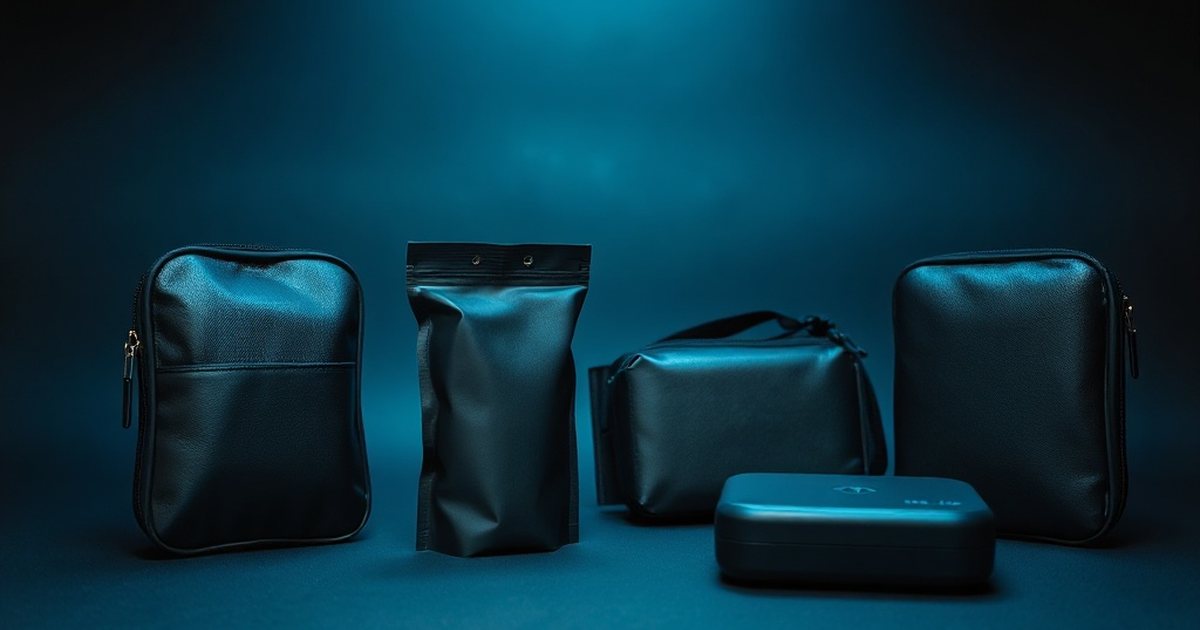
If you must carry it on your body, consider using a Faraday pouch that blocks signals when you don’t need connectivity. The Faraday Bag Buying Guide compares the options.
Enable Airplane Mode When Possible: At night or when you don’t need connectivity, airplane mode eliminates all wireless transmissions. Evidence on sleep is mixed: a one-year Swiss cohort found no link between phone use or environmental RF exposure and sleep disturbance, while a double-blind study of a pulsed GSM-like signal before sleep did not change sleep architecture but raised spindle-frequency EEG power [8][9]. Learn more about the differences between airplane mode and hardware shielding.
Mission Darkness Faraday Bag
For the times you want the phone fully silent rather than on a weaker network, a sealed Faraday bag stops it connecting at all. Test it by calling the phone once it is inside.
What the research does and does not show
It’s worth noting that the scientific community continues to study the long-term effects of wireless radiation. While regulatory bodies like the FCC maintain that current exposure limits are safe, these standards were established decades ago and are based primarily on thermal effects: the heating of tissue. Some researchers argue that non-thermal biological effects at lower exposure levels are not adequately addressed by current regulations. This is a contested position: health agencies have not identified hazards from 5G high band and mm-wave exposure at nonthermal levels below limits, although they recommend further research [14][15].
Organizations like the BioInitiative Working Group, comprising independent scientists and researchers from around the world, have compiled over 1,800 studies suggesting that current safety standards may not adequately protect against non-thermal biological effects of EMF exposure. Those are effects that group reports; a 2026 review concluded the evidence is not sufficient to conclude RF-EMF is a direct-acting genotoxic carcinogen or cancer initiator, and the BioInitiative position is contested [13][14].
The World Health Organization’s International Agency for Research on Cancer (IARC) classified radiofrequency electromagnetic fields as “possibly carcinogenic to humans” (Group 2B) back in 2011, based on an increased risk for glioma, a malignant type of brain cancer, associated with wireless phone use.
That classification rested on limited evidence. A later WHO-commissioned review of 63 articles from 22 countries found that mobile phone use was not associated with glioma (pooled relative risk 1.01, confidence interval 0.89-1.13), and the COSMOS cohort of 264,574 participants found no association between call time and glioma, meningioma or acoustic neuroma [17][16][18].
The fair reading is precaution and habit, not a demonstrated danger. A setting that costs nothing is easy to try, and a meter will tell you more about your own situation than any rule of thumb.
Frequently Asked Questions
Will switching to 4G affect my ability to make calls?
No. Voice calls work identically on 4G networks. In fact, 4G voice calls (VoLTE, Voice over LTE) have been the standard for years and offer excellent call quality. Many people don’t realize that even on 5G phones, most voice calls are actually handled by the 4G network.
Can I switch back to 5G when I need faster speeds?
Absolutely. The setting is easily accessible and can be changed anytime. Some people switch to 5G only when downloading large files, then return to 4G for everyday use. This gives you the best of both worlds: faster downloads when needed, lower exposure the rest of the time.
Is this tip relevant if I have an older phone without 5G?
If your phone doesn’t have 5G capability, you’re already benefiting from lower EMF exposure in this regard. However, the other tips in our guide (such as using speaker mode, maintaining distance, and using Faraday protection) still apply to all smartphone users regardless of network generation.
Will my carrier charge me differently for using 4G?
No. Your data plan covers both 4G and 5G access. There’s no additional cost or penalty for choosing to use 4G networks. You’re simply selecting which technology your phone uses to connect.
Does this affect my phone’s GPS or WiFi?
No. This setting only affects your cellular data connection. GPS, WiFi, and Bluetooth operate independently and will continue to function normally.
Will switching from 5G to 4G noticeably slow down my phone’s internet speed?
In most real-world scenarios, you won’t notice a significant difference in everyday browsing, messaging, or streaming. While 5G offers theoretical speed advantages, 4G/LTE is more than adequate for typical smartphone activities, and the speed difference becomes negligible for most users outside of specialized use cases.
How do I switch my phone to 4G mode to reduce EMF exposure?
On iPhone, go to Settings > Cellular > Cellular Data Options > Voice & Data, then select LTE instead of 5G. On Android devices like Samsung or Google Pixel, navigate to Settings > Network & Internet > Mobile Network > Preferred Network Type, and choose 4G/LTE from the available options.
Does using 4G instead of 5G affect my phone’s battery life?
Switching to 4G can actually improve battery life in many cases, since 4G networks are more power-efficient than 5G. Your phone won’t have to work as hard to maintain a connection, resulting in longer battery performance throughout the day.
Why do 5G networks emit more radiation than 4G networks?
Not necessarily. How much your phone transmits depends mainly on signal strength where you are. Millimeter waves are absorbed chiefly in the top layers of skin, and a 2025 note concluded that modulation differences between 4G LTE and 5G NR are unlikely to have biological relevance [15][2][1].
Take Action Today
Reducing your EMF exposure doesn’t require expensive equipment or dramatic lifestyle changes. Sometimes, the most effective strategies are the simplest ones. Switching from 5G to 4G takes 30 seconds, costs nothing, and provides ongoing benefits every time you use your phone.
This is just one of 100 practical tips we’ve compiled for reducing EMF exposure in your home and daily life. Each tip follows the same philosophy: simple, actionable, and effective. From bedroom optimization to kitchen appliance choices, from personal devices to whole-home shielding, our complete guide covers every aspect of EMF protection.
Ready for More EMF Protection Tips?
Our complete guide includes 100 actionable strategies for every room in your home, plus product recommendations from our curated collection.
Trusted by Families Worldwide
Start with this tip today, and explore our other resources to build a comprehensive EMF protection strategy for your family. Small changes can lower your exposure, though a health benefit from doing so is not established [16][15], and every step you take moves you closer to a lower-EMF lifestyle.
References
- ICNIRP (International Commission for Non-Ionizing Radiation Protection) Standing Committee on Epidemiology: et al. Epidemiology of Health Effects of Radiofrequency Exposure. Environmental Health Perspectives (2004). PMID 15579422
- Foster KR et al. Waveforms of 4G and 5G Radiofrequency Signals: Are Differences Relevant to Biology or Health?. Health physics (2025). PMID 39999412
- US National Cancer Institute Cell Phones and Cancer Risk. US National Cancer Institute (current). source
- Davide Colombi et al. Methods and Practices for In Situ Measurements of RF EMF Exposure From 5G Millimeter Wave Base Stations. IEEE Transactions on Electromagnetic Compatibility (2022). doi:10.1109/temc.2022.3212543
- Bushberg JT et al. Measurement of Ambient Millimeter Wave Exposure Levels around Small Base Stations. Health physics (2025). PMID 39804717
- T. Buczkowski et al. Influence of Mobile Phones on the Quality of ECG Signal Acquired by Medical Devices. Measurement Science Review (2013). doi:10.2478/msr-2013-0035
- Pw Kenny R et al. The effects of radiofrequency exposure on male fertility: A systematic review of human observational studies with dose-response meta-analysis. Environment international (2024). PMID 38880061
- Evelyn Mohler et al. Exposure to Radiofrequency Electromagnetic Fields and Sleep Quality: A Prospective Cohort Study. PLoS ONE (2012). PMID 22624036
- Regel SJ et al. Pulsed radio-frequency electromagnetic fields: dose-dependent effects on sleep, the sleep EEG and cognitive performance. Journal of sleep research (2007). PMID 17716273
- Eric Katz et al. A field test of mobile phone shielding devices. Purdue e-Pubs (Purdue University System) (2011). source
- Ming Li Jiao et al. Electromagnetic Interference Shielding Properties of Silver-Plated Polyester Fabric. Applied Mechanics and Materials (2012). doi:10.4028/www.scientific.net/amm.239-240.310
- Andrew C. Marvin et al. A Method for the Measurement of Shielding Effectiveness of Planar Samples Requiring No Sample Edge Preparation or Contact. IEEE Transactions on Electromagnetic Compatibility (2009). doi:10.1109/temc.2009.2015147
- Agrahari M et al. Non-ionizing radiation and cancer: A review on current evidence, mechanistic insights, and public health implications. Biochemistry and biophysics reports (2026). PMID 42437082
- International Commission on the Biological Effects of Electromagnetic Fields (ICBE-EMF) et al. Scientific evidence invalidates health assumptions underlying the FCC and ICNIRP exposure limit determinations for radiofrequency radiation: implications for 5G. Environmental Health (2022). PMID 36253855
- Kenneth R. Foster et al. Health Aspects of Millimeter-Wave Exposures in 5G and Beyond. IEEE Microwave Magazine (2024). doi:10.1109/mmm.2024.3474419
- Karipidis K et al. The effect of exposure to radiofrequency fields on cancer risk in the general and working population: A systematic review of human observational studies – Part I: Most researched outcomes. Environment international (2024). PMID 39241333
- Mireille B. Toledano et al. Cohort profile: UK COSMOS, a UK cohort for study of environment and health. International Journal of Epidemiology (2015). PMID 26534947
- Feychting M et al. Mobile phone use and brain tumour risk – COSMOS, a prospective cohort study. Environment international (2024). PMID 38458118
These statements have not been evaluated by the Food and Drug Administration. This information is not intended to diagnose, treat, cure, or prevent any disease. Content is for informational purposes only and is not medical advice; consult a qualified healthcare provider before starting any supplement. As an Amazon Associate we earn from qualifying purchases.