Body voltage is the small alternating-current voltage your body picks up when it stands in an electric field from nearby wiring. Some of it is normal in any building with mains wiring. The point of this tip is to compare spots, because unusually high readings where you sit or sleep can point to wiring that deserves a closer look.
Get our complete guide with room-by-room strategies and product recommendations.
What a body voltage reading is
Household wiring and cords make an electric field around them even when nothing is running. Your body is conductive, so it couples to that field and carries a small voltage. That is why the reading depends on where you stand, how close you are to wiring and whether you are touching a grounded object.
Body voltage testing shows how much voltage your body picks up from nearby wiring [1]. It can identify problem areas for remediation and verify that fixes are working.
Body voltage is an electric-field reading, not an RF or magnetic one
Measured in mG or µT
From current in wiring, power lines, motors and appliances. Read it with a gaussmeter or the magnetic mode of a multi-field meter.
Measured in V/m
From voltage on unshielded cords and wiring, even with nothing switched on. Read it with an electric-field mode; grounding changes the reading.
Measured in µW/m² or V/m
From phones, Wi-Fi, Bluetooth, cell towers and smart meters. Read it with an RF meter whose range covers the bands you care about.
Noise on the wiring
High-frequency noise riding on the mains, conducted rather than radiated. A field meter cannot see it; it needs a plug-in line-noise meter.
A voltage meter says nothing about RF.
Each field type needs its own sensor; a meter that reads one says nothing about the others.
Chart: frequencyblockers.com: Body voltage is an electric-field reading, not an RF or magnetic one
Embed this chart
Free to reuse on your site. Copy the code below; please keep the credit link.
How to take the readings
The Fix: Use a body voltage meter to check the electrical charge on yourself when standing in different areas of your home. Readings that are clearly higher in one spot are worth tracing.
- Follow the kit’s instructions for connecting the ground lead, and use the same setup for every reading.
- Stand in the bed or the chair you use, then in a few other spots in the same room.
- Write down each reading with its location so you can compare spots, not guess.
- Take readings with lamps, power strips and chargers near the bed on, then unplugged.

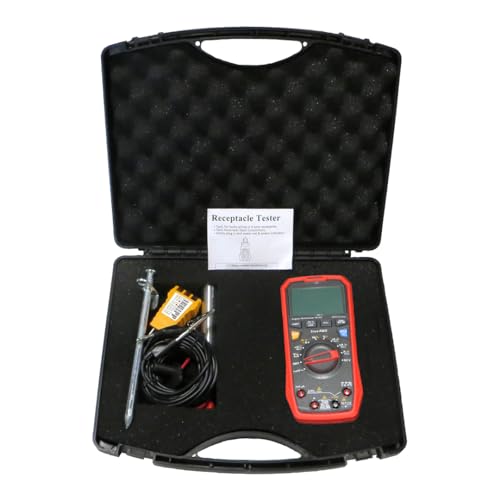
Body Voltage Meter Kit
A kit with the meter, ground reference and body lead that a body voltage reading needs. Take the readings in bed and at your desk, where you spend the most time.
View Product
Read the results and find the cause
Look for the spots that read clearly higher than the rest of the room. Common causes are cords under the bed, an extension lead near the headboard, or wiring running up the wall behind it. Unplug one thing at a time and re-measure to see which one moved the number.
A body voltage meter is not the same as an electric field meter or a gaussmeter. It reads what your body picks up, not the field in the air and not the magnetic field. If the numbers stay high after you remove nearby cords, ask an electrician to look at the wiring rather than guessing.
Limits of the test
Readings change with how you hold the meter, what you are standing on and the grounding setup, so only compare readings taken the same way. A reading is a number about electric fields, nothing more, and the research does not link it to anything you would feel.
The International Agency for Research on Cancer (IARC) classified radiofrequency electromagnetic fields as “possibly carcinogenic to humans” (Group 2B) in 2011, a rating based on limited human evidence about glioma in wireless phone users. Since then, a WHO-commissioned meta-analysis found that ever or regular mobile phone use was not associated with glioma risk (pooled relative risk 1.01), and the US National Cancer Institute says the evidence to date suggests cell phone use does not cause brain or other kinds of cancer in humans. Reducing exposure is a personal precaution, not a response to demonstrated harm [2][3][4].

Ready for More EMF Protection Tips?
Our complete guide includes 100 actionable strategies for every room in your home, plus product recommendations from our curated collection.
Get the Complete GuideFrequently Asked Questions
What exactly is stray voltage and how does it affect my health?
Stray voltage refers to electrical charge that shouldn’t be present on surfaces like floors, walls, or your body, and it typically indicates wiring issues or external contamination from utilities. This unwanted electrical charge is not itself an established health hazard, but it is a useful sign of a wiring or grounding problem worth checking [1].
How can I check for stray voltage with a body voltage meter?
A body voltage meter allows you to measure electrical charge present on surfaces and your own body by detecting the voltage levels in your environment. By using this tool, you can identify problem areas in your home and take targeted steps to reduce your EMF exposure through proper grounding and electrical corrections.
What should I do if I find stray voltage in my home?
If you detect stray voltage, you should first identify the source, which is often related to faulty wiring or grounding issues from your electrical system or utility lines. Once identified, you may need to contact a qualified electrician to address the root cause, or consider using shielding solutions and grounding techniques as part of the SHIELD principle of EMF protection.
Is stray voltage the same as general EMF exposure?
Stray voltage is a specific type of electrical contamination on surfaces, while general EMF exposure includes all electromagnetic fields from devices and infrastructure in your environment. Understanding this distinction helps you address the root cause of the problem rather than just treating symptoms, making it an important part of any comprehensive EMF protection strategy.
References
- International Commission on Non-Ionizing Radiation Protection ICNIRP Guidelines for Limiting Exposure to Time-Varying Electric and Magnetic Fields (1 Hz to 100 kHz). International Commission on Non-Ionizing Radiation Protection (2010). source
- International Agency for Research on Cancer IARC classifies radiofrequency electromagnetic fields as possibly carcinogenic to humans (Press release 208). International Agency for Research on Cancer (2011). source
- Karipidis K et al. The effect of exposure to radiofrequency fields on cancer risk in the general and working population: A systematic review of human observational studies – Part I: Most researched outcomes. Environment international (2024). PMID 39241333
- US National Cancer Institute Cell Phones and Cancer Risk. US National Cancer Institute (current). source
These statements have not been evaluated by the Food and Drug Administration. This information is not intended to diagnose, treat, cure, or prevent any disease. Content is for informational purposes only and is not medical advice; consult a qualified healthcare provider before starting any supplement. As an Amazon Associate we earn from qualifying purchases.