Fitness bands use Bluetooth to sync with your phone, so a small radio transmitter sits against your skin while you wear it. Lab tests of low-power Wi-Fi and Bluetooth devices found fields typically much less than 1% of safety limits, with duty cycles also under 1% [4].
A fitness band is a radio you wear all day, and that is the reason it makes the list, even though measured levels are low.
Get our complete guide with room-by-room strategies and product recommendations.
What the band is doing on your wrist
The band keeps a Bluetooth link to your phone so it can send step counts, heart readings and notifications. Each sync is a short transmission, and the rest of the time the radio idles. The exposure is small, but it is continuous contact with the skin.
Taking the tracker off removes a small body-worn RF source. Nothing in the verified evidence shows that low-level exposure like this accumulates into harm [4].
Skip the tracker, or turn off its radio, before reaching for shielding
Remove or switch it off
The most reliable fix: wire it, schedule it off, or choose a model without the radio.
Move it away
Fields from a device fall off quickly with distance, so the nightstand beats the pillow.
Block the path
Only for what you cannot remove or move; it must cover the path fully to work.
Measure before and after
Use a meter that reads the field type the change targets, so you know it worked.
Remove the radio first, then see what is left.
The usual order of fixes: source first, shielding last.
Chart: frequencyblockers.com: Skip the tracker, or turn off its radio, before reaching for shielding
Embed this chart
Free to reuse on your site. Copy the code below; please keep the credit link.
Ways to keep the data without the radio
The Fix: Remove the fitness tracker. Track workouts manually, use a paper log, or choose a non-wireless step counter.
- A paper log or notes app for workouts.
- A non-wireless step counter that you read by eye.
- Your phone’s built-in step counter, with the phone in a bag instead of on your body.
- If you keep the band, turn off notifications and syncing you do not use, and take it off when you do not need it.
Check it with an RF meter
An RF meter shows what the band does. Hold the sensor close to it while it syncs, then repeat with the band in a drawer. Use max-hold so short bursts are not missed, and compare with your phone to see which one dominates.
If the band reads barely above the room, taking it off changes little on the meter. That is useful to know, and it tells you where else to look first.
Skipping the band is still a fair choice if you simply prefer less on your body. The fix costs nothing, it is easy to reverse, and the meter lets you judge it with a reading instead of a feeling. Nothing here requires giving up your fitness goals, only the wireless link.
Timex Classic Analog Watch
A plain analog watch keeps the time on your wrist after the tracker comes off. For step counts, carry the phone in airplane mode instead.
Where the evidence stands
The International Agency for Research on Cancer (IARC) has classified radiofrequency electromagnetic fields as “possibly carcinogenic to humans,” a rating based on limited human evidence for glioma in wireless phone users. The US National Cancer Institute says the evidence to date suggests cell phone use does not cause brain or other kinds of cancer, and a WHO-commissioned meta-analysis found no association between ever or regular mobile phone use and glioma (pooled relative risk 1.01). Precautions are a personal choice, not a response to a demonstrated harm [1][2][3].

Ready for More EMF Protection Tips?
Our complete guide includes 100 actionable strategies for every room in your home, plus product recommendations from our curated collection.
Frequently Asked Questions
Do Bluetooth fitness trackers really emit harmful radiation?
Fitness bands use low-power Bluetooth. In a lab test of wireless earbuds, the highest readings were under 20% of the ICNIRP electric field limit and about 1% of the SAR limit, and a large cohort of mobile phone users found no association between call time and glioma, meningioma or acoustic neuroma. Wearing a tracker is not shown to be harmful, though some people prefer to take it off [5][2].
What are some practical alternatives to wearing a Bluetooth fitness tracker?
You can switch to non-wireless fitness trackers that don’t require Bluetooth connectivity, use your smartphone’s built-in health app instead, or opt for traditional pedometers and analog watches. These alternatives eliminate constant RF radiation exposure while still allowing you to monitor basic activity metrics.
How can I reduce my EMF exposure if I want to keep using my fitness band?
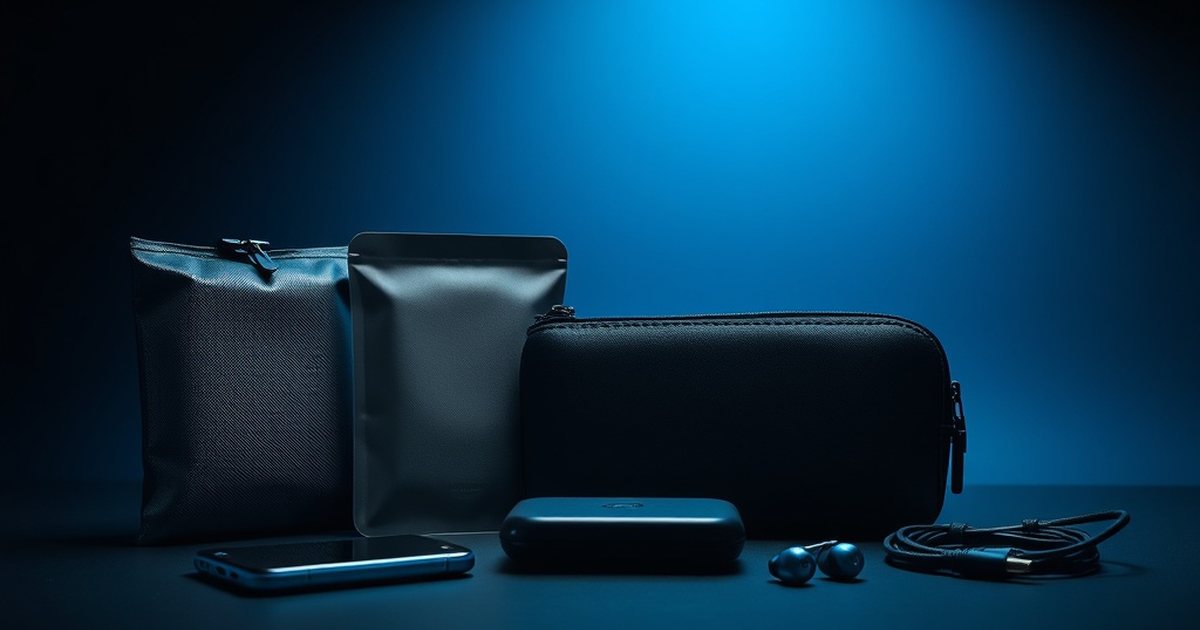
The most effective approach is applying the DISTANCE principle of EMF protection by removing the tracker during sleep and limiting wear time throughout the day. You can also disable Bluetooth when not actively syncing and use Faraday bags or RF shielding products to store the device when not in use.
Why should I be concerned about wearing a fitness tracker at night?
Fitness trackers that monitor sleep continuously broadcast Bluetooth signals directly against your skin for 8+ hours while your body is in a vulnerable resting state. In a one-year Swiss cohort, neither phone use nor modelled RF exposure was associated with sleep disturbance, and bedroom RF measurements with wrist actigraphy confirmed the null result. Taking a band off at night is simple, but any sleep benefit from reduced radiation is unproven [6].
References
- International Agency for Research on Cancer IARC classifies radiofrequency electromagnetic fields as possibly carcinogenic to humans (Press release 208). International Agency for Research on Cancer (2011). source
- US National Cancer Institute Cell Phones and Cancer Risk. US National Cancer Institute (current). source
- Karipidis K et al. The effect of exposure to radiofrequency fields on cancer risk in the general and working population: A systematic review of human observational studies – Part I: Most researched outcomes. Environment international (2024). PMID 39241333
- McKenzie RJ et al. Assessment of radio frequency fields in the 2.45 GHz band produced by smart home devices. Bioelectromagnetics (2024). PMID 38014861
- E. W. Obinor et al. Electromagnetic Field Analysis of Wireless Earbuds: A Comparative Study of Emf Emissions Across Multiple Brands and Operational Modes. Scientia Africana (2026). doi:10.4314/sa.v25i2.2
- Evelyn Mohler et al. Exposure to Radiofrequency Electromagnetic Fields and Sleep Quality: A Prospective Cohort Study. PLoS ONE (2012). PMID 22624036
These statements have not been evaluated by the Food and Drug Administration. This information is not intended to diagnose, treat, cure, or prevent any disease. Content is for informational purposes only and is not medical advice; consult a qualified healthcare provider before starting any supplement. As an Amazon Associate we earn from qualifying purchases.