EMF Wearable Loggers: A Complete Guide to Continuous Personal Exposure Tracking
Electromagnetic fields change constantly as people move through their daily environments—home, office, school, cars, stores, gyms, and anywhere wireless devices operate. Traditional handheld meters only provide momentary snapshots of EMF conditions. To understand long-term patterns, professionals and health-conscious individuals increasingly use EMF Wearable Loggers, devices designed to continuously record exposure to electric, magnetic, and radiofrequency fields over hours or days.
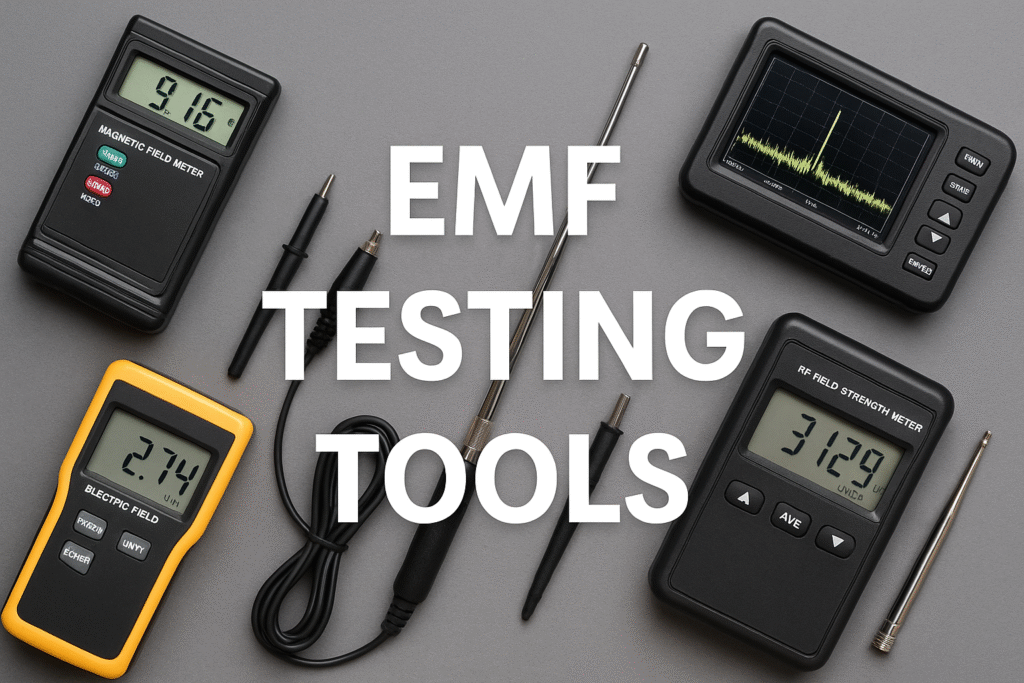
EMF Wearable Loggers provide a far more complete picture of daily exposure patterns, revealing spikes and trends that are otherwise impossible to detect. Whether you’re troubleshooting symptoms, conducting a home assessment, validating mitigation strategies, or performing research, these tools offer unmatched visibility. For an overview of all EMF testing tools, visit:
https://frequencyblockers.com/emf-testing-tools/
What EMF Wearable Loggers Measure
Depending on the model, EMF Wearable Loggers can track:
1. Radiofrequency (RF) Exposure
Including:
- Wi-Fi (2.4 & 5 GHz)
- Cellular (4G, 5G)
- Bluetooth
- Smart meters
- Wireless appliances and IoT devices
2. Magnetic Fields (mG)
Especially around:
- Appliances
- Wiring
- Motors
- Vehicles
3. Electric Fields (V/m)
Common in sleeping areas and workspaces.
4. Body-Carried Exposure
These devices measure exposure at the same location the wearer experiences it—something handheld testing cannot replicate.
5. Time-Stamped Activity Logs
Most EMF Wearable Loggers record:
- Peak readings
- Average exposure
- Time and duration
- Environmental trends
Some models include GPS tagging, allowing geographic correlation.
Why EMF Wearable Loggers Are Essential
1. Real-World Exposure Tracking
EMF exposure isn’t static—people encounter dozens of environments every day. Wearable logging reveals the true pattern of influence.
2. Captures Intermittent RF Signals
Many wireless systems pulse, hop, or broadcast unpredictably. EMF Wearable Loggers identify these events.
3. Identifies High-Exposure Zones
Common hotspots include:
- Commute routes
- Work stations
- Apartment complexes
- Near neighbors’ routers
- Certain rooms in the home
4. Links Symptoms to Exposure
People monitoring sleep quality, stress, or headaches often use logging to identify correlating EMF spikes.
5. Supports Professional Assessments
Home inspectors and consultants use EMF Wearable Loggers to document typical occupant exposure over time.
6. Validates Mitigation
After shielding, wiring adjustments, or router relocation, logging confirms whether exposure was actually reduced.
How EMF Wearable Loggers Work
Most EMF Wearable Loggers include:
1. Multi-Sensor Arrays
Track RF, electric, and magnetic fields simultaneously.
2. Large Internal Memory
Stores hours or days of exposure data.
3. Sampling Algorithms
Capture peak, RMS, and time-averaged values.
4. Wearable Form Factors
Often clipped to clothing, worn as a badge, placed in pockets, or strapped to belts.
5. Companion Software
Charts exposure patterns using:
- Graphs
- Maps
- Heat signatures
- Time-series plots
6. Battery-Efficient Architectures
Allow continuous operation without recharging every few hours.
Common Applications for EMF Wearable Loggers
1. Daily Life Tracking
People interested in personal wellness or environmental effects track exposure throughout the day.
2. Workplace Compliance Testing
Some facilities require ongoing EMF monitoring to ensure safety limits are met.
3. Home EMF Assessments
Wearable logs identify patterns not visible through spot measurements.
4. Transportation Exposure
RF levels in vehicles, trains, buses, and airports frequently reach elevated peaks.
5. Sleep Environment Testing
Nighttime exposure patterns often differ significantly from daytime patterns.
6. Research & Academic Studies
EMF Wearable Loggers are used in epidemiological research and environmental health investigations.
How to Use EMF Wearable Loggers Effectively
1. Wear the Logger Consistently
Keep it near the torso for accurate, person-centered measurement.
2. Avoid Obstructions
Do not cover sensors with metallic materials or thick layers.
3. Log for Multiple Days
Exposure varies widely day-to-day. Longer logs produce clearer insights.
4. Keep the Logger Away From Phones
Smartphones generate powerful bursts; distance helps prevent measurement saturation.
5. Use Software to Review Patterns
Look for:
- Repeated peaks
- Unusual spikes
- Time-of-day trends
- Room-based changes
6. Compare Environments
Wear the logger at home, at work, and during travel for a full exposure profile.
Understanding EMF Wearable Logger Data
These devices often show:
1. Peak RF Exposure
Important for identifying pulsed systems like smart meters or phones switching towers.
2. Average Power Density
Represents overall exposure levels throughout the monitoring period.
3. Duty Cycle Patterns
Useful for characterizing sources such as Wi-Fi and Bluetooth.
4. Magnetic Field Cycles
Correlate with HVAC systems, appliances, and wiring.
5. Electric Field Changes
Often linked to circuit activation or nearby electronics.
6. Exposure Hotspot Mapping
Some logging apps visualize where exposure increases geographically.
Types of EMF Wearable Loggers
1. RF-Only Wearable Loggers
Focus exclusively on wireless exposure.
2. Multi-Field Wearable Loggers
Measure RF, electric fields, and magnetic fields simultaneously.
3. Professional Data-Logging Badges
Used in industrial and research environments.
4. Smart Wearables
Newer devices integrate EMF sensors into watches or clip-on modules.
5. USB-Export Models
Allow high-resolution data downloads for analysis.
Price Ranges for EMF Wearable Loggers
| Category | Typical Price | Best For |
|---|---|---|
| Entry-Level | $100–$250 | Basic personal monitoring |
| Mid-Range | $250–$600 | Home assessments & wellness tracking |
| Professional | $600–$1,500+ | Research, consulting & compliance |
The cost depends on sensor quality, memory capacity, logging resolution, and software features.
Advantages of EMF Wearable Loggers
- True real-time personal exposure data
- Captures peaks & intermittent patterns
- Far more accurate than spot testing
- High value for sleep & symptom tracking
- Ideal for RF-dense urban environments
- Supports professional documentation
Limitations of EMF Wearable Loggers
- Proximity to smartphones may distort readings
- Interpretation requires some EMF knowledge
- Data sets can be large and complex
- Not all models measure all field types
Despite these limitations, EMF Wearable Loggers remain one of the most powerful tools for understanding real-world exposure.
EMF Wearable Loggers vs. Personal RF Exposure Monitors
| EMF Wearable Loggers | Personal RF Exposure Monitors |
|---|---|
| Track multiple field types | Primarily RF focused |
| Capture multi-day logs | Capture real-time RF levels |
| Strong analytics & software | Limited long-term reporting |
| Great for sleep & lifestyle testing | Great for RF-only assessments |
Most EMF assessors use both tools depending on the scenario.
Common Mistakes When Using EMF Wearable Loggers
- Wearing the logger inside a metal bag
- Keeping the logger in direct contact with a phone
- Logging for too short a period
- Forgetting to charge or sync the device
- Misreading short peaks as averages
Accuracy improves with proper use and thoughtful review of the data.
FAQs About EMF Wearable Loggers
Do EMF Wearable Loggers detect 5G?
Most modern models do, if their frequency range extends beyond 6 GHz.
Do they replace handheld meters?
No—handheld meters are still needed for precise source identification.
Are EMF Wearable Loggers safe?
Yes—they are passive sensors and emit no signal.
How long should logging be performed?
Ideally 24–72 hours for a full exposure profile.
Key Takeaways
- EMF Wearable Loggers provide continuous, personalized EMF exposure data, making them essential for understanding real-world conditions that handheld meters cannot capture.
- They help identify RF, electric, and magnetic field patterns across an entire day or week.
- These tools are invaluable for home assessments, wellness tracking, and professional diagnostics.
- For more EMF testing tools, visit:
https://frequencyblockers.com/emf-testing-tools/
References
- National Institute of Standards and Technology (NIST) — EMF Measurement Principles
https://www.nist.gov - Frequency Blockers — EMF Testing Tools Overview
https://frequencyblockers.com/emf-testing-tools/
Recommended EMF Testing Equipment
Ready to start testing? Check out our top-rated EMF meters:
- Safe and Sound Pro II RF Meter
- Safe and Sound Classic II RF Meter
- Safe and Sound Pro mmWave 20GHz Meter
Browse all EMF protection products →
Frequently Asked Questions
What exactly do EMF wearable loggers measure throughout the day?
EMF wearable loggers continuously record your exposure to radiofrequency (RF) fields, magnetic fields (measured in mG), and electric fields (measured in V/m) as you move through different environments. They capture time-stamped data that shows exactly when and where you encounter the highest exposure levels, unlike handheld meters that only provide single-moment readings.
How can wearing an EMF logger help me identify which locations in my life have the most exposure?
By wearing a logger for multiple days, you can map your personal exposure patterns across your home, workplace, car, and public spaces to see which environments generate the highest readings. The companion software lets you review the data and pinpoint specific hotspots, helping you understand whether your symptoms correlate with high-exposure zones and where you should focus your mitigation efforts.
How long should I use an EMF wearable logger to get accurate exposure data?
You should wear your EMF wearable logger consistently for at least several days to capture realistic patterns, since exposure varies throughout the week and across different times of day. Logging for a full week or longer provides the most comprehensive picture of your actual exposure and helps you identify consistent trends rather than isolated incidents.
Can EMF wearable loggers detect all types of wireless signals and electromagnetic fields?
Different logger models have different capabilities: RF-only wearable loggers detect radiofrequency signals from phones and WiFi, while multi-field wearable loggers capture RF, magnetic fields, and electric fields simultaneously. Professional multi-field models provide the most comprehensive data, though they’re typically more expensive than single-function devices.