Disclosure: As an Amazon Associate and affiliate partner, we earn from qualifying purchases at no extra cost to you. See our full affiliate disclosure.
Faraday Bags for Phones: A Complete Buyer’s Guide
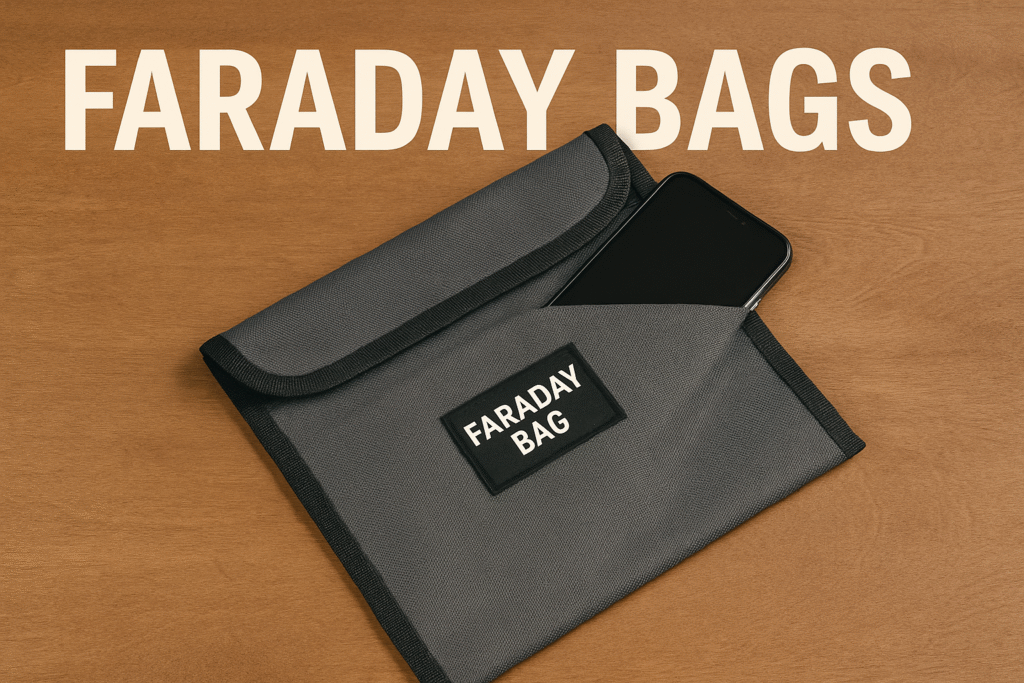
Faraday bags for phones are simple, portable enclosures that block wireless signals to protect your privacy, data, and location. This guide explains how they work, what they can and can’t do, how to choose the right one, and how to test yours at home.
Looking for broader apparel options? See our guides to Faraday Clothing and EMF Protective Hats for whole-body privacy strategies.
What Is a Faraday Bag for Phones?
A Faraday bag (sometimes called a signal-blocking pouch or RF shielding pouch) is a soft case lined with conductive layers that create a miniature Faraday cage. When properly sealed, it attenuates—often dramatically—all common phone signals, including cellular, Wi-Fi, Bluetooth, GPS/GNSS, and NFC/RFID. The result: your device stops sending or receiving radiofrequency (RF) communications.
How Do Faraday Bags Work?
A Faraday bag surrounds the phone with conductive material. Incoming and outgoing electromagnetic waves induce currents in the conductive layer; those currents cancel fields inside the bag, preventing signals from passing through. The bag’s seams, closure, and layer continuity are as important as the fabric itself—any gap or misalignment can reduce performance.
Key design elements
- Conductive layers: Woven metals (e.g., silver, copper, nickel blends) or metallized films.
- Multiple layers: Stacked layers generally increase shielding effectiveness across more bands.
- Closure system: Roll-down tops with hook-and-loop or magnetic closures help eliminate leakage; simple zippers alone are rarely sufficient unless the design compensates.
- Grounding: Not required for portable bags; they function via enclosure, not earth ground.
What Signals Do Faraday Bags for Phones Block?
When sealed correctly, quality phone Faraday bags can block or greatly reduce:
- Cellular: 2G/3G/4G/LTE/5G sub-6 GHz bands
- Wi-Fi: 2.4 and 5 GHz bands
- Bluetooth / BLE: 2.4 GHz
- GPS/GNSS: L1/L5 bands (and similar)
- NFC/RFID: 13.56 MHz and other common tags
Shielding effectiveness is usually expressed in decibels (dB). Roughly, every 20 dB equates to a 10× reduction in field strength; 60–80 dB represents strong attenuation suitable for most consumer needs.
What Faraday Bags for Phones Can’t Do
- They don’t block sound, light, or physical access. Microphones and cameras are unaffected unless you use additional covers.
- They don’t disinfect or “reset” a device. Malware present before bagging will still be present afterward.
- They’re not a substitute for backups or encryption. Use them alongside strong passcodes and device encryption.
- They won’t work if left open or partially sealed. Even a small gap can allow enough RF leakage to reconnect.
Common Use Cases
- Privacy on the go: Prevent passive location tracking and background app handshakes.
- Travel and hotels: Reduce attack surface on unfamiliar networks; store secondary phones, SIMs, or key fobs.
- Valet and keyless entry protection: Many bags also block RF car-key signals to deter relay theft.
- Tech breaks / digital detox: Ensure your phone stays offline without powering down.
- Evidence preservation (consumer context): Limit remote wipes or pings until you can secure a device.
How to Test Your Faraday Bag at Home
You can verify performance of faraday bags for phones in a few minutes:
- Baseline checks
- Note current bars and try a test call or message.
- Open a mapping app and watch GPS lock status.
- Seal test
- Place the phone inside, close as instructed (often: flatten, fold/roll, press).
- Try calling the device from another phone. It should go straight to voicemail or fail to connect within ~30 seconds.
- Toggle Wi-Fi and Bluetooth scans—networks and devices should not appear.
- Check for AirTag/Find My or similar pings from another device; they shouldn’t register while sealed.
- Edge cases
- Move near a cell tower or window; repeat tests.
- If calls sometimes slip through, reseat the phone flat, remove thick cases, and ensure a complete seal. Consistency matters.
Tip: Some phones buffer notifications. If messages flood in the moment you open the pouch, that’s expected—and a sign the bag was working.
Buying Guide: What to Look For in Faraday Bags for Phones
- Fit & form factor
- Phone sleeve: Minimal bulk; slips into a pocket.
- Two-pocket pouch: One shielded pocket and one passthrough pocket for normal use—handy when you still need calls sometimes.
- Closure quality
- Roll-down + hook-and-loop, magnetic bars, or double-fold designs usually provide higher, more repeatable attenuation than single zippers.
- Materials & layers
- Look for multi-layer conductive fabrics and reinforced seams in any faraday bags for phones. Ask about stated shielding (dB) across relevant bands.
- Durability
- Stitching, abrasion resistance, and tear strength matter for daily carry. Consider water-resistant outers if you’re outdoors a lot.
- Heat considerations
- Phones can warm up while searching for a signal. Use bags that dissipate heat reasonably and don’t store a powered device sealed in hot environments.
- Extras
- Lanyard points, MOLLE compatibility, waterproof liners, or document/key-fob pockets can add utility.
- Price ranges (typical)
- Entry level: $15–$30 (basic sleeve; single closure; casual use)
- Mid-range: $30–$70 (multi-layer, robust closure, better build)
- Premium/pro: $70–$150+ (lab-tested claims, ruggedized, forensic-leaning features)
Quick Comparison
| Style | Best For | Pros | Cons |
|---|---|---|---|
| Slim Sleeve | Minimal daily carry | Light, pocket-friendly, affordable | Less storage; may rely on perfect folding |
| Dual-Pocket Pouch | Switching between connected/offline | Keep phone usable in outer pocket; quick swap | Slightly bulkier |
| Rugged/Forensic | Field work, travel, harsh use | High dB, reinforced seams, lab-tested | Higher cost, larger size |
Safe Use & Care
- Emergency awareness: Once sealed, you cannot receive emergency alerts or calls. Set expectations before you go offline.
- Battery & heat: If you must keep the phone on, limit long sealed periods in hot cars or direct sun.
- Cleaning: Spot-clean outer shell; avoid saturating the inner conductive layers.
- Lifecycle: Performance can degrade with heavy wear. Replace if you notice inconsistent blocking or visible fabric damage.
EMF & Wellness Notes
Faraday bags for phones greatly reduce RF communication when sealed. They are not medical devices. If you’re aiming to reduce overall exposure at home or during sleep, consider broader strategies like shielded bedrooms, emf protective canopies, or airplane mode—and always balance safety, connectivity needs, and emergency access [1][2].
Frequently Asked Questions
Can I still use my phone through a Faraday bag?
No. A correctly sealed bag blocks connectivity. Some pouches include a non-shielded outer pocket for normal use when needed.
Does 5G make Faraday bags for phones obsolete?
No. Good bags attenuate a wide frequency range, including common 5G sub-6 GHz bands. (Millimeter-wave 5G is even easier to block, but coverage is limited in many areas.)
Are thicker bags always better?
Not always. Layer quality, continuity, and closure geometry matter more than bulk.
Will GPS still track me later?
While sealed, GPS lock and assisted location should drop. When you unseal, your device can reacquire a fix and may upload buffered data depending on your settings.
Key Takeaways
- Seal quality is everything. A perfect fold/closure makes the difference between full isolation and occasional leaks in different faraday bags for phones
- Look for multi-layer designs with stated dB performance across cellular, Wi-Fi, Bluetooth, and GPS bands.
- Match the form to your routine: slim sleeve for everyday pockets, dual-pocket for flexibility, rugged for travel/field.
- Test at home regularly to confirm consistent blocking as the bag wears.
- Plan for emergencies and heat—being unreachable has tradeoffs, and sealed devices can run warm.
- Learn common failures in faraday bags for phones with this article: why do faraday bags stop working?
Recommended Faraday Bags for Phones

SLNT Faraday Phone Sleeve
$79.95
•
SLNT + others

Mission Darkness Mojave Faraday Bags for Phones
$50.00
•
Mission Darkness + others

Mission Darkness Non‑Window Faraday Bag for Phones
$23.00
•
Mission Darkness + others

GoDark Faraday Bags for Phones
$60.00
•
GoDark Faraday Bags + others

DefenderShield ConcealShield Faraday Travel Bag
$119.99
•
DefenderShield + others

OffGrid Utility Faraday Bag (Phone)
$28.00
•
OffGrid Faraday Bags + others

Gecko Travel Tech Secure Travel Pouch (Faraday)
$24.99
•
Walmart – GeckoTravelTech, Inc. + others
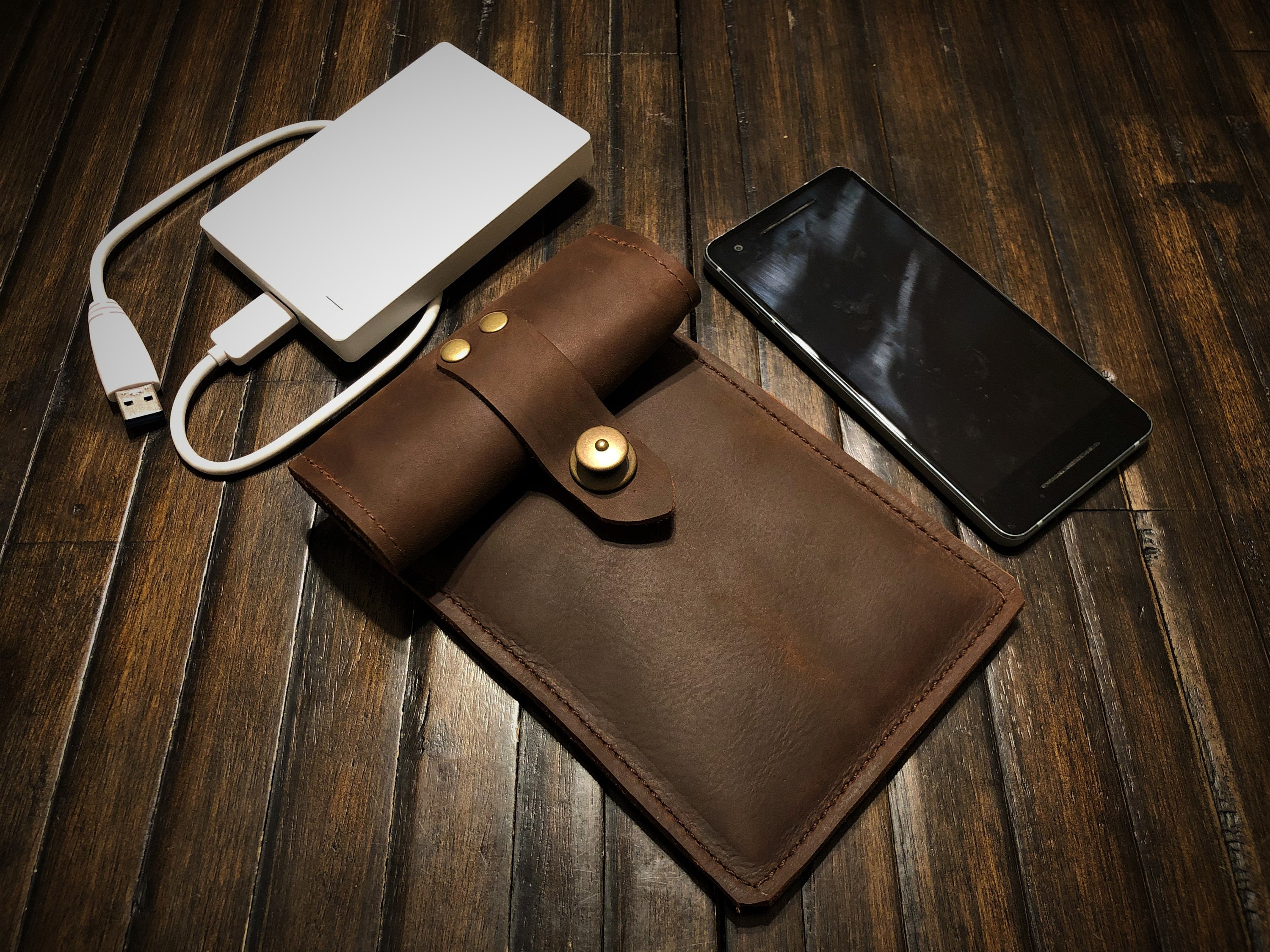
PreisingLegacy Handmade Leather Faraday Bag
$72.10
•
Etsy
Here’s a breakdown of each:
- SLNT Faraday Phone Sleeve: Premium everyday carry option. Built with patented Silent Pocket® Faraday cage, blocks cell/WiFi/Bluetooth/GPS/NFC. Price around US$80 to $100.
- Mission Darkness Mojave Faraday Phone Bag: Mid-premium travel-oriented bag from Mission Darkness. Price ~ US$50. MOS Equipment+2MOS Equipment+2
- Mission Darkness Non‑Window Faraday Bag for Phones: More budget professional shield from same brand. Price as low as US$23 listed. Teel Technologies+1
- GoDark Faraday Bags for Phones: High-end/military-grade shielding, independent test claims >100 dB attenuation. Price around US$90 to $130. GoDark Bags
- DefenderShield ConcealShield Faraday Travel Bag: Specialist luxury shield/travel version. Listed at US$119.99.
- OffGrid Utility Faraday Bag (Phone): Budget minimalist shield. Price ~ US$28.
- Gecko Travel Tech Secure Travel Pouch (Faraday): Entry-budget carry option. Price ~ US$24.99.
- PreisingLegacy Handmade Leather Faraday Bag: Artisan premium leather product; price ~ US$100+ (listed US$72.10 sale from US$103) for handmade build.
🎯 How to Structure Your Shortlist by Use-Case
1. Everyday Carry / Pocket Use
- SLNT Faraday Bags for Phones Sleeve → premium daily use, fits in pocket or bag.
- Mission Darkness Mojave → slightly larger/travel-oriented but still everyday compatible.
2. Travel / Field Work / High Assurance
- GoDark Faraday Bags → best performance rating, for high-risk/privacy-sensitive situations.
- DefenderShield ConcealShield → luxury travel version with higher end materials.
3. Budget / Entry / Backup
- OffGrid Utility Faraday Bag → great low-cost option for phone backup or occasional use.
- Gecko Travel Tech Secure Travel Pouch → ultra-budget entry to the category.
4. Specialty / Artisan
- PreisingLegacy Handmade Leather Faraday Bags for phones → unique build, premium materials, niche audience.
💡 Price Range Summary (for your table)
- Entry budget: ~US$20-30
- Budget minimalist/shield: ~US$25-40
- Mid-premium: ~US$45-70
- Premium everyday/travel: ~US$80-120
- High-end/military/specialist: ~US$90-150+
References
- FCC – Guidelines for Human Exposure to Radiofrequency Energy, consumer overview. https://www.fcc.gov/general/radio-frequency-safety-0
- NIST – Electromagnetic Compatibility (EMC) Basics and measurement concepts. https://www.nist.gov/ctl/electromagnetics
- ASTM International – ASTM D4935: Standard Test Method for Measuring the Electromagnetic Shielding Effectiveness of Planar Materials. https://www.astm.org/d4935
- Electronics Notes – Faraday Cage Theory & Applications (educational primer). https://www.electronics-notes.com/articles/electromagnetism/faraday-cage/what-is-faraday-cage.php
Featured Products
Looking for quality EMF protection? Check out these recommended products:
Learn More: For a complete overview of Faraday bag types, testing methods, and our top recommendations, see our Complete Guide to Faraday Bags.
Frequently Asked Questions
How do Faraday bags for phones actually block signals?
Faraday bags work by using conductive shielding materials that create a miniature Faraday cage around your phone. When properly sealed, these layers absorb and redirect wireless signals like cellular, Wi-Fi, Bluetooth, GPS, and NFC, preventing your device from sending or receiving any data.
How can I test if my Faraday bag is working properly?
The simplest test is to place your phone inside the sealed bag and have someone call your number from another phone. If the call doesn’t ring through, your bag is effectively blocking signals. You can also check that Wi-Fi and Bluetooth connectivity drop once your phone is sealed inside.
What should I look for when buying a Faraday bag for my phone?
Look for bags with at least 60dB attenuation rating, double-layer seals to ensure complete signal blocking, and durable conductive materials. Testing third-party certifications and reading user reviews about real-world effectiveness will help you choose a quality option that meets your privacy needs.
Will a Faraday bag prevent my phone from being tracked or hacked?
A Faraday bag will prevent location tracking via GPS and cellular signals while your phone is sealed inside, and it stops remote hacking attempts that require an active connection. However, it only works when your phone is actually in the bag and properly sealed, so it’s best used when you’re not actively using your device.