Gauss Meter: A Complete Guide to Measuring Magnetic Fields at Home
Magnetic fields are one of the most common forms of everyday electromagnetic exposure, and a Gauss Meter is the primary instrument used to measure them accurately. Whether you’re evaluating appliances, identifying wiring errors, or conducting a full home EMF assessment, this tool provides the essential data needed to understand magnetic field strength and sources. In this guide, you’ll learn how a Gauss Meter works, how to choose one, how to test correctly, and how to interpret the results with confidence.
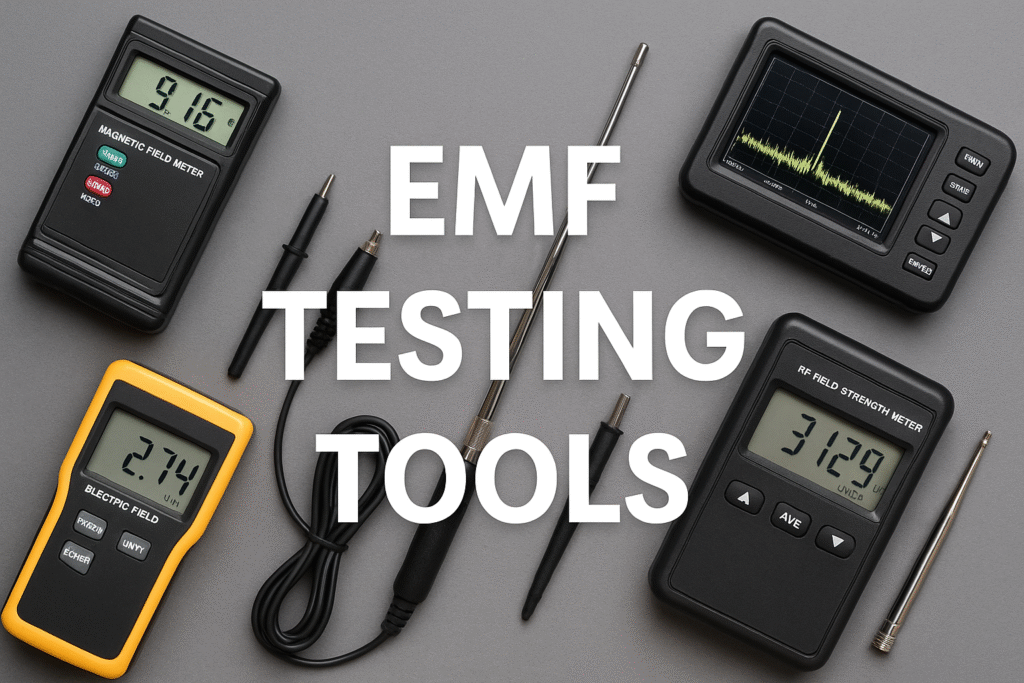
A Gauss Meter remains one of the most reliable ways to verify EMF levels around your home, and it forms the foundation of most professional testing workflows. If you plan to build a full toolkit, make sure to review our full overview of testing equipment here:
https://frequencyblockers.com/emf-testing-tools/
What Is a Gauss Meter?
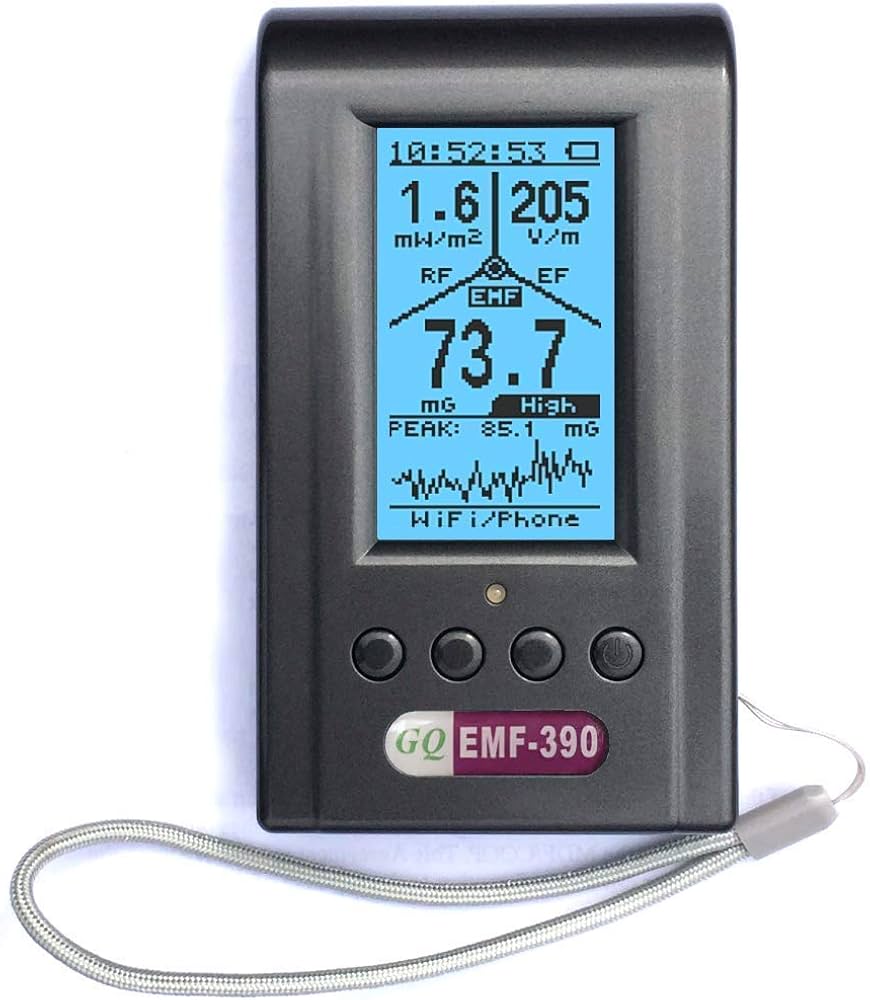
A Gauss Meter is a handheld instrument designed to measure magnetic field strength in units of gauss or milligauss (mG). Most modern residential and commercial meters display readings in milligauss because the magnetic fields found around wiring, appliances, and power lines typically fall within this range.
Magnetic fields are generated by electrical currents — and unlike electric fields, magnetic fields can pass through walls, floors, and most building materials without significant reduction. This means accurate measurement requires a dedicated tool such as a Gauss Meter, not a smartphone app or a non-specialized EMF meter.
Professionals rely on a Gauss Meter to:
- Identify wiring errors
- Track magnetic field hotspots
- Test distance decay from appliances
- Evaluate proximity to power lines or transformers
- Troubleshoot grounding or current flow issues
Because magnetic fields are harder to shield than RF or electric fields, measurement must be precise. That’s where a dedicated Gauss Meter becomes critical.
How a Gauss Meter Works
A Gauss Meter detects magnetic flux density using a sensor known as a Hall-effect probe. When exposed to a magnetic field, this probe experiences a voltage change that the meter converts into a numerical reading.
Key characteristics include:
1. Axis Configuration
- Single-axis: Measures magnetic fields in one direction at a time
- Three-axis: Measures fields in all three spatial orientations simultaneously
A three-axis Gauss Meter provides faster, more accurate results because you don’t need to rotate the device manually to get a full reading.
2. Measurement Range
Typical consumer ranges:
- 0–1,000 mG
- 0–2,000 mG
Professional ranges may extend much higher, especially for industrial or laboratory use.
3. Frequency Response
Residential magnetic fields are typically in the 50/60 Hz range, so you’ll want a Gauss Meter designed for low-frequency evaluation.
When Should You Use a Gauss Meter?
A Gauss Meter is ideal for detecting issues that cannot be seen but can significantly influence EMF levels. Whether assessing a home or office, these are the most common scenarios where a Gauss Meter is essential:
1. Inspecting Electrical Wiring
Faulty circuits or neutral-to-ground shorts often produce elevated magnetic fields. A Gauss Meter reveals these problems quickly.
2. Measuring Appliances
Refrigerators, induction cooktops, microwaves, EV chargers, and HVAC systems can generate substantial magnetic fields.
3. Evaluating Bedrooms
Because magnetic fields penetrate walls and cannot be easily shielded, testing sleeping areas is one of the most important steps in an EMF assessment.
4. Checking Distance from Power Lines
Even if a home looks far enough away, high current loads can create unexpected field levels.
5. Testing Home Offices
Computer towers, monitors, printers, and power strips can produce magnetic fields that vary dramatically based on layout.
How to Use a Gauss Meter: Step-by-Step
Using a Gauss Meter correctly ensures accurate, actionable results. Follow this structured workflow:
Step 1 — Turn Off Unnecessary Electronics
Background noise from unrelated equipment can distort measurements. Keep only the items you’re testing powered on.
Step 2 — Hold the Meter at Chest or Waist Level
This provides a consistent baseline as you move through the home.
Step 3 — Test in All Three Dimensions
Even if using a three-axis device, change position to capture variations across the space.
Step 4 — Scan Slowly
Magnetic fields fluctuate, so slow movements help capture accurate peaks and averages.
Step 5 — Measure at Practical Distances
For appliance testing:
- 0 inches
- 6 inches
- 12 inches
- 24 inches
- 36 inches
These distances help you map “distance decay,” one of the most important characteristics of magnetic fields.
Step 6 — Record Results
Take notes of:
- Peak readings
- Average readings
- Distance from source
- Circuit conditions
This documentation is crucial for troubleshooting.
Understanding Gauss Meter Readings
While no global safety standard exists for low-frequency magnetic fields, most building biologists and EMF assessors use ranges such as:
| Magnetic Field Level | Range (mG) | Interpretation |
|---|---|---|
| Very Low | 0–1 mG | Ideal for sleeping areas |
| Low | 1–2.5 mG | Acceptable but worth monitoring |
| Moderate | 2.5–4 mG | Investigate possible sources |
| High | 4–10 mG | Action recommended |
| Very High | 10+ mG | Strong magnetic field; mitigation needed |
A Gauss Meter makes these levels visible so you can address issues proactively.
Choosing the Right Gauss Meter
Not all meters are designed for the same environments. Consider these factors:
1. Axis Type
- Choose three-axis for accuracy and speed
- Choose single-axis for budget-conscious testing
2. Sensitivity
Look for a low measurement floor (0.1 mG or less).
3. Build Quality
Professional meters offer better stability and frequency filtering.
4. Price Range
General ranges include:
| Category | Typical Price | Use Case |
|---|---|---|
| Entry-Level | $50–$150 | Basic home assessments |
| Mid-Range | $150–$400 | Reliable, accurate, multi-axis readings |
| Professional | $400–$1,500+ | Precision measurements, audits, diagnostics |
When You Should Consider Professional Testing
If your Gauss Meter reveals readings above 4 mG in critical areas such as bedrooms, or if you detect irregular patterns that suggest wiring faults, a professional EMF assessment may be needed. Experts use advanced tools and electrical diagnostic equipment to identify issues inside walls, ceilings, or circuits.
Common Mistakes When Using a Gauss Meter
Many people misinterpret their results because of small errors. Avoid these pitfalls:
- Holding the meter too close to your body
- Allowing your hand or phone to influence readings
- Testing from inconsistent distances
- Ignoring fluctuations over time
- Measuring only once instead of scanning the room
- Forgetting that magnetic fields pass through all common building materials
Following a consistent protocol improves clarity and reliability.
FAQs About Gauss Meters
Do Gauss Meters detect Wi-Fi or RF signals?
No. A Gauss Meter is designed for low-frequency magnetic fields only, not radiofrequency emissions.
Can a smartphone app replace a Gauss Meter?
No. Smartphones do not have calibrated magnetic sensors for EMF measurement.
Do magnetic fields vary throughout the day?
Yes, especially when tied to electrical loads such as HVAC systems, refrigerators, and neighborhood demand cycles.
Key Takeaways
- A Gauss Meter is essential for measuring magnetic fields (mG) in homes, offices, and industrial environments.
- It helps diagnose wiring issues, appliance hotspots, and power line influence.
- Three-axis models deliver the most accurate results.
- Measured distances and slow scanning are critical for proper use.
- If readings exceed 4 mG consistently, investigate the source or consult a professional.
- For a broader overview of all recommended tools, visit:
https://frequencyblockers.com/emf-testing-tools/
References
- Building Biology Evaluation Guidelines (SBM-2015) — https://buildingbiologyinstitute.org/
- Frequency Blockers — EMF Testing Tools Overview — https://frequencyblockers.com/emf-testing-tools/
Frequently Asked Questions
What exactly does a Gauss Meter measure and why should I use one at home?
A Gauss Meter measures magnetic field strength in your living spaces, helping you identify sources of electromagnetic exposure from appliances, wiring, and power lines. It’s essential if you’re health-conscious about EMF and want accurate data about magnetic field levels around areas where you spend the most time, like your bedroom or home office.
Can a smartphone app do the same job as a physical Gauss Meter?
No, smartphone apps cannot reliably replace a dedicated Gauss Meter because most phones lack the specialized sensors needed for accurate magnetic field measurement. A real Gauss Meter provides calibrated, precise readings across multiple axes, while mobile apps often give unreliable or incomplete data.
How do I know if my Gauss Meter readings are normal or concerning?
You’ll need to understand safe exposure guidelines and compare your readings to recommended limits set by health organizations, which the article covers in its section on interpreting results. Recording measurements in practical locations like near appliances and at various distances helps you identify problem areas that may benefit from EMF protection or shielding.
What’s the difference between a single-axis and three-axis Gauss Meter?
A three-axis Gauss Meter measures magnetic fields in all directions simultaneously and is more convenient for home testing, while a single-axis meter requires you to manually rotate it through three dimensions. Three-axis models are generally recommended for most consumers because they provide faster, more comprehensive results with less room for user error.