Grounding sheets and earthing mats have become some of the most talked-about products in the wellness and EMF protection space. The pitch is simple: plug a conductive sheet into the ground port of your wall outlet (or connect it to a grounding rod outside your window), sleep on it, and your body stays electrically connected to the earth all night long. Proponents say this mimics the effect of walking barefoot on grass or soil, something humans did constantly for most of history but rarely do today.
These products often show up alongside EMF shielding fabrics, router guards, and phone cases in online stores. That placement creates a natural assumption: grounding sheets must block EMF radiation the way shielding products do. But that assumption is wrong, and understanding why matters before you spend $80 to $200 on one.
This guide breaks down what grounding sheets actually do, what the (limited) research says, what they cannot do, and whether they deserve a spot in your setup.
What Grounding Sheets Claim to Do
The concept behind grounding (also called “earthing”) is straightforward. The earth’s surface carries a mild negative electrical charge. When your bare skin touches the ground, your body equalizes with that charge. Grounding sheet manufacturers argue that modern life has disconnected us from this contact: we wear rubber-soled shoes, sleep on insulated mattresses, and live in elevated buildings with synthetic flooring.
A grounding sheet is typically made from cotton or polyester woven with conductive fibers, usually silver thread or stainless steel. A wire runs from the sheet to either the ground pin of a standard electrical outlet or to a metal grounding rod pushed into the soil outside. The idea is that this connection allows your body to discharge accumulated static electricity and reduce the voltage your body picks up from nearby household wiring.
Manufacturers and earthing advocates make a range of claims: better sleep, reduced inflammation, lower cortisol, less chronic pain, and improved circulation. Some marketing materials go further, suggesting grounding sheets offer “EMF protection.” That last claim needs careful unpacking.
The Critical Distinction: Electric Fields vs. Radiofrequency Radiation
This is the single most important thing to understand about grounding sheets, and the point where most marketing gets sloppy or outright misleading.
“EMF” is a broad term covering several very different types of fields. In a typical home, the relevant categories are:
- AC electric fields (from household wiring at 50/60 Hz, always present when wires carry voltage)
- AC magnetic fields (from current flowing through wires and appliances)
- Radiofrequency (RF) radiation (from WiFi routers, cell phones, Bluetooth devices, cell towers, 5G)
Grounding sheets address only the first category. When you stand or lie on an insulated surface in a modern building, the AC electric fields from nearby wiring induce a measurable voltage on your body. Building biologists call this “body voltage,” and an ungrounded person in a typical bedroom can accumulate anywhere from 2 to 10 volts or more. When you connect to earth ground, this induced voltage drops to near zero. You can measure this yourself with a body voltage meter.

Here is what grounding sheets do not do:
- They do not block WiFi signals
- They do not reduce cell tower or 5G exposure
- They do not attenuate Bluetooth radiation
- They do not reduce magnetic fields from wiring or appliances
RF shielding requires a different approach entirely: conductive fabrics, shielding paints, or metal mesh that physically blocks or reflects radio waves. A grounding sheet and an RF shielding blanket work through completely different mechanisms, even though they sometimes sit side by side in the same online store.
There is actually a counterargument that makes this even more important to understand. Some researchers and building biologists, including the late Dean Bonlie who spent decades in biomagnetic therapy research, have raised the concern that a conductive sheet connected to ground could act as an antenna for ambient RF signals, potentially increasing the RF exposure of the person lying on it. A peer-reviewed paper published in Biomedical Journal (Draz Ciger et al., 2022) on grounding and electromagnetic hygiene noted that grounding the human body can increase RF radiation absorption, and recommended that biological grounding should ideally happen in areas with good electromagnetic hygiene, meaning low RF levels.
The takeaway: if your primary concern is RF from WiFi or cell towers, a grounding sheet is not the product you need. If your concern is body voltage from household wiring, a grounding sheet addresses that directly and measurably.

What the Research Actually Shows
Honesty is important here. The earthing research base is real but limited, and it comes with significant caveats. Here is what exists.
The Cortisol and Sleep Study (2004)
The most cited grounding study was published in 2004 by Ghaly and Teplitz in the Journal of Alternative and Complementary Medicine. It measured cortisol levels and subjective sleep quality in 12 subjects who slept grounded for eight weeks. The study reported that grounded sleep appeared to resynchronize cortisol secretion with the natural circadian rhythm: participants’ cortisol curves normalized, and subjective reports of sleep quality, pain, and stress improved.
However, this was a very small study (12 people, no control group in the traditional sense), and it relied heavily on subjective reporting. It is frequently cited by earthing product companies, but it does not rise to the level of evidence that would change clinical practice.
Inflammation and Immune Response Review (2015)
Oschman, Chevalier, and Brown published a review in the Journal of Inflammation Research in 2015 examining earthing’s effects on inflammation, immune response, and wound healing. The review aggregated findings from several smaller studies and reported some positive indicators: reduced markers of inflammation, changes in white blood cell concentrations, and improvements in certain cytokine levels. Thermal imaging studies showed reduced heat signatures in previously inflamed areas after grounded sleep.

The review itself acknowledges significant limitations across the underlying studies: small sample sizes, difficulty with proper blinding (participants often know whether their mat is connected or not), and the fact that several of the researchers had financial ties to the earthing product industry.
Broader Reviews (2012, 2020)
Chevalier and colleagues published a review in the Journal of Environmental and Public Health in 2012 examining the health implications of reconnecting the human body to the earth’s surface electrons. Menigoz and colleagues published another review in the journal Explore in 2020, calling for earthing to be considered as part of integrative and lifestyle medicine strategies. Both reviews highlight potentially promising preliminary results while calling for larger, more rigorous, independently funded trials.
Recent Studies (2024-2025)
Research has continued at a modest pace. A 2024 animal study by Ye and colleagues, published in the International Journal of Molecular Sciences, examined earthing mats’ effects on sleep quality in rats and reported positive findings. A 2025 randomized controlled trial compared grounding sheets to sham sheets for sleep outcomes and found improvements in the grounding group, though effect sizes were modest and blinding remained a challenge.
The Honest Summary
Approximately 20 to 25 studies have been published on earthing and grounding over the past two decades, and most report some positive effect. But the field has real problems:
- Small sample sizes. Most studies involve fewer than 30 participants. Some have as few as 10 to 12.
- Blinding difficulties. It is hard to create a convincing sham grounding sheet. Participants may guess whether they are in the treatment group.
- Industry funding. Several key researchers have financial relationships with earthing product companies. This does not automatically invalidate findings, but it means independent replication is especially important, and that replication has largely not happened.
- No mainstream medical endorsement. Major medical organizations have not endorsed earthing as a treatment for any condition. The Sleep Foundation notes grounding sheets are not established medical devices.
- No large-scale RCTs. The kind of large, multi-center, independently funded randomized trial that would settle the question has not been conducted.
None of this means grounding does nothing. It means the evidence is preliminary and should be treated that way. If you see a product page citing “clinically proven” benefits, that is overstating what the literature supports.
How to Use a Grounding Sheet Properly
If you decide to try a grounding sheet, setup matters. A poorly grounded sheet is just an expensive pillowcase.
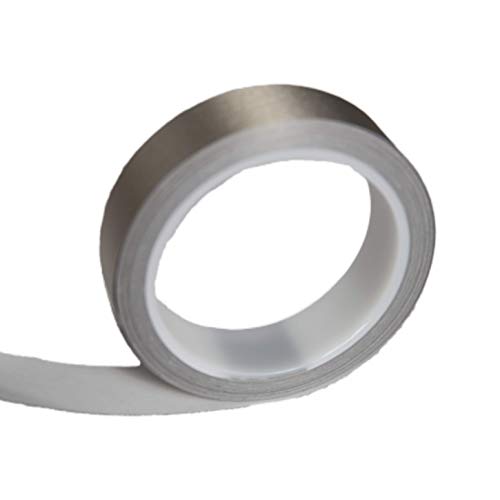
Editor’s Pick: GSX10 Grounding Tape for RF Shielding Paint
The grounding step is what makes shielding paint actually work. This conductive grounding tape connects the painted layer to your electrical ground, a required companion to any conductive paint job.
Connection Method
You have two options for connecting your sheet to earth ground:
- Wall outlet ground pin. Most grounding sheets come with a cord that plugs into the round ground pin (bottom hole) of a standard three-prong outlet. The cord connects only to ground, not to hot or neutral. This is the most convenient method, but it depends on your home’s wiring being properly grounded.
- Grounding rod. A metal rod (typically copper or galvanized steel, at least 8 to 12 inches long) pushed into moist soil outside your window, with a wire running to your sheet. This bypasses your home’s electrical system entirely and provides a direct earth connection. Many building biologists consider this the cleaner option because it avoids any possibility of dirty electricity on your ground wire.
Verify Your Ground
Before you connect anything, verify that your outlet’s ground actually works. An outlet tester (about $10 to $15 at any hardware store) will tell you immediately. If your outlet shows “open ground” or “reverse polarity,” do not plug a grounding sheet into it. You will not get any earthing benefit, and in certain wiring fault scenarios, you could be exposed to stray voltage.
For a more thorough check, use a multimeter to measure the voltage between your outlet’s ground pin and an independent earth reference (a grounding rod or cold water pipe that goes to earth). Ideally this should read close to zero volts. Any significant voltage suggests your home’s grounding system is carrying stray current.

The Dirty Electricity Concern
This is worth flagging. Your home’s ground wire is part of your electrical system. If your wiring has errors, if neighbors on your transformer share a ground path, or if electronic devices in your home generate high-frequency noise on the wiring, some of that can appear on the ground wire. Plugging a grounding sheet into a “dirty” ground could potentially increase your exposure to these frequencies rather than decrease it.
If you are concerned about this, a dedicated outdoor grounding rod is the safer approach. Some earthing product companies sell continuity testers specifically designed to verify that their sheets are properly connected to earth. These are worth using.
Maintenance
Conductive sheets need care to stay functional:
- Wash with mild detergent only. Bleach and fabric softener can damage conductive fibers.
- Silver-threaded sheets oxidize over time from sweat, body oils, and air exposure. This tarnish layer reduces conductivity, typically within 6 to 18 months of regular use.
- Stainless steel fiber sheets resist oxidation better and maintain conductivity longer.
- Test continuity periodically with a multimeter or the tester that came with your sheet.
Product Comparison: Grounding Sheets and Mats
The grounding sheet market has grown significantly. Here are four established products worth considering, with honest notes on each.
Earthing Elite Sleep Mat (Earthing.com)
Earthing.com is the original brand in this space, founded by Clint Ober, who is widely credited with bringing the grounding concept to mainstream awareness over 20 years ago. Ober has also been involved in several of the published research studies. The brand has evolved from traditional silver-threaded sheets to proprietary conductive mattress covers. Their Universal Mat starts around $80. They offer a 45-day return window and a one-year warranty. If you are buying based on brand provenance and the closest connection to the existing research, this is the default choice.
Ground Therapy Sleep Mat (Ultimate Longevity)
Ground Therapy products are exclusively created for Ultimate Longevity by Clint Ober as well, making them essentially a sister line to the Earthing brand. The Sleep Mat starts around $80, and kits include a copy of Ober’s Earthing book and access to phone-based grounding advisors. They offer a 30-day money-back guarantee and one-year warranty. The product itself is similar to the Earthing brand offerings but sold through a different distribution channel.
Groundology Fitted Sheet (Groundology)
Groundology is a UK-based company that has been in the space for over a decade. They offer fully fitted grounding bed sheets made from organic cotton woven with conductive silver fibers. Depending on size, each sheet contains between one-third to two-thirds of a mile of silver thread. They have also introduced an undersheet using 316L stainless steel fiber at 30% metal content, designed for longer lifespan since stainless steel resists the tarnishing problem that degrades silver over time. Groundology ships worldwide and was previously a distributor for Clint Ober’s Earthing products. Their sheets typically run in the $120 to $200 range depending on size and material.

GroundLuxe Fitted Sheet (GroundLuxe)
GroundLuxe positions itself at the premium end with 400-thread-count organic cotton and 10% conductive silver fiber, which they note is roughly twice the silver content of many competitors. The higher thread count and silver content aim to address two common complaints about grounding sheets: that they feel cheap and that they lose conductivity too quickly. These sheets are priced in the $130 to $180 range depending on size. If fabric quality and sleep comfort matter as much to you as the grounding function, GroundLuxe is worth considering.
Quick Comparison
| Product | Price Range | Material | Warranty |
|---|---|---|---|
| Earthing Universal Mat | ~$80+ | Proprietary conductive | 1 year |
| Ground Therapy Sleep Mat | ~$80+ | Conductive carbon | 1 year |
| Groundology Fitted Sheet | $120-$200 | Organic cotton + silver or stainless steel | Varies |
| GroundLuxe Fitted Sheet | $130-$180 | 400TC organic cotton + 10% silver | Varies |
Should You Try One?
Here is an honest framework for deciding.
A grounding sheet may be worth trying if:
- You are interested in reducing body voltage from AC electric fields in your bedroom, and you have verified that your outlet ground (or grounding rod) is clean and functional.
- You are curious about the reported sleep and inflammation effects and willing to spend $80 to $200 on an experiment, understanding the evidence is preliminary.
- You already address RF exposure separately through shielding, router management, or device placement, and you want to add electric field reduction to your approach.
- You sleep in a bedroom with a lot of wiring in the walls behind your headboard, which is a common source of elevated body voltage.
A grounding sheet is probably not worth it if:
- Your primary concern is WiFi, cell tower, or 5G exposure. A grounding sheet does not address RF at all, and the conductive material may theoretically increase RF pickup.
- Your home has older or questionable wiring. Without a verified clean ground, you could be connecting yourself to stray current rather than the earth.
- You are looking for a proven medical treatment. No major medical body endorses grounding sheets for any specific condition, and no grounding sheet is classified as a medical device for therapeutic purposes.
- You expect a dramatic, immediate change. Even the positive studies report modest, gradual effects over weeks.
The most pragmatic approach: if you are already taking other EMF reduction steps and you can afford one without stretching your budget, try it for 30 to 60 days and pay attention to your sleep quality. Most brands offer a return window. Use it if nothing changes for you. Do not let anyone convince you that a grounding sheet is a substitute for real RF shielding if that is what your situation calls for.
Frequently Asked Questions
Do grounding sheets block WiFi or cell phone radiation?
No. Grounding sheets reduce body voltage from AC electric fields (the low-frequency fields produced by household wiring). They have no effect on radiofrequency radiation from WiFi routers, cell towers, Bluetooth devices, or 5G. Blocking RF requires shielding materials like conductive fabric, metallic paint, or window film that physically reflects or absorbs radio waves.
Is there scientific proof that grounding sheets improve health?
There are approximately 20 to 25 published studies on earthing, and most report some positive effect on cortisol levels, sleep quality, inflammation markers, or subjective pain reports. However, these studies are generally small (often fewer than 30 participants), face blinding challenges, and several involve researchers with financial ties to the earthing industry. No major medical organization endorses grounding as a treatment. The evidence is best described as preliminary and suggestive, not proven.
Can a grounding sheet actually increase EMF exposure?
Potentially, yes, in two ways. First, if your home’s ground wire carries stray current or high-frequency electrical noise (“dirty electricity”), connecting to it via a grounding sheet can bring that noise to your body. Second, some researchers have noted that a conductive sheet connected to ground could act as an antenna for ambient RF, increasing rather than decreasing RF absorption. This is why building biologists recommend using grounding products only in areas with low RF levels.
How do I know if my outlet is properly grounded?
Use an outlet tester (available at hardware stores for about $10 to $15). It plugs into your three-prong outlet and lights up in a pattern that tells you whether the ground connection is present and the wiring is correct. If it shows “open ground” or any fault, do not use that outlet for a grounding sheet. For extra assurance, a multimeter can measure voltage between your outlet ground and an independent earth reference.

How long do grounding sheets last?
Silver-threaded grounding sheets typically maintain effective conductivity for 6 to 18 months with regular use and washing. Silver naturally oxidizes from sweat, body oils, and detergent, forming a tarnish layer that reduces conductivity over time. Stainless steel fiber sheets last significantly longer because stainless steel resists corrosion. Regardless of material, test your sheet’s conductivity periodically with a multimeter or the continuity tester included with most products.
Is a grounding rod better than using my wall outlet?
Many building biologists prefer a dedicated grounding rod because it bypasses your home’s electrical system entirely. Your wall outlet’s ground pin connects to your home’s grounding system, which can carry stray current or electrical noise from appliances and neighbors sharing the same transformer. A grounding rod pushed into moist soil outside your window provides a direct, clean earth connection. The tradeoff is convenience: running a wire through or near a window is less tidy than plugging into an outlet.
What is the difference between a grounding sheet and an EMF shielding blanket?
They work through completely different mechanisms. A grounding sheet connects your body to earth ground, equalizing your electrical potential and reducing body voltage from AC electric fields. An EMF shielding blanket uses dense conductive material (often silver-coated fabric) to attenuate radiofrequency radiation by reflecting or absorbing it. One addresses the electric field from your home wiring; the other addresses RF from wireless devices. They are complementary products, not interchangeable.
Do I need to touch the grounding sheet with bare skin?
Direct skin contact provides the best electrical connection, but you do not necessarily need full-body contact. Many users sleep with the sheet under a regular fitted sheet and still measure a reduction in body voltage, though the effect may be somewhat reduced by the insulating layer. For maximum conductivity, direct skin contact with the conductive surface is ideal. Some products are designed as half-sheets placed at the foot of the bed specifically so your bare feet rest on them.
The Bottom Line
Grounding sheets are real products that do a measurable thing: they reduce the AC electric field-induced voltage on your body when properly connected to earth ground. You can verify this with a $30 body voltage meter, and the reduction is immediate and consistent. That part is not controversial.
The broader health claims, that grounded sleep improves cortisol rhythms, reduces inflammation, enhances recovery, and eases chronic pain, rest on a small body of research that is suggestive but not definitive. The studies that exist are mostly small, sometimes funded by the earthing industry, and have not been replicated at the scale mainstream medicine requires before endorsing a treatment. Some people report meaningful improvements in sleep and pain after using grounding sheets. Whether that comes from the electrical connection, the placebo effect, or simply the act of paying more attention to sleep hygiene is genuinely unclear from the current evidence.

What is clear: grounding sheets are not RF shielding. If your concern is wireless radiation from WiFi, cell towers, or nearby devices, a grounding sheet does not address that and may theoretically make it slightly worse. Address RF with proper shielding solutions. Address electric field body voltage with grounding. They solve different problems.
If you try one, verify your ground connection first, consider a dedicated grounding rod for the cleanest path to earth, and give it a fair trial of several weeks before judging. Keep your expectations calibrated to the evidence: possible modest improvement in sleep and comfort, not a cure for anything.
These statements have not been evaluated by the Food and Drug Administration. This information is not intended to diagnose, treat, cure, or prevent any disease. Content is for informational purposes only and is not medical advice; consult a qualified healthcare provider before starting any supplement. As an Amazon Associate we earn from qualifying purchases.