Grounding Testers: A Complete Guide to Evaluating Electrical Grounding for EMF Reduction
Proper grounding is one of the most important—and most overlooked—factors affecting low-frequency electric field exposure in homes and workplaces. When grounding is poor, inconsistent, or improperly bonded, electric fields can extend farther into indoor spaces, affecting bedrooms, offices, and areas where people spend long periods of time. To diagnose these issues accurately, professionals and serious home assessors rely on Grounding Testers, instruments designed to verify grounding integrity, receptacle wiring, and the presence or absence of a safe ground path.
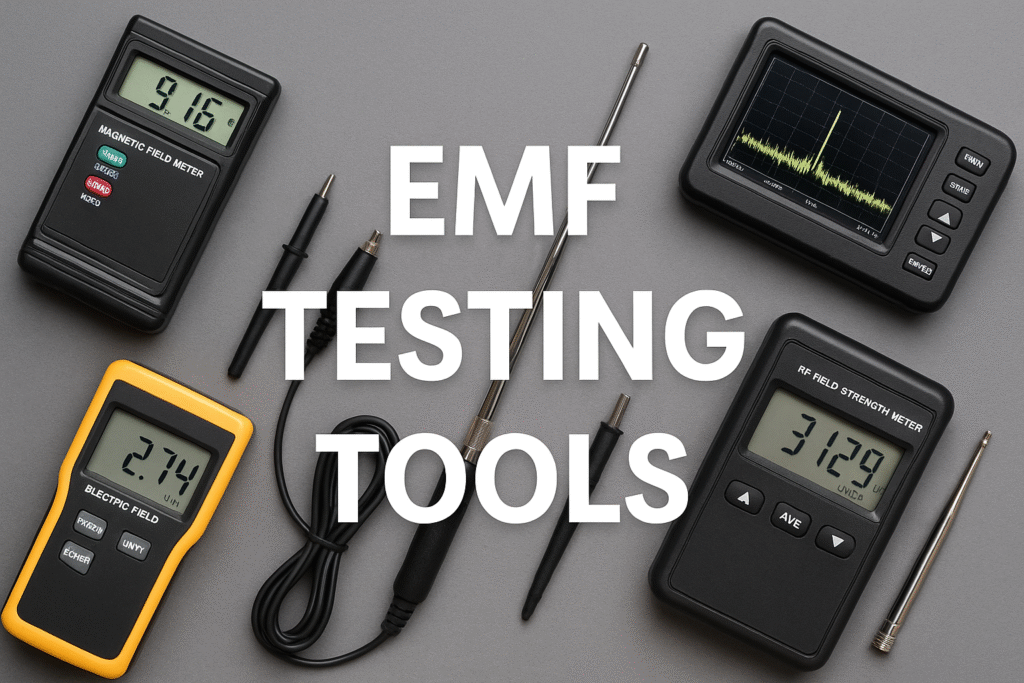
Grounding Testers play a key role in EMF assessments because electric fields behave differently depending on whether nearby metal objects, outlets, circuits, and structural components are properly grounded. This article explains how Grounding Testers work, what they reveal, when to use them, and how they integrate into a full EMF assessment. For an overview of all recommended EMF testing equipment, visit:
https://frequencyblockers.com/emf-testing-tools/
What Grounding Testers Measure
Depending on type and complexity, Grounding Testers measure:
1. Outlet Ground Integrity
Determines whether a receptacle has:
- Proper ground connection
- Open ground
- Reversed polarity
- Hot/neutral reversal
- Bootleg or false grounds (in advanced testers)
2. Ground Resistance
Advanced models measure ground path resistance to ensure it meets electrical safety standards.
3. Continuity Between Ground Points
Useful for checking grounding paths across:
- Outlets
- Metal appliances
- Bed frames
- Lamps
- Computer equipment
- Conductive flooring
4. Ground-Fault Detection
Some Grounding Testers confirm whether circuits trip correctly under fault conditions.
5. Earthing Quality in Shielding Systems
When installing shielding paint, mesh, canopy grounding, or conductive materials, Grounding Testers confirm the ground is functional and safe.
Grounding is foundational for reducing electric fields indoors, and these testers help verify whether conditions are optimal.
Why Grounding Testers Are Essential for EMF Diagnostics
1. Electric Fields Depend on Grounding
Unshielded electric fields often drop significantly when grounding paths are corrected or optimized.
2. Shielding Materials Require Proper Grounding
If grounding is absent or incorrect:
- Shielding paint may intensify electric fields
- Conductive fabrics may become energized
- Canopies may fail to perform
3. Outlet Wiring Problems Are Common
Older homes often contain:
- Ungrounded outlets
- Mixed grounding systems
- False grounds
- Reversed polarity
- Shared neutrals
These issues affect EMF exposure and electrical safety.
4. Bedside & Desk Environments Often Improve Dramatically When Grounding Is Corrected
Nightstands, lamps, and device chargers frequently create elevated electric fields. Grounding Testers help identify whether grounding corrections or rewiring will reduce exposure.
5. Supports Professional EMF Reporting
Clear documentation of grounding conditions is often required in EMF assessment reports.
Types of Grounding Testers
1. Basic Outlet Grounding Testers
Plug-in devices with indicator lights showing:
- Correct wiring
- Open ground
- Reversed hot/neutral
- Open neutral
2. Advanced Outlet Testers With GFCI & Bootleg Detection
Can detect:
- False grounds
- Improper bonding between neutral and ground
- GFCI outlet performance
3. Ground Resistance Meters
Measure ohmic resistance between grounding points.
- Used for professional diagnostics
- Essential for earthing systems and shielding evaluations
4. Continuity Testers
Check whether a metal object or circuit is connected to ground.
5. Multimeters Used for Ground Verification
While not specialized, digital multimeters can test:
- Ground continuity
- Voltage anomalies
- Neutral-to-ground voltage differences
Grounding Testers vary in complexity, but each plays an important role in EMF diagnostics.
How Grounding Testers Work
Grounding Testers operate by injecting small electrical signals or continuity checks into a circuit or metal object. They then evaluate whether those signals complete a safe and correct path to ground.
Basic testers verify:
- Whether ground is present
- Whether the wiring order is correct
- Whether the outlet is bonded properly
Advanced testers evaluate:
- Resistance (ohms)
- Leakage current
- GFCI response
- Ground path stability
Shielding system testers confirm:
- Conductive paint grounding
- Fabric canopy grounding
- Mesh panel earthing
- Cable ground bonding
These measurements directly relate to indoor electric field levels.
How to Use Grounding Testers for EMF Assessments
1. Start With All Bedroom Outlets
Bedrooms often contain the highest electric field exposure during sleeping hours.
Check each outlet for:
- Proper ground
- Correct polarity
- Open circuits
- Bootleg grounds
Document each result.
2. Test All Outlets Near Beds, Desks, and Appliances
Electric fields from improperly wired outlets can radiate several feet.
3. Check Lamps and Metal Objects
Use continuity testers to confirm whether:
- Metal lamp bases
- Bed frames
- Metal desk legs
are grounded or floating.
4. Verify Ground for Shielding Materials
Before applying:
- Shielding paint
- Conductive primer
- RF window film with grounding strips
- Canopy grounding cables
use Grounding Testers to confirm the house ground is functional.
5. Measure Neutral-to-Ground Voltage
Abnormally high values may indicate wiring or load imbalance issues.
6. Test GFCI Behavior
This ensures electrical safety and eliminates potential wiring irregularities.
Common Issues Detected by Grounding Testers
1. Open Ground
No grounding path exists—common in older homes.
2. Reverse Polarity
Hot and neutral wires swapped; unsafe and affects EMF readings.
3. Bootleg Grounds
Neutral falsely tied to ground.
Can indicate dangerous wiring and inaccurate EMF test conditions.
4. High Ground Resistance
Could indicate:
- Corroded connections
- Poor grounding rod contact
- Long or compromised grounding paths
5. Ground Loops
Cause magnetic field distortions and electrical noise.
6. Unbonded Metal Fixtures
Metal frames or fixtures that should be grounded but are floating may intensify electric fields.
Interpreting Grounding Tester Readings
For Plug-In Testers
Look for “Correct Wiring” indicators.
For Resistance Testers
Professional thresholds vary, but generally:
- < 1 ohm: excellent ground
- 1–5 ohms: good ground
- 5–25 ohms: acceptable in some jurisdictions
- > 25 ohms: poor ground; investigate further
For Continuity Tests
Zero or near-zero ohms indicates a solid path.
For Neutral-to-Ground Voltage
Values above 2V often indicate wiring imbalances.
Price Ranges for Grounding Testers
| Category | Typical Price | Best For |
|---|---|---|
| Basic Outlet Testers | $10–$25 | Quick household checks |
| Advanced Outlet Testers | $25–$60 | EMF assessors, safety checks |
| Ground Resistance Meters | $60–$200 | Professional EMF diagnostics |
| Multimeters With Ground Functions | $40–$120 | General troubleshooting |
| Shielding Ground Test Kits | $60–$180 | Verifying grounded paints & fabrics |
Even very affordable testers offer powerful insights.
Advantages of Grounding Testers
- Reveal hidden wiring problems
- Improve electric field assessment accuracy
- Essential for shielding installations
- Help reduce nighttime electric exposure
- Simple and fast to use
- Improve home electrical safety
Grounding is one of the most cost-effective ways to reduce EMF exposure.
Limitations of Grounding Testers
- Basic testers cannot detect all wiring faults
- Ground resistance meters require some training
- Improper testing technique can misread results
- They do not measure magnetic or RF fields
They must be paired with other EMF testing tools for a complete assessment.
Grounding Testers vs. Electric Field Meters
| Grounding Testers | Electric Field Meters |
|---|---|
| Evaluate grounding integrity | Measure electric field strength |
| Identify wiring problems | Reveal environmental electric fields |
| Diagnose circuit conditions | Show exposure at user height |
| Essential before shielding | Essential after shielding |
Both tools work together for accurate diagnostics.
Common Mistakes When Using Grounding Testers
- Testing only one outlet instead of all outlets
- Assuming a three-prong outlet is grounded
- Misinterpreting indicator lights
- Using grounding rods without verifying house ground
- Forgetting to test grounding after mitigation
Proper testing procedures ensure accurate EMF outcomes.
FAQs About Grounding Testers
Do Grounding Testers improve EMF exposure directly?
They do not reduce EMF by themselves but reveal issues that influence exposure.
Do Grounding Testers measure electric fields?
No—they only evaluate grounding and wiring conditions.
Can a home have mixed grounding quality?
Yes—different circuits can have entirely different grounding conditions.
Do Grounding Testers work with old two-prong outlets?
Advanced testers can diagnose conversion adapters and retrofitted grounds.
Key Takeaways
- Grounding Testers reveal critical wiring and grounding issues that directly affect electric field exposure, shielding performance, and overall EMF assessment accuracy.
- They identify open grounds, polarity problems, resistance issues, and grounding faults that basic EMF meters cannot detect.
- Grounding verification is essential before applying shielding materials or making electrical improvements.
- For additional EMF testing tools, visit:
https://frequencyblockers.com/emf-testing-tools/
References
- National Institute of Standards and Technology — Grounding & Bonding Principles
https://www.nist.gov - Frequency Blockers — EMF Testing Tools Overview
https://frequencyblockers.com/emf-testing-tools/
Recommended EMF Testing Equipment
Ready to start testing? Check out our top-rated EMF meters:
- Safe and Sound Pro II RF Meter
- Safe and Sound Classic II RF Meter
- Safe and Sound Pro mmWave 20GHz Meter
Browse all EMF protection products →
Frequently Asked Questions
What exactly do grounding testers measure and why should I care about my home’s grounding?
Grounding testers measure outlet ground integrity, ground resistance, and continuity between ground points to verify safe electrical pathways. Poor grounding allows electric fields to extend farther into your living spaces, which is why evaluating electrical grounding for EMF reduction is critical for reducing low-frequency EMF exposure in bedrooms and workspaces.
How often should I test the grounding in my home if I’m concerned about EMF exposure?
You should test grounding at least once in bedrooms, near desks, and around areas where you spend long periods of time. If you’ve had electrical work done, moved into a new home, or noticed persistent health concerns, testing your grounding system becomes even more important as a baseline assessment.
Can a basic outlet tester detect all grounding problems, or do I need advanced equipment?
Basic outlet testers identify common issues like open grounds and reverse polarity, but advanced testers with GFCI and bootleg ground detection, plus ground resistance meters, provide more comprehensive diagnostics. For serious EMF assessments and shielding system verification, you may need multiple instrument types to catch all problems.
What are bootleg grounds and why do they show up on grounding tests?
Bootleg grounds occur when a ground wire is improperly bonded to the neutral wire instead of a true earth ground, often found in older wiring. Grounding testers detect this dangerous configuration because it fails to provide proper ground continuity and can actually increase EMF exposure rather than reduce it.