Magnetic Field Probes: A Complete Guide to Precision Low-Frequency EMF Measurement
Magnetic fields are one of the most pervasive forms of electromagnetic exposure found in homes, workplaces, schools, and industrial environments. They originate from current flow—whether from building wiring, appliances, machinery, power lines, or utility transformers. While Gauss meters provide a straightforward way to measure these fields, professionals who require higher precision, directional accuracy, or diagnostic specificity often rely on Magnetic Field Probes, specialized sensing instruments engineered to detect magnetic fields with exceptional fidelity.
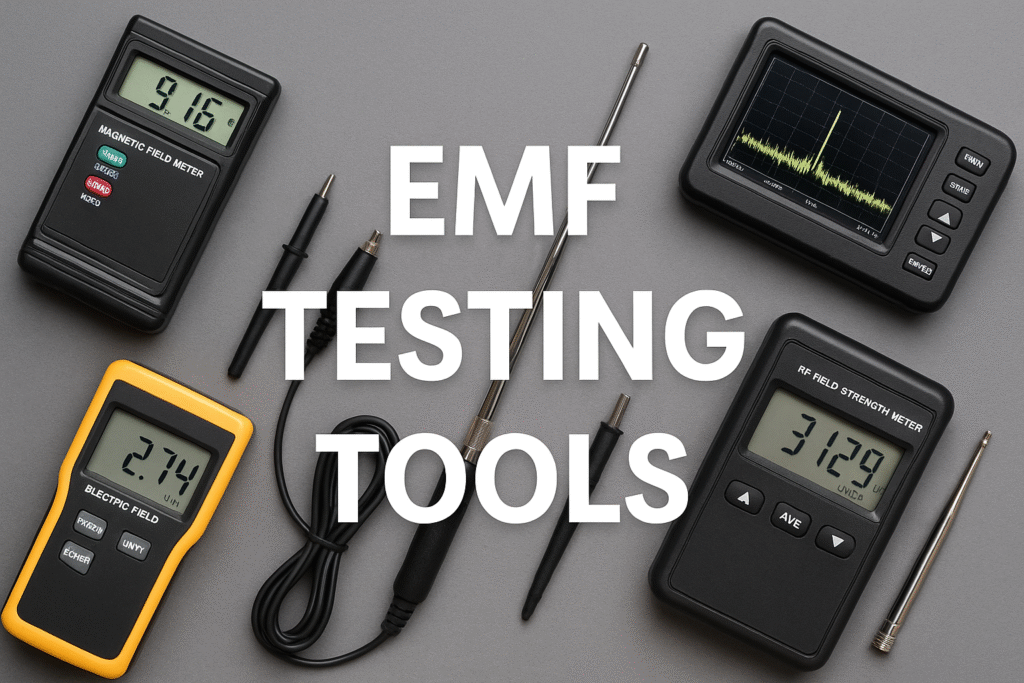
This guide explains how Magnetic Field Probes work, when to use them, how they differ from standard EMF meters, and what features matter most when selecting the right tool. For a complete overview of EMF testing equipment, visit:
https://frequencyblockers.com/emf-testing-tools/
What Magnetic Field Probes Do
Magnetic Field Probes are sensitive transducers designed to measure low-frequency magnetic fields with heightened accuracy. They are commonly used in:
- Electrical diagnostics
- EMF home assessments
- Engineering and research applications
- Troubleshooting industrial equipment
- Mapping directional magnetic fields
- Evaluating compliance with exposure guidelines
Unlike basic Gauss meters, which measure overall field strength, Magnetic Field Probes provide:
- Higher resolution
- Directional (axis-specific) measurement
- Better separation of frequency components
- Superior sensitivity at low field levels
- More stable readings in variable environments
They are ideal for environments where accuracy and detail matter.
How Magnetic Field Probes Work
Magnetic Field Probes convert magnetic flux into measurable electrical signals using specialized sensors. The two most common technologies are:
1. Hall-Effect Sensors
Detect magnetic fields by measuring voltage differences produced when current flows through a semiconductor.
2. Fluxgate Sensors
Highly sensitive sensors that modulate and demodulate magnetic signals to extract minute field variations.
- Often used in professional and scientific instruments
- Provide extremely low noise performance
- Suitable for both AC and DC magnetic field detection
Some advanced Magnetic Field Probes also integrate:
- Bandpass filters
- Low-noise amplifiers
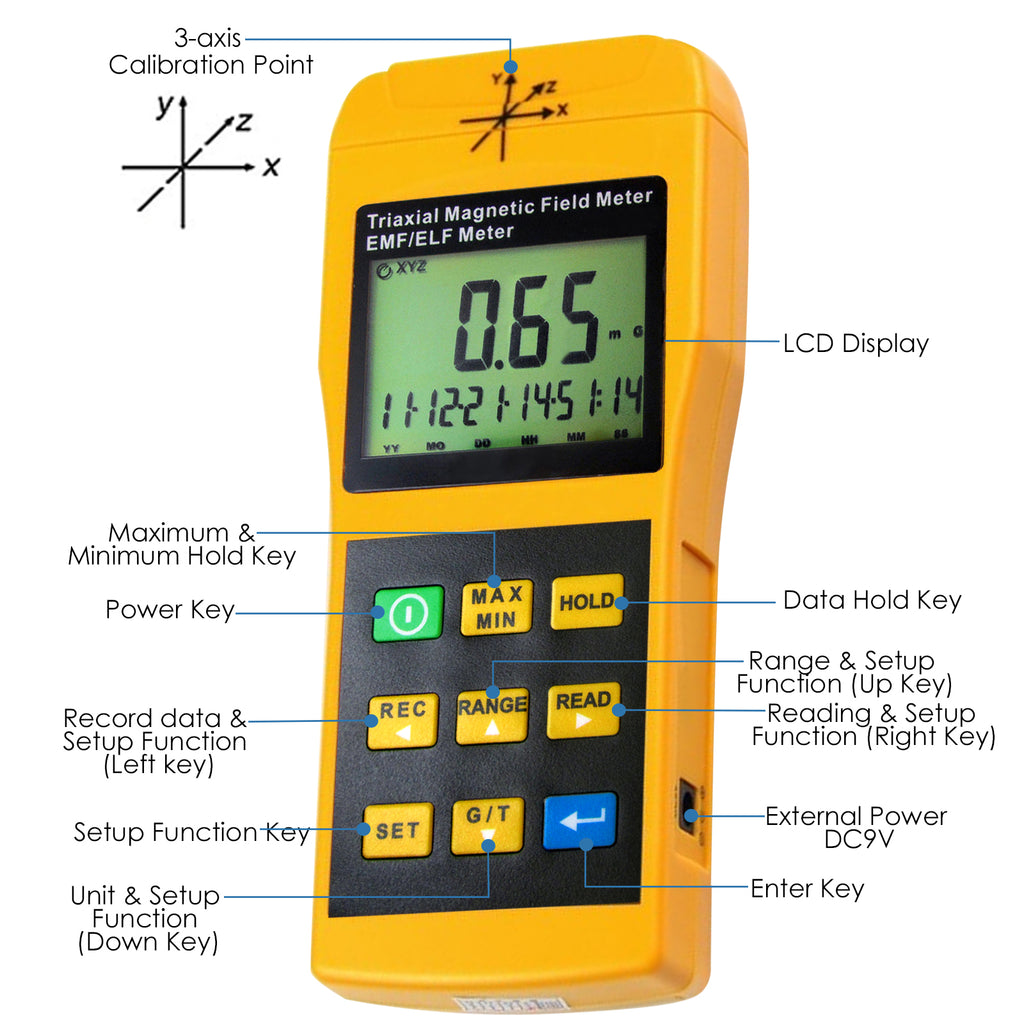
- Three-axis sensing arrays
- Frequency-selective detection
These features allow detailed magnetic field analysis beyond what consumer meters can achieve.
Why Probes Are Essential for EMF Diagnostics
1. Improved Sensitivity
Magnetic Probes detect subtle variations in magnetic fields that standard tools may overlook, particularly in sleeping spaces or low-load circuits.
2. Directional Measurements
Many probes measure field strength along specific axes (X, Y, Z), enabling users to map field vectors and pinpoint sources more accurately.
3. Frequency-Specific Insight
Some probes differentiate between 50/60-Hz fields and higher harmonics, revealing power quality issues that contribute to EMF.
4. Professional-Grade Accuracy
When preparing mitigation plans or compliance reports, Magnetic Field Probes ensure the precision needed for documentation.
5. Essential for Engineering and Industrial Settings
Factories, power stations, and research labs require higher accuracy than what handheld meters provide.
Common Applications for Field Probes
1. Home EMF Assessments
- Identifying wiring faults
- Evaluating high magnetic fields behind walls
- Measuring appliances such as refrigerators and induction cooktops
2. Evaluating Power Lines and Transformers
Magnetic Field Probes help determine how far fields extend into homes or yards.
3. Locating Electrical Grounding & Neutral Problems
Irregular magnetic field patterns often indicate wiring or grounding issues.
4. Industrial Diagnostics
Machinery such as motors, pumps, and transformers produce magnetic signatures that magnetic probes can analyze.
5. Research & Development
Engineers use Magnetic Field Probes to measure low-frequency interference and noise in sensitive equipment.
How to Use Magnetic Probes Effectively
Although Magnetic Field Probes are high-precision instruments, the fundamentals of measuring magnetic fields remain consistent.
1. Determine the Measurement Axis
Some probes measure one axis at a time, while others include three-axis sensors.
Directional clarity is essential for locating sources.
2. Maintain a Steady Distance
Magnetic fields decay quickly with distance. Keep the probe at a consistent spacing from the source.
3. Map Fields in Three Dimensions
Move the probe:
- Horizontally
- Vertically
- Along walls
- Near wiring paths
This creates a visual profile of magnetic field gradients.
4. Use Shielding or Filtering When Needed
To isolate low-frequency signals, apply appropriate filters or shields depending on the equipment.
5. Document Readings Thoroughly
High-accuracy measurements must be recorded with:
- Field strength
- Axis orientation
- Distance from source
- Environmental conditions
Understanding Readings From Probes
Standard interpretive ranges for power-frequency magnetic fields include:
| Level | Magnetic Field (mG) | Interpretation |
|---|---|---|
| Very Low | 0–1 mG | Ideal for sleeping areas |
| Low | 1–2.5 mG | Acceptable for most rooms |
| Moderate | 2.5–4 mG | Investigate further |
| High | 4–10 mG | Likely source nearby |
| Very High | 10+ mG | Immediate assessment needed |
Magnetic Field Probes provide more reliable readings at the lower end of the scale where precision matters most.
Types of Magnetic Field Probes
1. Single-Axis Magnetic Field Probes
Measure along one axis at a time.
- More affordable
- Higher directional sensitivity
2. Three-Axis Magnetic Field Probes
Measure all spatial axes simultaneously.
- Best for fast-moving or variable environments
- Essential for mapping complex magnetic fields
3. AC-Only Magnetic Field Probes
Designed specifically for 50/60-Hz fields.
4. Wide-Band Magnetic Field Probes
Measure harmonics and higher-frequency magnetic disturbances.
5. Low-Noise Scientific Probes
Used for ultra-low field environments or research labs.
Price Ranges for Probes
| Category | Typical Price | Best For |
|---|---|---|
| Entry-Level | $150–$300 | Basic diagnostic enhancement |
| Mid-Range | $300–$700 | Home inspectors, consultants |
| Professional | $700–$2,500+ | Engineering & scientific use |
Prices vary depending on sensitivity, bandwidth, and number of axes.
Advantages of Probes
- Highly sensitive and accurate
- Capable of directional measurements
- Useful for complex or subtle EMF assessments
- Ideal for troubleshooting wiring problems
- Essential for engineering-grade diagnostics
Magnetic Field Probes help bridge the gap between standard consumer-level EMF meters and laboratory-grade tools.
Limitations of Magnetic Field Probes
- Require more technical understanding than typical EMF meters
- May need calibration equipment
- Often require additional hardware such as data loggers or oscilloscopes
- Not typically used for RF or electric fields
Despite these limitations, they remain indispensable for professionals who demand accurate magnetic field assessment.
Magnetic Field Probes vs. Gauss Meters
| Magnetic Field Probes | Gauss Meters |
|---|---|
| Higher sensitivity | General-purpose measurement |
| Directional capability | Easy-to-use consumer tool |
| Frequency-selective options | Broad ELF measurement |
| Ideal for diagnostics | Ideal for quick assessments |
Most EMF consultants use Gauss meters for initial sweeps and Magnetic Field Probes for detailed investigations.
Common Mistakes When Using Magnetic Field Probes
- Holding the probe at inconsistent orientations
- Moving too quickly through the testing area
- Measuring too close to phones or metal objects
- Failing to note axis alignment
- Ignoring background fluctuations
- Testing only once without confirming stability
Best practice involves multiple readings, consistent technique, and careful documentation.
FAQs About Magnetic Field Probes
Do Magnetic Field Probes detect electric fields?
No—they are designed for magnetic field measurements only.
Are they necessary for home EMF testing?
Not always. They are recommended when high precision is needed or when standard meters produce unclear results.
Do they detect RF?
No—Magnetic Field Probes measure low-frequency magnetic fields.
Can they help diagnose wiring problems?
Yes—irregular magnetic field patterns often reveal improper wiring or grounding.
Key Takeaways
- Magnetic Field Probes provide high-precision measurement of low-frequency magnetic fields, offering directional accuracy and enhanced sensitivity.
- They are vital for diagnosing complex EMF problems, mapping fields, and analyzing wiring or appliance-related issues.
- Professionals use them to complement Gauss meters during detailed assessments.
- For additional EMF testing tools, visit:
https://frequencyblockers.com/emf-testing-tools/
References
- National Institute of Standards and Technology (NIST) — Magnetic Field Measurement Standards
https://www.nist.gov - Frequency Blockers — EMF Testing Tools Overview
https://frequencyblockers.com/emf-testing-tools/
Recommended EMF Testing Equipment
Ready to start testing? Check out our top-rated EMF meters:
- Safe and Sound Pro II RF Meter
- Safe and Sound Classic II RF Meter
- Safe and Sound Pro mmWave 20GHz Meter
Browse all EMF protection products →
Frequently Asked Questions
What’s the difference between a magnetic field probe and a regular Gauss meter?
Magnetic field probes offer higher precision, directional accuracy, and frequency-specific insight compared to Gauss meters, making them ideal for professional diagnostics. While Gauss meters provide straightforward readings, probes are engineered for exceptional fidelity when you need detailed measurement data for engineering or health assessments.
Can magnetic field probes detect electric fields, or only magnetic fields?
Magnetic field probes are specifically designed to measure magnetic fields only, not electric fields. If you need to assess both types of electromagnetic exposure in your home or workplace, you’ll need separate instruments to measure electric fields.
What are the main sources of magnetic fields that I should be measuring in my home?
Common sources include building wiring, household appliances, power lines near your property, utility transformers, and electrical grounding or neutral problems in your home’s wiring. Using a magnetic field probe helps you identify which areas have elevated exposure so you can take appropriate steps to reduce it.
Do I need a three-axis probe or will a single-axis probe work for EMF testing?
A three-axis probe allows you to measure magnetic fields in all directions simultaneously and provides a complete picture of your exposure, making it more efficient for thorough home assessments. Single-axis probes require you to manually test multiple orientations, so three-axis models are generally recommended for comprehensive EMF diagnostics unless budget is a significant constraint.