Personal RF Exposure Monitors: A Comprehensive Guide to Wearable Wireless Radiation Detection
Radiofrequency (RF) exposure today comes from hundreds of sources—Wi-Fi routers, Bluetooth devices, smart meters, cell towers, vehicle systems, and countless wireless technologies embedded in modern homes. Contrary to Personal RF Exposure Monitors , handheld meters provide valuable snapshots of RF activity, they do not track exposure over time or during daily movement. To understand cumulative exposure patterns, many professionals and health-conscious consumers rely on Personal RF Exposure Monitors, wearable devices that continuously measure RF signals throughout the day.
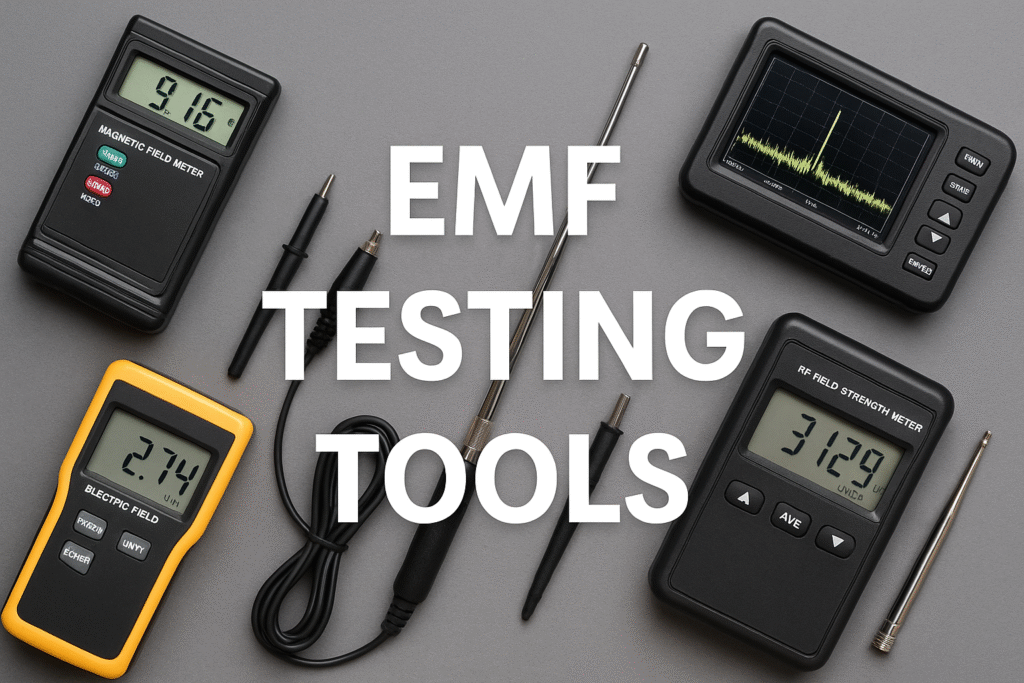
These monitors offer unparalleled insight into how real-world environments influence exposure, capturing fluctuations that traditional meters often miss. This guide explores what Personal RF Exposure Monitors do, how they work, when to use them, and how to select the best option. For an overview of all recommended testing tools, visit:
https://frequencyblockers.com/emf-testing-tools/
What Personal RF Exposure Monitors Measure
Personal RF Exposure Monitors measure radiofrequency radiation across a wide range of wireless technologies. These monitors typically track:
- Wi-Fi (2.4 GHz & 5 GHz)
- Bluetooth & BLE
- Cellular (3G, 4G, 5G)
- Smart meters (900 MHz & 2.4 GHz)
- Cordless phones
- IoT and Zigbee devices
- Wireless security and home automation systems
Because they continuously collect data, Personal RF Exposure Monitors reveal exposure patterns tied to movement, time of day, distance from transmitters, and device usage.
Why Personal RF Exposure Monitors Are Essential
Most EMF tools capture instantaneous readings, which may not reflect typical daily exposure. Personal RF Exposure Monitors bridge that gap by offering time-integrated perspective.
1. Continuous Monitoring
Captures exposure trends throughout:
- Home activities
- Work environments
- Commutes
- Travel
- Sleep
2. Identifying High-Exposure Zones
A location with low exposure in one moment may spike in the next, especially when wireless systems cycle or when people move closer to RF sources.
3. Understanding Wireless Duty Cycles
Many RF devices pulse intermittently:
- Smart meters send bursts
- Wi-Fi beacons transmit constantly
- Bluetooth hops channels
Personal RF Exposure Monitors reveal these fluctuations.
4. Personalized Exposure Profiles
Every person’s routine creates a unique RF exposure pattern. Wearable monitoring identifies when and where the highest exposure occurs.
5. Useful for Sensitive Individuals
People who are concerned about RF or are tracking symptoms can correlate exposure patterns with daily experiences.
How Personal RF Exposure Monitors Work
Although each model differs, most Personal RF Exposure Monitors include:
1. Broadband RF Sensors
These detect cumulative RF power density, often from 50 MHz to 6–10 GHz.
2. Data Logging
Monitors store exposure data for hours or days. Users can export this information to:
- Graph spikes
- Compare environments
- Visualize 24-hour patterns
3. Wearable Housing
Most devices clip to clothing, belts, backpacks, or collar areas.
4. Audio or Visual Alerts
Some monitors include alarms that trigger when RF exposure exceeds user-set thresholds.
5. Software Dashboards
Many advanced monitors include downloadable software that provides:
- Time-stamped logs
- Peak exposure visualization
- Average exposure graphs
- Frequency distribution reports
Common Applications of Personal RF Exposure Monitors
1. Home & Apartment Living
Measure RF near:
- Routers
- Mesh systems
- Smart thermostats
- Baby monitors
- Neighboring apartments
2. Workplace Assessments
Track exposure near:
- Large office Wi-Fi networks
- Industrial wireless systems
- Bluetooth-enabled equipment
- Corporate 5G environments
3. Commuting & Travel
Vehicles are saturated with RF:
- Vehicle Bluetooth
- Radar systems
- Collision-avoidance sensors
- Wireless infotainment
Monitors help document exposure during daily travel.
4. Schools & Educational Buildings
Personal RF Exposure Monitors are increasingly used to measure:
- Wi-Fi access points
- Smart boards
- Student device networks
5. EMF Sensitivity Investigations
Wearable logs allow individuals to correlate symptoms with specific exposure spikes.
How to Use Personal RF Exposure Monitors Correctly
1. Wear the Monitor Near the Torso
Most exposure detection is optimized at the central body height.
2. Keep the Device Away From Your Phone
Smartphone signals can dominate readings. Keep a few inches of separation.
3. Use for Multiple Days
Exposure varies daily—longer monitoring creates a more accurate profile.
4. Review Logged Data Carefully
Pay attention to:
- Peak spikes
- Average exposure
- Time-of-day patterns
- Location-based changes
5. Repeat Testing After Mitigation
After adjusting Wi-Fi placement, shielding, or habits, retest with the same device to evaluate progress.
Understanding Readings From Personal RF Exposure Monitors
Personal RF Exposure Monitors typically report:
Power Density
Measured in:
- µW/m²
- mW/m²
Higher values represent stronger RF intensity.
Peak Levels
Capture the strongest bursts from:
- Smartphones connecting to towers
- Wi-Fi beacon pulses
- Smart meter transmissions
Peaks are particularly important in environments with pulsed RF.
Averages Over Time
Provide a realistic picture of daily exposure.
Exposure Threshold Categories
Some devices include LED indicators for:
- Low exposure
- Moderate exposure
- High exposure
These simplify interpretation for new users.
Strengths of Personal RF Exposure Monitors
1. True Daily Exposure Insight
No other EMF tool captures movement-based exposure as effectively.
2. Accurate Peak Detection
Especially useful for intermittent signals like smart meters.
3. Ideal for Assessing Behavior-Based Exposure
Measures how close devices are held throughout the day.
4. Portable and Convenient
Lightweight, wearable, and easy to use during any routine.
5. Comprehensive Logging
Great for professional reports or personal evaluation.
Limitations of Personal RF Exposure Monitors
1. No Frequency-Specific Identification
They measure overall RF energy, not which device produced it.
2. Limited Dynamic Range Compared to Lab Equipment
Handheld RF Spectrum Analyzers provide more precision.
3. Potential Over-Responsiveness Near Your Phone
Cellular bursts can dominate logs.
4. Data Interpretation Requires Familiarity
Understanding peaks vs. averages is essential.
Despite these limitations, Personal RF Exposure Monitors remain one of the most practical tools for daily RF assessment.
Price Ranges for Personal RF Exposure Monitors
| Category | Typical Price | Best For |
|---|---|---|
| Entry-Level | $150–$300 | Basic daily tracking |
| Mid-Range | $300–$600 | Comprehensive logs and better accuracy |
| Professional | $600–$1,200+ | Advanced monitoring and reporting |
Higher-end models include better sensitivity, larger memory, and superior software tools.
Best Practices for Reducing RF Exposure After Monitoring
Once Personal RF Exposure Monitors reveal your patterns, you can implement targeted mitigation:
- Increase distance from routers and Wi-Fi devices
- Reduce smartphone use against the body
- Use wired Ethernet when possible
- Move beds away from shared wireless walls
- Disable unused features (Bluetooth, NFC, hotspots)
- Place routers in non-sleeping areas
- Use shielding materials after proper assessment
Always retest after changes to confirm improvement.
FAQs About Personal RF Exposure Monitors
Do they detect 5G?
Yes—most cover frequencies up to 6–10 GHz.
Can children wear them?
Yes, with supervision.
Are logs stored automatically?
Most monitors record continuously as long as memory is available.
Do they replace RF Spectrum Analyzers?
No—Personal RF Exposure Monitors track exposure, while analyzers identify frequencies.
Will shielding clothing affect readings?
Yes. If worn under shielding garments, readings may decrease.
Key Takeaways
- Personal RF Exposure Monitors offer continuous, wearable RF assessment that captures exposure trends throughout daily life.
- They reveal peaks, averages, and patterns that handheld meters cannot detect.
- These monitors are essential for understanding real-world RF environments, especially in wireless-dense settings.
- They complement but do not replace more advanced RF tools.
- To explore all EMF testing equipment, visit:
https://frequencyblockers.com/emf-testing-tools/
References
- National Institute of Standards and Technology – RF Exposure Measurement Principles
https://www.nist.gov - Frequency Blockers – EMF Testing Tools Overview
https://frequencyblockers.com/emf-testing-tools/
Recommended EMF Testing Equipment
Ready to start testing? Check out our top-rated EMF meters:
- Safe and Sound Pro II RF Meter
- Safe and Sound Classic II RF Meter
- Safe and Sound Pro mmWave 20GHz Meter
Browse all EMF protection products →
Frequently Asked Questions
What’s the difference between a personal RF exposure monitor and a handheld RF meter?
Handheld meters give you a single snapshot of RF levels at that moment, while personal RF exposure monitors are wearable devices that continuously track your exposure throughout the day and log data over time. This allows you to see cumulative exposure patterns and understand how your RF exposure varies during daily activities.
Where should I wear my RF exposure monitor to get accurate readings?
You should wear the monitor near your torso, as this provides the most representative measurement of your body’s exposure to RF signals. Keep it away from your phone and other wireless devices you’re carrying, as this can skew the readings and give you inaccurate data about ambient RF exposure.
Can a personal RF exposure monitor help if I think I’m sensitive to electromagnetic fields?
Yes, personal RF exposure monitors are particularly useful for EMF-sensitive individuals because they provide detailed logging of exposure patterns that can help identify specific high-exposure zones and times in your environment. This data can help you understand whether your symptoms correlate with actual RF exposure levels or pinpoint which areas of your home or workplace need mitigation.
How long should I use a personal RF exposure monitor to get meaningful results?
You should use the monitor for multiple days to capture different patterns in your exposure, including weekdays and weekends, work environments, and commute times. A longer monitoring period allows you to identify trends and averages rather than relying on single-day snapshots that may not represent your typical exposure.