Disclosure: As an Amazon Associate and affiliate partner, we earn from qualifying purchases at no extra cost to you. See our full affiliate disclosure.
Tri Field EMF Meters: A Complete Guide to Multi-Field Electromagnetic Assessment
Electromagnetic fields come in several forms—electric, magnetic, and radiofrequency—and each interacts with the human body differently. Instead of using a different device for each type, many homeowners and inspectors turn to Tri Field EMF Meters, versatile tools capable of measuring all three categories in one instrument. These meters are especially useful for general home assessments, quick diagnostics, and early-stage EMF investigations.
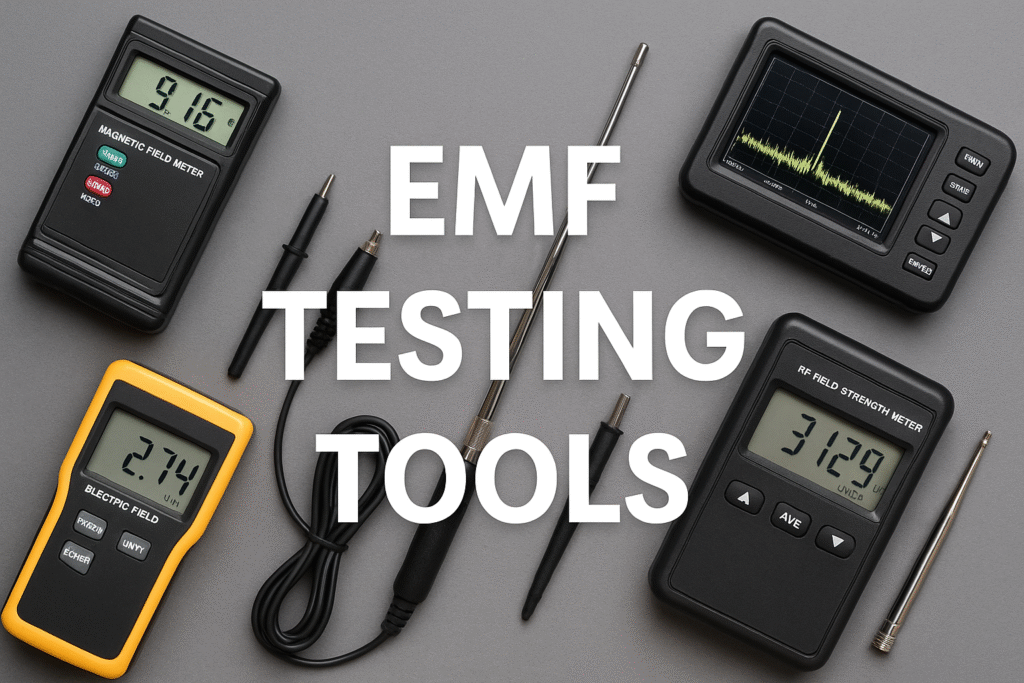
Because they combine multiple sensors, Tri-Field EMF Meters offer a practical starting point for anyone evaluating EMF levels in homes, offices, or schools. In this detailed guide, you’ll learn how they work, the advantages and limitations of combined-field detection, how to interpret readings correctly, and when a specialized meter may still be necessary. For a complete overview of EMF testing tools, visit:
https://frequencyblockers.com/emf-testing-tools/
What Tri Field EMF Meters Measure
Tri-Field EMF Meters combine three measurement modes into one handheld device:
- Magnetic Fields (mG)
- Electric Fields (V/m)
- Radiofrequency Fields (µW/m² or mW/m²)
This multi-field capability allows users to quickly identify which type of EMF is present and whether additional testing or mitigation is needed. Although Tri-Field EMF Meters are not as specialized as dedicated instruments, they provide an excellent overview of the electromagnetic environment.
How Tri Field EMF Meters Work
Tri-Field EMF Meters use dedicated internal sensors for each field type. When the user selects a mode, the meter activates the appropriate sensor and displays the corresponding readings.
1. Magnetic Field Mode
- Measures ELF magnetic fields (50/60 Hz)
- Detects wiring issues, appliances, and power lines
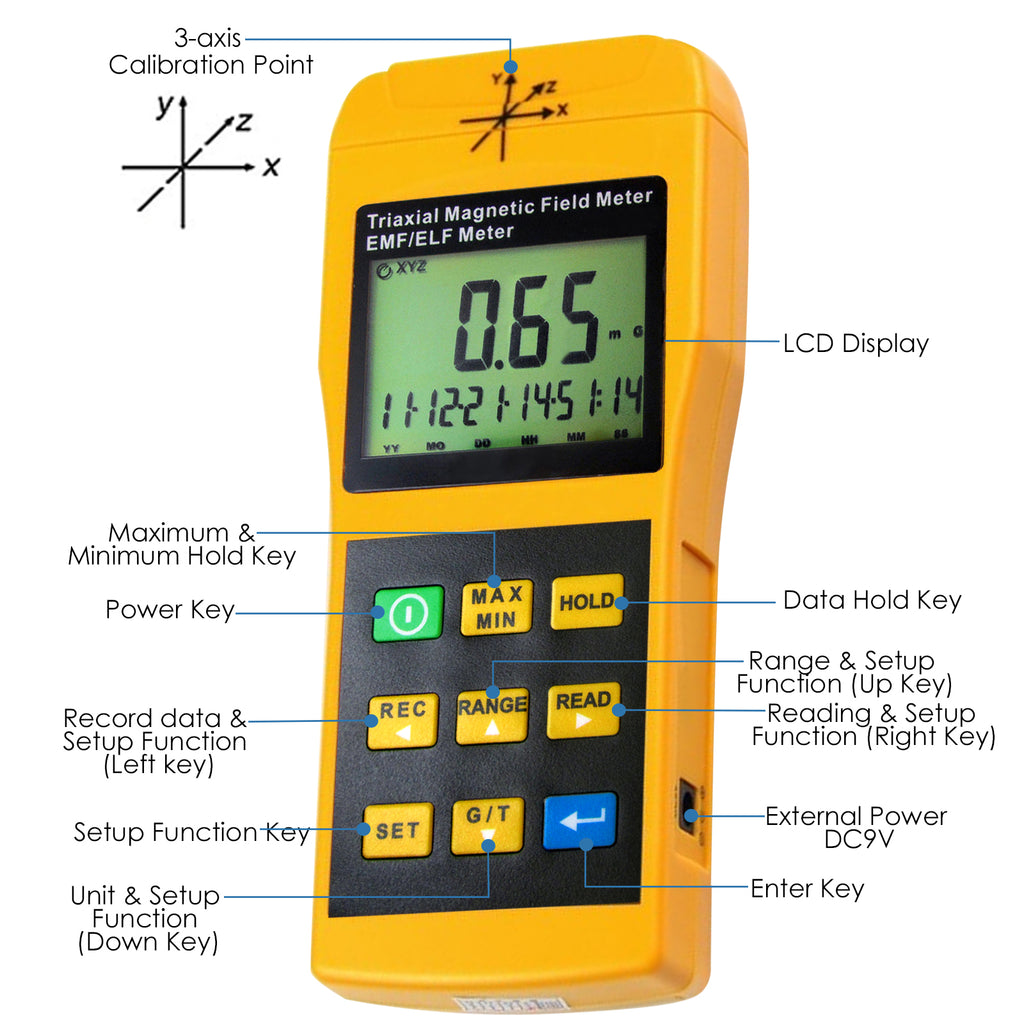
- Uses either single-axis or three-axis sensors depending on the model
2. Electric Field Mode
- Measures voltage-induced electric fields
- Identifies exposure from cords, outlets, lamps, and walls
- Useful for assessing bedrooms and workspaces
3. RF Mode
- Detects high-frequency emissions
- Useful for Wi-Fi, Bluetooth, smart meters, cordless phones, and other wireless devices
- Typically uses a broadband RF detector rather than a frequency-specific analyzer
Because each sensor is optimized for its task, Tri-Field EMF Meters provide dependable all-in-one insight into daily EMF exposure.
Why Tri Field EMF Meters Are So Popular
Tri-Field EMF Meters remain one of the most widely purchased EMF tools for good reason:
Ease of Use
They provide fast, intuitive readings without requiring advanced settings.
Multi-Field Capability
Users can switch instantly between electric, magnetic, and RF measurements.
Cost-Effective
Purchasing one multi-field tool is more affordable than buying three separate meters.
Ideal for First-Time Assessments
They reveal which EMF category deserves deeper investigation.
Reliable for Home Surveys
Bedrooms, kitchens, living areas, and office setups can all be tested with a single device.
Because EMF environments are complex, a combined tool like this helps users quickly gain clarity about potential concerns.
Applications of Tri Field EMF Meters
Tri-Field EMF Meters are useful in many common scenarios:
1. Bedroom Assessments
Measure electric fields from lamps and wiring, RF from routers or smart meters, and magnetic fields from appliances on adjoining walls.
2. Desk and Home Office Testing
Detect layered exposures from monitors, chargers, laptops, and Wi-Fi routers.
3. Appliance Testing
Refrigerators, microwaves, induction cooktops, and HVAC systems produce multiple types of EMF.
4. Wiring Diagnostics
Tri-Field EMF Meters can reveal whether magnetic fields are elevated due to improper circuits.
5. Wi-Fi and Wireless Monitoring
Use RF mode to identify strong hotspots near routers or mesh systems.
How to Use Tri-Field EMF Meters for Accurate Readings
Although these meters are user-friendly, proper technique matters.
1. Hold the Meter at a Consistent Height
Keep the meter around chest level unless testing a specific location like a pillow or desk.
2. Scan Each Room Slowly
Electric and magnetic fields fluctuate with movement and load conditions.
3. Use All Three Modes
Each mode reveals different information. A low magnetic reading does not mean RF is low.
4. Measure from Practical Distances
For appliances:
- 0 inches
- 6 inches
- 12 inches
- 24 inches
- 36 inches
For bedroom testing:
- Pillow height
- Mattress surface
- Nightstand height
5. Compare Readings Throughout the Day
RF exposure often peaks in the evening, while magnetic fields vary with electrical demand.
6. Document Each Reading
Record the date, reading, mode, and distance. This helps you track changes over time.
Understanding Readings From Tri Field EMF Meters
Tri-Field EMF Meters display simplified values that give quick context:
Magnetic Field (mG)
Indicates current flow through appliances or wiring.
Values above ~4 mG often require deeper investigation.
Electric Field (V/m)
Measures voltage-induced fields.
Elevated readings near beds may suggest grounding or circuit management needs.
RF Power Density (µW/m²)
Displays cumulative RF from all transmitting devices.
High peaks usually indicate close proximity to active transmitters.
While Tri-Field EMF Meters do not provide frequency-specific RF data, they accurately capture real-world exposure levels.
Advantages of Tri Field EMF Meters
- Quick, general-purpose EMF analysis
- Affordable compared to specialized tools
- Ability to detect all major EMF categories
- Lightweight and easy to operate
- Fast scanning for entire households
They are especially effective for:
- Renters
- Parents evaluating children’s rooms
- Homeowners conducting routine EMF checks
- Inspectors performing initial site surveys
- Anyone tracking changes in wireless exposure
Limitations of Tri Field EMF Meters
While useful, these meters are not designed for advanced diagnostics.
1. Limited RF Analysis
They measure total RF power, not specific frequencies.
2. Less Precision Than Dedicated Meters
Electric and magnetic field readings are solid but may lack fine-grained resolution.
3. No Directional Antenna
RF readings often come from multiple overlapping sources.
4. Reduced Sensitivity at Low Levels
For extremely low EMF environments, professional tools may be required.
Most users still find that Tri-Field EMF Meters provide more than enough detail for everyday assessments.
Price Ranges for Tri Field EMF Meters
| Category | Typical Price | Best For |
|---|---|---|
| Entry-Level | $80–$150 | Basic home scanning |
| Mid-Range | $150–$250 | Most consumers and renters |
| Professional | $250–$400 | Inspectors, real estate, consultants |
These meters deliver excellent value by combining three tools into one.
Common Misinterpretations and Mistakes
Avoid these errors when using Tri-Field EMF Meters:
- Assuming low magnetic fields mean all EMFs are low
- Holding the meter too close to your body
- Not documenting distance from the source
- Testing only once instead of scanning the entire area
- Ignoring RF spikes because they seem brief
- Expecting lab-grade RF analysis
Consistent technique ensures meaningful results.
Tri Field EMF Meters vs. Dedicated Meters
| Tri Field EMF Meters | Dedicated Tools |
|---|---|
| Measure all fields | Highly precise single-field measurement |
| Great for general assessments | Best for professional diagnostics |
| Affordable | More expensive |
| Easy to use | Requires training |
Most professional EMF testers use both:
Tri-Field EMF Meters for broad scanning, dedicated tools for validation.
FAQs About Tri- Field EMF Meters
Do Tri Field EMF Meters detect 5G?
Yes, as long as the RF frequency range covers relevant local bands.
Can they replace professional meters?
They provide strong general assessments but lack advanced RF analysis.
Are they accurate for low-level testing?
Mid- and high-end models perform well, but specialized meters may be required for strict building biology standards.
Are Tri Field EMF Meters safe to use?
Yes—these are passive sensing devices.
Key Takeaways
- Tri Field EMF Meters provide fast, multi-field EMF analysis across electric, magnetic, and RF categories.
- They are popular because they are versatile, easy to use, and cost-effective.
- While not as precise as dedicated meters, they offer excellent clarity for home and office assessments.
- They help identify whether further detailed testing is necessary.
- For a full overview of EMF testing tools, visit:
https://frequencyblockers.com/emf-testing-tools/
References
- Building Biology Institute – EMF Measurement Guidelines
https://buildingbiologyinstitute.org - Frequency Blockers – EMF Testing Tools Overview
https://frequencyblockers.com/emf-testing-tools/
Frequently Asked Questions
What’s the difference between a Tri Field EMF meter and using separate devices for each type of electromagnetic field?
A Tri Field EMF meter measures electric fields, magnetic fields, and radio frequencies all in one device, eliminating the need to purchase and operate three separate instruments. This makes home assessments more convenient and cost-effective, especially for first-time users conducting general EMF investigations in their homes.
How much does a quality Tri Field EMF meter cost?
The TriField TF2, the most popular consumer option, costs around $170. This mid-range price point makes it accessible for homeowners and privacy-conscious individuals who want reliable multi-field capability without investing in professional-grade equipment.
Why do EMF readings change throughout the day, and how should I account for this when testing my home?
EMF levels fluctuate throughout the day based on power usage, wireless device activity, and electrical grid variations in your area. To get accurate readings, you should measure at multiple locations and compare results taken at different times of day, documenting each reading to identify patterns and hotspots.
What are the main limitations I should know about before buying a Tri Field EMF meter?
Tri Field EMF meters have limited RF detection capabilities compared to specialized RF meters, and they may not capture all types of electromagnetic exposure in complex environments. They’re best suited for general home assessments and initial screening rather than comprehensive, professional-level electromagnetic audits that require more advanced equipment.