LF Analyzers: A Complete Guide to Low-Frequency EMF Measurement and Diagnostics
Low-frequency electromagnetic fields (ELF and VLF) originate from sources such as electrical wiring, power lines, AC motors, HVAC systems, transformers, and countless appliances found in homes and workplaces. These fields tend to penetrate walls easily and can extend several feet from their source. While basic EMF meters provide general readings, professionals rely on LF Analyzers for far more detailed insight into low-frequency electric and magnetic fields.
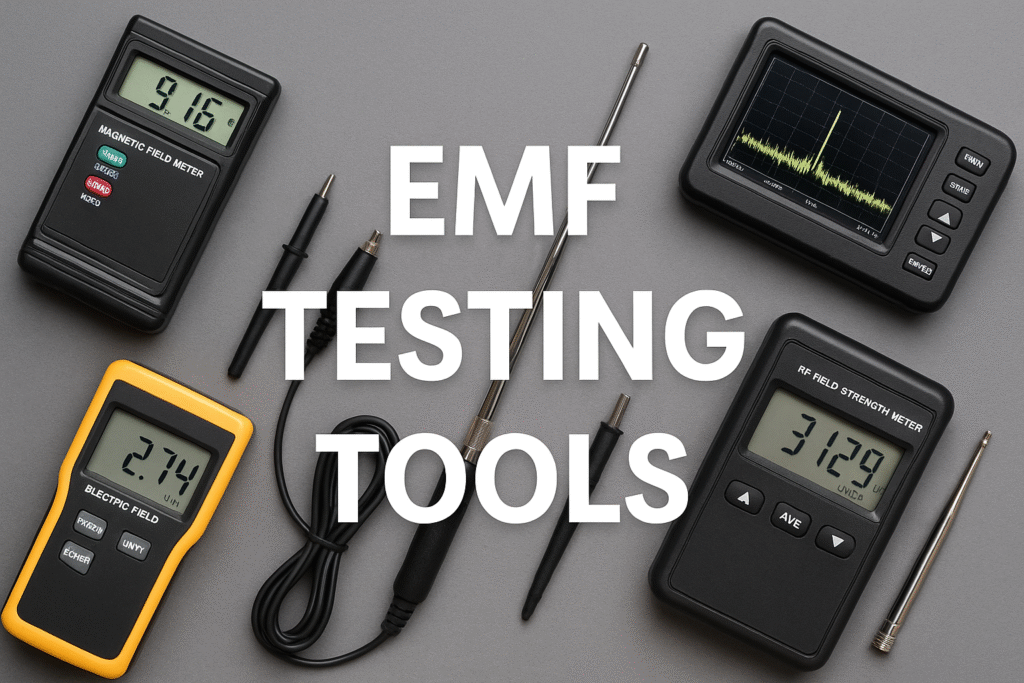
LF Analyzers measure the characteristics of 50/60 Hz power-line emissions, detect harmonic distortion, assess circuit irregularities, and evaluate workplace or home exposure with precision, consistent with ELF/VLF measurement standards established by national metrology bodies.[1] They are foundational tools for advanced EMF diagnostics. For an overview of all EMF testing tools, visit:
https://frequencyblockers.com/emf-testing-tools/
What LF Analyzers Measure
LF Analyzers measure electric and magnetic fields at low frequencies—typically in the 1 Hz to 30 kHz range. These tools can detect:
- 50/60 Hz power-line magnetic fields
- Voltage-induced electric fields
- Harmonics caused by non-linear loads
- Ground current distortions
- Variations caused by motors or compressors
- Transients related to switching operations
- Field gradients across sleeping or working areas
Depending on the model, LF Analyzers may also provide:
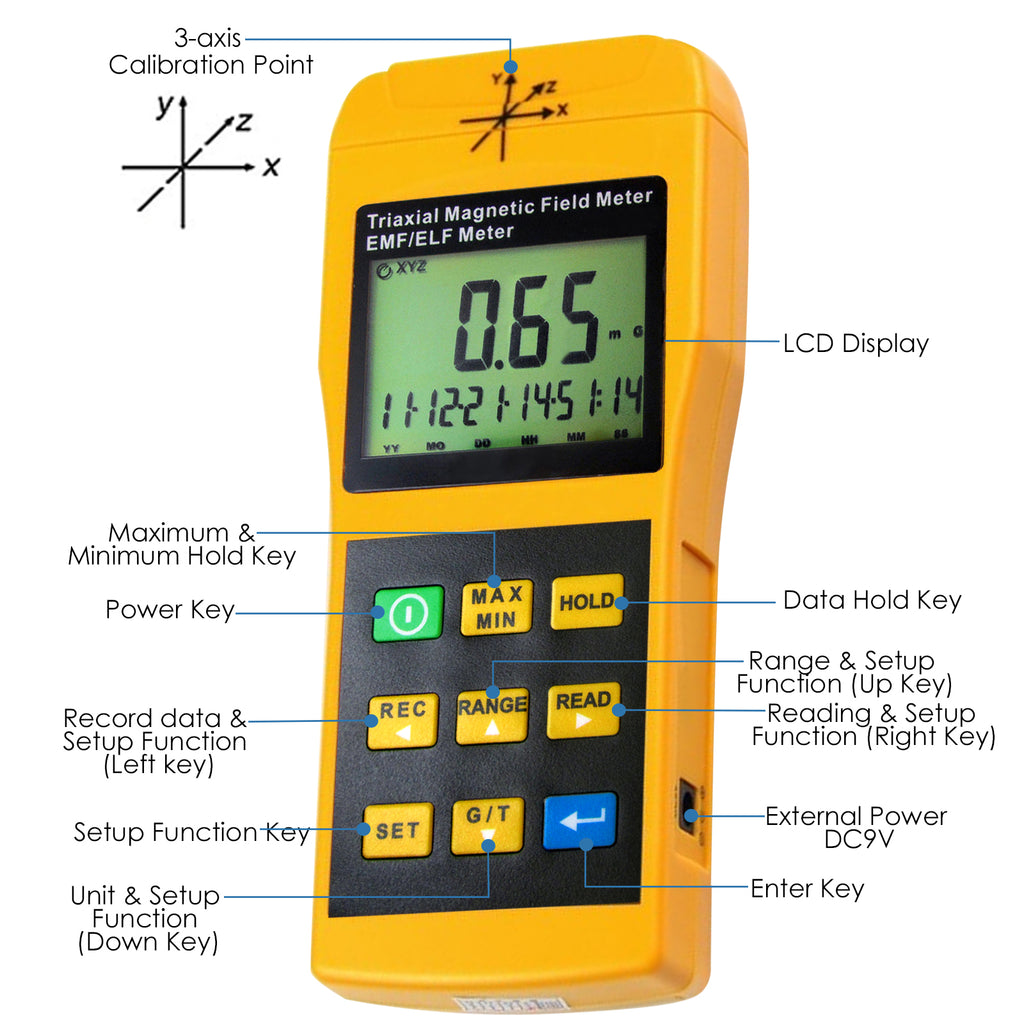
- Three-axis magnetic field measurement
- Frequency decomposition (fundamental + harmonics)
- Waveform analysis
- Peak and RMS values
- Audio output for source characterization
LF Analyzers are ideal for diagnosing low-frequency EMF challenges that basic Gauss meters may oversimplify.
Why LF Analyzers Are Crucial for EMF Diagnostics
1. Identify Wiring and Grounding Issues
LF Analyzers can pinpoint elevated magnetic fields caused by:
- Improper neutral bonding
- Shared neutrals
- Faulty connections
- Ground loops
- Current imbalances
These issues often go unnoticed without advanced tools.
2. Evaluate Sleeping Areas
Magnetic and electric fields that seem harmless during the day can cause sustained overnight exposure. LF Analyzers provide precise mapping around:
- Beds
- Cribs
- Living rooms
- Office desks
3. Analyze Appliance and Motor Output
Refrigerators, HVAC compressors, and washing machines produce unique low-frequency signatures.
4. Detect Harmonic Distortion
Dirty electricity and power quality issues often produce low-frequency harmonics. LF Analyzers reveal these distortions clearly.
5. Assess Low-Frequency Environments in Workplaces
Industrial equipment often generates strong ELF fields that require periodic evaluation.
How LF Analyzers Work
LF Analyzers use specialized sensors and signal-processing circuits to measure low-frequency electric and magnetic fields with high accuracy.
Key sensing technologies include:
1. Fluxgate Sensors
Provide extreme sensitivity for magnetic fields, including DC and ELF.
2. Inductive Coils
Detect AC magnetic fields at 50/60 Hz and associated harmonics.
3. Capacitive Sensors
Measure ambient low-frequency electric fields.
4. Signal Processing Algorithms
Break down signals into:
- Fundamental waveform
- Harmonics
- Field strength over time
- RMS and peak values
5. Three-Axis Detection
Some LF Analyzers measure magnetic fields along X, Y, and Z axes, providing directional data and source localization.
Applications for LF Analyzers
1. Home EMF Assessments
LF Analyzers help determine whether sources include:
- Electrical panels
- Bedroom wiring
- Dimmer switches
- Induction cooktops
- Smart appliances
- Ceiling fans
2. Power Line Evaluation
Measure magnetic field intensity near:
- Overhead lines
- Pad-mounted transformers
- Service drops
3. Building Diagnostics
LF Analyzers identify structural wiring issues hidden behind walls.
4. Factory and Industrial Assessments
Machinery and motor-driven systems produce strong low-frequency fields.
5. Research & Compliance Testing
LF Analyzers assist in verifying exposure levels for worker safety and regulatory compliance.
How to Use LF Analyzers Effectively
1. Start With a Baseline Sweep
Walk the perimeter of each room and map magnetic and electric field gradients.
2. Test at Different Heights
Low-frequency fields often vary between:
- Floor level
- Waist level
- Head level
- Bed or pillow height
3. Check Appliance Behavior
Test devices both operating and idle.
4. Evaluate Circuit-Level Patterns
Turn circuits on and off to isolate contributing lines.
5. Document Harmonics
Some LF Analyzers identify:
- 2nd, 3rd, and 5th harmonics
- Distortion caused by LED lighting
- Inverter-based appliances
6. Compare RMS vs. Peak Measurements
RMS represents typical exposure; peak measurements reveal sudden surges or transients.
Understanding LF Analyzer Readings
LF Analyzers may express magnetic field strength in:
- milligauss (mG)
- microtesla (µT)
and electric fields in:
- volts per meter (V/m)
General interpretive guide:
| Level | Magnetic Field (mG) | Interpretation |
|---|---|---|
| Very Low | 0–1 mG | Ideal for bedrooms |
| Low | 1–2.5 mG | Acceptable |
| Moderate | 2.5–4 mG | Investigate source |
| High | 4–10 mG | Likely wiring/appliance issue |
| Very High | 10+ mG | Immediate diagnostic needed |
LF Analyzers also indicate harmonic levels, waveform distortion, and transient spikes, offering a broader diagnostic picture.
Types of LF Analyzers
1. Basic ELF Meters
Measure simple AC magnetic fields.
Suitable for beginners.
2. Tri-Axis Low-Frequency Analyzers
Provide directional magnetic field data.
Preferred by EMF consultants.
3. Advanced LF Spectrum Tools
Break down harmonic distortion.
Useful for power quality assessments.
4. Multi-Mode LF Analyzers
Measure:
- Electric fields
- Magnetic fields
- Harmonics
- Transients
5. Lab-Grade LF Measurement Systems
Used for:
- Industrial diagnostics
- Research
- Regulatory evaluations
Price Ranges for LF Analyzers
| Category | Typical Price | Best For |
|---|---|---|
| Entry-Level | $100–$250 | Basic evaluations |
| Mid-Range | $250–$600 | Home inspectors & consultants |
| Professional | $600–$2,000+ | Engineering diagnostics |
Pricing depends on sensor type, frequency range, and harmonic capabilities.
Advantages of LF Analyzers
- High accuracy across ELF/VLF ranges
- Detect wiring faults and grounding problems
- Evaluate bedrooms and sensitive areas
- Identify appliance-related magnetic fields
- Reveal harmonic distortion often missed by basic meters
- Essential for EMF professionals and building biologists
Limitations of LF Analyzers
- More complex than consumer EMF tools
- Require interpretation experience
- Do not measure RF fields
- Some models need careful calibration
Despite these limitations, LF Analyzers remain indispensable for serious low-frequency EMF evaluations.
LF Analyzers vs. Gauss Meters
| LF Analyzers | Gauss Meters |
|---|---|
| Frequency-specific analysis | Basic AC magnetic field measurement |
| Detect harmonics and distortion | No harmonic capability |
| Professional-grade accuracy | Good for quick readings |
| Useful for wiring diagnostics | General-purpose use |
Both tools complement each other during assessments.
Common Mistakes When Using LF Analyzers
- Holding the device too close to the body
- Testing only at one time of day
- Ignoring electric fields
- Moving through rooms too quickly
- Misinterpreting harmonic signatures
- Failing to test circuit-by-circuit
Correct technique ensures accurate results.
FAQs About LF Analyzers
Do LF Analyzers detect RF?
No—they measure low-frequency fields only.
Can they diagnose wiring problems?
Yes—harmonic signatures and field gradients often reveal wiring faults.
Are LF Analyzers safe?
Yes—they passively measure electromagnetic fields.
Do you need a professional model for home testing?
Entry-level models are fine for basic checks, but mid-range units provide better accuracy.
Key Takeaways
- LF Analyzers provide precise measurement of low-frequency electric and magnetic fields, offering insights far beyond what simple Gauss meters can provide.
- They are essential for diagnosing wiring issues, evaluating sleeping spaces, testing appliances, and identifying harmonics.
- Best used alongside HF Analyzers, broadband detectors, and electric field meters for a complete EMF assessment.
- For additional EMF testing tools, visit:
https://frequencyblockers.com/emf-testing-tools/
References
- NIST – Electromagnetic Compatibility and Telecommunications LAP
- Frequency Blockers – EMF Testing Tools Overview
Recommended EMF Testing Equipment
Ready to start testing? Check out our top-rated EMF meters:
- Safe and Sound Pro II RF Meter
- Safe and Sound Classic II RF Meter
- Safe and Sound Pro mmWave 20GHz Meter
Browse all EMF protection products →

Frequently Asked Questions
What’s the difference between an LF Analyzer and a basic EMF meter?
While basic EMF meters provide general readings of electromagnetic fields, LF Analyzers offer detailed diagnostics including harmonic distortion detection, three-axis measurements, and circuit-level pattern analysis. Professionals rely on LF Analyzers when you need precise identification of wiring issues, grounding problems, and specific appliance output patterns that basic meters cannot capture.
Can an LF Analyzer help identify which appliances in my home are creating high EMF?
Yes, LF Analyzers excel at this task through appliance-specific testing where you measure EMF output at different distances and heights from each device. By documenting readings from motors, HVAC systems, transformers, and other appliances, you can identify which sources contribute most to your home’s electromagnetic environment and determine if shielding or relocation is necessary.
Are LF Analyzers safe to use around high electromagnetic fields?
Yes, LF Analyzers are passive measurement devices designed specifically to safely assess electromagnetic fields without risk to you during use. The analyzer itself does not emit radiation or create additional EMF exposure; it simply detects and measures existing low-frequency fields in your environment.

Do I need a professional to use an LF Analyzer, or can I conduct my own home assessments?
You can perform basic home assessments with proper training, starting with baseline sweeps and testing at different heights around appliances and sleeping areas. However, interpreting results like harmonic distortion patterns and RMS versus peak measurements may require professional expertise, especially if you discover complex wiring or grounding issues that need solutions.
{ “@context”: “https://schema.org”, “@type”: “FAQPage”, “mainEntity”: [ { “@type”: “Question”, “name”: “What’s the difference between an LF Analyzer and a basic EMF meter?”, “acceptedAnswer”: { “@type”: “Answer”, “text”: “While basic EMF meters provide general readings of electromagnetic fields, LF Analyzers offer detailed diagnostics including harmonic distortion detection, three-axis measurements, and circuit-level pattern analysis. Professionals rely on LF Analyzers when you need precise identification of wiring issues, grounding problems, and specific appliance output patterns that basic meters cannot capture.” } }, { “@type”: “Question”, “name”: “Can an LF Analyzer help identify which appliances in my home are creating high EMF?”, “acceptedAnswer”: { “@type”: “Answer”, “text”: “Yes, LF Analyzers excel at this task through appliance-specific testing where you measure EMF output at different distances and heights from each device. By documenting readings from motors, HVAC systems, transformers, and other appliances, you can identify which sources contribute most to your home’s electromagnetic environment and determine if shielding or relocation is necessary.” } }, { “@type”: “Question”, “name”: “Are LF Analyzers safe to use around high electromagnetic fields?”, “acceptedAnswer”: { “@type”: “Answer”, “text”: “Yes, LF Analyzers are passive measurement devices designed specifically to safely assess electromagnetic fields without risk to you during use. The analyzer itself does not emit radiation or create additional EMF exposure; it simply detects and measures existing low-frequency fields in your environment.” } }, { “@type”: “Question”, “name”: “Do I need a professional to use an LF Analyzer, or can I conduct my own home assessments?”, “acceptedAnswer”: { “@type”: “Answer”, “text”: “You can perform basic home assessments with proper training, starting with baseline sweeps and testing at different heights around appliances and sleeping areas. However, interpreting results like harmonic distortion patterns and RMS versus peak measurements may require professional expertise, especially if you discover complex wiring or grounding issues that need solutions.” } } ] }These statements have not been evaluated by the Food and Drug Administration. This information is not intended to diagnose, treat, cure, or prevent any disease. Content is for informational purposes only and is not medical advice; consult a qualified healthcare provider before starting any supplement. As an Amazon Associate we earn from qualifying purchases.