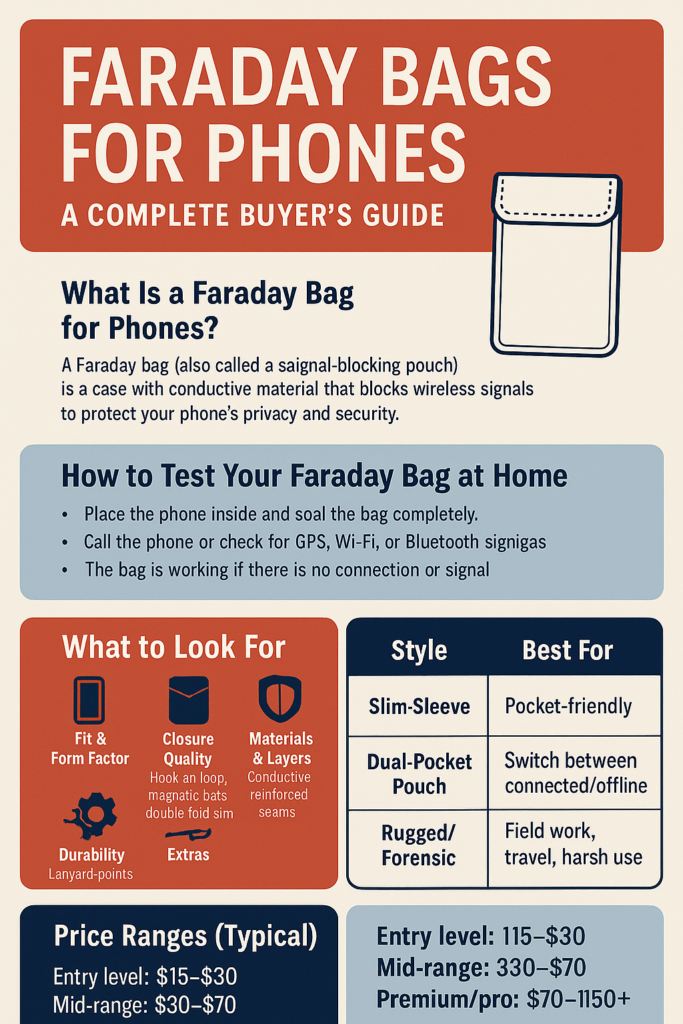
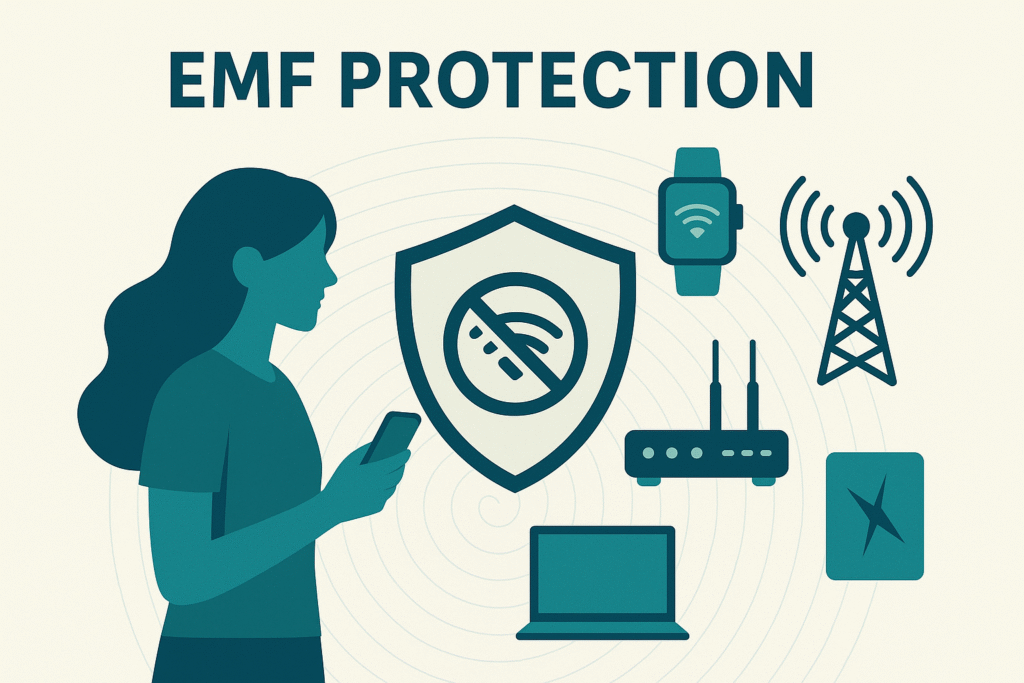
Faraday bags may feel like modern privacy tools, but their origins reach back more than 180 years to the early days of electromagnetic research. From Michael Faraday’s pioneering experiments in the 1830s to 21st-century digital privacy concerns, the evolution of faraday bags reflects how society adapts to new forms of communication — and new security threats.
In this historical overview, we trace how faraday bags developed from scientific curiosity to military necessity and ultimately to the consumer privacy market.
For current top-performing models, see:
https://frequencyblockers.com/best-faraday-bags-2026/
1836: Michael Faraday and the Discovery That Started It All
The foundation of faraday bags began in 1836 when physicist Michael Faraday demonstrated that a conductive enclosure could:[3]
- Block external electric fields
- Prevent electromagnetic interference
- Redirect electromagnetic energy around the protected interior
This became known as the Faraday Cage Principle, which faraday bags use today in flexible, fabric-based form.
Faraday was originally studying how electromagnetic fields behaved, not building consumer privacy tools — but his discovery laid the groundwork for all modern RF shielding.
Early 1900s–1950s: Shielding Rooms and Industrial Applications
Before portable faraday bags existed, the earliest practical implementations were:
- Electrically shielded rooms
- Radio testing chambers
- Military communication bunkers
- Scientific laboratories
These fixed enclosures were used to:
- Prevent interference with sensitive instruments
- Test radio and radar systems
- Protect classified communications
This era saw the development of:
- Copper mesh shielding
- Aluminum-paneled RF rooms
- Early standards for electromagnetic compatibility (EMC)
Still no portable faraday bags — but the core technology was maturing.
Cold War Era (1950s–1980s): Classified Communications & Military Shielding
During the Cold War, electromagnetic shielding rapidly advanced due to military needs.
Faraday-based solutions were developed for:
1. Secure Military Communications
Preventing electronic eavesdropping and signal interception.
2. EMP Protection
After nuclear tests revealed the electromagnetic pulse (EMP) threat, militaries developed:
- Shielded bunkers
- Shielded vehicles
- Hardened communication lines
3. TEMPEST Security Programs
Government standards were created to prevent electronic spying via electromagnetic emissions.
This era directly influenced the shielding materials used in modern faraday bags.
1990s: The First Portable Shielding Pouches Appear
As cell phones became widespread in the 1990s, intelligence agencies and law enforcement began using early portable RF shielding pouches made from:
- Copper mesh
- Aluminum textile composites
- Nickel-coated fabric
These early faraday bags were used to:
- Transport seized devices
- Prevent remote wiping
- Block tracking
- Preserve digital evidence
These initial pouches were the ancestors of modern consumer faraday bags.
2007–2015: Mainstream Smartphone Adoption Creates Consumer Demand
Once smartphones became universal, new privacy concerns emerged:
- GPS tracking
- Bluetooth beacons
- Remote access risks
- Wireless hacking
- RFID/NFC skimming
Law enforcement already used faraday bags (e.g., Mission Darkness Forensic Evidence Bags), but now consumers recognized the need for:
- Phone faraday bags
- Key fob faraday pouches
- RFID-blocking wallets
- Laptop faraday sleeves
Companies like Silent Pocket and Mission Darkness began adapting professional shielding for everyday users.
2016–2020: Corporate Security & High-Profile Privacy Concerns
During this period, major events accelerated consumer interest:
1. Data breaches & corporate espionage cases
Companies adopted faraday bags to protect intellectual property and secure executive travel.
2. Journalists & Investigators
Reporters working in hostile environments used faraday bags for device protection.
Your related article:
https://frequencyblockers.com/faraday-bags-for-journalists-investigators/
3. Key Fob Relay Theft Explodes
Car thieves used amplifiers to steal vehicles wirelessly, leading to widespread use of key fob faraday bags such as the OffGrid Key Fob Pouch.
4. Consumer awareness shifts
Concerns about tracking, advertising identifiers, and wireless surveillance grew.
This era marks the point when faraday bags became mainstream.
2021–2026: High-Tech Advancements & Expanded Use Cases
Modern faraday bags are more advanced than ever, integrating:
- Multi-layer nickel-copper shielding
- Silver-lined conductive fabrics
- 5G attenuation capability
- Weatherproof TPU exteriors
- Roll-top closures for waterproof models
- Integrated faraday compartments in backpacks and duffel bags
Popular 2026 models include:
- Mission Darkness Dry Shield Faraday Duffel
- Silent Pocket Faraday Backpack
- GoDark Waterproof Dry Bag
- Faraday Defense NX3 series
New use cases emerging today:
- Drone security
- Anti-stalking protection (AirTags, UWB trackers)
- Corporate meeting security
- Emergency preparedness (EMP / solar storm)
- Law enforcement digital forensics
Faraday bags have evolved from ultra-specialized tools to everyday privacy solutions.
How Faraday Bags Will Continue to Evolve
Faraday bags today are only the beginning. Future developments will include:
1. Lighter and stronger conductive fabrics
Graphene-based shielding fabrics may replace nickel-based weaves.
2. Smart faraday bags
Bags with built-in sensors that confirm RF isolation.
3. Modular faraday systems
Backpacks + removable pouches + integrated laptop sleeves.
4. Hardened EMP-ready consumer versions
High-dB protection for grid-down preparedness.
5. Corporate integration
Faraday lockers, meeting room systems, and fleet-wide device isolation.
This will be explored in more detail in the upcoming article on the future of faraday bags.
Key Takeaways
- Faraday bags originated from the 1836 discovery of electromagnetic shielding by Michael Faraday.
- Their early development focused on military, scientific, and industrial applications.
- Portable faraday bags emerged in the 1990s for law enforcement.
- Widespread smartphone use and keyless vehicles accelerated consumer adoption.
- Modern faraday bags now serve travelers, journalists, corporations, drone pilots, and emergency planners.
- Improvements in materials and shielding technology continue to expand their applications.
Product References
- Mission Darkness Forensic Evidence Bag
- Mission Darkness Dry Shield Faraday Duffel
- Mission Darkness Dry Shield Phone Sleeve
- Silent Pocket Faraday Backpack
- Silent Pocket Faraday Phone Sleeve
- Silent Pocket Laptop Faraday Bag
- GoDark Waterproof Faraday Dry Bag
- OffGrid Key Fob Pouch
- Faraday Defense NX3 Pouches
- Faraday Defense NX3 Evidence Bag
- SteelShield Laptop Faraday Sleeve
References
- FCC – RF Consumer Information
- NIST – Electromagnetic Compatibility and Telecommunications LAP
- Wikipedia – Faraday Cage
- Frequency Blockers – Best Faraday Bags 2026
- Frequency Blockers – Faraday Bags for Journalists & Investigators
Featured Products
Looking for quality EMF protection? Check out these recommended products:
Frequently Asked Questions
When were Faraday bags first invented and why?
Faraday bags originated from Michael Faraday’s 1836 discovery that conductive enclosures could block external electric fields and prevent electromagnetic interference. This scientific principle laid the foundation for modern Faraday bags, which use the same concept to shield contents from RF signals today.
How did the military use Faraday cage technology during the Cold War?
During the Cold War era (1950s-1980s), the military developed Faraday shielding for three critical purposes: secure classified communications, EMP protection for sensitive equipment, and TEMPEST security programs to prevent electromagnetic eavesdropping. This classified research accelerated the development of portable shielding technology.
What events in the 2010s made consumers suddenly interested in Faraday bags?
The explosion of key fob relay theft, high-profile data breaches, and corporate espionage cases between 2016-2020 drove consumer awareness of Faraday bag protection. Additionally, journalists and investigators began using them to protect sensitive communications, which brought mainstream attention to privacy threats.

What advanced features are emerging in new Faraday bags today?
Modern Faraday bags are evolving with lighter conductive fabrics, smart integrated features, modular systems you can customize, and EMP-ready consumer versions for emergency preparedness. Companies are also integrating Faraday technology into corporate security protocols as threats become more sophisticated.
{ “@context”: “https://schema.org”, “@type”: “FAQPage”, “mainEntity”: [ { “@type”: “Question”, “name”: “When were Faraday bags first invented and why?”, “acceptedAnswer”: { “@type”: “Answer”, “text”: “Faraday bags originated from Michael Faraday’s 1836 discovery that conductive enclosures could block external electric fields and prevent electromagnetic interference. This scientific principle laid the foundation for modern Faraday bags, which use the same concept to shield contents from RF signals today.” } }, { “@type”: “Question”, “name”: “How did the military use Faraday cage technology during the Cold War?”, “acceptedAnswer”: { “@type”: “Answer”, “text”: “During the Cold War era (1950s-1980s), the military developed Faraday shielding for three critical purposes: secure classified communications, EMP protection for sensitive equipment, and TEMPEST security programs to prevent electromagnetic eavesdropping. This classified research accelerated the development of portable shielding technology.” } }, { “@type”: “Question”, “name”: “What events in the 2010s made consumers suddenly interested in Faraday bags?”, “acceptedAnswer”: { “@type”: “Answer”, “text”: “The explosion of key fob relay theft, high-profile data breaches, and corporate espionage cases between 2016-2020 drove consumer awareness of Faraday bag protection. Additionally, journalists and investigators began using them to protect sensitive communications, which brought mainstream attention to privacy threats.” } }, { “@type”: “Question”, “name”: “What advanced features are emerging in new Faraday bags today?”, “acceptedAnswer”: { “@type”: “Answer”, “text”: “Modern Faraday bags are evolving with lighter conductive fabrics, smart integrated features, modular systems you can customize, and EMP-ready consumer versions for emergency preparedness. Companies are also integrating Faraday technology into corporate security protocols as threats become more sophisticated.” } } ] }These statements have not been evaluated by the Food and Drug Administration. This information is not intended to diagnose, treat, cure, or prevent any disease. Content is for informational purposes only and is not medical advice; consult a qualified healthcare provider before starting any supplement. As an Amazon Associate we earn from qualifying purchases.