Wireless Protection for the Brain and Head
Introduction
As wireless technologies expand into every corner of daily life, the human head remains one of the most exposed areas to radio frequency (RF) and electromagnetic field (EMF) radiation. From smartphones and Bluetooth headsets to Wi-Fi routers and 5G networks, the proximity of these devices to our heads raises growing concern for those seeking to minimize exposure.
An RF shielding skull cap offers a simple yet effective solution: providing a lightweight, comfortable, and discreet layer of protection specifically designed to reduce radiation absorption near the brain.
What Is an RF Shielding Skull Cap?
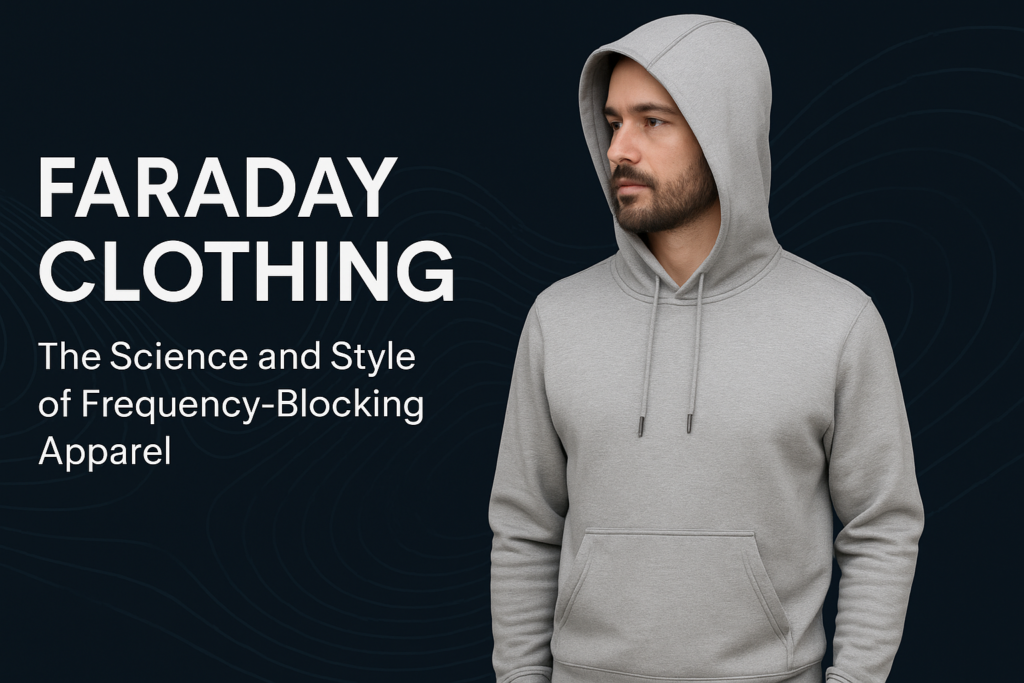
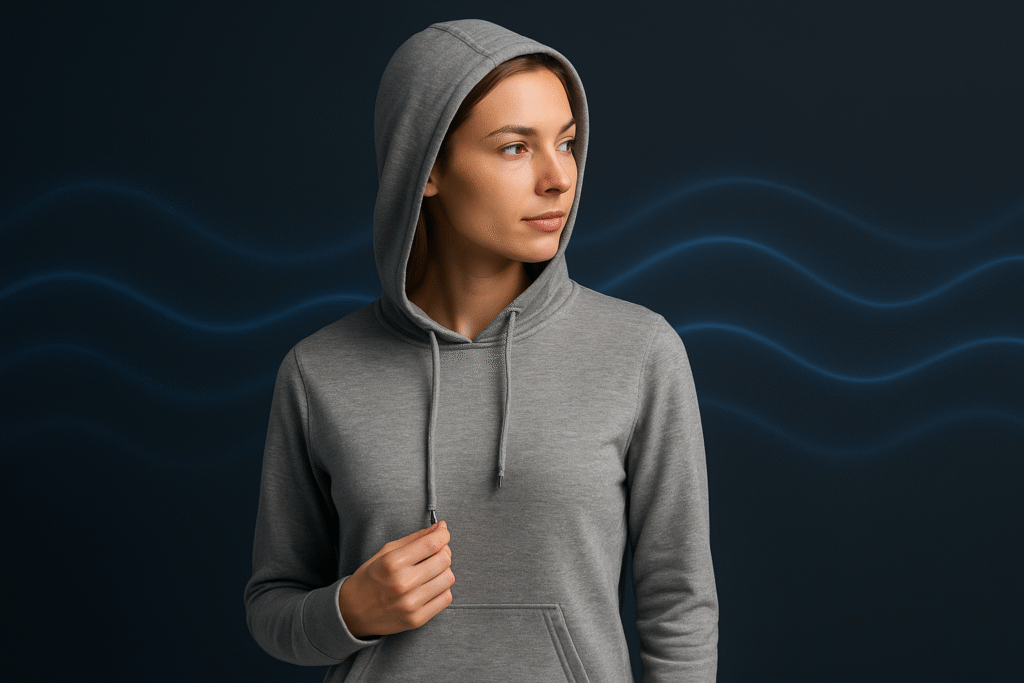
An RF shielding skull cap (sometimes called a Faraday beanie) is a close-fitting, conductive fabric hat engineered to reflect and absorb electromagnetic energy. The design mirrors the principle of a Faraday cage, attenuating some of the RF energy that would reach the covered part of the head, with gaps at the face and neck where it can leak [1].
Research note: RF absorption is greatest on the side of the head where the phone is held and falls to less than one-tenth on the opposite side [15].
These caps are especially popular among:
- Individuals with electromagnetic hypersensitivity (EHS)
- Office and tech workers surrounded by wireless devices
- Sleep-conscious users seeking low-EMF environments
- Those practicing preventive wellness and biohacking
How RF Shielding Skull Caps Work
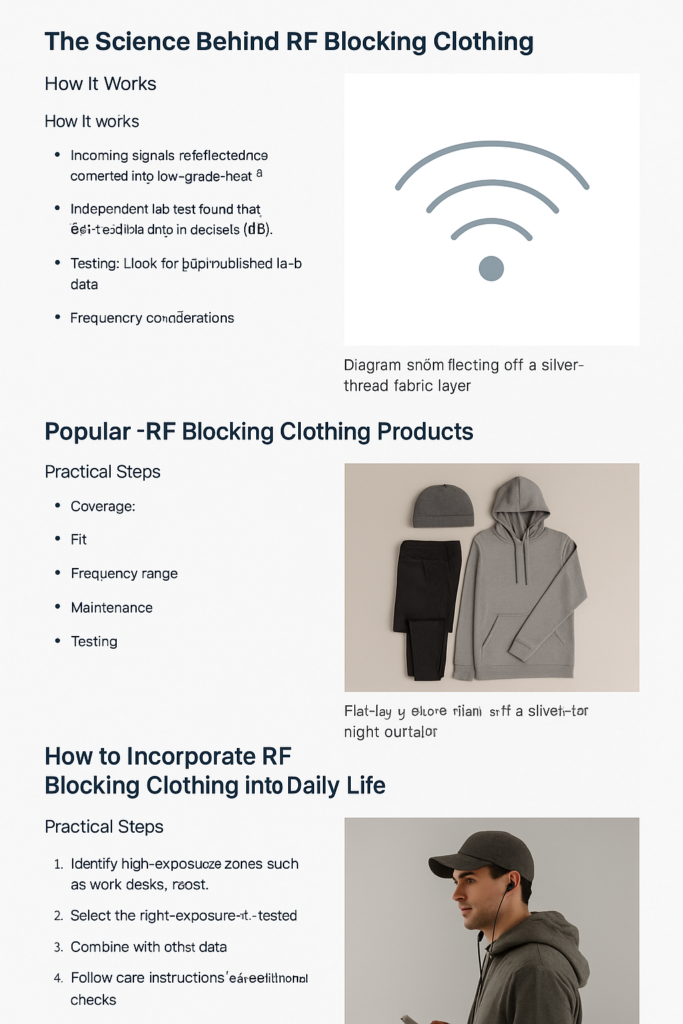
The technology relies on conductive materials woven into the cap’s structure. When electromagnetic waves hit the conductive layer, they are either reflected outward or absorbed and dissipated as heat, effectively preventing them from entering the wearer’s body.
A skull cap reflects RF over the scalp, but the face and edges stay exposed
A conductive layer bounces RF
Metal-coated fabric, foil, mesh and conductive paint reflect most incoming radio-frequency energy.
Some energy is lost inside
Thicker or multi-layer materials also absorb part of the signal as it passes through.
Gaps let signals through
Seams, open weaves, zips and unsealed edges leak, and short wavelengths slip through smaller gaps.
Low-frequency magnetic fields pass
Thin fabric or paint does little against 50/60 Hz magnetic fields; distance or special high-permeability metal is needed.
It shields a small part of the head
How well a material shields depends on the frequency and on how completely it covers the space.
Chart: frequencyblockers.com: A skull cap reflects RF over the scalp, but the face and edges stay exposed
Embed this chart
Free to reuse on your site. Copy the code below; please keep the credit link.
Key Mechanisms:
- Reflection: Metallic threads create a barrier that reflects RF signals.
- Absorption: Conductive fibers absorb residual radiation.
- Grounding (optional): Some caps include grounding connections for added static discharge protection.
Applications and Use Cases
1. Sleep and Nighttime Protection
Many users wear RF shielding skull caps while sleeping to reduce exposure from nearby routers, smart meters, or cell towers, promoting better rest quality and reduced neurological stimulation.
2. Daily Wear for EMF Sensitivity
Some people with EHS symptoms (like headaches, brain fog, or dizziness) report relief when they reduce exposure. In blinded provocation studies, though, the fields did not trigger those symptoms, and the expectation of harm did [6][7].3. Work and Commuting
Ideal for urban environments, co-working spaces, or long commutes in high-signal areas where 5G and Bluetooth signals are dense.
4. Radiation-Conscious Athletes
Some users wear RF caps beneath helmets or during workouts with Bluetooth headphones to minimize direct scalp exposure.
Common Materials in RF Shielding Skull Caps
| Material | Shielding Performance | Comfort | Description |
|---|---|---|---|
| Silver Fiber Fabric | 70 to 90 dB | Soft, antimicrobial | Excellent conductivity, used in premium caps |
| Copper-Nickel Blend | 60 to 80 dB | Medium weight | High shielding and durability |
| Stainless Steel Thread Fabric | 50 to 70 dB | Slightly firmer | Industrial-grade, washable |
| Cotton-Silver Hybrid | 40 to 60 dB | Very comfortable | Best for long-term wear and sensitive skin |
Most RF shielding caps use a two-layer design: an inner conductive layer for shielding, and an outer natural fiber layer (cotton or bamboo) for comfort and aesthetics.
Popular Brands and Examples
Several trusted manufacturers produce RF shielding skull caps with verified lab testing and durable materials:
- DefenderShield® EMF Skull Cap: Uses silver-fiber blend fabric for high attenuation, breathable and stylish.
- Lambs® Faraday Beanie: Features WaveStopper™ silver threading, which the maker says blocks 99% of wireless radiation up to 30 GHz [4].
- Havnwear® RF Shielding Cap: Lightweight bamboo-silver mix offering comfort and antimicrobial protection.
- Mission Darkness™ TitanRF Skull Cap (custom fabric): Built using TitanRF Flex Faraday Fabric, ideal for DIY or professional applications.
- YShield® Silver Elastic Cap: Laboratory-tested RF shielding fabric with grounding compatibility.
Scientific Context and Health Considerations
While mainstream science continues to study long-term EMF health effects, many individuals prefer precautionary measures. Conductive fabric attenuates RF in lab tests, but worn on the body it does not reliably lower absorbed energy. In simulations of anti-radiation pregnancy bands, the average field fell by no more than 30 percent even with a seamless band, and the maximum field rose in more than 90 percent of the scenarios [8][9].
Reducing RF exposure to the brain can be particularly relevant for:
- Children and adolescents
- Pregnant women
- Individuals experiencing sleep disturbances or neurological fatigue
Even if the health impacts remain debated, reducing unnecessary exposure is a rational step in personal wellness management.
Care and Maintenance Tips
- Hand wash only with mild detergent and cold water.
- Avoid bleach, fabric softeners, or tumble drying, these damage metallic fibers.
- Air dry flat in shade.
- Store in a clean, dry space away from direct heat or sunlight.
Proper care ensures your cap maintains its shielding performance for years.
For the groups listed above, the evidence so far is mostly null. A double-blind crossover test in young adolescents found no clear effect of mobile-phone-like RF on waking EEG or cognitive performance, and the authors said adolescents do not appear more sensitive than adults. In a Korean cohort of 1198 mother-child pairs where RF exposure was measured with a personal meter in a subset, prenatal exposure was not significantly associated with child neurodevelopment [13][14].
Advantages and Limitations
Advantages
- Lightweight and breathable for daily or nighttime wear
- Attenuates RF at the covered area, by an amount that depends on frequency and test setup [3][4]
- Portable and discreet: looks like a standard beanie or skull cap
- Some wearers report fewer symptoms, but blinded studies found symptoms track belief about exposure rather than the actual exposure [10][11]
- No batteries or electronic parts needed
Limitations
- Only shields the covered area (head and scalp), look at a emf scarf for neck
- Must be correctly fitted for full effectiveness
- Fabric performance may decrease with age and washing
- Not a substitute for whole-room or whole-body shielding
Key Takeaways
- RF shielding skull caps protect the head from EMF and RF exposure through conductive fabric technology. Constructed from silver, copper, or stainless steel fibers, they attenuate wireless signals at the covered area, and the amount depends on frequency and test setup [3][4].
- Suitable for sleep, travel, and daily wear, especially for those sensitive to EMF.
- Trusted examples include DefenderShield, Lambs, Havnwear, Mission Darkness, and YShield.
- Combining wearable shielding with environmental EMF reduction provides the best overall protection.
Further Reading
IEEE 299-2006: RF Shielding Effectiveness Standard
DefenderShield: EMF Protection Apparel
Mission Darkness: TitanRF Fabrics
YShield: RF Shielding Materials
Featured Products
Looking for quality EMF protection? Check out these recommended products:
Frequently Asked Questions
How effective is an RF shielding skull cap at blocking radiation from my smartphone and Wi-Fi?
RF shielding skull caps use conductive fabrics that reflect and absorb electromagnetic waves before they reach your head, similar to a Faraday cage. Their effectiveness depends on the material quality and weave density, with properly designed caps significantly reducing radiation exposure in the frequencies used by smartphones, Wi-Fi, and Bluetooth devices.
Can I wear an RF shielding skull cap every day, or is it only for nighttime use?
You can wear an RF shielding skull cap throughout the day for continuous protection, though many people find them most beneficial during sleep when the head is in close proximity to wireless devices on nightstands. Some users wear them during work, commuting, or while using multiple wireless devices, depending on their personal EMF sensitivity and lifestyle.
What materials are used in RF shielding skull caps to make them conductive?
Most RF shielding skull caps incorporate metallic fibers such as silver, copper, or nickel-coated fabrics woven into the material to create a conductive layer that blocks electromagnetic radiation. These materials are chosen for their shielding effectiveness while maintaining comfort and breathability for extended wear.
Is there scientific evidence that RF shielding skull caps protect against health risks from EMF exposure?
While studies confirm that properly designed Faraday cages effectively block electromagnetic radiation, research specifically measuring health outcomes from skull cap use is limited. The caps reduce RF at the covered part of the head. Blinded studies have not shown that EMF exposure triggers symptoms in people with electromagnetic hypersensitivity, so a cap’s benefit for them is unproven [6][12].
References
- Andrew C. Marvin et al. A Method for the Measurement of Shielding Effectiveness of Planar Samples Requiring No Sample Edge Preparation or Contact. IEEE Transactions on Electromagnetic Compatibility (2009). doi:10.1109/temc.2009.2015147
- Mustafa Sabri Ozen et al. Investigation of electromagnetic shielding effectiveness of needle punched nonwoven fabric produced from conductive silver coated staple polyamide fibre. Journal of the Textile Institute (2015). doi:10.1080/00405000.2015.1070604
- Pušić T et al. Electromagnetic Shielding Properties of Knitted Fabric Made from Polyamide Threads Coated with Silver. Materials (Basel, Switzerland) (2021). PMID 33800263
- Ming Li Jiao et al. Electromagnetic Interference Shielding Properties of Silver-Plated Polyester Fabric. Applied Mechanics and Materials (2012). doi:10.4028/www.scientific.net/amm.239-240.310
- Tanja Pušić et al. Electromagnetic Shielding Effectiveness of Woven Fabric with Integrated Conductive Threads after Washing with Liquid and Powder Detergents. Polymers (2022). PMID 35746018
- Rubin GJ et al. Idiopathic environmental intolerance attributed to electromagnetic fields (formerly 'electromagnetic hypersensitivity'): An updated systematic review of provocation studies. Bioelectromagnetics (2010). PMID 19681059
- Kristina Schmiedchen et al. Methodological limitations in experimental studies on symptom development in individuals with idiopathic environmental intolerance attributed to electromagnetic fields (IEI-EMF): a systematic review. Environmental Health (2019). PMID 31640707
- Fatemeh Dehrouyeh et al. On the Shielding Effectiveness of Anti-Electromagnetic-Radiation Clothes for Pregnant Females. (2023). doi:10.36227/techrxiv.22890860.v1
- T. Buczkowski et al. Influence of Mobile Phones on the Quality of ECG Signal Acquired by Medical Devices. Measurement Science Review (2013). doi:10.2478/msr-2013-0035
- Eltiti S et al. Symptom Presentation in Idiopathic Environmental Intolerance With Attribution to Electromagnetic Fields: Evidence for a Nocebo Effect Based on Data Re-Analyzed From Two Previous Provocation Studies. Frontiers in psychology (2018). PMID 30210397
- Regel SJ et al. UMTS base station-like exposure, well-being, and cognitive performance. Environmental health perspectives (2006). PMID 16882538
- Rubin GJ et al. Electromagnetic hypersensitivity: a systematic review of provocation studies. Psychosomatic medicine (2005). PMID 15784787
- Loughran SP et al. No increased sensitivity in brain activity of adolescents exposed to mobile phone-like emissions. Clinical neurophysiology : official journal of the International Federation of Clinical Neurophysiology (2013). PMID 23428307
- Kyung‐Hwa Choi et al. Neurodevelopment for the first three years following prenatal mobile phone use, radio frequency radiation and lead exposure. Environmental Research (2017). PMID 28511138
- ICNIRP (International Commission for Non-Ionizing Radiation Protection) Standing Committee on Epidemiology: et al. Epidemiology of Health Effects of Radiofrequency Exposure. Environmental Health Perspectives (2004). PMID 15579422
These statements have not been evaluated by the Food and Drug Administration. This information is not intended to diagnose, treat, cure, or prevent any disease. Content is for informational purposes only and is not medical advice; consult a qualified healthcare provider before starting any supplement. As an Amazon Associate we earn from qualifying purchases.