The Science and Style of Frequency-Blocking Apparel
In an age where our bodies, homes, and cities are surrounded by constant wireless communication, from Wi-Fi to 5G to Bluetooth, it’s no surprise that people are looking for ways to reduce their exposure to electromagnetic frequencies.
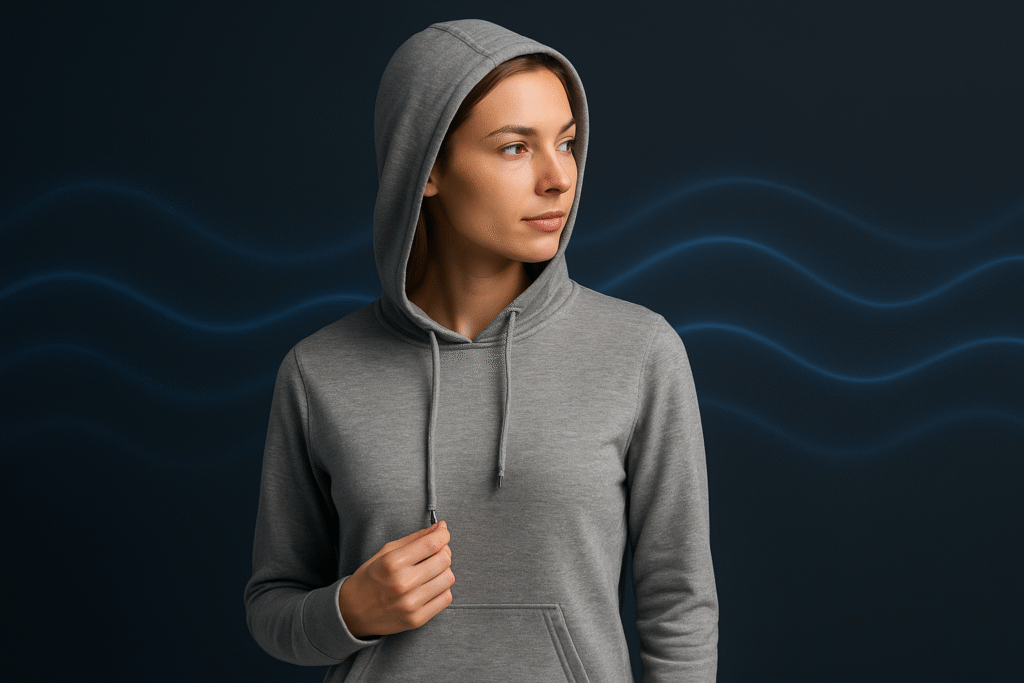
Enter Faraday clothing, a growing category of apparel designed to block, shield, or reduce human exposure to radiofrequency (RF) and electromagnetic fields (EMF).
Once limited to military and industrial use, these garments are now available to everyday consumers (in the form of hoodies, hats, maternity wear, and even sleepwear) combining science, safety, and style.
What Is Faraday Clothing?
The term “Faraday” comes from Michael Faraday, the 19th-century scientist who discovered that a conductive enclosure could block electric fields: now known as the Faraday cage.
Faraday clothing uses the same principle, incorporating conductive materials such as silver, copper, stainless steel, or nickel fibers into the fabric.
These fibers form a fine mesh that reflects and redirects electromagnetic radiation away from the body. The result: a wearable, flexible barrier that works similarly to the shielding used in phone pouches or data-secure wallets.
How It Works in Simple Terms
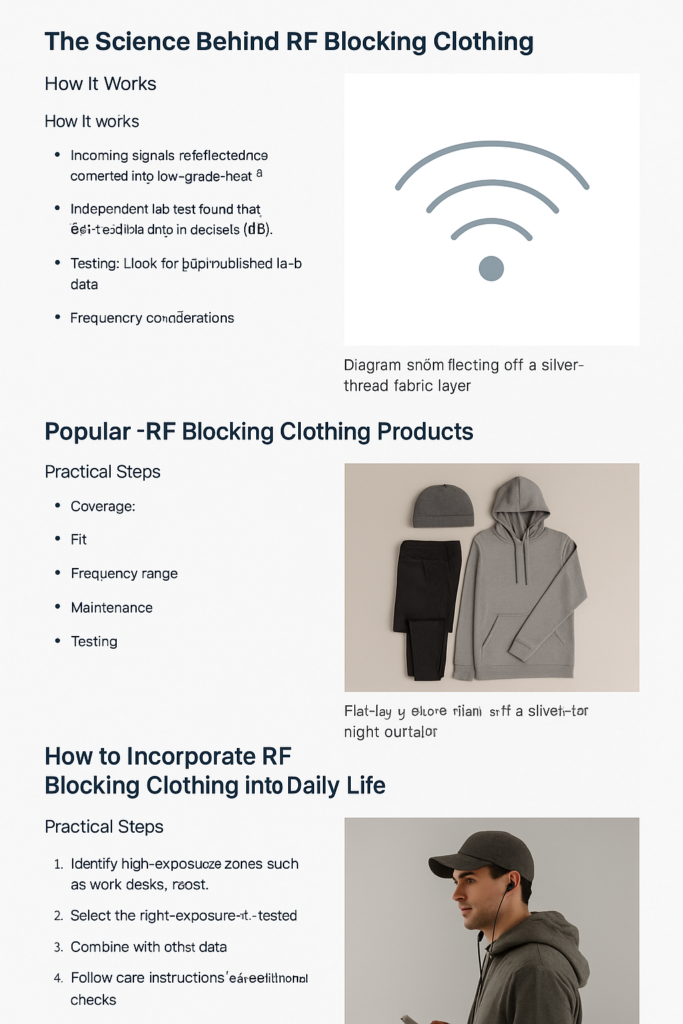
When radiofrequency energy hits the conductive threads in the fabric, the signal’s electric component is either reflected or dissipated as heat. This process, known as attenuation, can reduce the strength of Wi-Fi, cellular, or other wireless signals that reach the wearer’s body.
Faraday clothing helps only where the conductive fabric fully covers you
A conductive layer bounces RF
Metal-coated fabric, foil, mesh and conductive paint reflect most incoming radio-frequency energy.
Some energy is lost inside
Thicker or multi-layer materials also absorb part of the signal as it passes through.
Gaps let signals through
Seams, open weaves, zips and unsealed edges leak, and short wavelengths slip through smaller gaps.
Low-frequency magnetic fields pass
Thin fabric or paint does little against 50/60 Hz magnetic fields; distance or special high-permeability metal is needed.
Coverage decides how much a garment blocks
How well a material shields depends on the frequency and on how completely it covers the space.
Chart: frequencyblockers.com: Faraday clothing helps only where the conductive fabric fully covers you
Embed this chart
Free to reuse on your site. Copy the code below; please keep the credit link.
Manufacturers usually measure shielding effectiveness in decibels (dB), higher numbers mean stronger protection. For example, 40 dB blocks about 99.99% of the incident power (equivalently, a 99% reduction in field strength); 80 dB blocks about 99.999999% of the power.
Materials Used in Faraday Clothing
Most modern Faraday garments use hybrid fabrics, blends of natural or synthetic fibers with ultra-thin conductive metals. The goal is to maintain comfort while ensuring consistent shielding performance.
Research note: Repeated cleaning cut the shielding of a silver-coated polyamide knit, and wet cleaning hurt it more than dry cleaning because it damaged the silver coating [1].
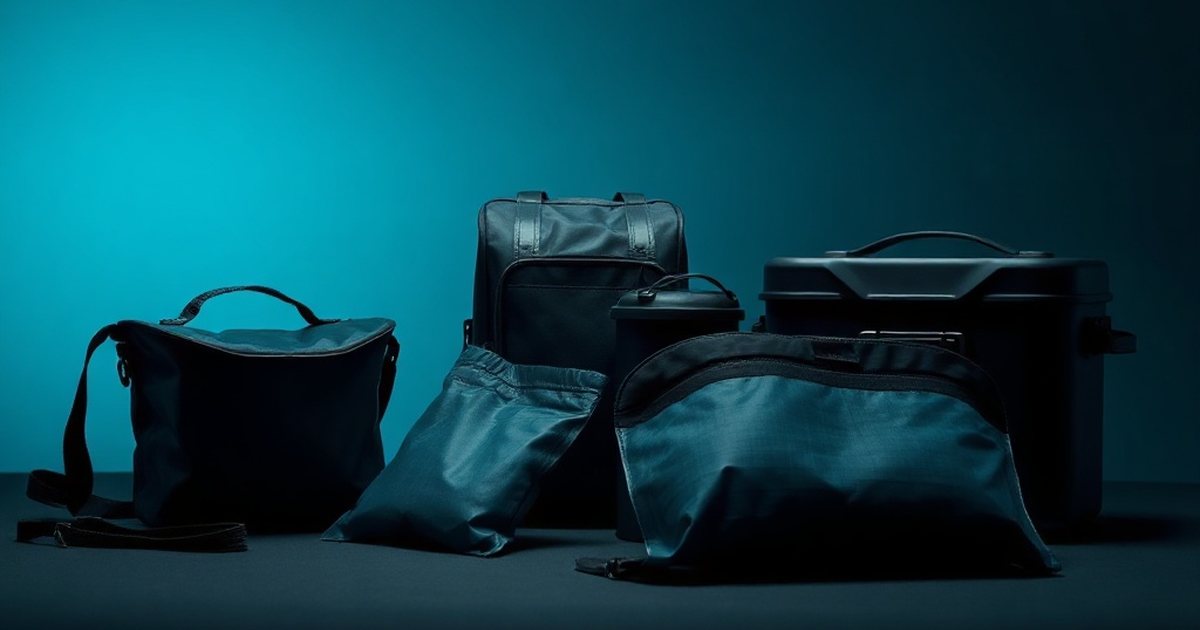
Common Materials
- Silver fibers: Excellent conductivity and antimicrobial properties; common in high-end brands.
- Copper and nickel alloys: Strong shielding, used in industrial-grade apparel.
- Stainless steel fibers: Durable and corrosion-resistant, used in outerwear or uniforms.
- Graphene-infused fabrics: Emerging in advanced textiles for high-frequency attenuation.
For instance, companies like Lambs, Shield, and SYB (Shield Your Body) say their proprietary silver-lined fabrics block 99% of wireless radiation in ranges from 0.1 GHz to 20 GHz, though measured shielding varies by fabric and frequency [1][2]. (getlambs.com, shieldyourbody.com)
Types of Faraday Clothing
Faraday clothing isn’t one-size-fits-all: it’s available in many forms depending on use case and level of protection.
1. Faraday Shirts and T-Shirts
Everyday wear with lightweight silver or copper fibers woven into cotton or polyester blends. Designed for comfort and breathability while shielding major torso areas.
2. Faraday Hoodies and Jackets
Heavier layers offering higher shielding. Useful for travel or when exposed to dense wireless environments (airports, offices, urban centers).
3. Faraday Underwear
Faraday boxers and bras protect more sensitive areas from EMF exposure. Lambs’ silver-lined “smart underwear” claims up to 99% attenuation against cellphone radiation. (getlambs.com)
4. Faraday Maternity Wear
Designed for pregnant women concerned about prenatal exposure. These use soft, breathable fabrics lined with silver or copper threads to shield the abdomen. Examples include Belly Armor’s maternity covers and RadiaSmart belly bands (bellyarmor.com, radiasmart.com).
5. Faraday Beanies and Hats
These protect the head: one of the most exposed areas to wireless fields from nearby devices. Brands like BlocWave and SYB produce hats and beanies with high dB ratings.
6. Faraday Pajamas and Sleepwear
Intended to reduce exposure during sleep: a time when the body’s regenerative systems are most active. Shielded sleepwear often combines cotton with 20 to 40% conductive thread.
How Effective Is Faraday Clothing?
Effectiveness depends on material quality, construction, and fit.
Shielding Range
Lab results for conductive textiles vary widely by fabric and frequency. A silver-coated polyamide nonwoven peaked at 36.53 dB across 15 to 3000 MHz, and a silver-coated knit gave 24.1 dB at 2.4 GHz but only 14.8 dB at 0.9 GHz; the higher figures usually come from lab-made fabrics or manufacturer reports [3][1][4][5].
For reference:
- 20 dB ≈ 99% of incident power blocked
- 40 dB ≈ 99.99% of incident power blocked
- 60 dB+ ≈ 99.9999% of incident power blocked
However, shielding isn’t uniform across all frequencies. A garment can perform very differently by frequency, and the difference does not always favour lower bands: one silver-coated knit gave 24.1 dB at 2.4 GHz but only 14.8 dB at 0.9 GHz [1][2].

Real-World Use
Keep in mind that complete blocking is impractical, because air gaps, openings, and seams allow signals to leak through. Realistically, Faraday clothing reduces direct exposure intensity rather than eliminating it entirely.
Also, note that many experts, including the World Health Organization (WHO) and U.S. FDA, consider current everyday RF exposure to be below harmful thresholds. (who.int)
That said, for those seeking additional reassurance or privacy, Faraday apparel offers a science-based, physical approach to exposure management.
Beyond Health: Privacy & Security Applications
Faraday clothing isn’t only about wellness: it also plays a role in security and privacy fields.
- Military and tactical use: Prevents electronic eavesdropping or signal tracking.
- Corporate espionage protection: Executives in sensitive industries use shielded garments or pouches during travel.
- Digital privacy enthusiasts: Some see Faraday wear as part of a broader “digital hygiene” lifestyle, alongside Faraday phone bags and wallets.
The same technology that blocks EMF exposure can also reduce device emissions: a subtle way to minimize personal data footprint.
Specialized Use: Maternity and Infant Protection
Pregnant individuals are among the largest groups purchasing Faraday clothing. Health agencies have not linked low-level RF exposure to pregnancy harm, but a WHO-commissioned review rated the evidence on mobile phone RF and pregnancy outcomes as very uncertain, so precautionary shielding remains appealing to many [6][7].
Brands like RadiaSmart, SYB, and Belly Armor offer belly bands and baby blankets using silver-thread fabric that claim up to 99% shielding across Wi-Fi and cellular bands.
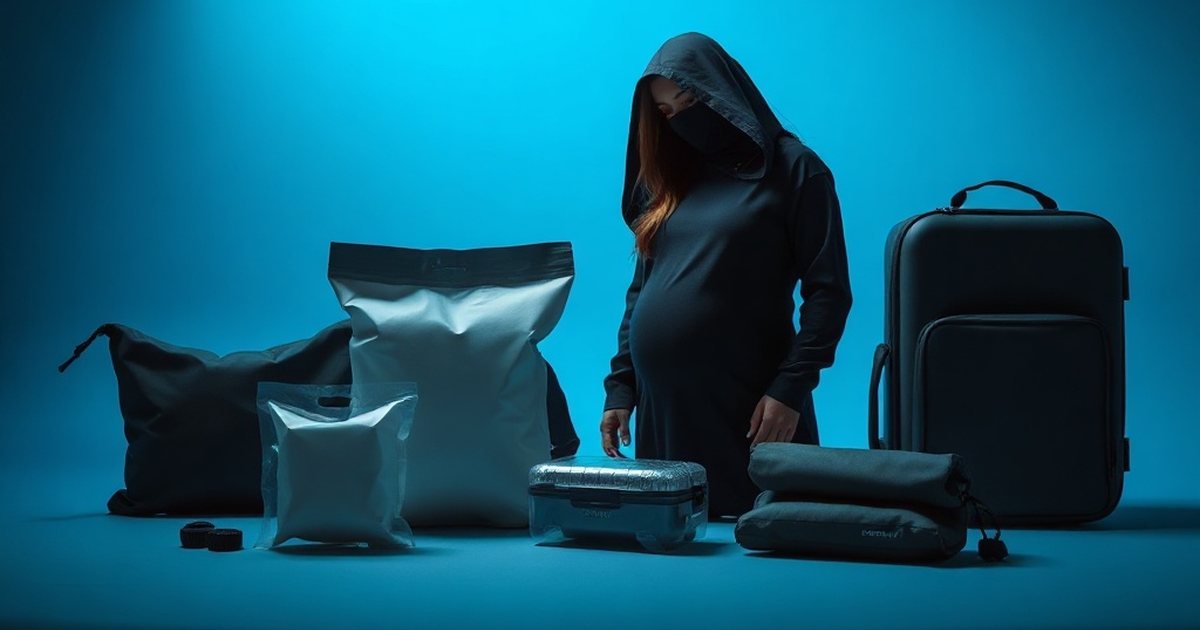
These garments are soft, breathable, and washable: making them practical as well as protective.
Independent modelling is less encouraging for belly bands. In simulations of anti-radiation pregnancy bands at 0.9, 1.8 and 2.4 GHz, the average field fell by no more than 30 percent even with a gap-free band, and the maximum field rose in more than 90 percent of the scenarios [9].
Care & Maintenance Tips
Since Faraday clothing contains conductive metals, it requires special care to maintain performance:
- Avoid bleach or harsh detergents.
- Wash in cold water with gentle detergent.
- Air-dry only, heat can degrade conductive fibers.
- Do not iron directly on the shielding layer.
Most manufacturers recommend replacing frequently used garments every 1 to 2 years for consistent effectiveness.
Common Misconceptions
“It Blocks All Radiation.”
No shielding material blocks all electromagnetic radiation. Faraday clothing significantly reduces exposure in specific frequency ranges but doesn’t create a zero-signal bubble.
“Wearing It Improves Health Immediately.”
Faraday clothing doesn’t cure or treat any condition; it simply reduces external RF energy. Any health benefits are indirect: through perceived comfort, sleep quality, or reduced worry.
“You Can’t Use Devices While Wearing It.”
Faraday fabrics can weaken signals, but in most cases, your phone or watch still functions: albeit at reduced performance. Some people wear shielding garments selectively (e.g., during sleep or travel) rather than continuously.
Buying Guide: What to Look For
When shopping for Faraday clothing, consider:
| Feature | What to Check | Why It Matters |
|---|---|---|
| Shielding Effectiveness | dB rating (40 to 80 dB typical) and frequency range (MHz-GHz) | Indicates how much reduction you can expect |
| Fabric Composition | Percentage of silver, copper, or stainless steel fibers | More conductive fibers = stronger shielding |
| Comfort & Fit | Breathable, flexible, and non-irritating materials | Encourages consistent wear |
| Certification or Testing | Independent lab results (SGS, Intertek, etc.) | Confirms authenticity |
| Care Instructions | Cold wash, no bleach, air-dry | Maintains shielding over time |
Popular examples:
- Lambs Silver Apparel: SilverFlex™ fabric, 99% RF blocking, made in the USA. (getlambs.com)
- SYB Boxer Briefs & Hoodies: Cotton-silver blends, certified lab-tested shielding. (shieldyourbody.com)
- BlocWave Clothing: Broad range, including beanies and maternity wear. (emfclothing.com)
A Balanced View: Science Meets Lifestyle
Mainstream science hasn’t confirmed any causal link between typical EMF exposure and adverse health effects. Yet, the appeal of Faraday clothing isn’t solely medical: it’s psychological and cultural.
In the same way people choose organic food or air purifiers, shielding apparel represents a lifestyle of intentional design: choosing what to let in and what to filter out.
It’s about comfort, control, and conscious living in a hyper-connected era.
The Future of Faraday Fashion
As smart textiles evolve, Faraday clothing may become even more sophisticated: integrating nanofiber meshes, graphene weaves, and multifunctional fabrics that combine EMF blocking with moisture-wicking, antibacterial, and temperature-regulating properties.
Designers are also moving beyond utilitarian looks toward sleek, wearable tech fashion: transforming what was once niche gear into everyday apparel.
Soon, Faraday protection may come built into jackets, yoga pants, or business suitsinvisible protection for an invisible world.
Final Thoughts
Faraday clothing bridges a fascinating intersection of science, fashion, and personal wellness. While it won’t create a perfect signal-free bubble, it offers measurable RF reduction, style, and reassurance: all without needing to give up modern connectivity.
If you’re looking to live more intentionally in a wireless world, a few well-chosen pieces of Faraday clothing can help you do just that: shielding not just your body, but your sense of calm.
References
- World Health Organization: Electromagnetic Fields FAQ (who.int)
- “RF and EMF Shielding in Textiles”: Journal of Industrial Textiles (SAGE Publications)
- Lambs SilverFlex Technology Overview (getlambs.com)
- SYB Apparel Product Testing Reports (shieldyourbody.com)
- RadiaSmart EMF Protection Wear (radiasmart.com)
Recommended Faraday Clothing & Accessories
Browse all EMF protection products
Frequently Asked Questions
How does Faraday clothing actually work to block electromagnetic frequencies?
Faraday clothing incorporates conductive materials like silver, copper, or stainless steel fibers into the fabric, which form a fine mesh that reflects and redirects electromagnetic fields. This works on the same principle as a Faraday cage, named after 19th-century scientist Michael Faraday, who discovered that conductive enclosures could block electric fields.
Can you still use your phone and other wireless devices while wearing Faraday clothing?
Usually yes. Faraday clothing only weakens signals that pass through the fabric, so your phone or watch generally still works, though possibly at reduced performance. A device fully enclosed in shielded fabric, such as a pouch, is a different case and will lose signal.
Will wearing Faraday clothing improve my health immediately?
Wearing Faraday clothing is not a quick fix for health issues. While it may reduce your exposure to electromagnetic frequencies, any health benefit is unproven. Blinded studies have not found that fields trigger symptoms in people who report sensitivity, and expecting harm can itself produce symptoms [8].

What types of Faraday clothing are available for everyday wear?
Faraday clothing now comes in many everyday styles including hoodies, jackets, t-shirts, beanies, hats, underwear, pajamas, and specialized maternity wear. These garments combine frequency-blocking technology with modern fashion, making EMF protection accessible for various lifestyles and preferences.
References
- Pušić T et al. Electromagnetic Shielding Properties of Knitted Fabric Made from Polyamide Threads Coated with Silver. Materials (Basel, Switzerland) (2021). PMID 33800263
- Ming Li Jiao et al. Electromagnetic Interference Shielding Properties of Silver-Plated Polyester Fabric. Applied Mechanics and Materials (2012). doi:10.4028/www.scientific.net/amm.239-240.310
- Mustafa Sabri Ozen et al. Investigation of electromagnetic shielding effectiveness of needle punched nonwoven fabric produced from conductive silver coated staple polyamide fibre. Journal of the Textile Institute (2015). doi:10.1080/00405000.2015.1070604
- Dan Yu et al. Preparation of silver-plated polyimide fabric initiated by polyaniline with electromagnetic shielding properties. Journal of Industrial Textiles (2017). doi:10.1177/1528083717692592
- Yun Mao et al. Conductive, antibacterial, and electromagnetic shielding silver‐plated cotton fabrics activated by dopamine. Journal of Applied Polymer Science (2018). doi:10.1002/app.46766
- Johnson EE et al. The effects of radiofrequency exposure on adverse female reproductive outcomes: A systematic review of human observational studies with dose-response meta-analysis. Environment international (2024). PMID 38880062
- Peter A. Valberg et al. Workgroup Report: Base Stations and Wireless Networks, Radiofrequency (RF) Exposures and Health Consequences. Environmental Health Perspectives (2006). PMID 17431492
- Rubin GJ et al. Idiopathic environmental intolerance attributed to electromagnetic fields (formerly 'electromagnetic hypersensitivity'): An updated systematic review of provocation studies. Bioelectromagnetics (2010). PMID 19681059
- Fatemeh Dehrouyeh et al. On the Shielding Effectiveness of Anti-Electromagnetic-Radiation Clothes for Pregnant Females. (2023). doi:10.36227/techrxiv.22890860.v1
These statements have not been evaluated by the Food and Drug Administration. This information is not intended to diagnose, treat, cure, or prevent any disease. Content is for informational purposes only and is not medical advice; consult a qualified healthcare provider before starting any supplement. As an Amazon Associate we earn from qualifying purchases.