RF Blocking Clothing Explained: Science, Benefits, and Everyday Uses
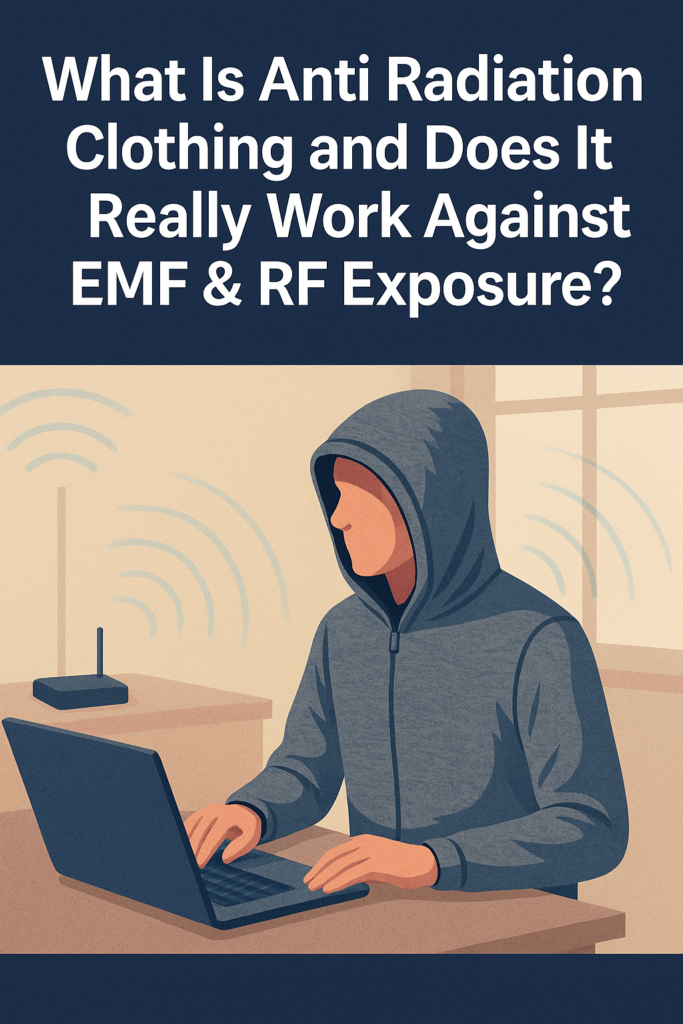
RF Blocking Clothing is emerging as a practical option for people looking to reduce their exposure to radiofrequency (RF) radiation from WiFi, cell towers, and connected devices. This guide explains why RF blocking clothing is needed, how it works, what products exist, and how to use it in daily life.
What Is RF Blocking Clothing?
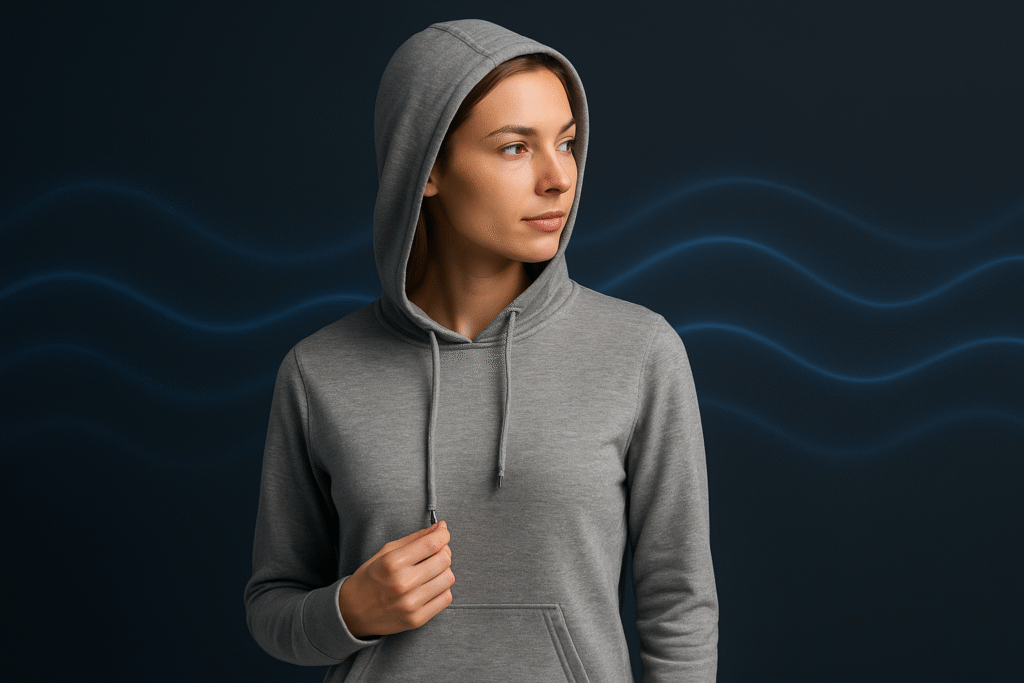
RF Blocking Clothing (also called RF shielding or RF attenuating apparel) uses conductive fibers, often silver, copper, or stainless steel, woven into soft blocking fabrics that reflect or absorb electromagnetic waves. When worn, these garments help reduce how much radiofrequency energy reaches your body.
The goal isn’t perfect isolation. It’s balance: limiting unnecessary exposure while maintaining comfort and style.
Why It’s Becoming Relevant
Wireless devices and 5G networks have made RF exposure nearly constant. While science continues to evaluate long-term health implications, many consumers adopt a precautionary approach, especially in bedrooms and home offices.
For context, whole-body SAR computed from everyday personal meter readings was below the 0.08 W/kg basic restriction for the general public, and a WHO-commissioned meta-analysis found that ever or regular mobile phone use was not associated with glioma risk [3][4].
Common motivations include:
- Reducing nighttime exposure from routers and nearby electronics.
- Supporting wellness goals for people who attribute symptoms to electromagnetic fields, although blinded provocation studies have found no robust evidence that fields trigger those symptoms and support a nocebo effect, meaning expectation of harm [1].
- Lowering cumulative load from multiple sources such as smart meters, Bluetooth, and cell towers.
- Integrating wellness technology with daily wear instead of lifestyle disruption.
How RF Blocking Clothing Works
How It Works
RF blocking clothing functions like a flexible Faraday cage. Conductive fibers create a surface that redirects or absorbs radiofrequency waves.
- Incoming signals are reflected or converted into low-grade heat.
- The weave density, material conductivity, and coverage area determine performance.
- Independent lab tests often report attenuation levels in decibels (dB) showing how much signal reduction occurs across frequencies.
RF blocking clothing works by reflecting signal, and gaps undo the benefit
A conductive layer bounces RF
Metal-coated fabric, foil, mesh and conductive paint reflect most incoming radio-frequency energy.
Some energy is lost inside
Thicker or multi-layer materials also absorb part of the signal as it passes through.
Gaps let signals through
Seams, open weaves, zips and unsealed edges leak, and short wavelengths slip through smaller gaps.
Low-frequency magnetic fields pass
Thin fabric or paint does little against 50/60 Hz magnetic fields; distance or special high-permeability metal is needed.
A garment shields only what it covers
How well a material shields depends on the frequency and on how completely it covers the space.
Chart: frequencyblockers.com: RF blocking clothing works by reflecting signal, and gaps undo the benefit
Embed this chart
Free to reuse on your site. Copy the code below; please keep the credit link.
A peer-reviewed study found that certain knitted fabrics reduced electromagnetic radiation across the 100 MHz-1000 MHz range, depending on thread type and structure (PMC 7962651).

Scientific Considerations
- Coverage: More covered surface = higher attenuation.
- Fit: Loose or open seams allow signal penetration.
- Frequency range: Shielding may vary across WiFi, 4G, and 5G bands.
- Maintenance: Fabric integrity degrades if washed incorrectly.
- Testing: Look for published lab data and frequency charts.
Popular RF Blocking Clothing Products
| Product | Description | Merchant |
|---|---|---|
| SLNT Faraday Jacket & Pants Bundle | Full-body shielding set using conductive fibers for total coverage | slnt.com |
| Radia Smart Premium Shielding Poncho | Silver-thread poncho ideal for lounging or travel | Etsy: Radia Smart |
| Fusion Faraday Silver-Lined Pants | Breathable cotton pants with silver lining for partial body protection | Proteck’d Apparel |
| Mission Darkness EMF Blackout Hat | Lightweight RF blocking hat tested for cell and WiFi bands | mosequipment.com |
| SafeSleeve RF Blocking Beanie | Soft silver-fiber beanie for sleep or daily wear | safesleevecases.com |
| DefenderShield RF Blocking Cap | Everyday baseball-cap style shielding hat | defendershield.com |
| WOREMOR Silver Fiber Night Shirt | Nightwear for low-EMF sleep environments | emrss.com |
How to Incorporate RF Blocking Clothing into Daily Life
Practical Steps
- Identify high-exposure zones such as work desks, routers, or shared walls with smart meters.
- Select the right garment: ponchos or hoods for rest; jackets or caps for travel.
- Combine with other strategies: disable wireless functions at night, move devices away from the body, or use grounding accessories.
- Follow care instructions carefully: avoid bleach or high heat.
- Wear it consistently during higher-exposure activities.
Lifestyle Integration
RF blocking clothing fits best when it feels natural. Choose designs that blend with everyday outfits, not industrial gear, so protection becomes an easy habit rather than a chore.
Common Mistakes to Avoid
- Expecting 100% isolation: No fabric blocks every signal. The goal is reduction, not elimination.
- Ignoring testing data: Choose products with published attenuation charts.
- Improper washing: Conductive threads can break down. Use gentle, cool wash cycles.
- Focusing on one area only: Covering head alone won’t protect torso; consider overall coverage balance.
- Over-reliance: Clothing complements environmental changes: it’s not a standalone fix.
Key Takeaways
- RF Blocking Clothing uses conductive fibers to reduce radiofrequency exposure by reflection or absorption.
- Its popularity grows as wireless density increases and people seek balanced, low-EMF lifestyles.
- Effectiveness depends on fabric composition, fit, frequency range, and coverage.
- Available options range from affordable beanies to full-body suits.
- Combine wearables with environmental mitigation (distance, device management, and grounding) for best results.
Further Reading
- Pušić T. et al. “Electromagnetic Shielding Properties of Knitted Fabric for Protection Against Electromagnetic Radiation.” PMC 7962651.
- OSHA (1993). Interpretation Letter on RF Protective Clothing. osha.gov
- Safe Living Technologies: RF Shielding Fabric and Apparel Guide. safelivingtechnologies.com
- Less EMF: Shielding Fabrics and Textiles. lessemf.com
- HAVN Wear: Science Overview on EMF Exposure. havnwear.com
Featured Products
Looking for quality EMF protection? Check out these recommended products:
Frequently Asked Questions
What materials are used in RF blocking clothing to shield against electromagnetic radiation?
RF blocking clothing uses conductive fibers such as silver, copper, or stainless steel woven into soft fabrics that reflect or absorb electromagnetic waves. These materials create a flexible barrier similar to a Faraday cage, reducing the amount of radiofrequency energy that reaches your body without requiring perfect isolation.

Is RF blocking clothing actually effective, or is it just a marketing gimmick?
RF blocking clothing works by redirecting or absorbing radiofrequency waves using conductive fibers, similar to how traditional Faraday cages function. While it won’t provide complete isolation, many consumers adopt this precautionary approach to reduce cumulative exposure from WiFi, cell towers, and connected devices, particularly in bedrooms and home offices.
Can I wear RF shielding apparel all day without discomfort?
Yes, RF blocking clothing is designed for everyday wear with comfort and style in mind. Modern RF shielding fabrics are soft and flexible, allowing you to integrate electromagnetic protection into your daily wardrobe rather than disrupting your lifestyle or requiring isolation from your environment.

Who should consider wearing RF blocking clothing?
Some people with self-reported electromagnetic sensitivity choose RF blocking clothing, but blinded provocation studies have found no robust evidence that fields trigger their symptoms, so the benefit cannot be expected from the shielding itself [2][1], those who work from home surrounded by wireless devices, and individuals seeking to reduce nighttime exposure from routers and nearby electronics. Anyone adopting a precautionary approach to wireless radiation exposure while maintaining normal daily activities may find it useful.
References
- Rubin GJ et al. Idiopathic environmental intolerance attributed to electromagnetic fields (formerly 'electromagnetic hypersensitivity'): An updated systematic review of provocation studies. Bioelectromagnetics (2010). PMID 19681059
- Rubin GJ et al. Electromagnetic hypersensitivity: a systematic review of provocation studies. Psychosomatic medicine (2005). PMID 15784787
- Joseph W et al. Estimation of whole-body SAR from electromagnetic fields using personal exposure meters. Bioelectromagnetics (2010). PMID 20041435
- Karipidis K et al. The effect of exposure to radiofrequency fields on cancer risk in the general and working population: A systematic review of human observational studies – Part I: Most researched outcomes. Environment international (2024). PMID 39241333
These statements have not been evaluated by the Food and Drug Administration. This information is not intended to diagnose, treat, cure, or prevent any disease. Content is for informational purposes only and is not medical advice; consult a qualified healthcare provider before starting any supplement. As an Amazon Associate we earn from qualifying purchases.