Near Field Antennas for EMF Testing: A Complete Guide to Precision RF Diagnostics
Radiofrequency (RF) fields behave differently at close range compared to long distances. While broadband RF detectors and spectrum analyzers measure overall exposure, they cannot always isolate specific sources, identify interference patterns, or diagnose issues within a device’s immediate electromagnetic environment. This is where Near Field Antennas for EMF Testing become essential. These specialized antennas are engineered to detect electromagnetic activity within inches or centimeters of a device, circuit, appliance, or cable.
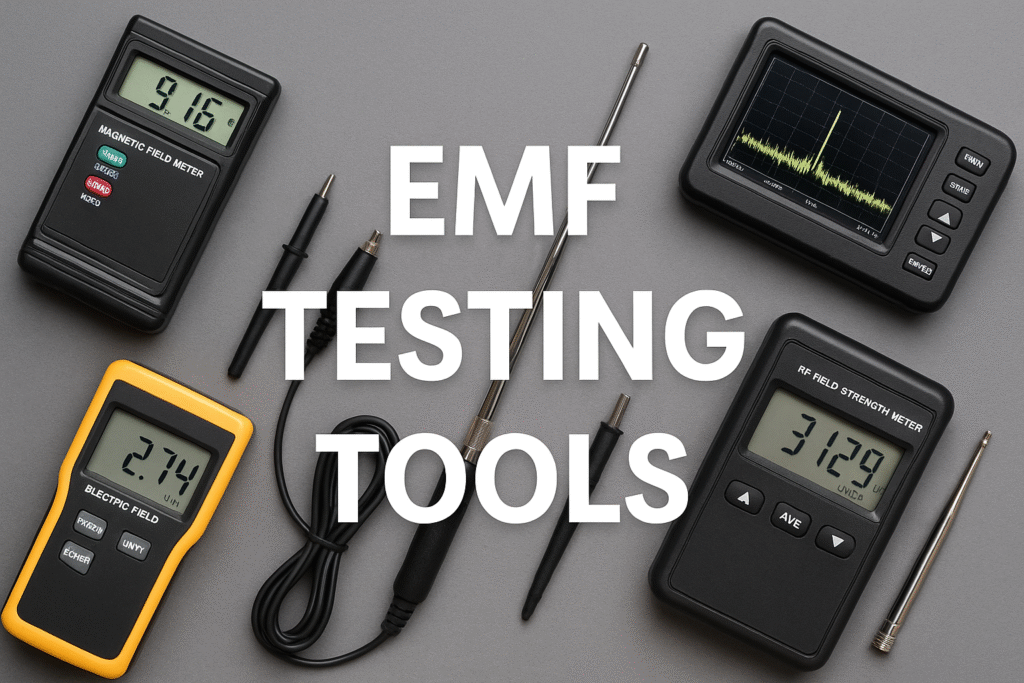
Near field testing is critical in environments where RF fields are generated internally—inside electronics, smart appliances, routers, laptops, IoT devices, and other modern systems. This guide explains how Near Field Antennas for EMF Testing work, what they measure, where they are used, and how to choose the right set for your toolkit. For a complete overview of EMF testing equipment, visit:
https://frequencyblockers.com/emf-testing-tools/
What Near-Field Antennas for EMF Testing Measure
RF fields have two distinct zones:
- Near Field (close range): Complex mixture of electric and magnetic components surrounding a transmitting device.
- Far Field (distance): Stable electromagnetic wave propagating outward.
Near Field Antennas for EMF Testing are designed to measure the near-field zone, which may extend a few centimeters to several feet depending on frequency and power.
These antennas measure:
- Local RF emissions immediately around circuits
- Leakage from electronic enclosures
- Crosstalk between components
- RF hotspots on device surfaces
- Harmonics, spurs, and unintended transmissions
- Interference patterns inside appliances
- Radiation from internal antennas and chips
Because the near-field zone is highly reactive and unpredictable, specialized antennas are required.
Why Near-Field Antennas Are Essential in EMF Diagnostics
1. Detect Hidden RF Sources
Routers, laptops, smart TVs, gaming consoles, and IoT devices may emit RF energy in unexpected places. Near-Field Antennas reveal these hotspots.
2. Identify Defective or Noisy Electronics
Faulty switching components, improperly shielded circuits, loose connections, or ground faults can generate unique signatures.
3. Useful for Engineering and Consumer EMF Testing
Engineers rely on near-field tools to test products before launching them. Home assessors use them to locate high-RF areas on devices people use daily.
4. Essential for Evaluating Shielding
When applying RF shielding tape, paint, or mesh, Near-Field Antennas measure leakage points around seams and interfaces.
5. More Accurate Than Broadband Meters for Close Range
Broadband meters saturate or lose resolution when measuring at very close distances. Near-field antennas are designed for high accuracy in tight spaces.
How Near Field Antennas for EMF Testing Work
Near-field antennas couple directly to electromagnetic fields surrounding a device. Unlike far-field antennas, which are tuned to specific wavelengths, near-field probes rely on magnetic induction or capacitive coupling.
Types of sensing technologies:
1. Magnetic Near-Field Probes (H-field)
Measure magnetic components
- Ideal for switching power supplies
- Diagnose clock harmonics
- Identify cable emissions
2. Electric Near-Field Probes (E-field)
Measure electric field concentrations
- Useful for pinpointing leakage through seams
- Identify electrostatic coupling issues
3. Broadband Near-Field Probes
Cover wide frequency ranges for fast scanning.
4. Shielded Near Field Probes
Provide improved directionality and reduced interference.
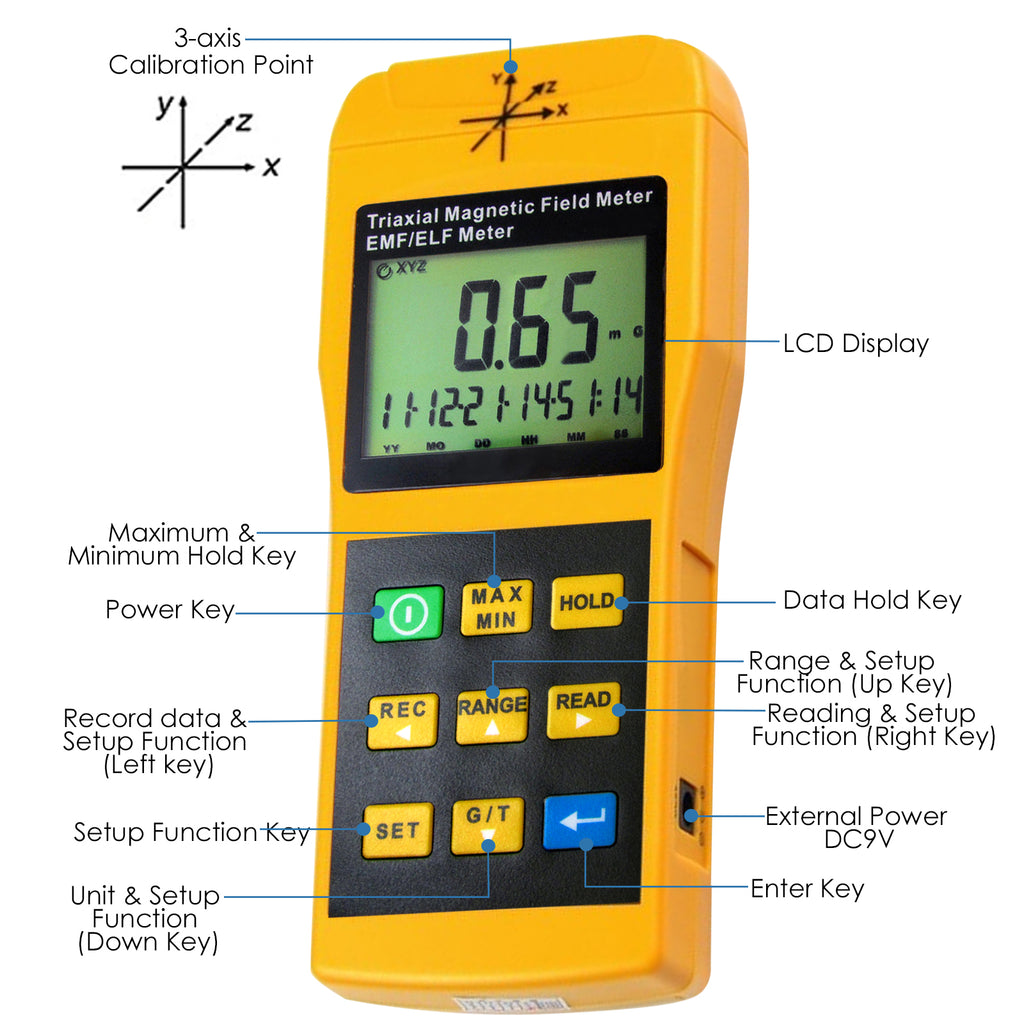
Near-field antennas are typically connected to spectrum analyzers, oscilloscopes, or advanced RF meters for accurate visualization.
Common Applications for Near Field Antennas
1. Consumer EMF Testing
Identify hotspots on:
- Wi-Fi routers
- Laptops and tablets
- Smart appliances
- LED lighting systems
- Smart TVs and streaming devices
2. Product Engineering and R&D
Near-Field Antennas are used during pre-compliance testing to locate emissions before official regulatory testing.
3. Diagnosing Interference
Near-field tools reveal sources of:
- RF noise
- Crosstalk
- EMI interference
- Harmonic radiation
4. Evaluating Shielding Effectiveness
Test whether shielding tape, conductive gaskets, or RF enclosures reduce emissions.
5. Appliance and Power Supply Diagnostics
Switch-mode power supplies, inverters, and chargers all produce characteristic signatures that near-field antennas detect.
How to Use Near Field Antennas for EMF Testing
1. Select the Proper Probe
- Magnetic probes for inductive noise
- Electric probes for radiated leakage
- Broadband probes for general scanning
2. Connect the Probe to a Measurement Device
Most commonly, a:
- Spectrum analyzer
- Oscilloscope
- RF diagnostic tool
3. Move the Probe Slowly Over the Device
Keep the probe close—typically 1–30 mm from the surface.
4. Map the Emissions
Move horizontally, vertically, and diagonally across:
- Circuit boards
- Cable junctions
- Vents
- Antenna housings
- Power supplies
5. Document Peaks
Record:
- Frequency of emissions
- Power intensity
- Location on device
- Possible causes
6. Test Again After Mitigation
Re-evaluate shielding, cable routing, or grounding improvements.
Understanding Near-Field Measurement Results
1. Peaks at Specific Frequencies
Indicate harmonics or clock signals.
2. Broadband Noise
Suggests switching power supplies or noisy circuits.
3. Repetitive Pulses
Often indicate microcontroller operations or wireless transmissions.
4. Sudden Spikes
May point to grounding issues or failing components.
Near-field testing reveals problems invisible to broadband meters.
Types of Near-Field Antenna Sets
1. Basic Near Field Probe Kits
Include 3–4 probes (E-field and H-field).
Affordable and suitable for entry-level diagnostics.
2. Shielded Probe Kits
Higher directionality and reduced interference.
3. High-Frequency Probe Kits
Extend up to 3–6 GHz or higher.
4. Premium EMC Pre-Compliance Kits
Used by engineering teams and professional EMF consultants.
Price Ranges for Near-Field Antennas for EMF Testing
| Category | Typical Price | Best For |
|---|---|---|
| Entry-Level | $80–$200 | Basic scanning of consumer electronics |
| Mid-Range | $200–$600 | Serious EMF consultants and technicians |
| Professional | $600–$2,500+ | Engineering labs and compliance testing |
The price varies widely based on shielding, frequency range, and probe sensitivity.
Advantages of Near-Field Antennas for EMF Testing
- High precision in close-range RF measurement
- Essential for diagnosing noisy electronics
- Reveal interference patterns and leakage points
- Work with a variety of advanced instruments
- Ideal for analyzing smart devices and modern electronics
Limitations of Near-Field Antennas
- Require a compatible analyzer or oscilloscope
- Measure only near-field zones, not far-field intensity
- Not suitable for whole-room RF assessments
- Sensitive to probe angle and distance
- Interpretation requires some RF knowledge
These limitations make them specialized rather than general-purpose tools.
Near-Field Antennas vs. Broadband RF Detectors
| Near-Field Antennas for EMF Testing | Broadband RF Detectors |
|---|---|
| Designed for close range | Designed for room-scale exposure |
| Identify exact hotspots | Provide overall RF readings |
| Require advanced equipment | Standalone operation |
| Diagnostic precision | General exposure awareness |
Both tools serve different but complementary roles.
Common Mistakes When Using Near-Field Antennas
- Holding the probe too far from the surface
- Measuring at inconsistent angles
- Failing to calibrate or stabilize the analyzer
- Confusing unintentionally coupled signals with leakage
- Moving the probe too quickly to capture accurate peaks
Slow, deliberate testing produces the most reliable results.
FAQs About Near-Field Antennas for EMF Testing
Do these antennas measure wireless exposure in a room?
No—they measure close-range emissions.
Can they detect 5G signals?
Yes, if paired with equipment capable of measuring the appropriate frequencies.
Are they safe to use?
Yes—near-field antennas are passive sensing tools.
Do you need engineering experience to use them?
Basic scanning is accessible, but interpretation improves with RF knowledge.
Can they test shielding?
Yes—excellent for detecting seam leakage and flaws.
Key Takeaways
- Near-Field Antennas for EMF Testing provide precision RF diagnostics that reveal emissions and interference patterns invisible to standard EMF meters.
- They are essential for evaluating close-range exposure, diagnosing electronic noise, testing shielding, and troubleshooting modern wireless devices.
- These antennas pair with spectrum analyzers and oscilloscopes for detailed visualization and analysis.
- For additional EMF testing tools, visit:
https://frequencyblockers.com/emf-testing-tools/
References
- National Institute of Standards and Technology (NIST) – RF Field Measurement Principles
https://www.nist.gov - Frequency Blockers – EMF Testing Tools Overview
https://frequencyblockers.com/emf-testing-tools/
Recommended EMF Testing Equipment
Ready to start testing? Check out our top-rated EMF meters:
- Safe and Sound Pro II RF Meter
- Safe and Sound Classic II RF Meter
- Safe and Sound Pro mmWave 20GHz Meter
Browse all EMF protection products →
Frequently Asked Questions
What’s the difference between near field antennas and regular EMF meters?
Near field antennas detect electromagnetic activity within inches or centimeters of a specific device, allowing you to isolate sources and identify interference patterns that broadband RF detectors cannot. Regular EMF meters measure overall exposure across a wider area but lack the precision needed for close-range diagnostics of individual appliances or circuits.
Can I use near field antennas for EMF testing in my own home?
Yes, near field antennas are practical for consumer EMF testing and help you identify which household devices are producing the most radiofrequency emissions. You can map emissions around your WiFi router, smart meter, power supplies, or other electronics to understand your personal exposure and evaluate whether shielding solutions are working.
How do I know which type of near field probe I need?
You should select based on what you’re testing: magnetic probes (H-field) detect current in cables and transformers, electric probes (E-field) sense voltage fields, and broadband probes measure both types across multiple frequencies. For consumer use, a basic near field probe kit works well, while shielded or high-frequency kits are better if you’re dealing with complex interference or sensitive equipment.
What should I do after I get results from near field antenna testing?
Document the peaks and frequencies you find, then implement mitigation measures like repositioning devices, adding shielding, or addressing noisy electronics. After making changes, test again with the same antenna and measurement device to verify that your EMF reduction efforts are actually lowering emissions in that specific area.