How It Works, Why People Wear It, and What to Look For
A Faraday Beanie is one of the most discreet and wearable forms of EMF protection available today. Designed to reduce exposure to radiofrequency (RF) and electromagnetic (EMF) radiation around the head, these beanies combine comfort, style, and shielding science. This guide explains what Faraday beanies are, how they function, what makes a quality design, and how to choose one that truly works.
What Is a Faraday Beanie?
A Faraday Beanie is a knit or lined cap infused with conductive materials such as silver, copper, or stainless-steel fibers. The term “Faraday” comes from the Faraday cage principle, which uses conductive material to block or redirect electromagnetic fields.
When you wear a Faraday beanie, these conductive threads act as a shield, reflecting and absorbing RF energy from sources like WiFi routers, Bluetooth devices, cell towers, and 5G antennas. The goal isn’t to completely block all EMF, which isn’t practical, but to reduce head-level exposure where many people keep their phones or experience the highest intensity of nearby signals.
For scale: in personal meter recordings of 200 randomly selected residents, the maximum electric field strength was always below 1.5 V/m, and 94 percent of broadband measurements in Belgian schools, homes and public places were below 1 V/m [6][7].
Faraday beanies have grown popular because they look like ordinary winter hats while quietly providing a layer of protection against wireless radiation.
Why People Use Faraday Beanies
1. Convenience and Comfort
A Faraday beanie is lightweight, breathable, and can be worn anywhere: indoors or outdoors, during sleep, meditation, or travel. Unlike bulky shielding gear, it integrates easily into daily life. Like a faraday hoodie, it can be an easy stylish way to be comfortable
Research note: Pooling two studies, people who attribute symptoms to EMF reported lower well-being during real than sham base-station exposure only when they knew the exposure status, not in double-blind trials [8].
2. Head-Focused Coverage
The brain and pineal region have not been shown to be especially sensitive to radiofrequency fields: daily exposure to GSM or DCS phones for four weeks did not disrupt the melatonin profile in 37 young men, and the wider literature on RF and melatonin is conflicting. People concerned about EMF exposure often start with the head because phones are held there [1][2].
3. Everyday Use Scenarios
- While sleeping in high-signal apartments or near WiFi routers
- During commutes or air travel when surrounded by wireless devices
- While working on laptops or phones for extended periods
- During relaxation or meditation, to reduce environmental interference
4. Discreet Style
Unlike full hoods or shielding ponchos, beanies blend into everyday outfits. They look normal, feel comfortable, and don’t attract attention.
How Faraday Beanies Work
How Shielding Works
Faraday beanies rely on conductive textiles that interact with electromagnetic fields by:
- Reflection: Conductive surfaces bounce electromagnetic waves away.
- Absorption: Some RF energy is converted into tiny amounts of heat within the fabric.
- Redirection: The energy follows the conductive fibers instead of penetrating deeper toward the body.
A beanie shields the head only as far as its fabric and fit allow
A conductive layer bounces RF
Metal-coated fabric, foil, mesh and conductive paint reflect most incoming radio-frequency energy.
Some energy is lost inside
Thicker or multi-layer materials also absorb part of the signal as it passes through.
Gaps let signals through
Seams, open weaves, zips and unsealed edges leak, and short wavelengths slip through smaller gaps.
Low-frequency magnetic fields pass
Thin fabric or paint does little against 50/60 Hz magnetic fields; distance or special high-permeability metal is needed.
Gaps at the edge let signal around the cap
How well a material shields depends on the frequency and on how completely it covers the space.
Chart: frequencyblockers.com: A beanie shields the head only as far as its fabric and fit allow
Embed this chart
Free to reuse on your site. Copy the code below; please keep the credit link.
Measured Performance
Shielding effectiveness is measured in decibels (dB). A higher dB rating means more attenuation (signal reduction).
For reference:
- 20 dB: 99% of incident power blocked
- 30 dB: 99.9% of incident power blocked
- 50 dB: 99.999% of incident power blocked

Most quality Faraday beanies use materials tested between 10 MHz and 10 GHz, covering common WiFi, Bluetooth, and 5G frequencies.
Material Science
- Silver fiber: Excellent conductor, natural antimicrobial properties, and soft texture.
- Copper fiber: High conductivity but more rigid; often blended for flexibility.
- Stainless steel fiber: Durable and cost-effective but less conductive than silver.
Care and Durability
Conductive fibers degrade over time if treated harshly. Always wash in cold water, gentle cycle, and air dry. Avoid bleach and high heat to preserve shielding properties.
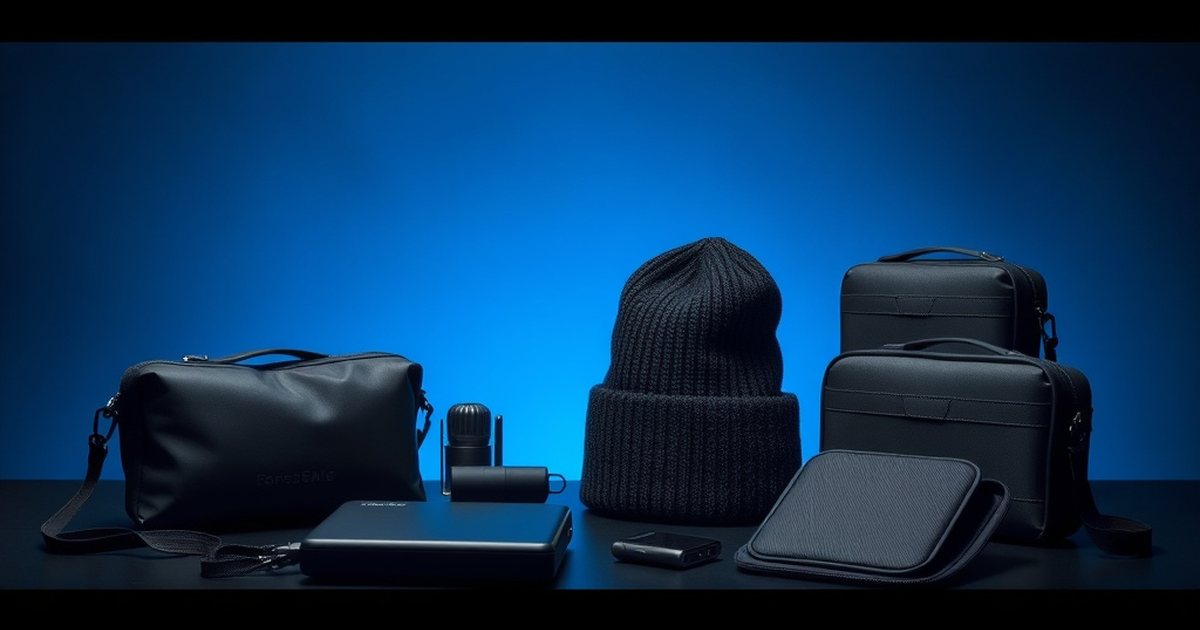
Key Benefits of Wearing a Faraday Beanie
- Reduces localized EMF exposure near the head, brain, and thyroid area.
- A soft hat to sleep in [3] although a one-year Swiss cohort of 955 adults found no association between modelled environmental RF exposure and sleep disturbance [3].
- Provides portable shielding, easy to carry and wear anywhere.
- Helps frequent travelers exposed to multiple WiFi and cellular networks.
- Stylish and unnoticeable, blends into any outfit while offering function.
Top Faraday Beanie Products
| Product | Description | Merchant |
|---|---|---|
| DefenderShield EMF Radiation Protection Beanie | Silver-lined, soft cotton outer layer; advertised for 99% attenuation | defendershield.com |
| SafeSleeve RF Blocking Beanie | Lightweight silver fiber beanie for daily wear and sleep | safesleevecases.com |
| Radia Smart Silver Fiber Beanie | Silver-thread knit design; OEKO-TEX certified | radiasmart.com |
| Proteck’d EMF Shielding Beanie | Silver-nylon blend, rated up to 50 dB attenuation | proteckd.com |
| WOREMOR Silver Fiber EMF Beanie | Made in Canada; high-conductivity silver blend | emrss.com |
Product Highlights
- DefenderShield Beanie: Premium comfort and verified lab results; well-suited for daily wear or sleep.
- SafeSleeve RF Beanie: Great entry-level option, lightweight, and travel-friendly.
- Radia Smart Silver Fiber Beanie: Balanced affordability and comfort; ideal for sleeping or lounging.
- Proteck’d EMF Beanie: Strong technical performance with high shielding ratings.
- WOREMOR Silver Fiber Beanie: Professional-grade protection with long-lasting silver thread durability.
How to Use a Faraday Beanie Effectively
- Wear during high-exposure times, when using your phone, laptop, or in dense wireless areas.
- Use at night if your bed is near WiFi routers or smart home devices.
- Pair with EMF-conscious habits: keep phones off your body, disable unnecessary wireless features, and create a lower-EMF sleep space.
- Avoid layering under non-breathable fabrics; airflow helps dissipate heat and moisture.
- Rotate usage, wear it when exposure is highest; you don’t need it 24/7.
Faraday Beanie vs. Regular Beanie
| Feature | Faraday Beanie | Regular Beanie |
|---|---|---|
| Material | Conductive fibers (silver, copper, steel blends) | Cotton, acrylic, or wool |
| Purpose | EMF/RF shielding and comfort | Warmth or style |
| Effect on EMF | Reflects and attenuates signals | None |
| Wash Care | Cold wash, air dry | Normal wash acceptable |
Faraday beanies are more specialized and slightly costlier, but the additional functionality and reassurance make them appealing for health-conscious or sensitive individuals.
Common Mistakes and Myths
- Myth: Faraday beanies eliminate radiation completely.
False: they reduce exposure, not eliminate it. Open areas around the face still allow partial EMF penetration. - Mistake: Choosing style over material specs.
The outer look doesn’t matter if the inner shielding layer isn’t properly conductive or tested. - Myth: Any silver-colored beanie offers protection.
False: only lab-tested conductive fabrics with verified attenuation offer true performance. - Mistake: Ignoring wash instructions.
High heat or harsh detergent can destroy conductive threads.
Who Benefits Most from a Faraday Beanie
- Urban dwellers near multiple cell towers or apartment WiFi networks
- Remote workers sitting near routers and laptops for long hours
- Travelers exposed to high-density signals in airports and hotels
- Wellness-focused individuals seeking EMF-conscious lifestyles
- Electrosensitive people who feel discomfort around electronics (in 46 blind or double-blind studies with 1175 volunteers, fields did not trigger symptoms, while expecting harm did) [4][5]
How to Choose the Right Faraday Beanie
- Check attenuation data: Look for verified dB ratings and frequency ranges.
- Choose natural fiber blends: Silver-nylon or silver-cotton offer comfort and breathability.
- Look for independent testing: Trusted labs or standards (e.g., ASTM D4935) indicate credible results.
- Evaluate fit: The beanie should cover the entire head snugly without being too tight.
- Prioritize comfort: You’ll wear it more if it feels natural and stylish.
Key Takeaways
- Faraday Beanies use conductive textiles to reduce RF and EMF exposure, especially around the head.
- They’re easy to wear, travel-friendly, and compatible with most lifestyles.
- Choose based on material quality, shielding performance, and independent testing, not just marketing claims.
- Integrate them into a balanced EMF reduction plan, distance, grounding, and device management are equally important.
- Reliable brands include DefenderShield, Radia Smart, SafeSleeve, Proteck’d, and WOREMOR.
Further Reading
- Pušić, T. et al., Electromagnetic Shielding Properties of Knitted Fabric for Protection Against Electromagnetic Radiation (PMC, 2021).
- ASTM D4935-18Standard Test Method for Measuring the Electromagnetic Shielding Effectiveness of Planar Materials.
- Safe Living TechnologiesRF Shielding Apparel Overview. safelivingtechnologies.com
- Less EMFShielding Fabrics and Clothing. lessemf.com
- HAVN WearScience of EMF and Human Exposure. havnwear.com
Featured Products
Looking for quality EMF protection? Check out these recommended products:
Frequently Asked Questions
What materials are used in a Faraday beanie to block EMF radiation?
Faraday beanies are infused with conductive materials such as silver, copper, or stainless-steel fibers that work according to the Faraday cage principle. These conductive threads reflect and absorb radiofrequency (RF) energy from sources like WiFi routers, cell towers, and 5G antennas to reduce your head-level exposure.
Can you wear a Faraday beanie all day without discomfort?
Yes, Faraday beanies are designed to be lightweight and breathable, making them comfortable for all-day wear whether you’re indoors or outdoors. You can wear one during sleep, meditation, travel, or daily activities without the bulk associated with other shielding gear.
Will a Faraday beanie completely block all electromagnetic fields?
No, a Faraday beanie is not designed to completely block all EMF radiation, which isn’t practical in real-world conditions. Instead, it reduces your overall head-level exposure to wireless radiation, particularly where you keep your phone or experience the highest intensity of nearby signals.
Who should consider wearing a Faraday beanie and why?
People concerned about EMF exposure, especially those who keep a phone at the head or spend long hours near routers [4][5], may benefit from wearing a Faraday beanie. It’s a way to lower head-level RF exposure during prolonged phone use [1][2], sleep in apartments near WiFi routers, or during commutes surrounded by wireless devices.
References
- René de Sèze et al. Evaluation in humans of the effects of radiocellular telephones on the circadian patterns of melatonin secretion, a chronobiological rhythm marker. Journal of Pineal Research (1999). PMID 10551772
- Selmaoui B et al. Association Between Mobile Phone Radiation Exposure and the Secretion of Melatonin and Cortisol, Two Markers of the Circadian System: A Review. Bioelectromagnetics (2021). PMID 33238059
- Evelyn Mohler et al. Exposure to Radiofrequency Electromagnetic Fields and Sleep Quality: A Prospective Cohort Study. PLoS ONE (2012). PMID 22624036
- Rubin GJ et al. Electromagnetic hypersensitivity: a systematic review of provocation studies. Psychosomatic medicine (2005). PMID 15784787
- Rubin GJ et al. Idiopathic environmental intolerance attributed to electromagnetic fields (formerly 'electromagnetic hypersensitivity'): An updated systematic review of provocation studies. Bioelectromagnetics (2010). PMID 19681059
- Jean‐François Viel et al. Residential exposure to radiofrequency fields from mobile phone base stations, and broadcast transmitters: a population-based survey with personal meter. Occupational and Environmental Medicine (2009). PMID 19336431
- Leen Verloock et al. Assessment of Radio Frequency Exposures in Schools, Homes, and Public Places in Belgium. Health Physics (2014). PMID 25353235
- Eltiti S et al. Aggregated data from two double-blind base station provocation studies comparing individuals with idiopathic environmental intolerance with attribution to electromagnetic fields and controls. Bioelectromagnetics (2015). PMID 25644455
These statements have not been evaluated by the Food and Drug Administration. This information is not intended to diagnose, treat, cure, or prevent any disease. Content is for informational purposes only and is not medical advice; consult a qualified healthcare provider before starting any supplement. As an Amazon Associate we earn from qualifying purchases.