Faraday Hoodie: What It Is, How It Works, and How to Choose One
Faraday Hoodie apparel has moved from niche gear to a practical option for people who want everyday, wearable RF/EMF reduction. This guide explains what a Faraday Hoodie is, how shielding fabrics work, how to evaluate performance claims, product examples with price ranges, fit and care tips, and where a hoodie fits into a broader low-exposure lifestyle.
What is a Faraday Hoodie?
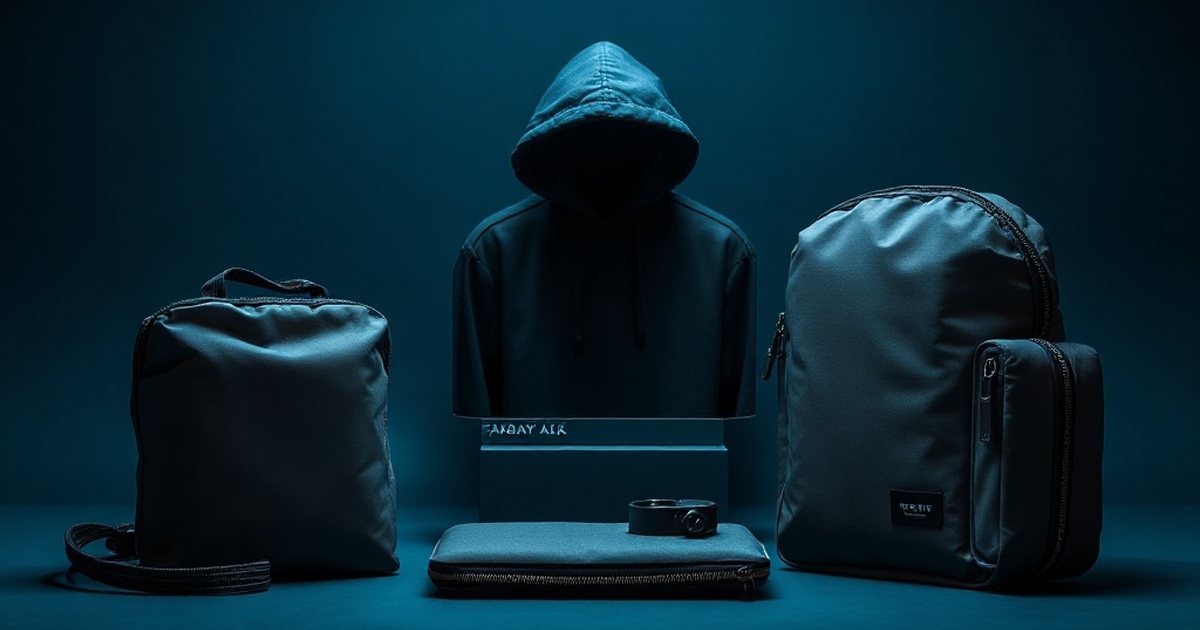
A Faraday Hoodie is a hooded sweatshirt that incorporates conductive textiles (typically silver-, copper-, or stainless-steel threads) to attenuate radio-frequency (RF) fields, and to a much lesser degree other [1] electromagnetic fields (EMF). The conductive layer forms a partial “Faraday cage” around covered areas (head, neck, torso), reflecting and/or absorbing incident waves from sources such as Wi-Fi, Bluetooth, cell towers, and mobile devices. Effectiveness depends on fabric conductivity, coverage, fit, and the frequencies involved.
The Science (Short & Clear)
Shielding principle
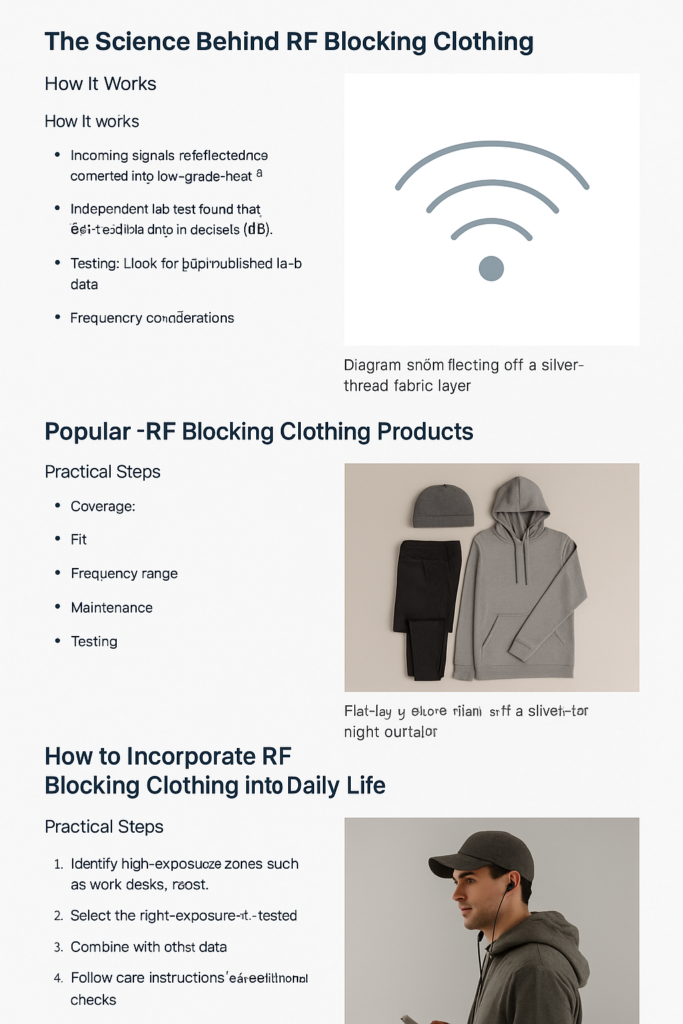
Conductive fibers disperse incident fields across the garment’s surface, reducing penetration to the body. In labs, shielding effectiveness (SE) is expressed in decibels (dB) across frequency bands (e.g., 15 MHz to 3 GHz in one ASTM D4935 study [2] for some standard tests). The most commonly cited planar-material method is ASTM D4935-18, which describes a coaxial test fixture for measuring SE of fabrics and other flat samples. ASTM International
Research note: With powder detergent, the same stainless-steel-thread fabric lost 5.59 dB of shielding effectiveness at 0.9 GHz between the first and tenth wash [5].
A Faraday hoodie reflects RF, and the hood and cuffs are where it leaks
A conductive layer bounces RF
Metal-coated fabric, foil, mesh and conductive paint reflect most incoming radio-frequency energy.
Some energy is lost inside
Thicker or multi-layer materials also absorb part of the signal as it passes through.
Gaps let signals through
Seams, open weaves, zips and unsealed edges leak, and short wavelengths slip through smaller gaps.
Low-frequency magnetic fields pass
Thin fabric or paint does little against 50/60 Hz magnetic fields; distance or special high-permeability metal is needed.
A hoodie shields what the fabric surrounds
How well a material shields depends on the frequency and on how completely it covers the space.
Chart: frequencyblockers.com: A Faraday hoodie reflects RF, and the hood and cuffs are where it leaks
Embed this chart
Free to reuse on your site. Copy the code below; please keep the credit link.
What the research shows
Open-access reviews and textile studies report that knitted/metal-coated fabrics can provide meaningful attenuation; performance varies with yarn, weave/knit structure, metal content, and laundering cycles. PMC
Two details from the studies: a silver-coated polyamide knit gave 24.1 dB of shielding at 2.4 GHz but only 14.8 dB at 0.9 GHz, and in simulations of anti-radiation pregnancy bands the average field fell by no more than 30 percent even with a gap-free band while the maximum field rose in more than 90 percent of the scenarios. Shielded clothing reduces some fields, not all, and not evenly [3][4].
Practical expectations
- Reduction, not elimination. Clothing won’t create a perfect cage; seams, openings, and incomplete coverage matter.
- Frequency dependence. A hoodie that performs well at ~1 GHz may perform differently at 3 to 5 GHz (common Wi-Fi/5G bands); look for published curves, not single numbers.
- Care matters. Conductive fibers can degrade with harsh washing; follow brand guidance.
Occupational guidance exists for RF protective clothing selection/limitations (geared to workplace fields), reinforcing that use-cases and limits should be understood. OSHA
How to Evaluate a Faraday Hoodie
1) Ask for third-party test data
Prefer brands that publish attenuation vs. frequency (dB curves), not only marketing percentages. Reference to recognized methods (e.g., ASTM D4935-18) is a plus. ASTM International
2) Check materials and construction
- Silver/copper content and surface resistivity (Ω/sq) are meaningful indicators.
- Dense knits and continuous conductive layers generally shield better.
3) Fit & coverage
A snug, but comfortable, fit that closes at the neck and covers the head can reduce leakage compared with a loose, open neck/hood.
4) Care instructions
Look for clear laundering guidance; cold/gentle cycles and air-drying are common to preserve conductivity.
Faraday Hoodie vs. “RF-Blocking Hoodie”
These terms are used interchangeably in consumer markets. “Faraday Hoodie” emphasizes the shielding concept; “RF-blocking hoodie” emphasizes purpose. In both cases, judge products by data (dB across frequencies), not the label alone. (See standards and studies above.) ASTM International
Product Examples & Typical Price Ranges
Pricing and features change; the snapshots below illustrate the landscape and what brands claim today. Always verify current specs on the merchant page.
| Product | What it is | Notes |
|---|---|---|
| DefenderShield EMF Radiation Protection Hooded Jacket | A lined, everyday jacket/hoodie-style garment from a mainstream shield-wear brand | Brand positions up to “99%” blocking; check current sizing/availability. DefenderShield |
| WOREMOR Silver Hoodie | Silver-fiber hoodie with published specs | Canada-made; check size and current price on product page. WOREMOR |
| Proteck’d “Nebula” Faraday Hoodie | Unisex Faraday Hoodie with silver-lined construction | Offers multiple colors; verify size chart and returns. Proteck’d EMF Apparel |
| SLNT Faraday Jacket (adjacent category) | Weatherproof jacket with removable Faraday pocket for devices | Privacy/security-driven; device pocket is the shielding component. SLNT® |
| Proteck’d Faraday Zip-Up (Amazon listing) | Silver-lined zip hoodie variant | Example of marketplace listings; confirm seller, fabric, and data. Amazon |
How to Use a Faraday Hoodie (Practical Playbook)
When to wear it
- Desk work or gaming near routers, access points, and Bluetooth peripherals.
- Commuting/travel (public Wi-Fi, dense device environments).
- Evenings/sleep if you want extra coverage for the head/torso while relaxing.
How to wear it for best effect
- Close the gaps. Pull the hood up and close zips/overlaps to reduce openings around neck and head.
- Layer smartly. The conductive layer should not be overly separated by thick insulating layers; most hoodies integrate shielding in the lining.
- Combine with environment fixes. Increase distance from routers, enable airplane mode when possible, and disable unused radios.
Care & longevity
- Follow brand laundering guidance (often cold/gentle; avoid bleach and high heat) to preserve conductive fibers and maintain published attenuation. (See brand pages and general textile findings on wash cycles.) PMC
Common Mistakes (and How to Avoid Them)
- Expecting perfection. Even excellent garments leak through openings; think exposure reduction, not zero.
- Buying without data. Favor products with frequency-by-frequency results, not only a single “blocks 99%” claim. ASTM International | ASTM
- Over-relying on clothing. A hoodie helps most when paired with distance, device settings, and home layout improvements.
- Ignoring fit. An open neckline/loose hood reduces real-world attenuation compared to a better-fitting design.
- Skipping care instructions. Harsh washing can degrade performance; check the tag and product page. PMC
Where a Faraday Hoodie Fits in Your Low-Exposure Plan
Think in layers:
- Source control: Turn off/limit radios you don’t need; position routers away from work/sleep areas.
- Distance & time: Keep phones/tablets off-body when practical; use speaker mode or wired options.
- Shield selectively: Use a Faraday Hoodie when you want wearable reduction (work, commute, rest).
- Measure & iterate: If possible, use an RF meter to understand hotspots and verify whether changes help.
Key Takeaways
- A Faraday Hoodie uses conductive textiles to attenuate RF/EMF, offering practical, wearable reduction, especially for head/torso coverage.
- Judge products by published attenuation data (dB across frequencies) and reference to recognized test methods like ASTM D4935-18. ASTM International | ASTM
- Coverage, fit, fabric, and care significantly influence real-world performance. PMC
- Reputable examples include mainstream brands (e.g., DefenderShield) and specialty makers (e.g., WOREMOR, Proteck’d); verify current price/stock before buying. DefenderShield
- A hoodie works best with environment changes (distance, device settings) rather than as a solo fix.
References (selected)
- OSHA. Evaluation and use of radiofrequency protective clothing (Letter of Interpretation, Apr 14, 1993). OSHA
- OSHA. Radiofrequency and Microwave Radiation: Standards & Guidance. OSHA
- ASTM D4935-18. Standard Test Method for Measuring the EM Shielding Effectiveness of Planar Materials. (overview pages). ASTM International
- Pušić T., et al. Electromagnetic Shielding Properties of Knitted Fabric… (2021). PMC
- Mikołajczyk Z., et al. Modern Electromagnetic-Radiation-Shielding Materials… (2024). PMC
- Product pages (for current descriptions/pricing/examples): DefenderShield Hoodie/Jacket; WOREMOR Silver Hoodie; Proteck’d Faraday Hoodie; SLNT Faraday Wearables. DefenderShield
Featured Products
Looking for quality EMF protection? Check out these recommended products:
Frequently Asked Questions
What exactly is a Faraday Hoodie and how does it protect you from EMF?
A Faraday Hoodie is a hooded sweatshirt woven with conductive threads (silver, copper, or stainless steel) that create a partial electromagnetic shield around your head, neck, and torso. These conductive fibers reflect and absorb radio-frequency waves from sources like Wi-Fi, cell towers, and mobile devices, reducing EMF exposure to your body.
How effective is a Faraday Hoodie at blocking RF and EMF signals?
Effectiveness depends on the fabric’s conductivity, how well it fits, coverage area, and the specific frequencies you’re exposed to. Laboratory testing uses a standard called ASTM D4935-18 to measure shielding effectiveness in decibels (dB), but real-world performance varies based on how consistently you wear it and the sources around you.
When should you wear a Faraday Hoodie for the best protection?
You should wear it when you’re in high-RF environments or spending extended time near multiple wireless sources like busy offices, public transit, or areas with strong cell tower signals. It’s most practical as part of a broader low-exposure lifestyle rather than as constant, all-day protection.

How much does a quality Faraday Hoodie typically cost?
Faraday Hoodies vary widely in price depending on brand, material quality, and shielding specifications, with typical ranges provided in product examples throughout the buying guide. You should evaluate performance claims and fabric conductivity rather than price alone when choosing one.
References
- Satpute N et al. Manufacturing of Pure Iron by Cold Rolling and Investigation for Application in Magnetic Flux Shielding. Materials (Basel, Switzerland) (2022). PMID 35407962
- Mustafa Sabri Ozen et al. Investigation of electromagnetic shielding effectiveness of needle punched nonwoven fabric produced from conductive silver coated staple polyamide fibre. Journal of the Textile Institute (2015). doi:10.1080/00405000.2015.1070604
- Pušić T et al. Electromagnetic Shielding Properties of Knitted Fabric Made from Polyamide Threads Coated with Silver. Materials (Basel, Switzerland) (2021). PMID 33800263
- Fatemeh Dehrouyeh et al. On the Shielding Effectiveness of Anti-Electromagnetic-Radiation Clothes for Pregnant Females. (2023). doi:10.36227/techrxiv.22890860.v1
- Tanja Pušić et al. Electromagnetic Shielding Effectiveness of Woven Fabric with Integrated Conductive Threads after Washing with Liquid and Powder Detergents. Polymers (2022). PMID 35746018
These statements have not been evaluated by the Food and Drug Administration. This information is not intended to diagnose, treat, cure, or prevent any disease. Content is for informational purposes only and is not medical advice; consult a qualified healthcare provider before starting any supplement. As an Amazon Associate we earn from qualifying purchases.